NEWRelease 08 98,6% in English. Released on 20/11/2026: 40 documents, 841 pages and 85 new dossiers in English.View now ↗
UFOandUAPARCHIVE IN ENGLISH

PATHS THROUGH THE ARCHIVE

Astronaut accounts

Stories connected by a shared form of observation or investigation.

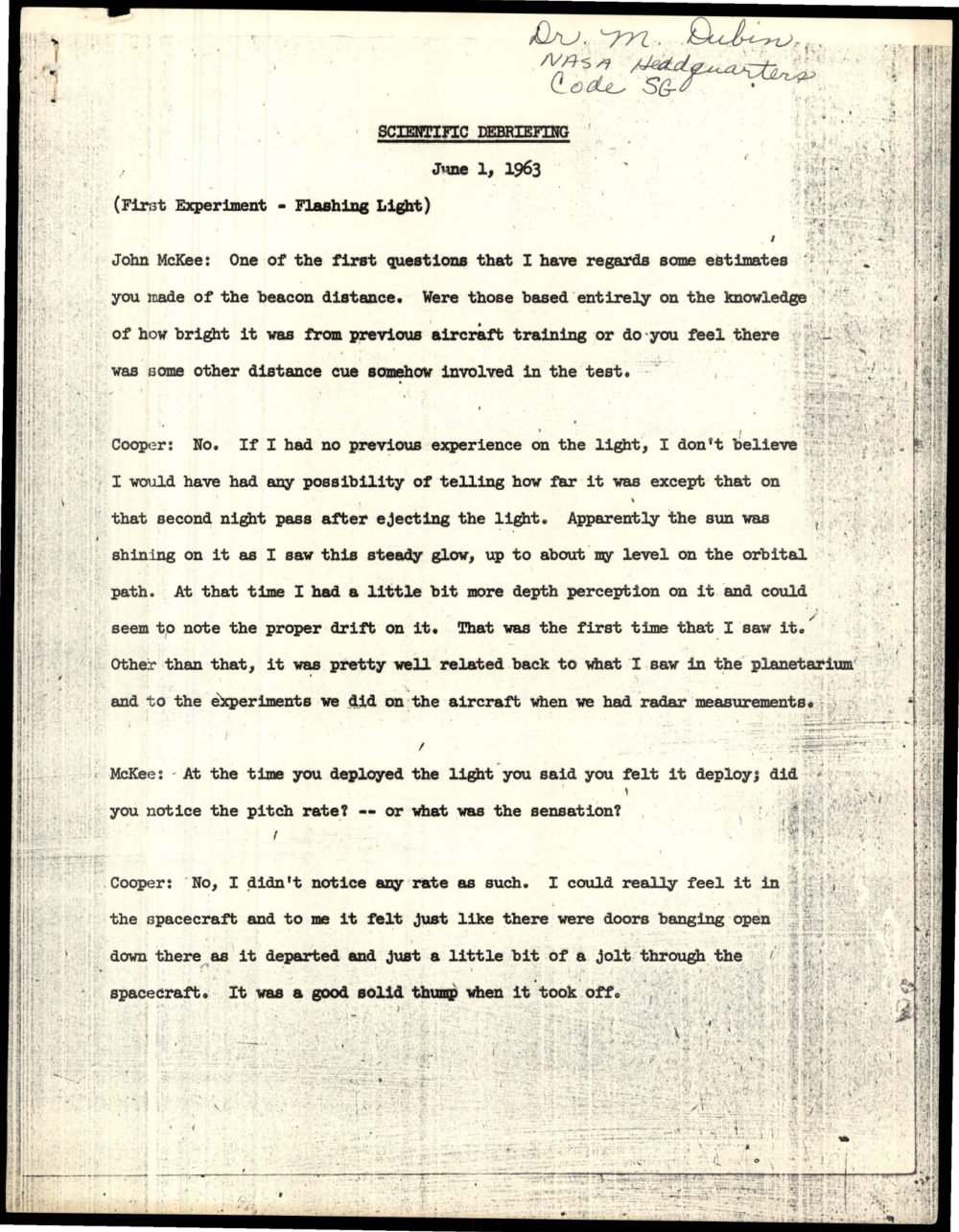
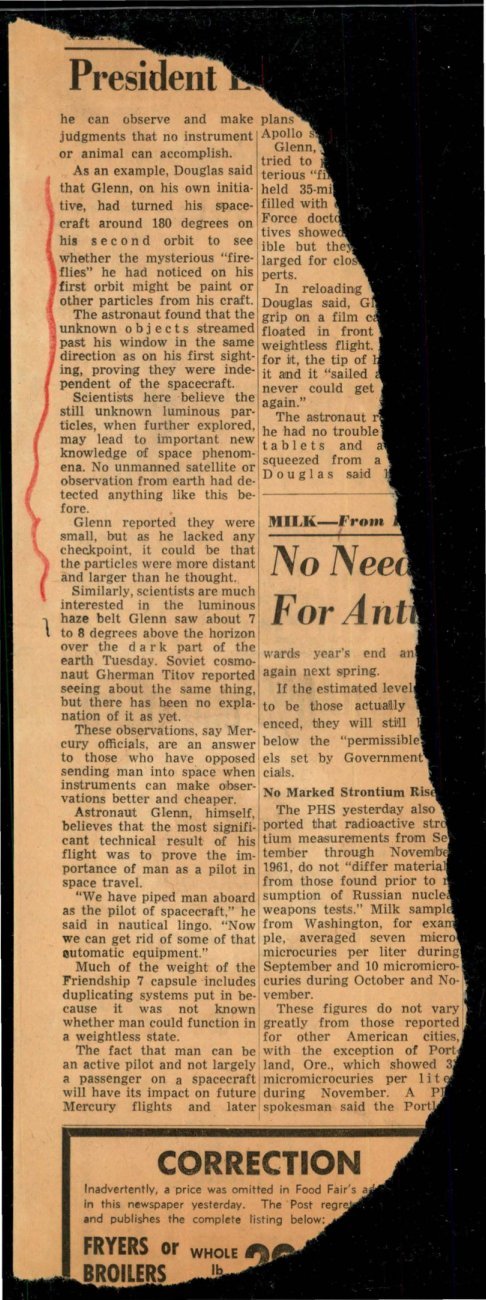
Yellowed newspaper clipping, narrow and torn on the right, with the beginning of a headline starting with "President", columns of text about Glenn and the luminous particles, a red line in the margin and, at the bottom, a correction notice and an advertisement for chickens.Newspaper clipping

Astronaut accounts1962Location: Earth orbit, during the three sunrises of the Mercury-Atlas 6 flight

Full dossier

Friendship 7, 1962: John Glenn describes “fireflies” around the capsule at every sunrise

One week after the first American orbital flight, John Glenn described to NASA scientists thousands of yellowish-green UFOs that appeared around the capsule at every sunrise. An internal draft from March 1962 concluded that they were particles associated with the spacecraft or the rocket, not coming from space.

Open the case
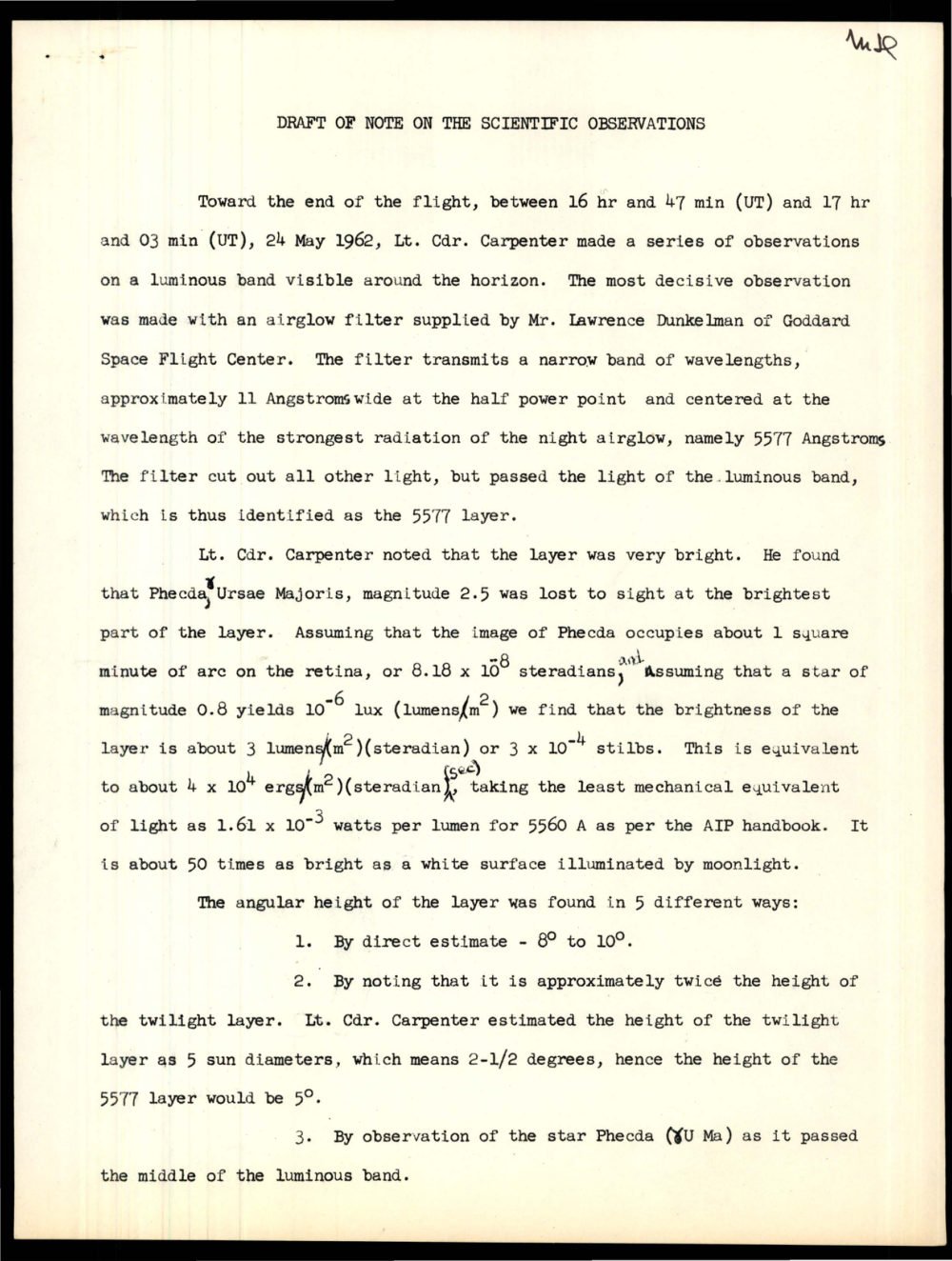
Typewritten page of the NASA draft note on Carpenter's scientific observations.Draft scientific note

Astronaut accounts1962Location: Earth orbit, Mercury-Atlas 7 flight

Full dossier

Aurora 7, 1962: Scott Carpenter knocks on the capsule wall and releases a cloud of particles

A draft NASA note records that Scott Carpenter saw and photographed white, snowflake-like particles on all three orbits and, shortly before reentry, struck the capsule wall with his hand, releasing many of them. The text concludes that they were most likely flakes formed from the vapor of the life support system.

Open the case
Title sheet of Walter Schirra's scientific debriefing, March 12, 1963.Debriefing title sheet

Astronaut accounts1962Location: Earth orbit, Mercury-Atlas 8 flight

Full dossier

Sigma 7, 1962: Walter Schirra sees “frost flakes” and links the fireflies to the spacecraft's own environment

In the scientific debriefing of March 1963, Walter Schirra described white particles and other yellowish-green ones around Sigma 7, and a film on the window left by the escape rocket. He himself attributed the “fireflies” to gases and vapor released by the spacecraft.

Open the case
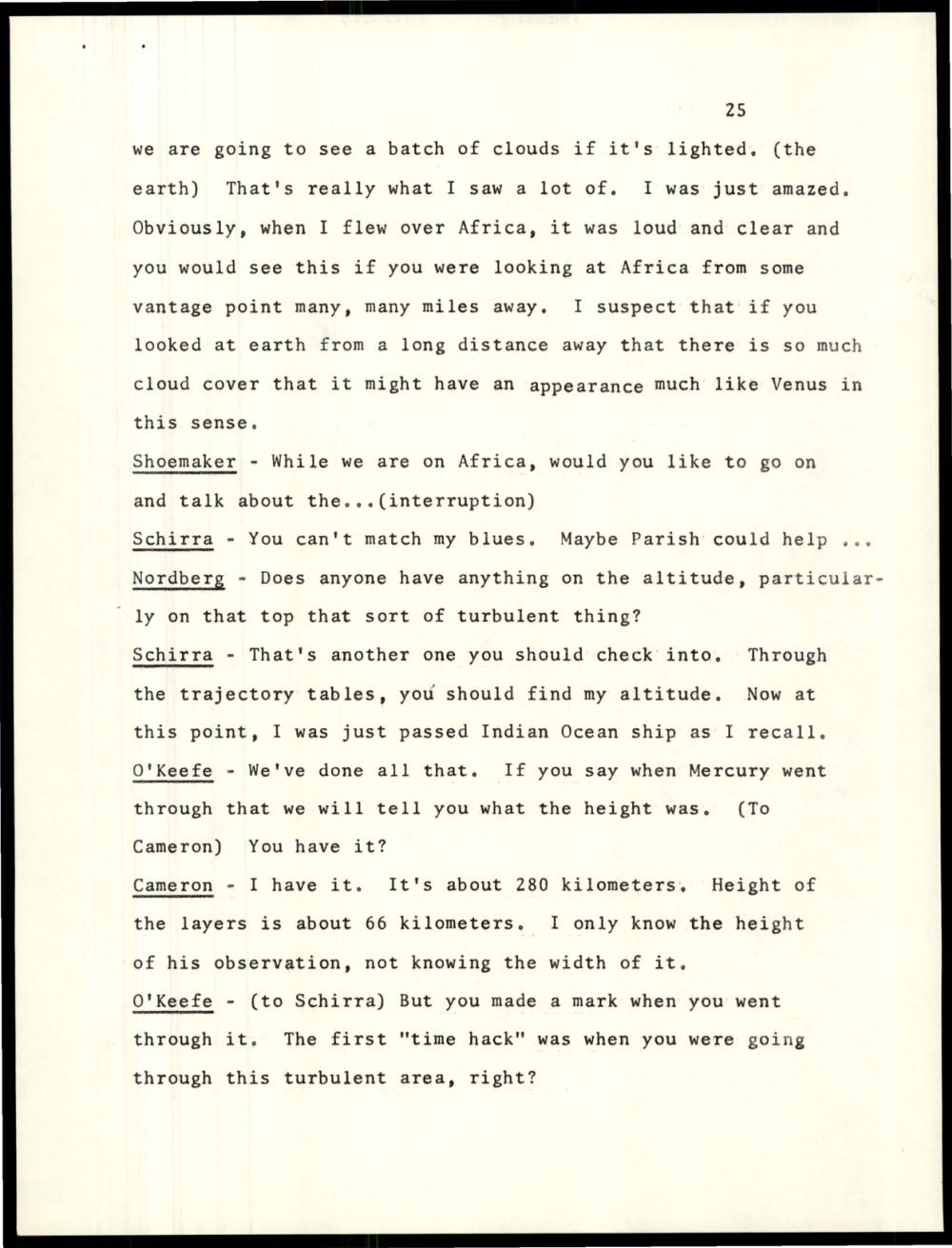
Page of the transcript of Schirra's debriefing, with the start of the discussion about Africa.Debriefing transcript

Astronaut accounts1962Location: Over the Indian Ocean, after passing over southern Africa, according to Schirra's reconstruction

Full dossier

Sigma 7, 1962: the brown “smog band” Schirra saw on the horizon after crossing Africa

Schirra called his biggest surprise a brownish-gray layer, “smog-colored,” that spanned the entire horizon and dimmed the stars seen through it. The scientists estimated that it would be hundreds of times brighter than ordinary night airglow, and the question was left unanswered in the document.

Open the case
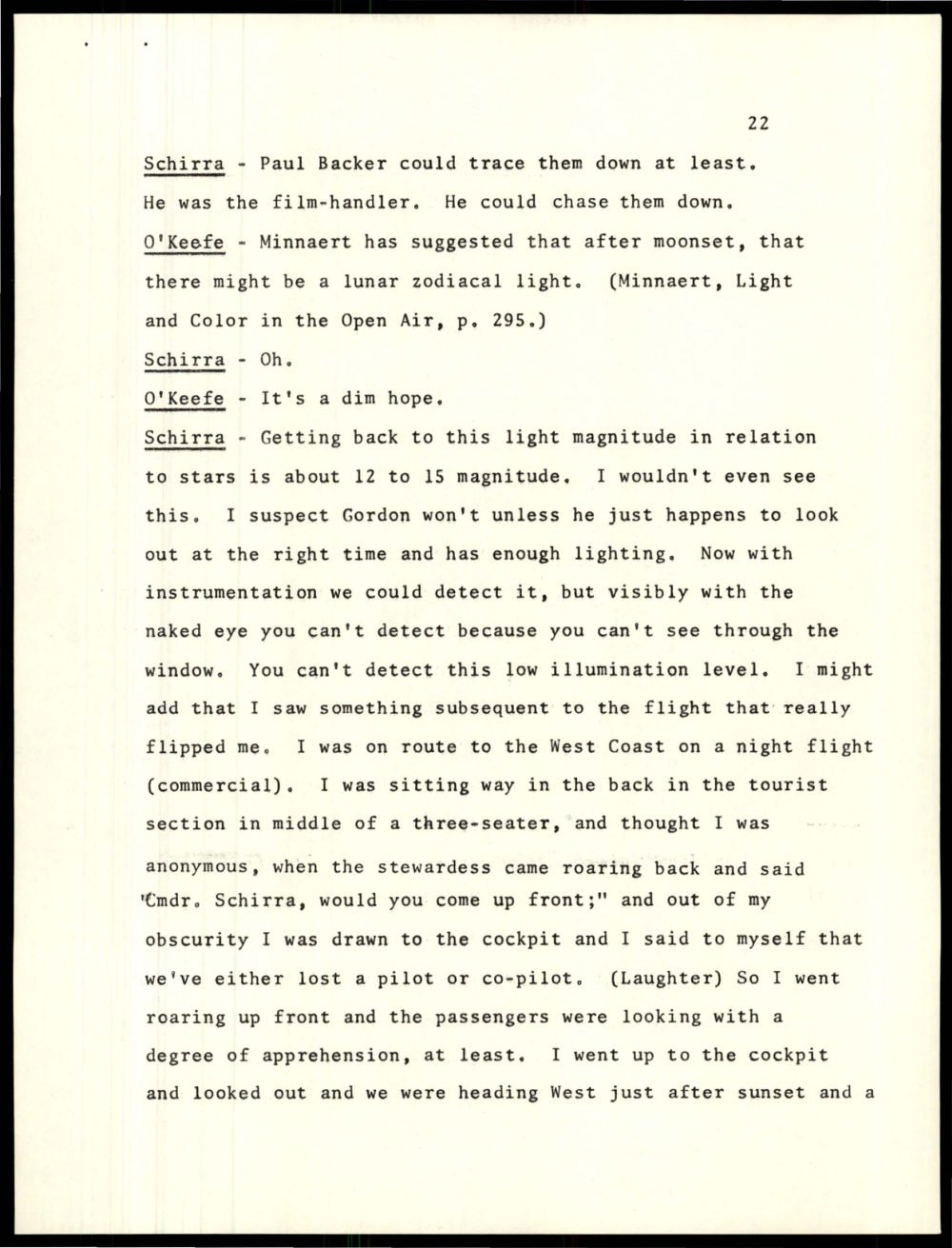
Transcript page in which Schirra begins to tell the episode in the airplane cockpit.Debriefing transcript

Astronaut accounts1963Location: On a night commercial flight bound for the U.S. West Coast

Full dossier

U.S. West Coast, 1962-1963: Schirra is called to an airplane cockpit to see the glow that alarmed the pilots

Walter Schirra told NASA scientists that, while traveling as a passenger, he was called to the cockpit because the pilots did not know what an enormous glow in the sky after sunset was. He attributed it to the launch of a Blue Scout rocket from Vandenberg base.

Open the case
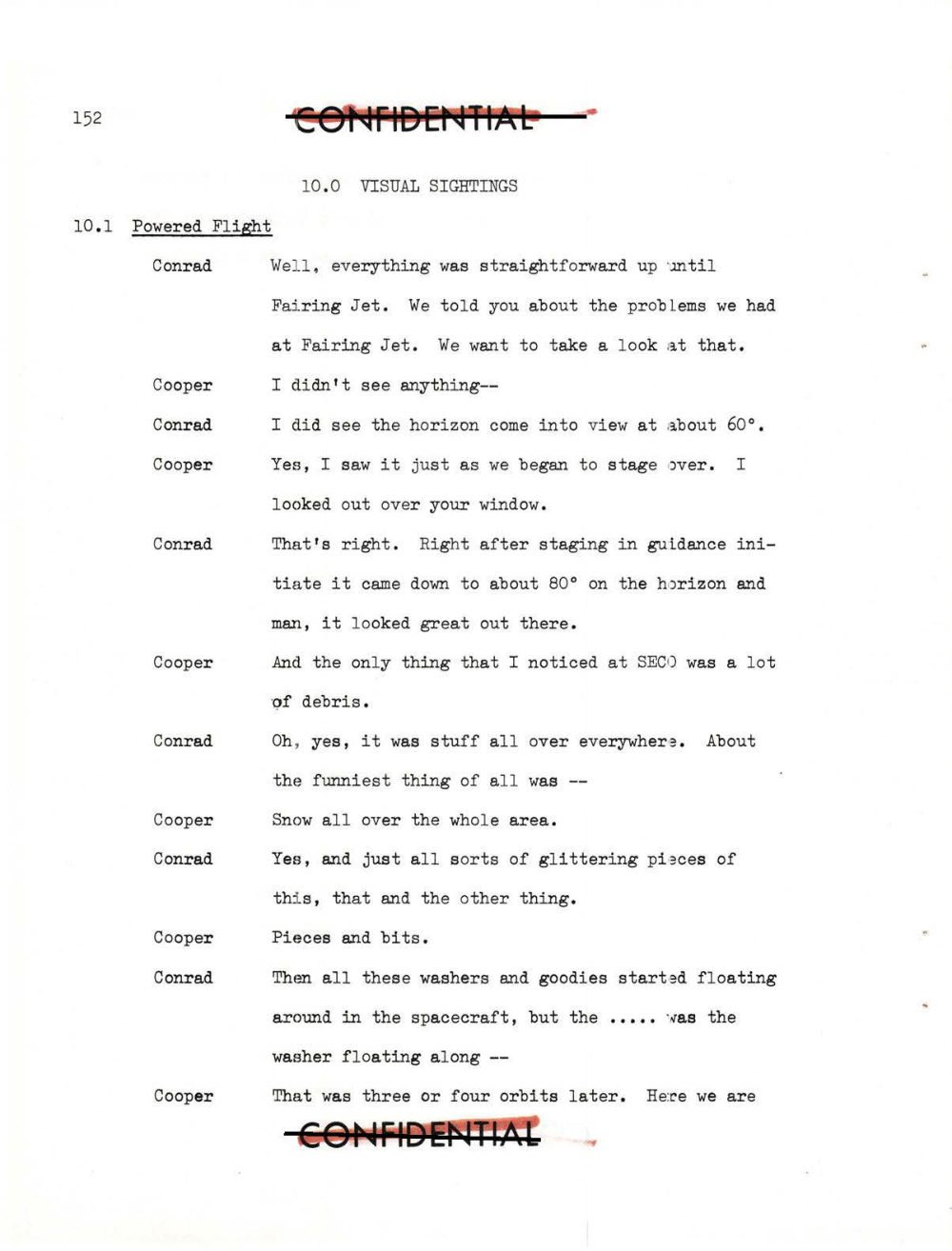
First page of the visual sightings section of the Gemini V debriefing.Debriefing transcript

Astronaut accounts1965Location: Earth orbit and nighttime reentry of Gemini V

Full dossier

Gemini V, 1965: a green "aurora-like" UFO, a possible satellite, and another UFO reentering behind the spacecraft

In the sightings section of the Gemini V debriefing, Gordon Cooper and Charles Conrad talk about an intense green UFO that changed the appearance of the airglow, a possible satellite in free flight, and a large UFO reentering behind them. The astronauts themselves suggest aurora and spacecraft parts as explanations.

Open the case
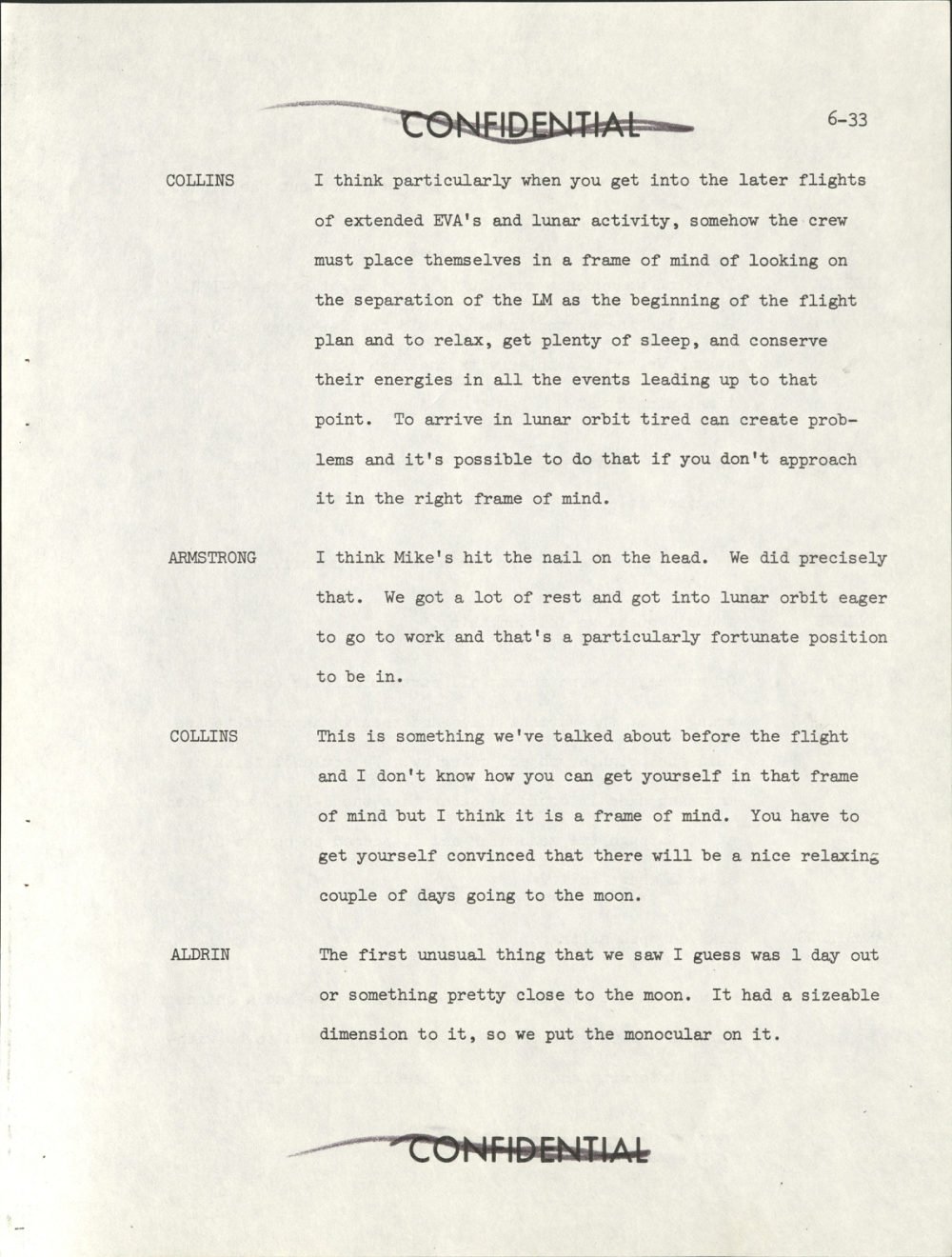
Typed debriefing page with crossed-out Confidential marking and dialogue between Collins, Armstrong and Aldrin.Technical debriefing page

Astronaut accounts1969Location: Space, on the trajectory between the Earth and the Moon

Full dossier

Apollo 11, 1969: the "L"-shaped UFO the crew saw on the way to the Moon

In the Apollo 11 technical debriefing, Aldrin, Armstrong and Collins say they saw through the window a bright UFO that looked like an "L", an open suitcase or a hollow cylinder, depending on the instrument's focus. They thought of the rocket's third stage, but ground control reported that it was about 6.000 miles away, and the crew ended the conversation without a conclusion, suspecting something that had come loose from the spacecraft itself.

Open the case
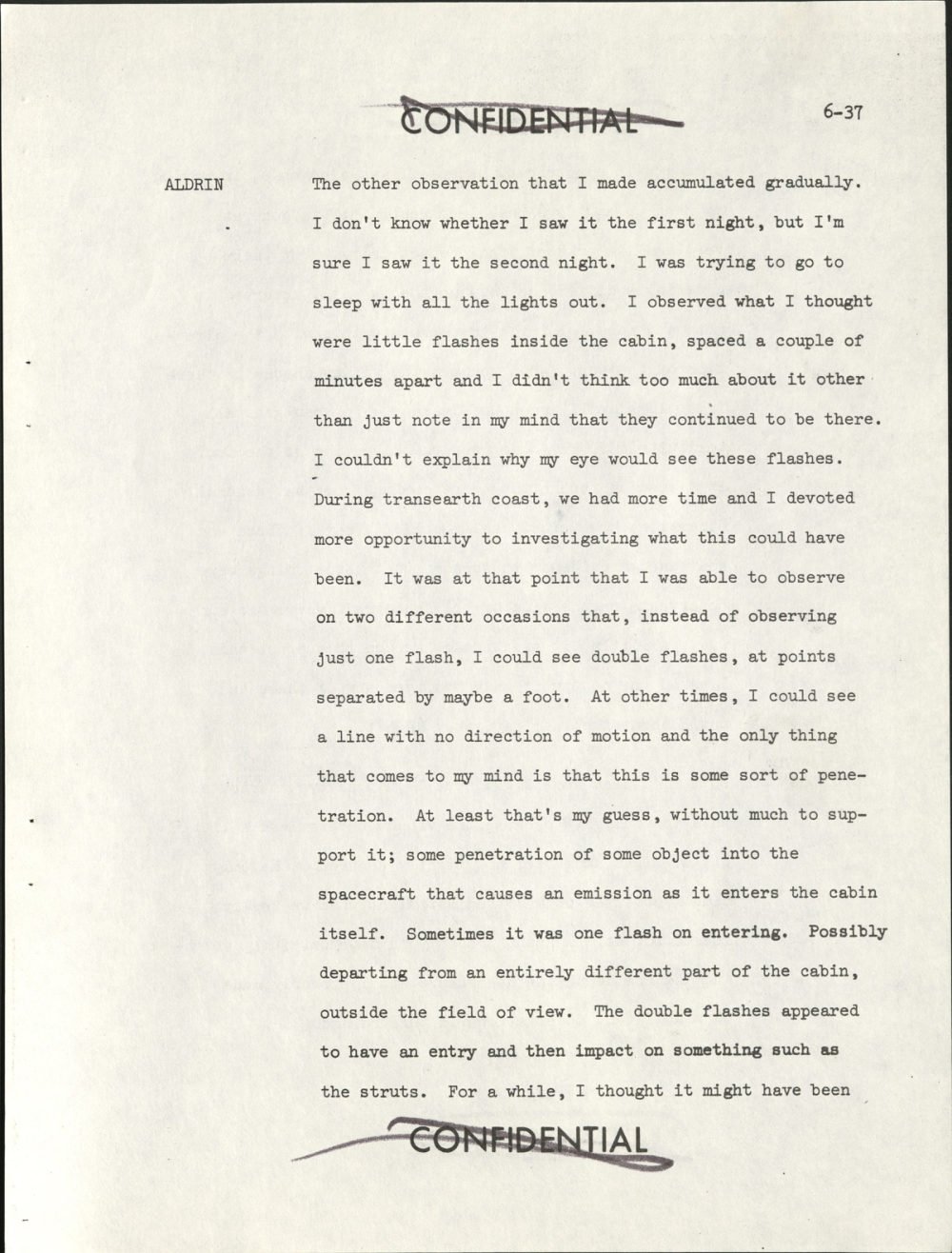
Typed debriefing page with Aldrin's account of flashes.Technical debriefing page

Astronaut accounts1969Location: Interior of the command module, between the Earth and the Moon

Full dossier

Apollo 11, 1969: the flashes Aldrin saw inside the cabin while trying to sleep

Buzz Aldrin said in the technical debriefing that, with the lights off, he saw small flashes inside the cabin, sometimes double or line-shaped, and ventured that something was penetrating the spacecraft. Armstrong, who only looked for the phenomenon on the last night, said he made about 50 observations in one hour.

Open the case
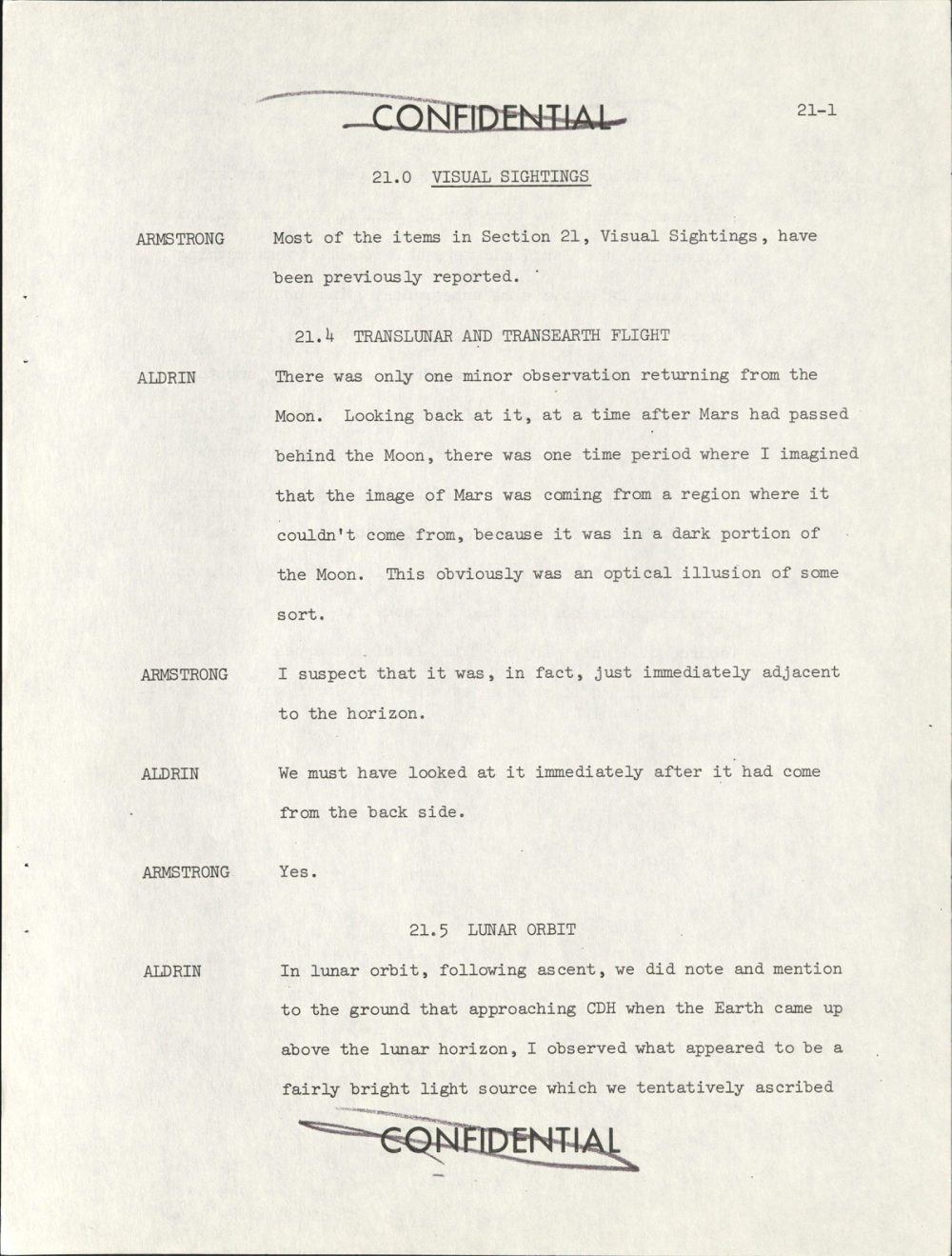
Typed debriefing page, section 21, with dialogue between Armstrong and Aldrin.Technical debriefing page

Astronaut accounts1969Location: Lunar orbit, looking at the Earth above the Moon's horizon

Full dossier

Apollo 11, 1969: the bright light seen on Earth, first attributed to a laser and later to a lake

In the sightings section of the Apollo 11 technical debriefing, Aldrin says that, in lunar orbit, he saw a fairly bright light source on Earth and tentatively attributed it to a laser. On the way back, upon seeing something similar through the monocular, the crew revised the conclusion to the Sun's reflection on a lake, although Aldrin still found the brightness unusual.

Open the case
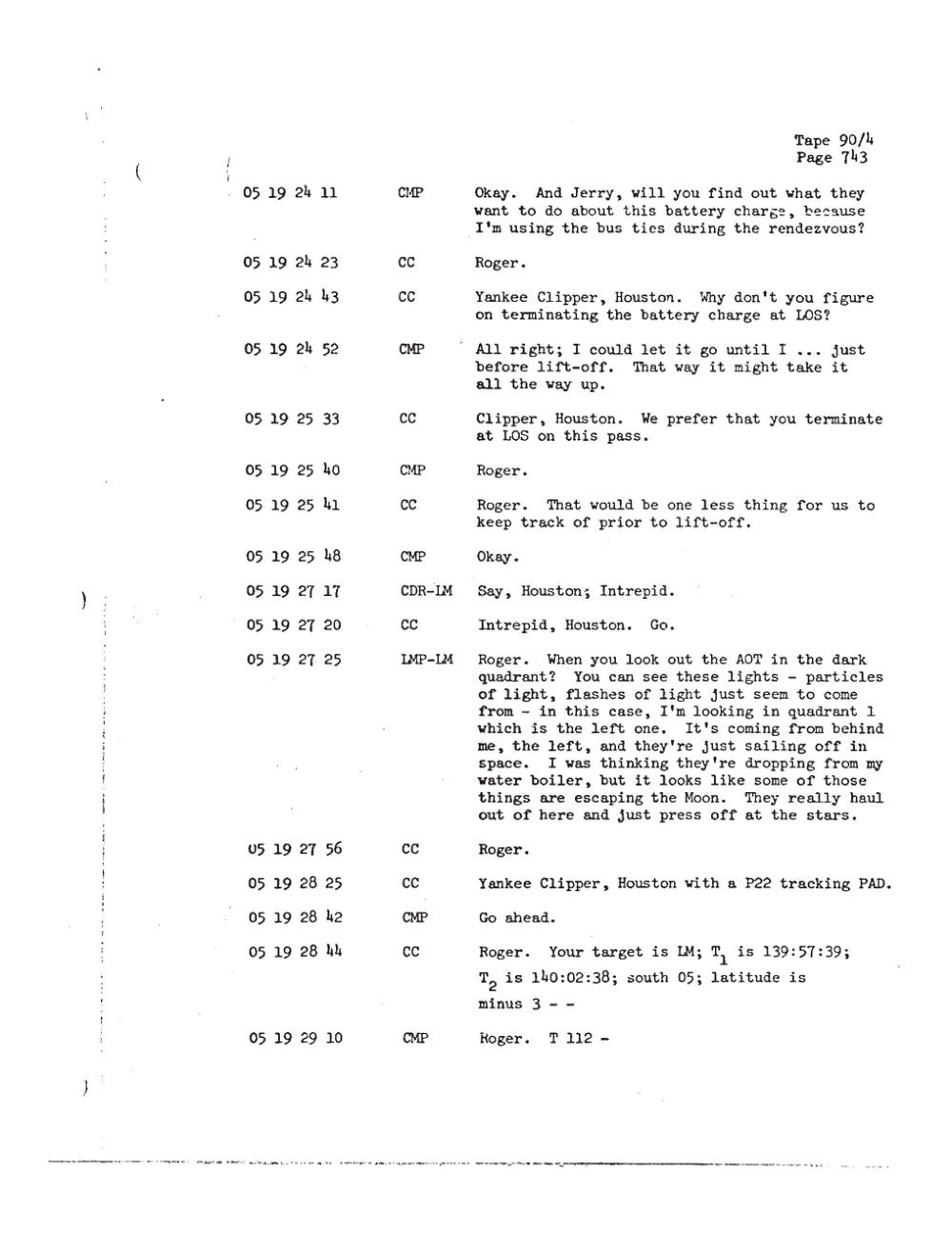
Transcript with columns for time, speaker and text; Bean's passage is in the middle of the page.Communication transcript

Astronaut accounts1969Location: Surface of the Moon, inside the lunar module Intrepid, in the Ocean of Storms

Full dossier

Apollo 12, 1969: Alan Bean sees from the surface of the Moon “particles of light” that seem to be escaping from the Moon

In the Apollo 12 air-to-ground transcript, Alan Bean tells Houston that, looking through the lunar module's alignment telescope, he saw particles and flashes of light going by and heading off into space; he thought of the vehicle's own cooling system, but said some seemed to be “escaping from the Moon”. Houston merely acknowledges receipt.

Open the case
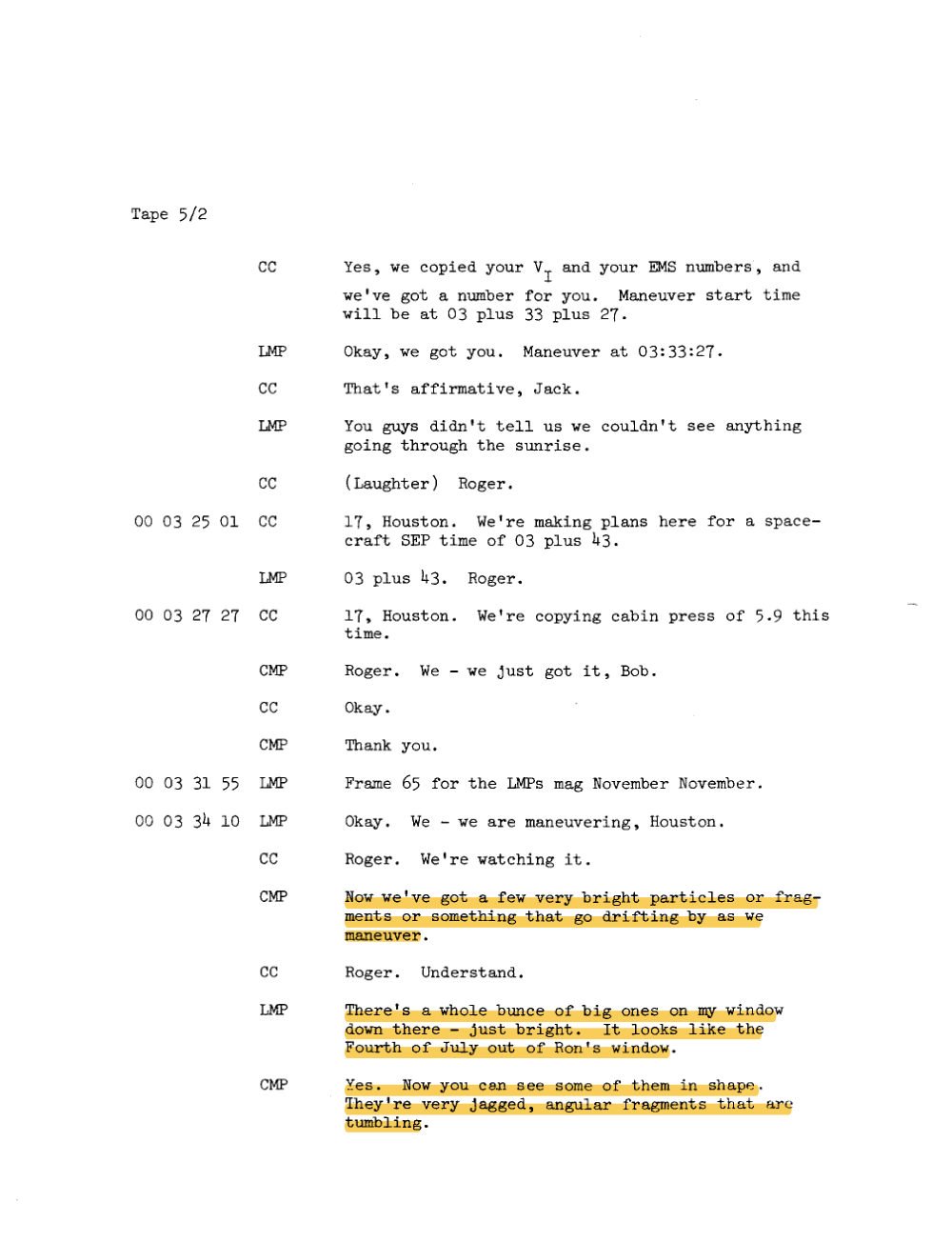
Transcript with the passages about bright fragments highlighted in yellow.Communication transcript

Astronaut accounts1972Location: Space, right after leaving Earth orbit bound for the Moon

Full dossier

Apollo 17, 1972: bright fragments around the spacecraft at third-stage separation

Shortly after leaving Earth orbit, the Apollo 17 crew described to Houston “very bright” particles, angular fragments that were tumbling and sparkling near the spacecraft. Ronald Evans ventured ice or paint coming off the third stage, and control recalled having seen paint peeling on the rocket.

Open the case
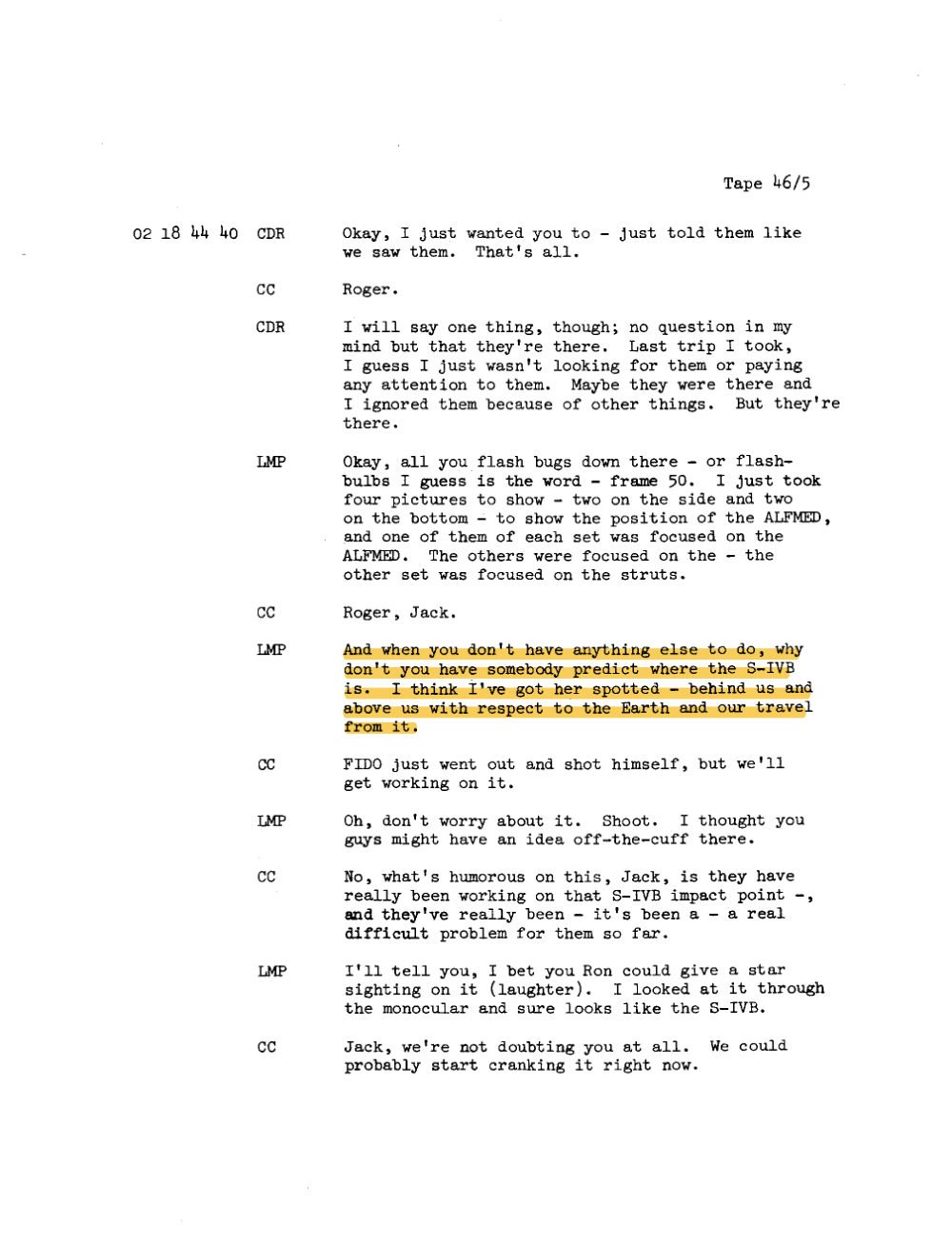
Transcript with time and speaker columns, tape 46/5.Communication transcript

Astronaut accounts1972Location: Space, on the trajectory between the Earth and the Moon

Full dossier

Apollo 17, 1972: “there's something out there,” the flashing UFO Cernan asked to have located

Gene Cernan reported to Houston a bright, distant UFO that rotated and flashed at a regular rhythm, “something physical out there,” and marked its passage so that the control could calculate its position. Schmitt, who had already been observing it, thought it was the rocket's third stage, and hours later Cernan spoke of two flashing UFOs that might be panels of the spacecraft adapter.

Open the case
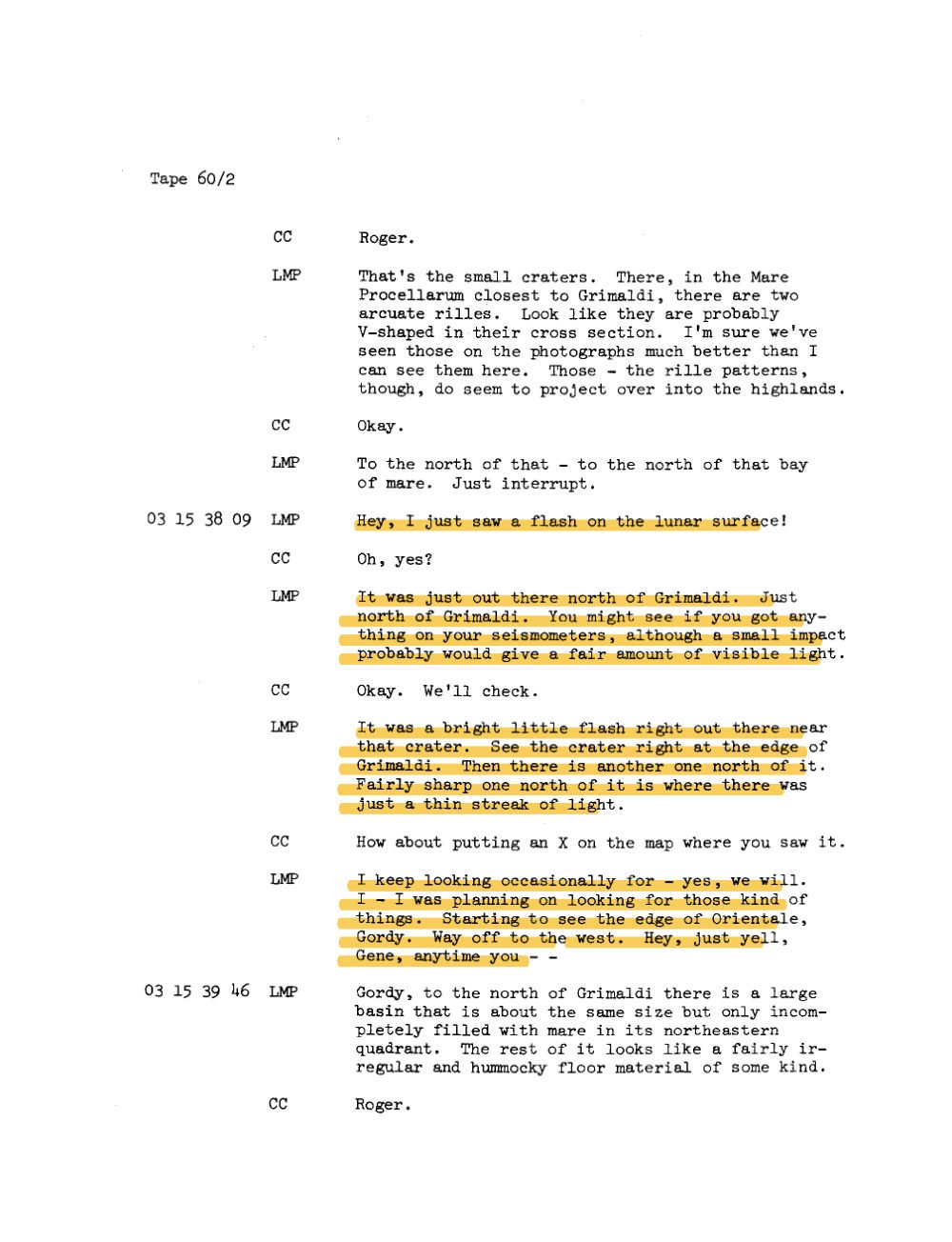
Transcript of tape 60/2 with the report of the lunar flash.Communication transcript

Astronaut accounts1972Location: Lunar surface north of Grimaldi crater, observed from the spacecraft

Full dossier

Apollo 17, 1972: Harrison Schmitt sees a flash on the Moon's surface north of Grimaldi crater

While describing the Moon lit by earthlight, geologist Harrison Schmitt interrupted his narration to say he had just seen a flash on the surface, north of Grimaldi, and suggested checking the seismometers because a small impact would produce light. In the technical debriefing, he says only that he had a flash “that he thought was” on the lunar surface.

Open the case
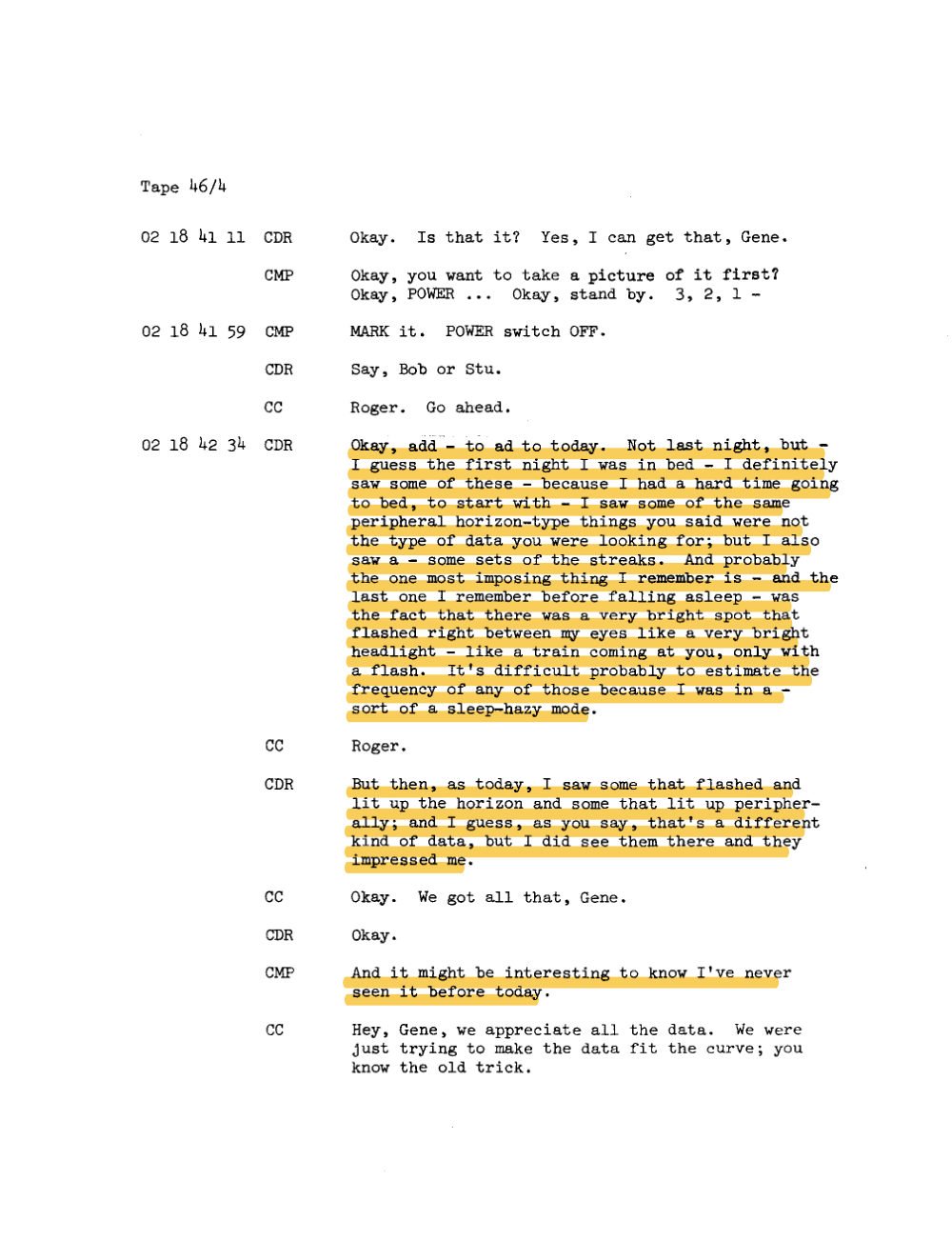
Transcript of tape 46/4 with the description of the flashes.Communication transcript

Astronaut accounts1972Location: Inside the spacecraft, between Earth and the Moon

Full dossier

Apollo 17, 1972: the flashes the crew saw in the dark, “like a train's headlight”

On Apollo 17, which carried an experiment to study the flashes seen by astronauts, Gene Cernan told Houston that, while almost asleep, he saw a very bright spot flash “right between the eyes, like the headlight of a train coming toward you.” In the debriefing, Schmitt said they saw flashes almost continuously, except during the blindfold experiment.

Open the case
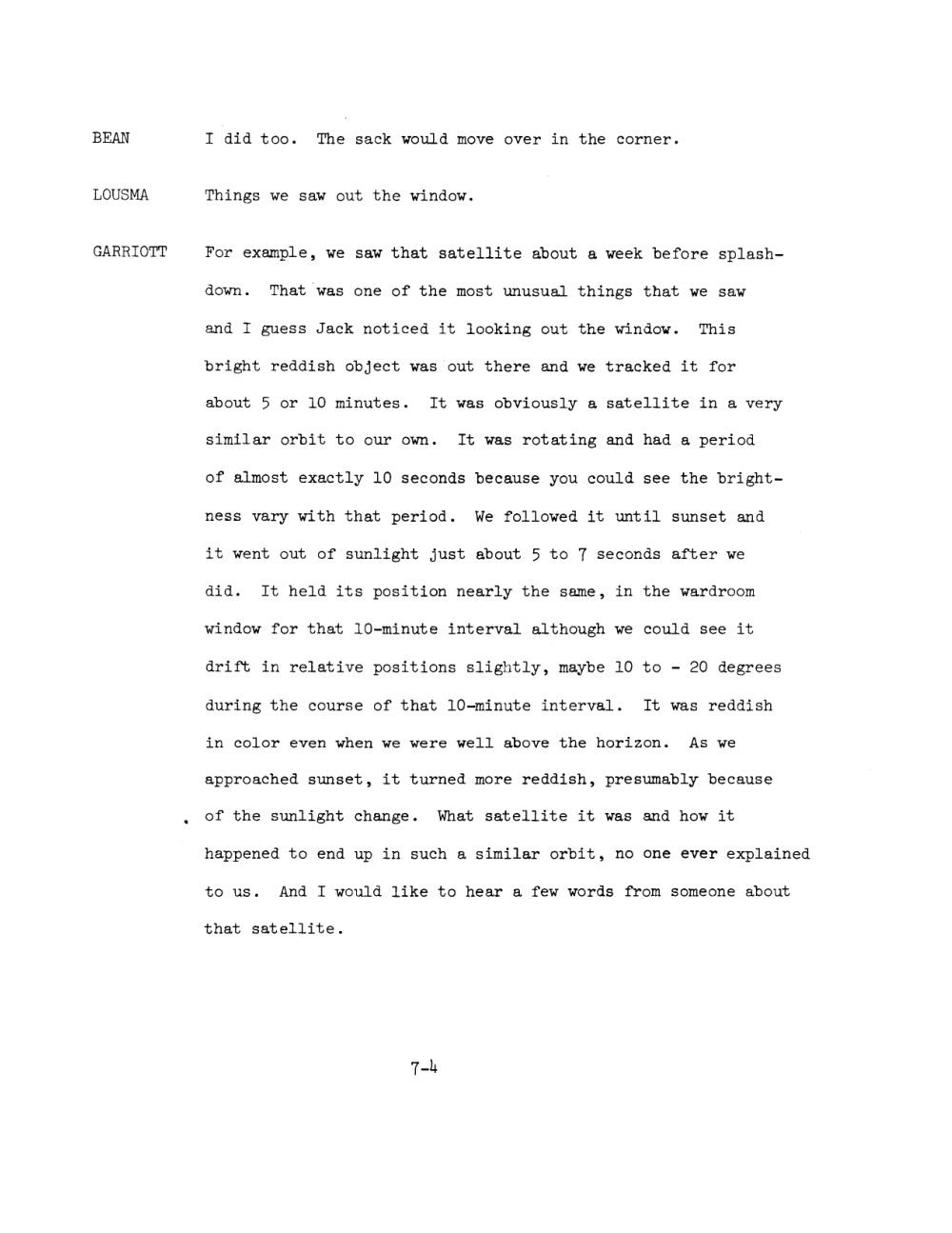
Typewritten page from the Skylab 1/3 debriefing with Garriott's remarks.Technical debriefing page

Astronaut accounts1973Location: Earth orbit, seen from the window of the Skylab station

Full dossier

Skylab 3, 1973: the red, rotating UFO that accompanied the station for ten minutes

In the debriefing of the second Skylab crew, Owen Garriott, Jack Lousma and Alan Bean describe a reddish UFO, brighter than Jupiter, that varied in brightness every 10 seconds and followed the station for about ten minutes. To them it was a satellite in a very similar orbit, but no one told them which one, and Garriott asked for the identification.

Open the case
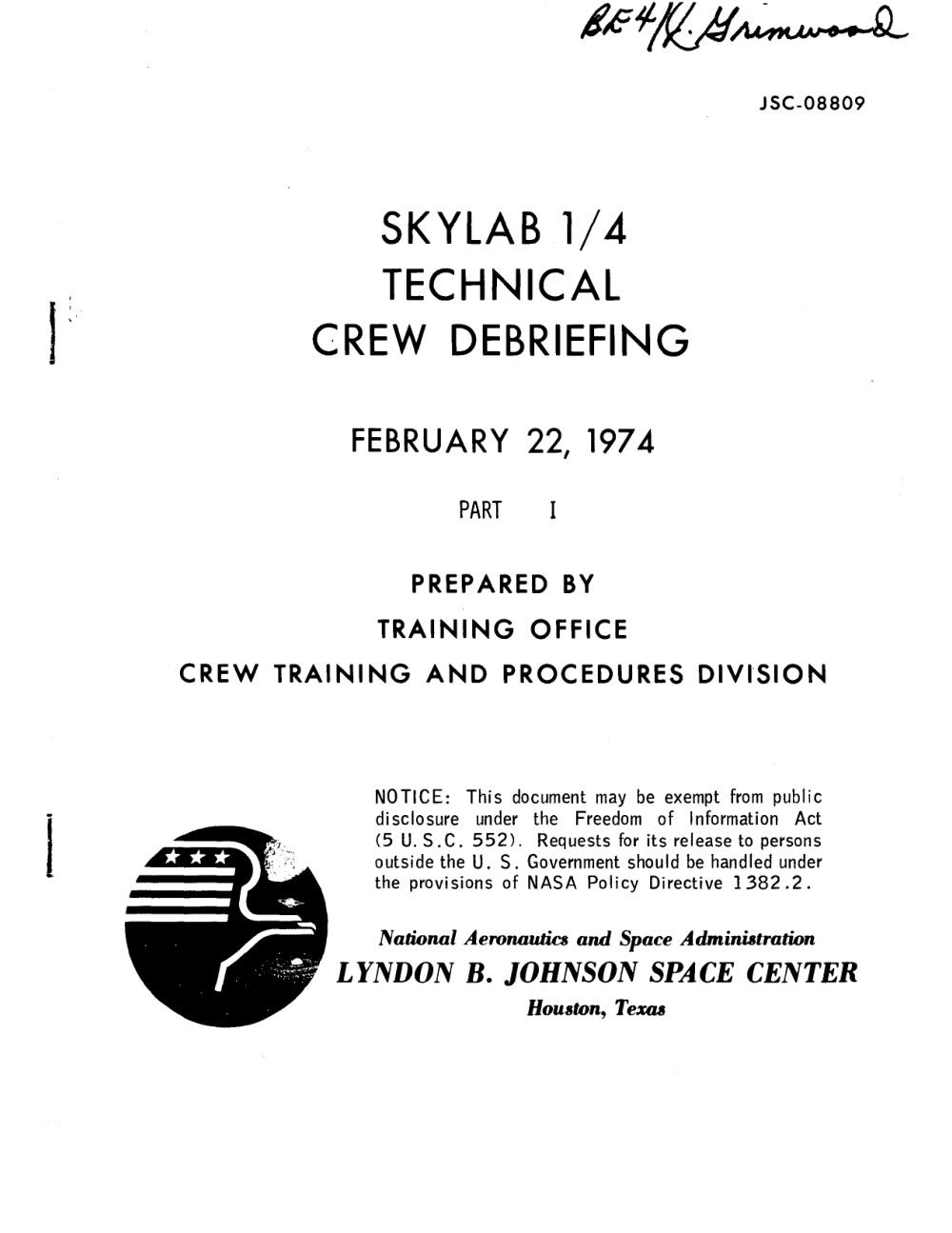
Cover page of document JSC-08809.Technical debriefing cover

Astronaut accounts1974Location: Earth orbit, seen from the Skylab station

Full dossier

Skylab 4, 1973-1974: UFOs flashing outside the station, with their own motion

In the debriefing of the last Skylab crew, commander Gerald Carr says that, two or three times, they saw UFOs flashing outside, with clear motion relative to the station. They assumed they were pieces of Skylab itself or other satellites, and attributed the “tumbling” appearance to the oscillation of the flashes.

Open the case
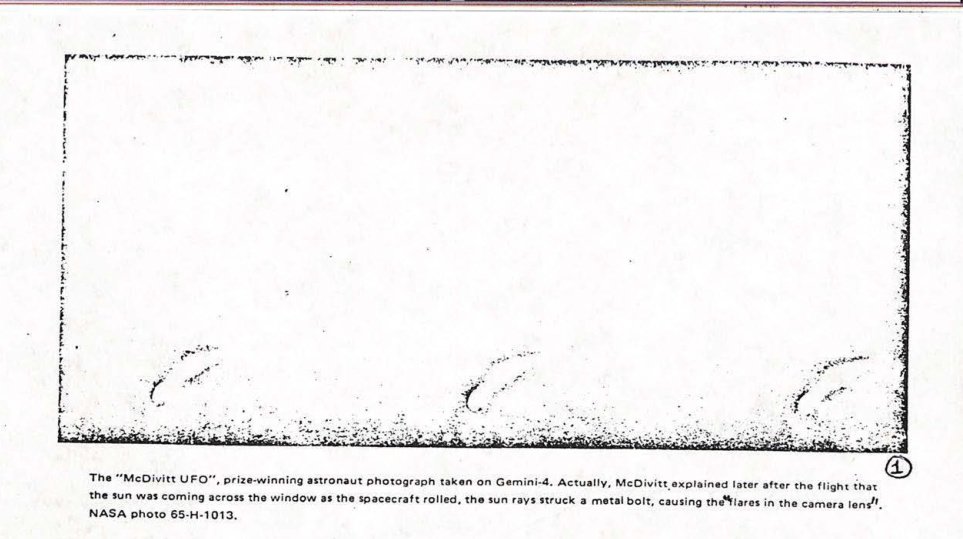
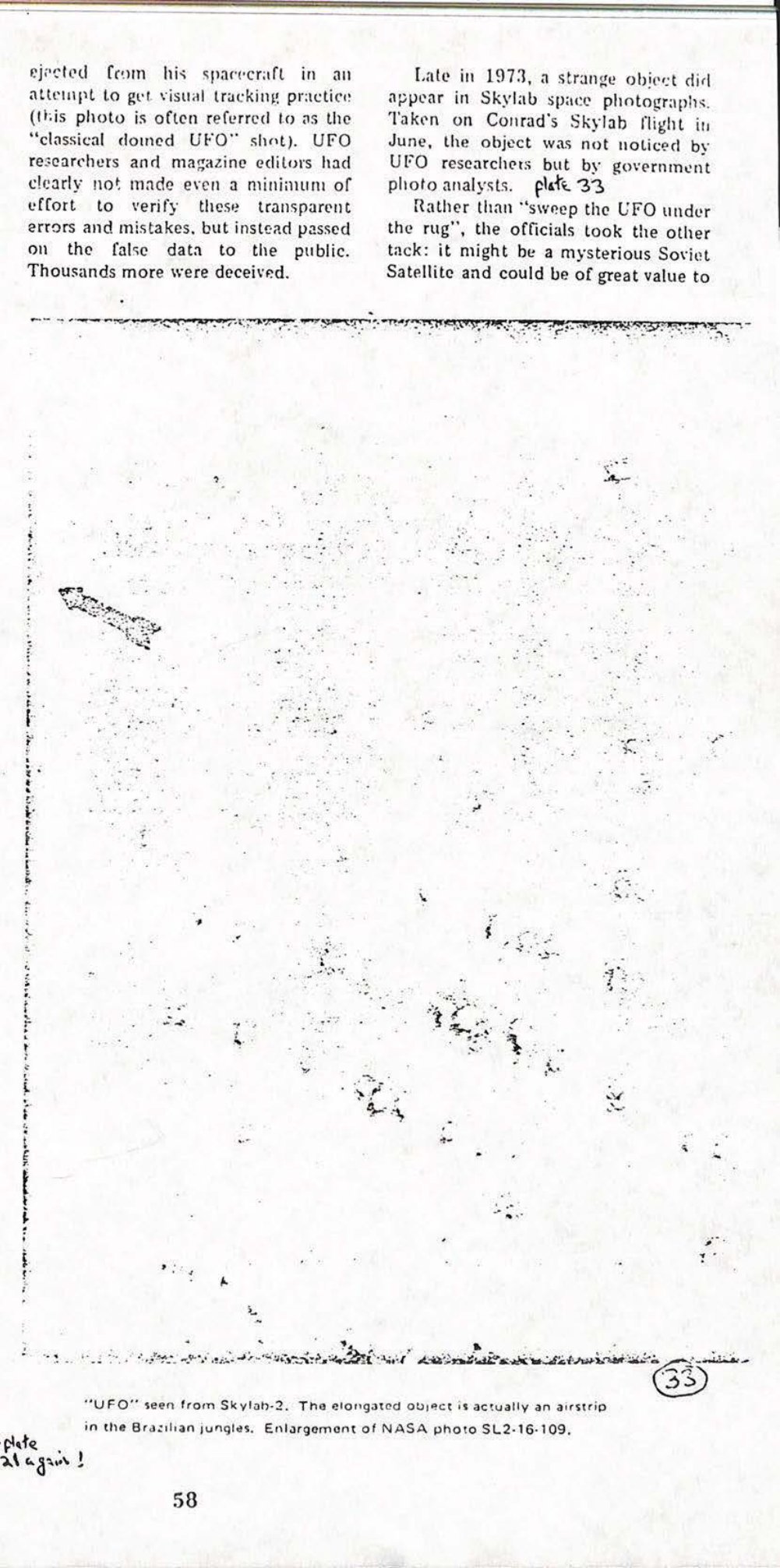
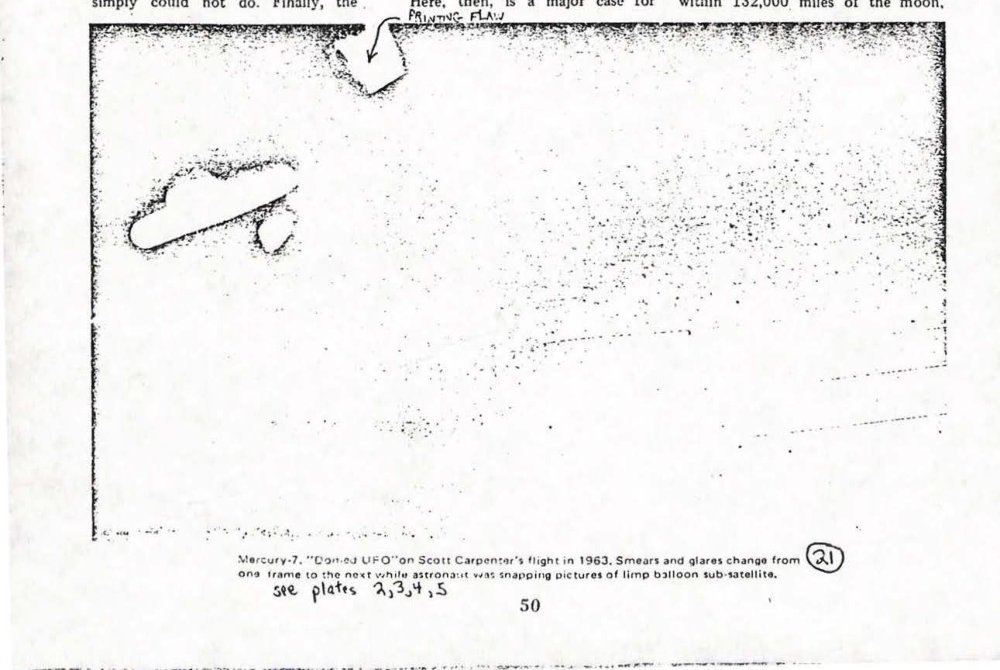
Magazine clipping with a grainy photo, an arrow and a caption below.Magazine clipping

Astronaut accounts1973Location: Earth orbit; the object was in Brazil

Skylab 2, 1973: the “cylinder with panels” in the station's photos was an airstrip in the Brazilian jungle

Government analysts found in Skylab 2 photos a UFO that looked like a cylinder with two solar panels and suspected a Soviet satellite. According to James Oberg, the investigation concluded that it was an airstrip in the Brazilian jungle, which appeared in the same place in photos taken months later.

Open the case
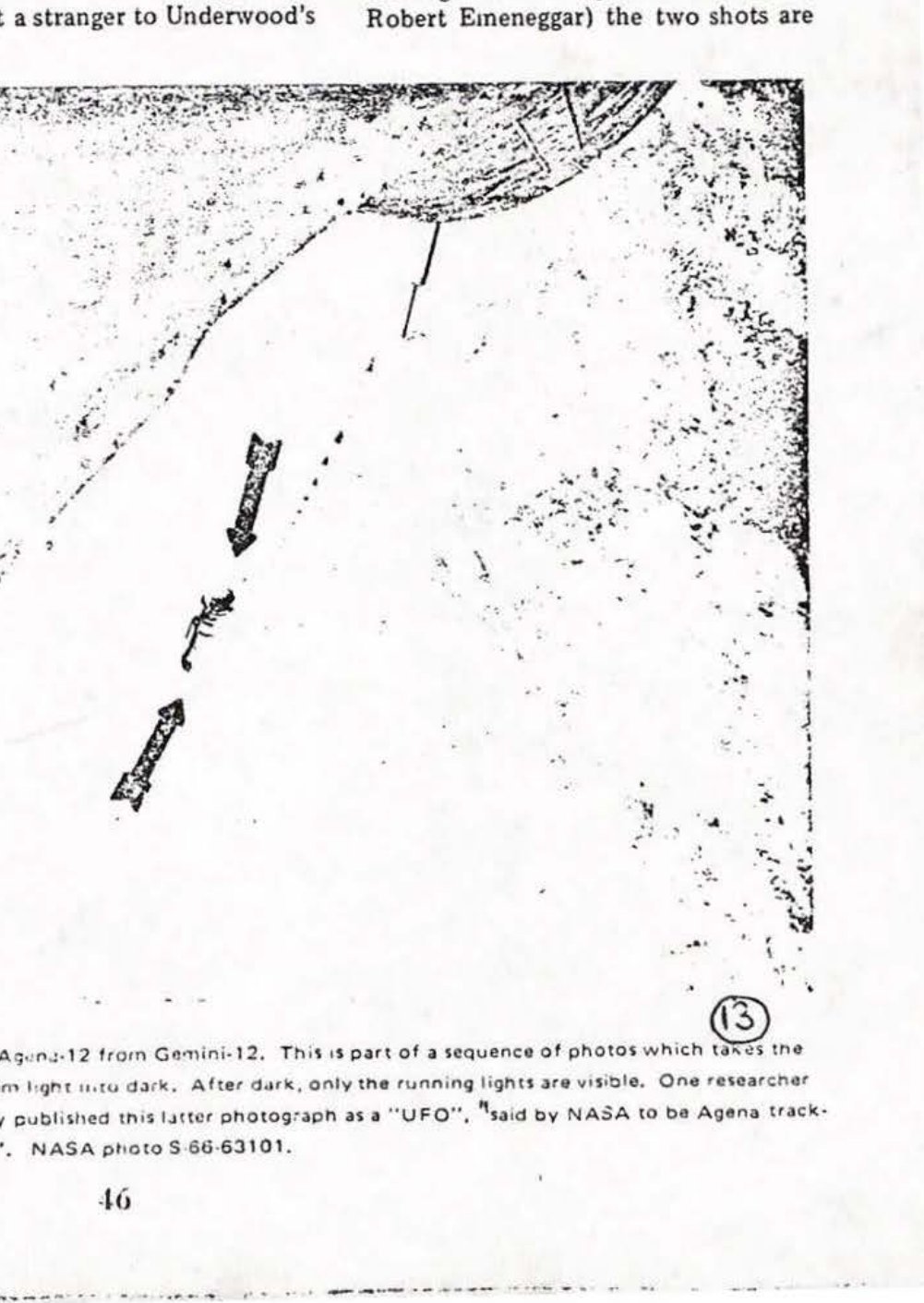
Magazine page with a high-contrast photo of an elongated object against a dark background and arrows.Magazine clipping

Astronaut accounts1966Location: Earth orbit

Gemini 12, 1966: the line of UFOs photographed in the dark and the “four objects” Lovell saw after throwing bags overboard

Two Gemini 12 photos showing a row of luminous UFOs were published in a book about UFOs. According to James Oberg, they were part of a sequence of 20 photos of the Agena target vehicle passing into the Earth's shadow, and the “four objects in a line” reported by James Lovell were bags the crew had discarded.

Open the case
Cover of the NASA document with title, date and center logo.Cover of the crew technical debriefing

Astronaut accounts1973Location: Skylab space station, in Earth orbit

Full dossier

Skylab 2, 1973: the flashes Conrad, Kerwin and Weitz saw with their eyes closed, "not hallucinations"

In the technical debriefing of the first Skylab crew, physician-astronaut Joseph Kerwin opens the item "unusual or unexpected visual phenomenon" by saying that everyone saw flashes of light, sometimes two or three per minute, especially with their eyes closed. Weitz and Conrad describe "in and out" streaks that they attributed to cosmic particles.

Open the case
Typewritten cover with NASA logo, title Apollo 17 Crew Debriefing for Science and date January 8, 1973.Facsimile of a document cover

Astronaut accounts1973Location: Manned Spacecraft Center, Houston, Texas

Full dossier

Houston, 1973: in the Apollo 17 science debriefing, a researcher talks about ultraviolet results no one expected

The excerpt NASA included in the UAP files collection is the presentation by a scientist from the Apollo 17 ultraviolet spectrometer in front of the crew. The "mystery" mentioned is astronomical: what holds the Coma galaxy cluster together and where a diffuse ultraviolet glow comes from.

Open the case
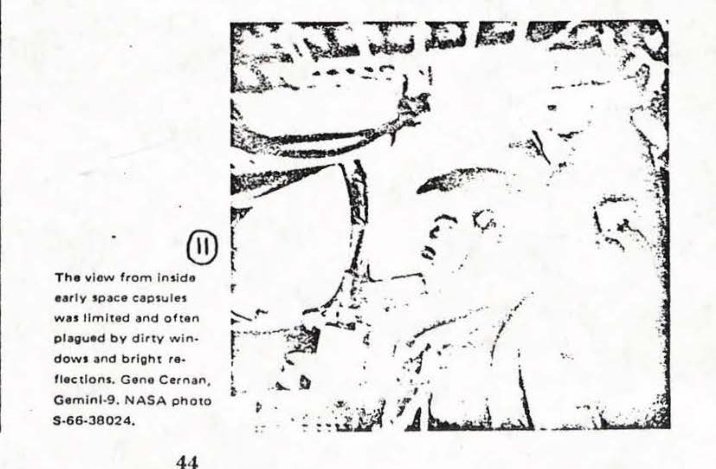
High-contrast photocopy of an astronaut in profile, with an open helmet, inside a cramped cabin, with the panel and a window frame on the left; printed caption on the left.Magazine clipping

Astronaut accounts1966Location: Earth orbit (flight); debriefing at the Manned Spacecraft Center, Houston

Full dossier

Gemini IX-A, 1966: a very bright meteor, the "sparks" that did not appear, and the question about the light on the window

In the notes of the Gemini IX-A science debriefing, Thomas Stafford and Eugene Cernan say they saw a very bright meteor, yellowish-white according to the handwritten note from the session, and answer questions from scientists about luminous particles, "sparks" and blinking lights on the ATDA target, which they say they never saw. One researcher wanted to know whether the light that interfered with observations came "from space" or from the window.

Open the case

Full dossier

Apollo 17, 1972: the photo of the Taurus-Littrow valley with three UAP in the sky that the government reopened as a case

The Department of War opened a case to examine an Apollo 17 photo in which three UAP in a triangle appear in the black lunar sky when the image is enlarged. A preliminary government analysis says they may be something physical in the scene; the full analysis has not yet been released.

Open the case

Full dossier

Apollo 12, 1969: the five photos of the lunar surface in which the government highlighted "unidentified phenomena" above the horizon

Five consecutive Apollo 12 photos were published with yellow boxes that enlarge UAP, seen as dots and smudges in the black sky, above the lunar horizon. The official records call what appears "unidentified phenomena," but warn that the highlights are not a conclusion about the nature of what is seen.

Open the case

Full dossier

Columbia, 1996: three photos of a small triangular UAP that passed between the space shuttle and the Earth

Columbia astronauts photographed three times a small, light-colored UAP with a triangular outline, seen through the window against space and then against the Earth. The official descriptions say it appears to have rotated and followed a trajectory between the spacecraft and the Earth, consistent with something floating freely, without identifying it.

Open the case
See all topics

YOUR CHOICE

Cloudflare measures visits and performance without cookies, in aggregate statistics. Google Analytics only loads if you authorize it below. You can decline the optional items and browse the entire archive.

Read privacy policy