Date: 19/11/1969, according to archive catalogs (first Apollo 12 moonwalk)Location: Ocean of Storms, on the Moon, Apollo 12 landing site
Apollo 12, 1969: the five photos of the lunar surface in which the government highlighted "unidentified phenomena" above the horizon
Five consecutive Apollo 12 photos were published with yellow boxes that enlarge UAP, seen as dots and smudges in the black sky, above the lunar horizon. The official records call what appears "unidentified phenomena," but warn that the highlights are not a conclusion about the nature of what is seen.
- Event date
- 19/11/1969, according to archive catalogs (first Apollo 12 moonwalk)
- Location
- Ocean of Storms, on the Moon, Apollo 12 landing site
- Topic
- Astronaut accounts
- Source agencies
- Documents
- 0 documents · 0 pages
- Reading time
- 2 min
DOCUMENTARY SOURCES ·
What the records tell
The UAP file collection published in May 2026 includes five photos of the Moon's surface taken by Apollo 12 in November 1969, identified in the metadata as AS12-46-6842, 6846, 6847, 6848 and 6849. All of them show the gray ground, long shadows and the black sky. Each one comes with yellow boxes that enlarge small areas above the horizon. The official record for each image repeats the same sentence: the photo shows the lunar surface seen from the landing site, with areas of interest "in which there are visible unidentified phenomena."
The number of areas varies. In the first photo, an enlarged box shows a vertical bluish streak. In the second, two areas, labeled "Area 1" and "Area 2," contain nearly invisible dots. In the third, near the right edge, a bright dot with colored tints appears, and in the fourth, a reddish dot slightly left of center. The fifth has five areas, and in the last of them two overlapping light smudges appear. In several photos, the shadows of human figures and of structures can be seen on the ground.
The records carry an important notice: the images were modified to help the public find the areas, and the highlights "do not constitute an analytical judgment, investigative conclusion or factual determination" about the nature of what appears. In other words, the government points out where to look, but does not say what it is. Dots of this size could be objects, lens reflections, particles close to the camera or defects of the film and of the digitization; these are editorial hypotheses to be tested, and a single photo gives neither distance nor speed.
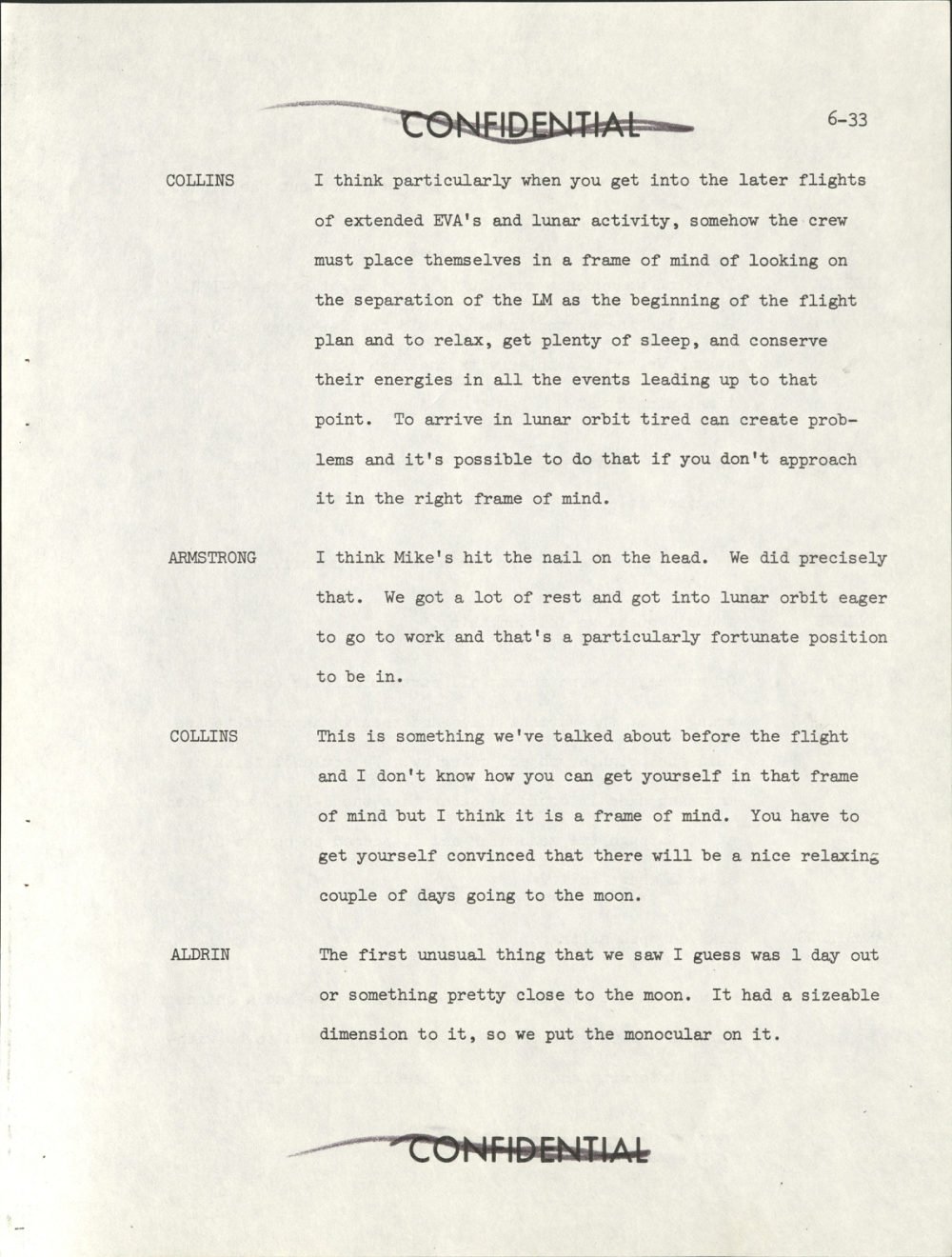
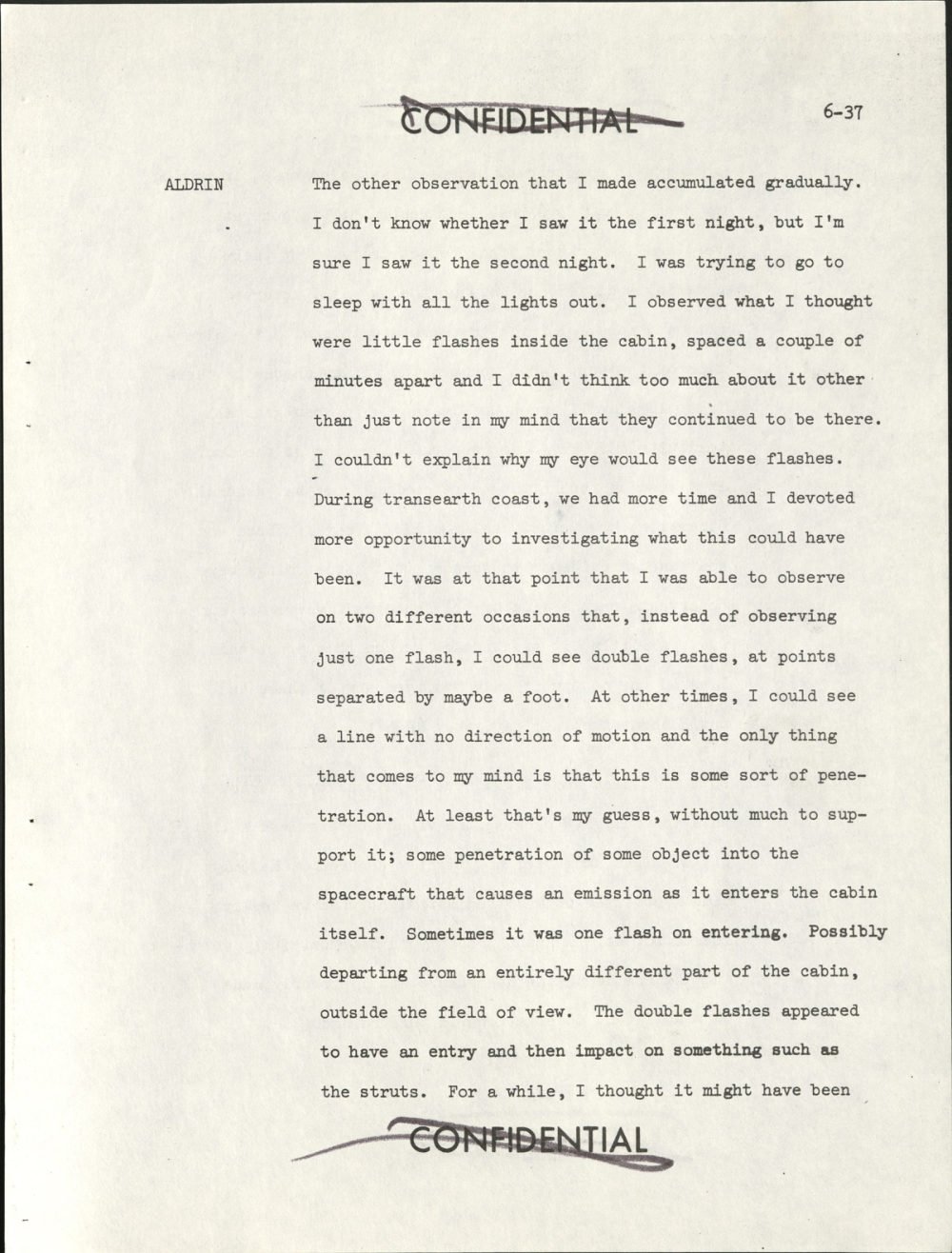
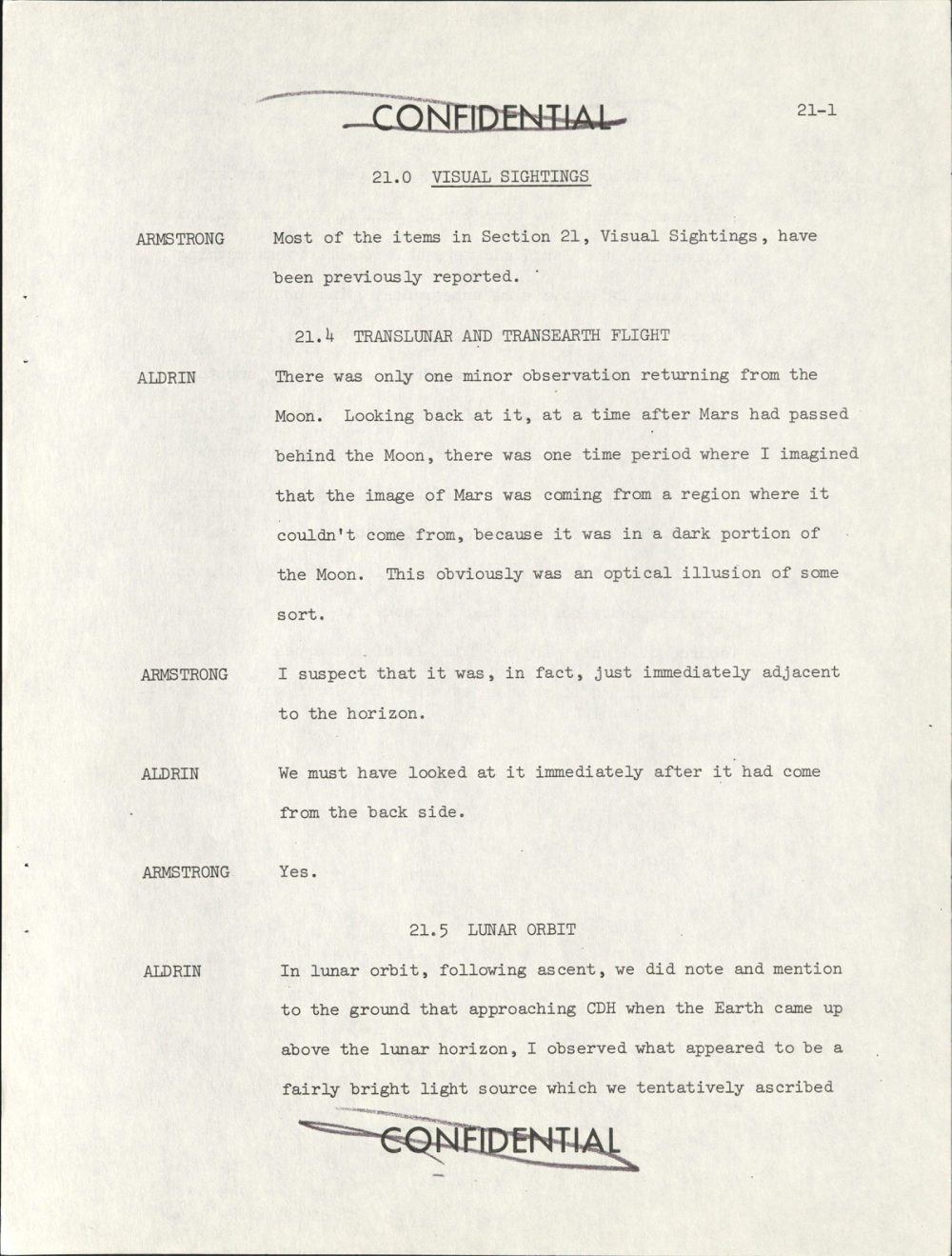
According to public catalogs of the Apollo archive, the photos are from film magazine 46, used on the first moonwalk, on November 19, 1969. They should not be confused with Alan Bean's account of "particles of light" seen through the lunar module's alignment telescope, made the following day, a few hours before liftoff, and covered in another dossier. The official records of the photos do not cite that account, and the mission transcript published in the same set does not mention photographs.
DIRECT READING OF THE FILE
The document, in the original
The files are images with no text of their own. The five official publication records, with the notice about modification, were translated in full. The frame identifiers come from the XMP metadata embedded in each JPG. The date and the magazine come from public catalogs (Project Apollo Archive), cited as such.
Dates and documentary context
- Event
- 19/11/1969 — Project Apollo Archive catalog: "magazine 46/Y, EVA-1". Apollo 12's first moonwalk was on 19/11/1969. Secondary source; the official records give no date.
- Document
- Not established — The JPG metadata contain only the frame title with the suffix "_Zoom".
- Publication
- 05/2026 — Release 1 of the UAP files collection, May 2026.
Origin and release
NASA (photographs); enlarged areas inserted by the U.S. government in the 2026 release · NASA-UAP-VM1-Apollo-12-1969.jpg, NASA-UAP-VM2-Apollo-12-1969.jpg, NASA-UAP-VM3-Apollo-12-1969.jpg, NASA-UAP-VM4-Apollo-12-1969.jpg, nasa-uap-vm5-apollo-12-1969.jpg
The five images examined in full and in the enlarged areas; XMP metadata checked.
undefined ↗ — undefined
Related accounts and their differences
- Apollo 12: particles of light seen from the Moon
- Apollo 12: "we are being followed"
- Apollo 17: three dots in the lunar sky
Questions to continue the investigation
- Do the same dots appear in more than one of the five photos, in the same position relative to the stars or the landscape?
- Will a comparison with the original film, like the one announced for the Apollo 17 photo, also be made for these images?
GEOGRAPHY OF THE CASE
Ocean of Storms, Moon
Site on the Moon; there is no point on the map of Earth.
DOCUMENTARY TRAIL
Go back to the sources
References use physical pages of the PDF, counting the cover. Summaries are presented in English; the documents keep their original language.
Related publications and media
Editorial summary based on the collection's research notes. How we read the documents.