Date: December 1972 (photograph AS17-147-22470)Location: Taurus-Littrow valley, on the Moon, Apollo 17 landing site
Apollo 17, 1972: the photo of the Taurus-Littrow valley with three UAP in the sky that the government reopened as a case
The Department of War opened a case to examine an Apollo 17 photo in which three UAP in a triangle appear in the black lunar sky when the image is enlarged. A preliminary government analysis says they may be something physical in the scene; the full analysis has not yet been released.
- Event date
- December 1972 (photograph AS17-147-22470)
- Location
- Taurus-Littrow valley, on the Moon, Apollo 17 landing site
- Topic
- Astronaut accounts
- Source agencies
- Documents
- 0 documents · 0 pages
- Reading time
- 2 min
DOCUMENTARY SOURCES ·
What the records tell
The published image is photograph AS17-147-22470, from the last crewed mission to the Moon, in December 1972. According to the official record, within the PURSUE program for reviewing historical UAP materials, the U.S. Department of War "opened a case to investigate" the photo. It shows "three dots" in a triangular formation in the lower right quadrant of the lunar sky, visible when the image is enlarged. The released file already comes with a yellow box enlarging this small area, placed by the government over the dark sky.
In the photo, the black sky takes up almost half the frame, above light-colored hills and flat terrain with rocks. In the lower left corner a dark silhouette appears, and there are bands along the side edges. Archive catalogs list the frame in film magazine 147, with the landscape of the Taurus-Littrow valley, and describe it as part of a sequence taken from the lunar module, near the first moonwalk. In the enlarged box, the three dots are tiny: two bluish and one reddish, very close together.
The record notes that the photo had already been published and discussed by attentive observers, with no consensus on the nature of the anomaly. It also says that a "new preliminary U.S. government analysis suggests that the image detail is potentially the result of a physical object in the scene" and that the government obtained the original Apollo 17 film. The results of the full NASA and Department of War analysis, according to the text, will be released when completed.
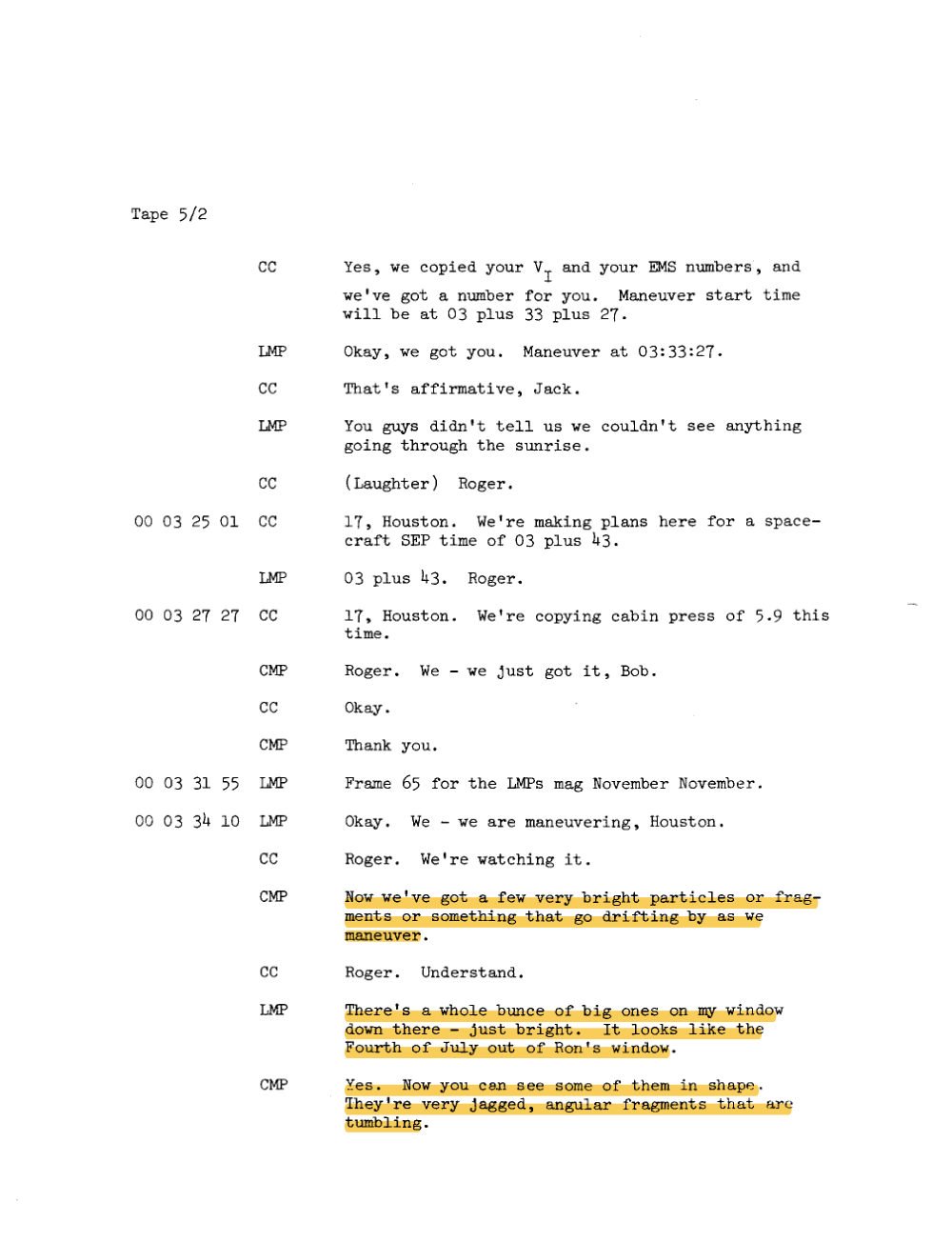
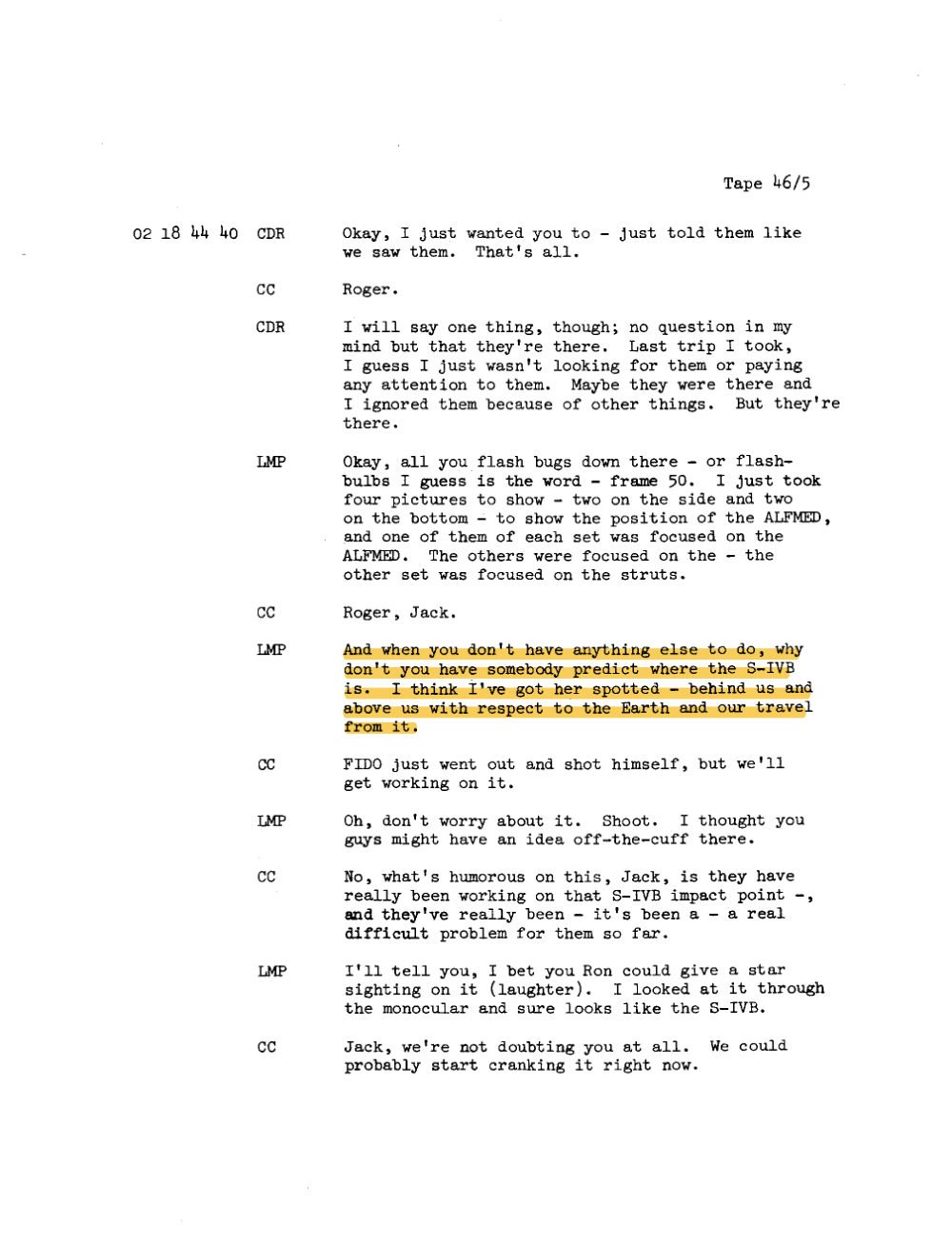
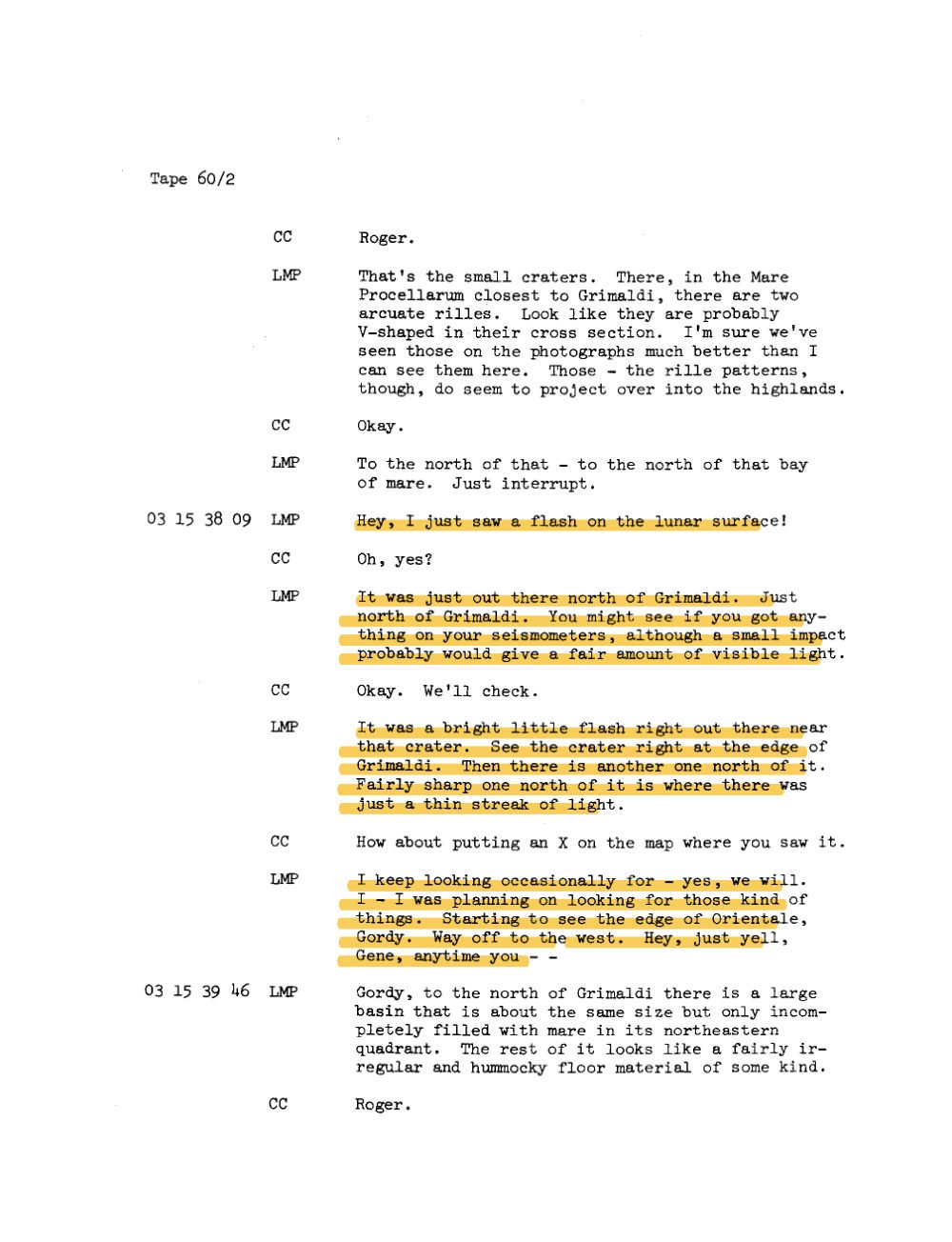
A preliminary analysis is not a conclusion. "Physical object in the scene" means something real in front of the camera, and not a defect of the film or of the digitization, but it gives no distance, size or nature. Editorial hypotheses to be tested include reflections or particles near the window, pieces of the spacecraft itself, or more distant points. The record does not link the photo to any crew account, and the frame number does not appear in the text extracted from the Apollo 17 transcripts published in the same set.
DIRECT READING OF THE FILE
The document, in the original
The file is an image with no text of its own; the only official text is the publication record, translated in full. The identifier AS17-147-22470 comes from the metadata embedded in the JPG (title "AS17-147-22470_Zoom"). Catalog information about the magazine and the sequence comes from public catalogs (NASA Earth Observations and Project Apollo Archive) and is attributed in the text.
Dates and documentary context
- Event
- 12/1972 — The official record says "December 1972". Archive catalogs place the frame near the first moonwalk, on 11/12/1972, but this has not been checked against a primary source.
- Document
- Not established — The JPG metadata only contain the title "AS17-147-22470_Zoom", with no legible preparation date.
- Publication
- 05/2026 — Release 1 of the UAP files collection, May 2026.
Origin and release
NASA (photograph); enlarged area inserted by the U.S. government in the 2026 release · NASA-UAP-VM6-Apollo-17-1972.jpg
Image examined in full and in the enlarged area. XMP metadata checked.
undefined ↗ — undefined
Related accounts and their differences
Questions to continue the investigation
- What will the full analysis of the original film, promised by NASA and the Department of War, say about the three dots?
- Do neighboring frames from the same magazine show the dots, which would make it possible to know whether they moved?
GEOGRAPHY OF THE CASE
Taurus-Littrow Valley, Moon
Site on the Moon; there is no point on the map of Earth.
DOCUMENTARY TRAIL
Go back to the sources
References use physical pages of the PDF, counting the cover. Summaries are presented in English; the documents keep their original language.
Related publications and media
Editorial summary based on the collection's research notes. How we read the documents.