Date: Cases from 13/08/1947 to 22/12/1952; report dated 05/05/1955Location: United States and an air base in Korea; analysis at ATIC, Wright-Patterson, Ohio
Special Report 14: the 12 "good unknowns" with which the Air Force tried to draw a flying saucer, and why it failed
Of the 434 cases classified as unknowns, the Special Report 14 team singled out only 12 described in enough detail to draw the UFO. The shapes ranged from propeller and cigar to disk with windows, and the report concluded that no common model fit all of them.
- Event date
- Cases from 13/08/1947 to 22/12/1952; report dated 05/05/1955
- Location
- United States and an air base in Korea; analysis at ATIC, Wright-Patterson, Ohio
- Topic
- History of the investigation
- Source agencies
- CIA
- Documents
- 1 document · 312 pages
- Reading time
- 34 min
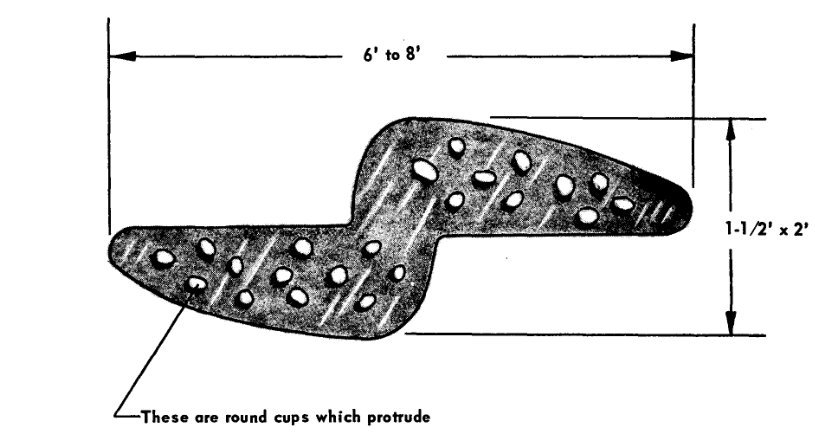 Official report drawingPhysical page 88
DOCUMENTARY SOURCES · CIA
What the records tell
Since the statistical tests gave an inconclusive result, the Special Report 14 team tried another approach: describing a typical "flying saucer" based on the best reports. A panel reexamined the files of the unknowns. Of the 164 files of daytime or twilight sightings examined, 18 became possible aircraft, 20 possible balloons and 19 other possible knowns, two of them parhelia; 100 remained unknowns and 7 were considered "good unknowns". From the nighttime cases, 5 more were added to this list.
The text makes an important observation about what an unknown was. Only about 40 of the 434 had a shape that should have been easily recognized. All the others were classified as such only because the witnesses reported maneuvers that no known object would perform. The authors point out that size, distance and speed are difficult to estimate with the naked eye, and say that radar returns with no visible object were probably ground targets reflected by temperature inversion, although they admit this could not be proven.
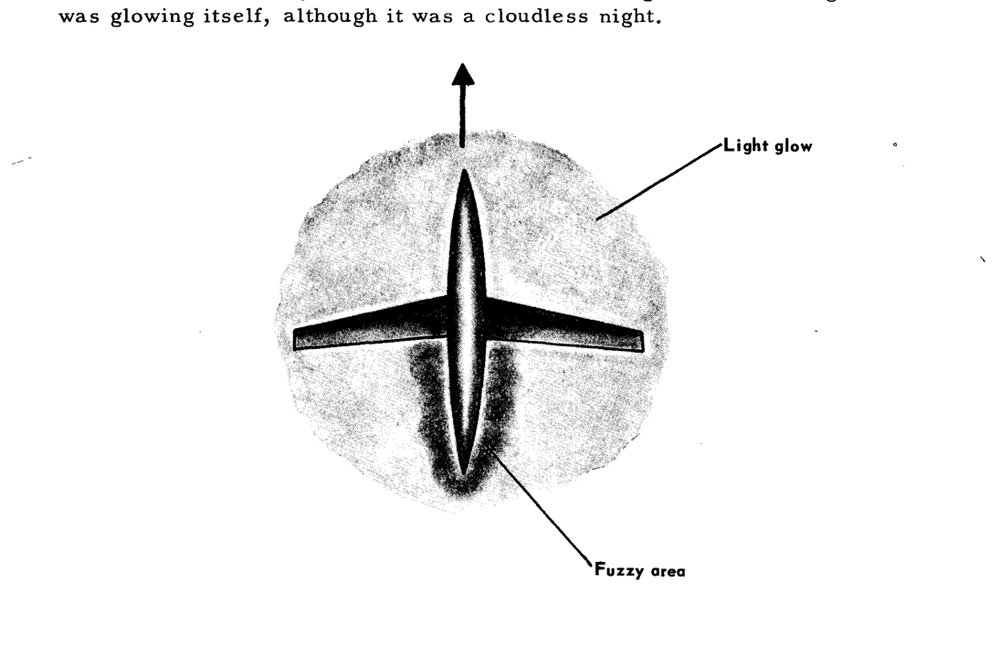
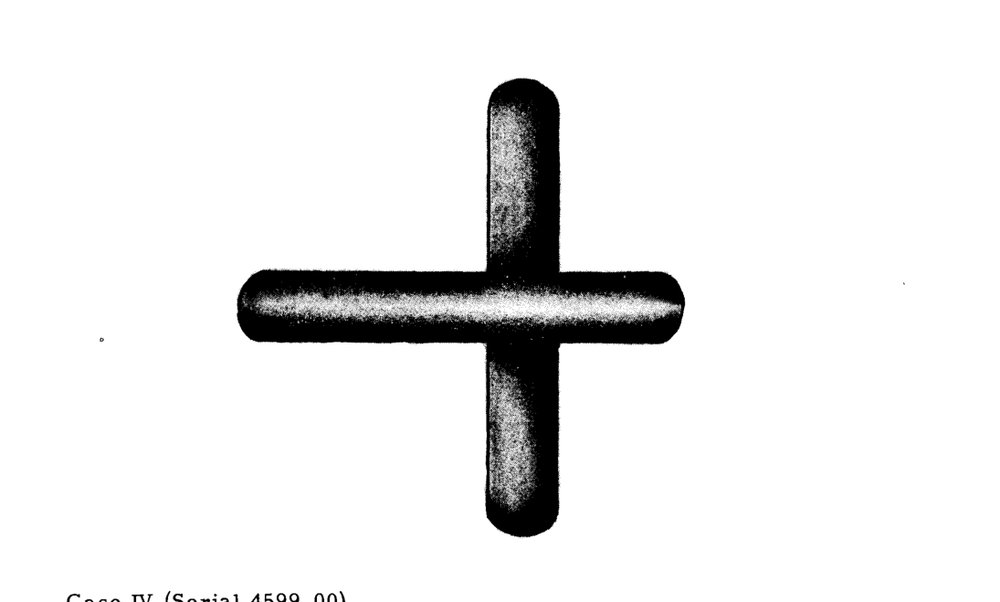
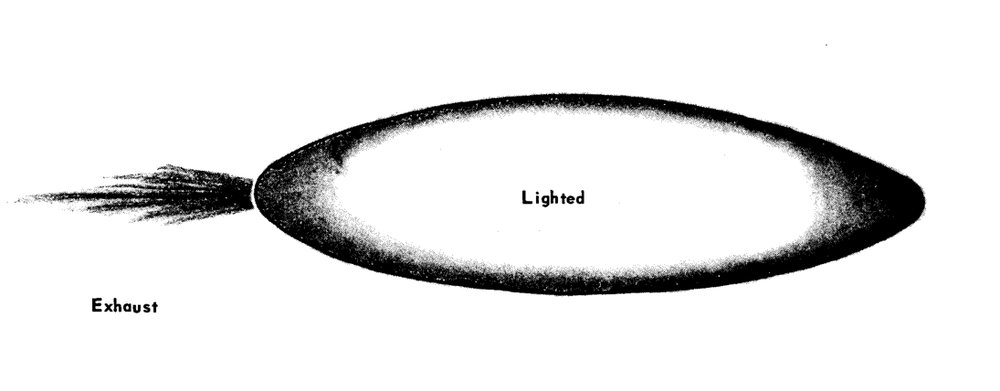
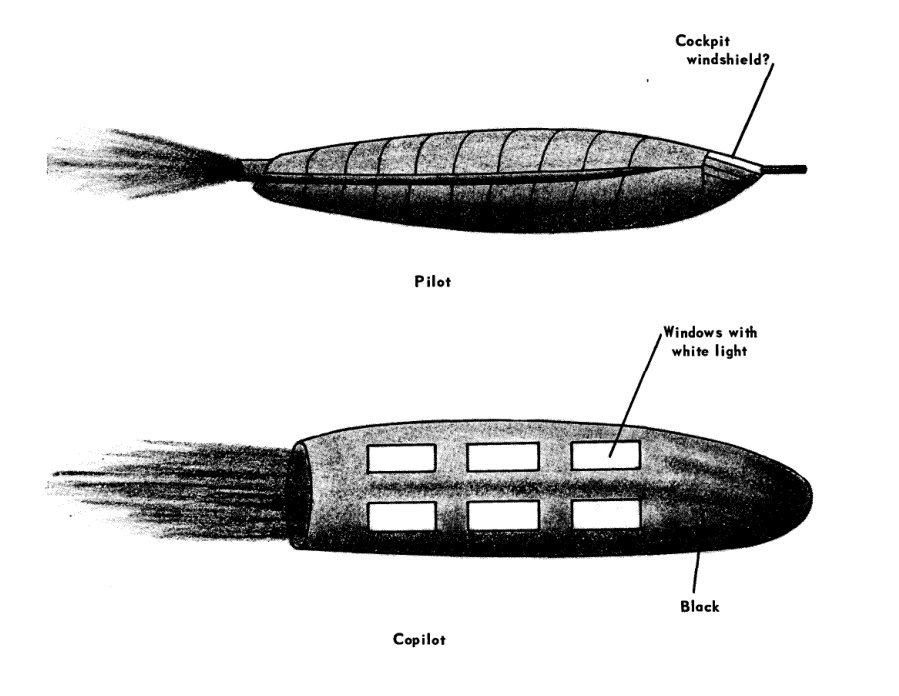
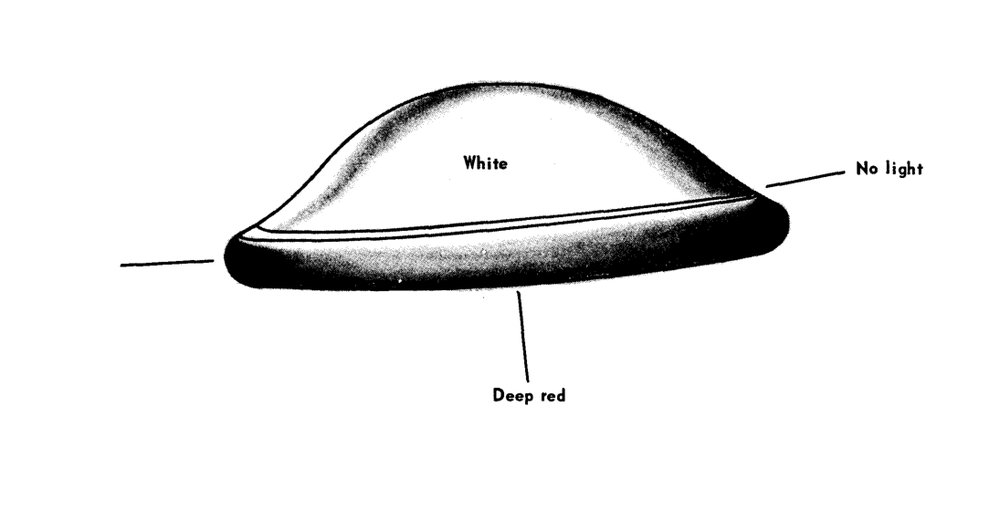
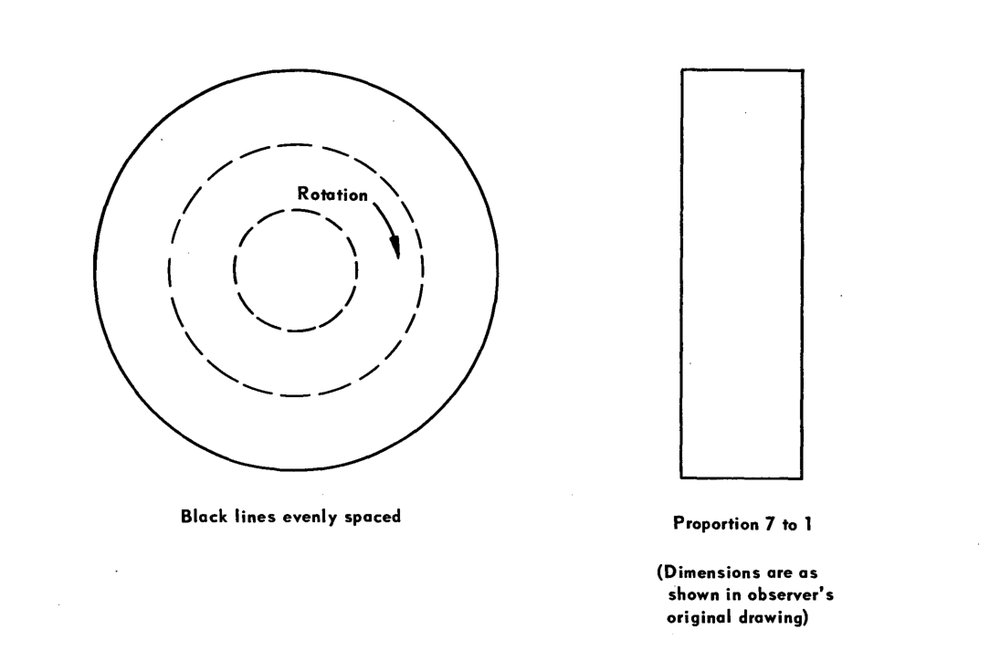
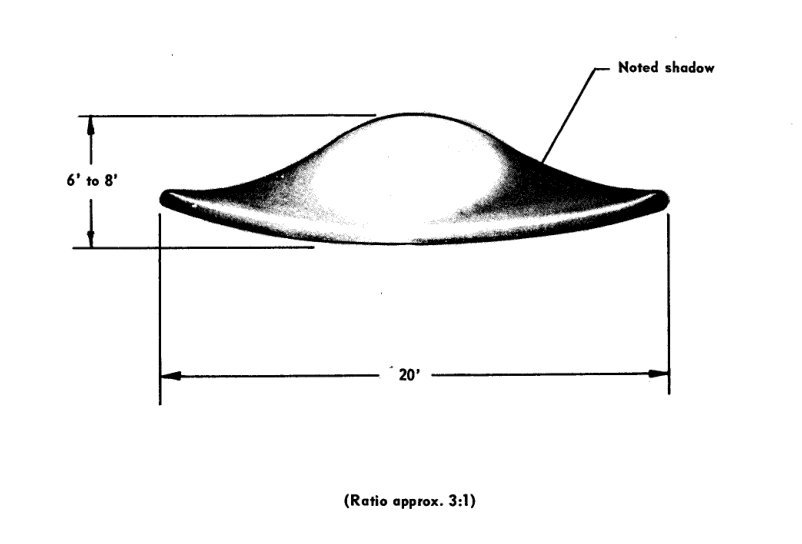
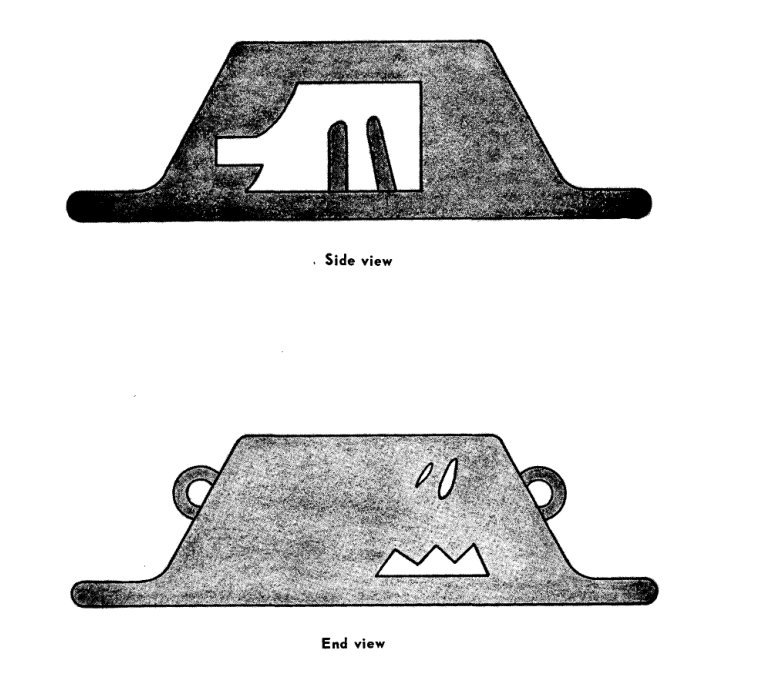
The 12 cases chosen are the only ones in the report with a drawing of the object. In 11 of them the witness had already made a sketch; the published drawings were redrawn by the team from these sketches. The report groups them by shape: propeller (case I, Indianapolis, 1948), airplane (cases II and III), cigar (cases IV and V, the latter being the encounter of the Eastern DC-3 in July 1948) and ellipse or disk (cases VI to XII). The witnesses range from pilots and controllers to a farmer, an electrician, a technician, a sergeant and a musician. The report does not publish names or cities, except for one mention of Flint, Michigan.
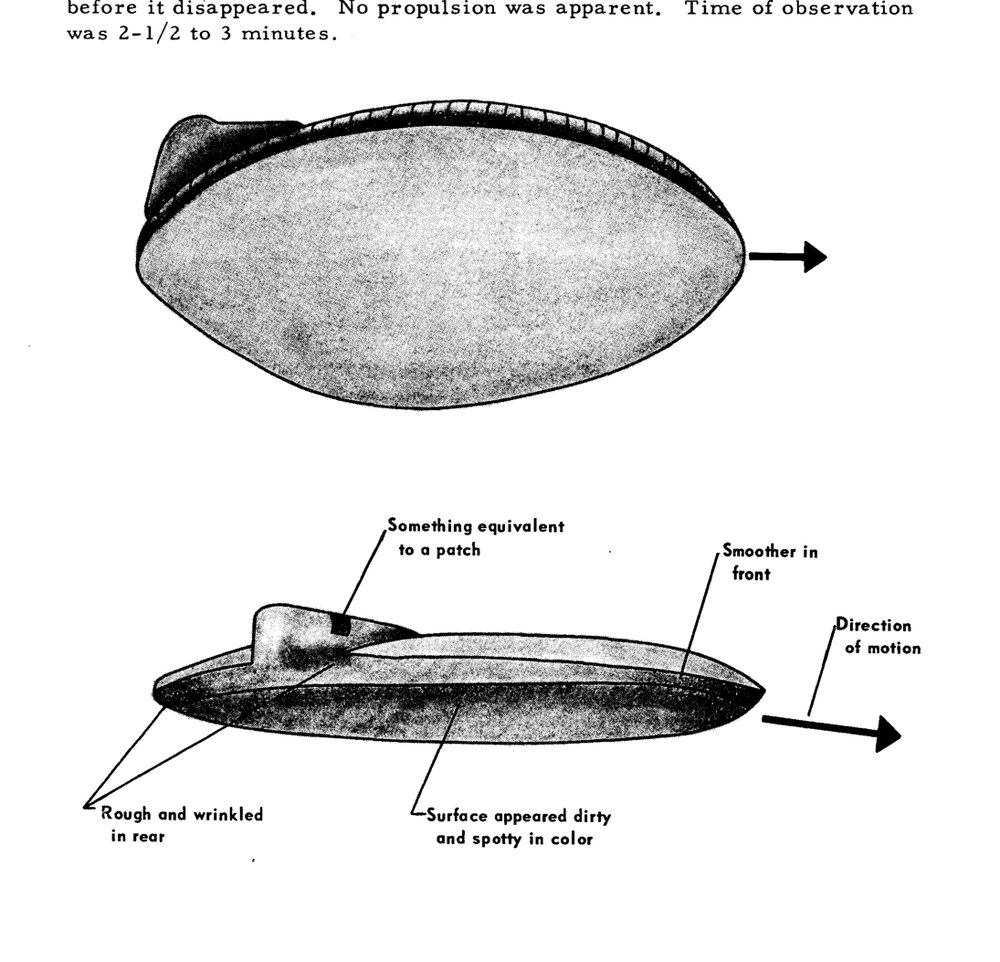
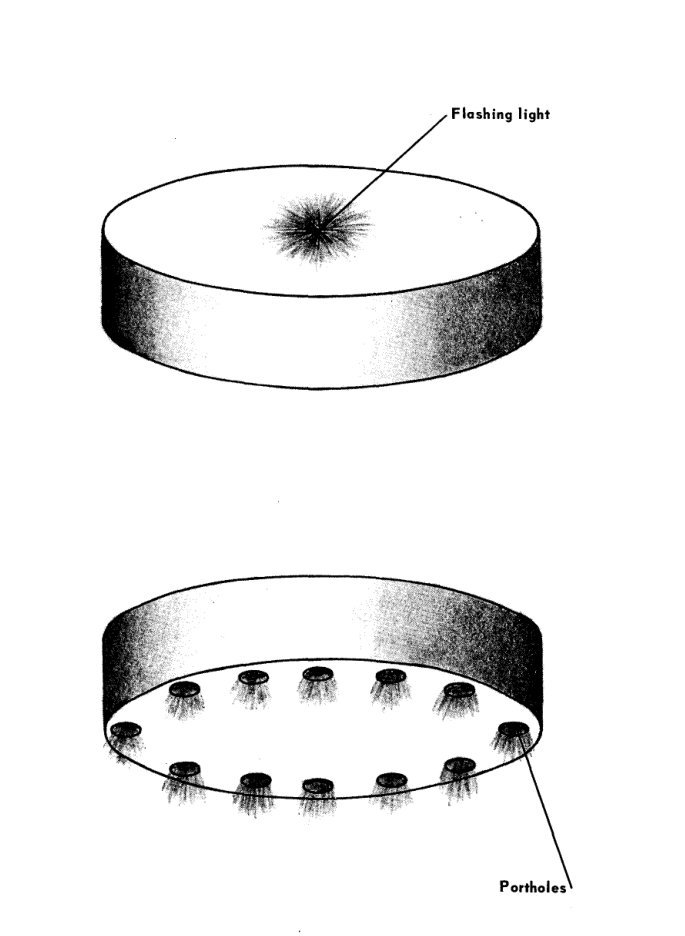
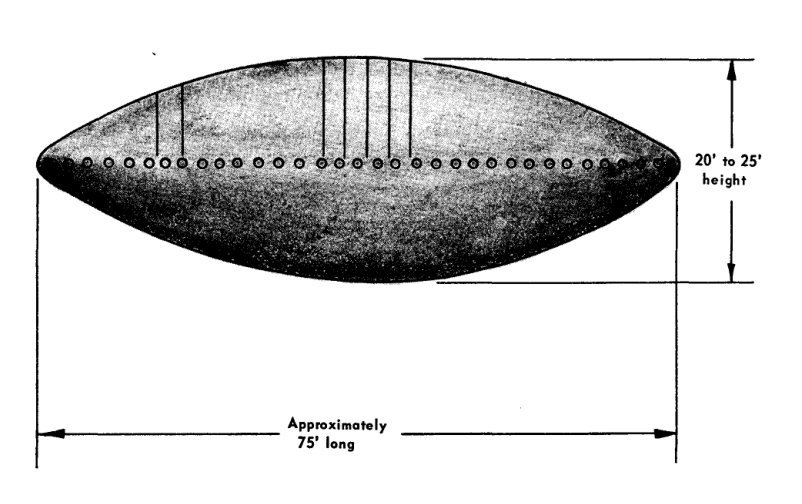
To serve as a model, a case had to meet four conditions: shape and maneuvers compatible with many other unknowns, a reliable witness and report, details that excluded ordinary objects, and at least two good unknowns without conflict between them. Cases I to VII failed one of the first three; the red glow in case II, for example, could have been a reflection of the lights of Flint on birds or airplanes. Cases VIII to XII passed all three, but were too different from one another: a smooth disk, an object with pods emitting flames, another with a fin, another with portholes underneath and another with propellers on the rim.
The conclusion is one of the most quoted sentences in the report: of about 4.000 people who said they had seen a flying saucer, only 12 gave a detailed description, and even with "the cream of the crop" selected it was not possible to form a picture of what a flying saucer would be. The authors add that some cases later explained seemed as strange as these 12. The report also attributes belief in the phenomenon to people who had read few reports, saying that interest is lost by reading many; this is an opinion of the authors, not a measured result.
More images from the document
DIRECT READING OF THE FILE
The document, in the original
U.S. government document. Translated in full: physical pages 86 to 103: end of the statistical tests, reevaluation of the unknowns, the summaries of the 12 cases with the labels of the drawings, and the case-by-case discussion. On page 99 (case XII), a piece of information about the witness's health condition was omitted and marked. Nothing else was left out.
EXCERPT 1 · PHYSICAL PAGE 86
Physical page 86 (p. 76): full text (end of the chi-square tests and "The flying saucer model")
I
Another interesting aspect of these new tests is that there are only I
two large discrepancies in all of the groups. These are for the 11 or more
groups in the classification by number of objects per sighting and for the I
over-400-mph and meteor-like group for the classification by speed. The
first was relatively unchanged by deletion of the astronomical sightings
principally because of the concentration of sightings in the single-object I
category. The second was slightly increased by the removal of the astronomical sightings from the meteor-like classification. However, the main
discrepancy, that of the excess of UNKNOWNS in the over-400-mph class, I
was little changed. I
The results of these tests are inconclusive since they neither confirm
nor deny that the UNKNOWNS are primarily unidentified KNOWNS, although
they do indicate that relatively few of the UNKNOWNS are actually astro I
nomical phenomena.
I It was decided that this process would not be carried to its logical
conclusion {that is, the determination of a linear combination of KNOWNS
that would give a negligible chi square when compared with the UNKNOWNS), I
since it was felt that the inaccuracies in the reports would give a distorted
and meaningless result. I
The "Flying Saucer" Model I
The importance of the problem dictated a second approach, should the I
statistical results prove inconclusive. It was decided that an attempt
would be made to describe the physical appearance, flight characteristics,
and other attributes {that is, construct a model) of a class or classes of I
"flying saucers". I
Preparatory to this attempt, a re-evaluation of the UNKNOWNS was
necessary. This re-evaluation was accomplished by a panel composed only
of persons previously associated with the work. Using all the UNKNOWNS I
reports available at ATIC, the panel made a careful study of the reports for
the UNKNOWN SIGHTINGS in angle-of-sun-elevation Groups 1, 2, 3, 6, and I 7 - those .groups for which the sun was either above the horizon or less than
10° in elevation below the horizon. I
This study had two purposes. The first was to determine, with
additional information such as the angle of elevation of the sun, how many
of the UNKNOWNS might be ascribed to known phenomena. The second was I
to obtain those UNKNOWNS which were described in sufficient detail that
they might be used to construct a model or models of "flying saucers". I
It was decided to put any of the UNKNOWNS which might be known
phenomena into a "possible KNOWN" category to denote the slightly lower I
confidence level which could be ascribed to these new evaluations. The
I
I
76Editorial note: The three opening paragraphs, which close the preceding statistical section, were added.
Check the original PDF
Another interesting aspect of these new tests is that there are only two large discrepancies in all of the groups. These are for the 11 or more groups in the classification by number of objects per sighting and for the over-400-mph and meteor-like group for the classification by speed. The first was relatively unchanged by deletion of the astronomical sightings principally because of the concentration of sightings in the single-object category. The second was slightly increased by the removal of the astronomical sightings from the meteor-like classification. However, the main discrepancy, that of the excess of UNKNOWNS in the over-400-mph class, was little changed. The results of these tests are inconclusive since they neither confirm nor deny that the UNKNOWNS are primarily unidentified KNOWNS, although they do indicate that relatively few of the UNKNOWNS are actually astronomical phenomena. It was decided that this process would not be carried to its logical conclusion (that is, the determination of a linear combination of KNOWNS that would give a negligible chi square when compared with the UNKNOWNS), since it was felt that the inaccuracies in the reports would give a distorted and meaningless result. The "Flying Saucer" Model The importance of the problem dictated a second approach, should the statistical results prove inconclusive. It was decided that an attempt would be made to describe the physical appearance, flight characteristics, and other attributes (that is, construct a model) of a class or classes of "flying saucers". Preparatory to this attempt, a re-evaluation of the UNKNOWNS was necessary. This re-evaluation was accomplished by a panel composed only of persons previously associated with the work. Using all the UNKNOWNS reports available at ATIC, the panel made a careful study of the reports for the UNKNOWN SIGHTINGS in angle-of-sun-elevation Groups 1, 2, 3, 6, and 7 - those groups for which the sun was either above the horizon or less than 10° in elevation below the horizon. This study had two purposes. The first was to determine, with additional information such as the angle of elevation of the sun, how many of the UNKNOWNS might be ascribed to known phenomena. The second was to obtain those UNKNOWNS which were described in sufficient detail that they might be used to construct a model or models of "flying saucers". It was decided to put any of the UNKNOWNS which might be known phenomena into a "possible KNOWN" category to denote the slightly lower confidence level which could be ascribed to these new evaluations. TheView the document record ↗ · Physical page 86, counting the cover.
EXCERPT 2 · PHYSICAL PAGE 87
Physical page 87 (p. 77): reassessment of the unknowns
I
I
I
UNKNOWNS with sufficiently detailed description would be called II good
UNKNOWNS", while the remainder would simply be called UNKNOWNS.
One hundred sixty-four folders of a total of 186 OBJECT SIGHTINGS in
I
Groups 1, 2, 3, 6, and 7 were examined. There were 18 possible aircraft,
20 possible balloons, 7 good UNKNOWNS, 100 UNKNOWNS, and 19 others
which were identified as being possible KNOWNS of various types. It is
interesting to note that two of these were established as mock suns on the I basis of the angle of sun elevation and the sun bearing angle, together with
the direction of the object from the observer. In addition, the UNKNOWNS
I in angle-of-sun-elevation Groups 4 and 5 (nighttime sightings) were scanned
with no attempt at identification, but to find any possible "good UNKNOWNS".
There were five sightings that could be put into this category.
I
I Of the UNKNOWNS, there were approximately 20 sightings that were
observed in such a way that they should have been recognized easily if they
had been familiar objects, that is, there was little possibility that their
shapes, as seen, could have been distorted sufficiently by one cause or
I another to render them unrecognizable. There were a very few that would
have been identified as guided missiles or rockets, but that were not so
identified because of the geographical location in which they were seen.
I
I
All of the remaining UNKNOWNS were classified as such solely because they were reported to have performed maneuvers that could not be
ascribed to any known objects. In these cases, the shape might have been
unrecognizable also, but it was felt that this was because of distortion and
I distance, or because of darkness.
This is a very important point. To put it differently, if these I UNKNOWNS, which represent all but about 40 of the UNKNOWN SIGHTINGS,
were reported to have performed maneuvers which could be ascribed to
I known phenomena, they would pro~ have been identified as KNOWNS.
With the exception of some radar sightings, all of these maneuvers were
observed visually. The possibilities for inaccuracies are great because
I of the inability of an observer to estimate visually size, distance, and
speed.
I Reports of sightings by radar usually were of high-speed objects,
some at extremely high altitudes. Some were identified as UNKNOWNS
I because there was no object to be seen visually at the point indicated by the
radar set. It cannot be said with any assurance what these radar sightings
mean, but the most logical explanation is that they are ground targets reI flected by an atmospheric temperature inversion layer. The validity of this
I
statement cannot be established. It is felt that radar sightings in this study
are of no significance whatsoever unless a visual sighting of the object also
1s made.
I Taken in conjunction with the Chi Square Tests discussed earlier,
I
the results of the re-evaluation of reports identified as UNKNOWN
SIGHTINGS would seem to indicate that the majority of them could easily
77
ICheck the original PDF
UNKNOWNS with sufficiently detailed description would be called "good UNKNOWNS", while the remainder would simply be called UNKNOWNS. One hundred sixty-four folders of a total of 186 OBJECT SIGHTINGS in Groups 1, 2, 3, 6, and 7 were examined. There were 18 possible aircraft, 20 possible balloons, 7 good UNKNOWNS, 100 UNKNOWNS, and 19 others which were identified as being possible KNOWNS of various types. It is interesting to note that two of these were established as mock suns on the basis of the angle of sun elevation and the sun bearing angle, together with the direction of the object from the observer. In addition, the UNKNOWNS in angle-of-sun-elevation Groups 4 and 5 (nighttime sightings) were scanned with no attempt at identification, but to find any possible "good UNKNOWNS". There were five sightings that could be put into this category. Of the UNKNOWNS, there were approximately 20 sightings that were observed in such a way that they should have been recognized easily if they had been familiar objects, that is, there was little possibility that their shapes, as seen, could have been distorted sufficiently by one cause or another to render them unrecognizable. There were a very few that would have been identified as guided missiles or rockets, but that were not so identified because of the geographical location in which they were seen. All of the remaining UNKNOWNS were classified as such solely because they were reported to have performed maneuvers that could not be ascribed to any known objects. In these cases, the shape might have been unrecognizable also, but it was felt that this was because of distortion and distance, or because of darkness. This is a very important point. To put it differently, if these UNKNOWNS, which represent all but about 40 of the UNKNOWN SIGHTINGS, were reported to have performed maneuvers which could be ascribed to known phenomena, they would probably have been identified as KNOWNS. With the exception of some radar sightings, all of these maneuvers were observed visually. The possibilities for inaccuracies are great because of the inability of an observer to estimate visually size, distance, and speed. Reports of sightings by radar usually were of high-speed objects, some at extremely high altitudes. Some were identified as UNKNOWNS because there was no object to be seen visually at the point indicated by the radar set. It cannot be said with any assurance what these radar sightings mean, but the most logical explanation is that they are ground targets reflected by an atmospheric temperature inversion layer. The validity of this statement cannot be established. It is felt that radar sightings in this study are of no significance whatsoever unless a visual sighting of the object also is made. Taken in conjunction with the Chi Square Tests discussed earlier, the results of the re-evaluation of reports identified as UNKNOWN SIGHTINGS would seem to indicate that the majority of them could easilyView the document record ↗ · Physical page 87, counting the cover.
EXCERPT 3 · PHYSICAL PAGE 88
Physical page 88 (p. 78): opening of the list of the 12 cases
I
I have been familiar objects. However, the resolution of this question with
any degree of certainty appears to be impossible. I
Thus, out of the 434 OBJECT SIGHTINGS that were identified as.
UNKNOWNS by the data reduction process, there were only 12 that were
described with sufficient detail that they could be used in an attempt to I
derive a model of a "flying saucer". The following is a summary of the 12
good UNKNOWN SIGHTINGS: I
Case I {Serial 0573. 00) I
Two men employed by a rug-cleaning firm were driving across a
bridge at 0955 hours on July 29, 1948, when they saw an object glide across I
the road a few hundred feet in front of them. It was shiny and metallic in
construction, about 6 to 8 feet long and 2 feet wide. It was in a flat glide I
path at an altitude of about 30 feet and in a moderate turn to the left. It was
seen for only a few seconds and apparently went down in a wooded area,
although no trace of it was found. I
I
6' to 8' I
I
I
1-1/2' X 2' I
I
I
I
I Case II {Serial 4508. 00)
A naval aviation student, his wife, and several others were at a I
These are round cups which protrude
drive-in movie from 2115 to 2240 hours on April 20, 1952, during which
time they saw several groups of objects fly over. There were from two to
nine objects in a group and there were about 20 groups. The groups of I
78 I
ICheck the original PDF
have been familiar objects. However, the resolution of this question with any degree of certainty appears to be impossible. Thus, out of the 434 OBJECT SIGHTINGS that were identified as UNKNOWNS by the data reduction process, there were only 12 that were described with sufficient detail that they could be used in an attempt to derive a model of a "flying saucer". The following is a summary of the 12 good UNKNOWN SIGHTINGS:View the document record ↗ · Physical page 88, counting the cover.
EXCERPT 4 · PHYSICAL PAGE 88
Physical page 88 (p. 78): case I and drawing
I
I have been familiar objects. However, the resolution of this question with
any degree of certainty appears to be impossible. I
Thus, out of the 434 OBJECT SIGHTINGS that were identified as.
UNKNOWNS by the data reduction process, there were only 12 that were
described with sufficient detail that they could be used in an attempt to I
derive a model of a "flying saucer". The following is a summary of the 12
good UNKNOWN SIGHTINGS: I
Case I {Serial 0573. 00) I
Two men employed by a rug-cleaning firm were driving across a
bridge at 0955 hours on July 29, 1948, when they saw an object glide across I
the road a few hundred feet in front of them. It was shiny and metallic in
construction, about 6 to 8 feet long and 2 feet wide. It was in a flat glide I
path at an altitude of about 30 feet and in a moderate turn to the left. It was
seen for only a few seconds and apparently went down in a wooded area,
although no trace of it was found. I
I
6' to 8' I
I
I
1-1/2' X 2' I
I
I
I
I Case II {Serial 4508. 00)
A naval aviation student, his wife, and several others were at a I
These are round cups which protrude
drive-in movie from 2115 to 2240 hours on April 20, 1952, during which
time they saw several groups of objects fly over. There were from two to
nine objects in a group and there were about 20 groups. The groups of I
78 I
ICheck the original PDF
Case I (Serial 0573.00). Two men employed by a rug-cleaning firm were driving across a bridge at 0955 hours on July 29, 1948, when they saw an object glide across the road a few hundred feet in front of them. It was shiny and metallic in construction, about 6 to 8 feet long and 2 feet wide. It was in a flat glide path at an altitude of about 30 feet and in a moderate turn to the left. It was seen for only a few seconds and apparently went down in a wooded area, although no trace of it was found. [Drawing labels:] 6' to 8'. 1-1/2' x 2'. These are round cups which protrude.View the document record ↗ · Physical page 88, counting the cover.
EXCERPT 5 · PHYSICAL PAGE 88
Physical page 88 (p. 78): beginning of case II
I
I have been familiar objects. However, the resolution of this question with
any degree of certainty appears to be impossible. I
Thus, out of the 434 OBJECT SIGHTINGS that were identified as.
UNKNOWNS by the data reduction process, there were only 12 that were
described with sufficient detail that they could be used in an attempt to I
derive a model of a "flying saucer". The following is a summary of the 12
good UNKNOWN SIGHTINGS: I
Case I {Serial 0573. 00) I
Two men employed by a rug-cleaning firm were driving across a
bridge at 0955 hours on July 29, 1948, when they saw an object glide across I
the road a few hundred feet in front of them. It was shiny and metallic in
construction, about 6 to 8 feet long and 2 feet wide. It was in a flat glide I
path at an altitude of about 30 feet and in a moderate turn to the left. It was
seen for only a few seconds and apparently went down in a wooded area,
although no trace of it was found. I
I
6' to 8' I
I
I
1-1/2' X 2' I
I
I
I
I Case II {Serial 4508. 00)
A naval aviation student, his wife, and several others were at a I
These are round cups which protrude
drive-in movie from 2115 to 2240 hours on April 20, 1952, during which
time they saw several groups of objects fly over. There were from two to
nine objects in a group and there were about 20 groups. The groups of I
78 I
ICheck the original PDF
Case II (Serial 4508.00). A naval aviation student, his wife, and several others were at a drive-in movie from 2115 to 2240 hours on April 20, 1952, during which time they saw several groups of objects fly over. There were from two to nine objects in a group and there were about 20 groups. The groups ofView the document record ↗ · Physical page 88, counting the cover.
EXCERPT 6 · PHYSICAL PAGE 89
Physical page 89 (p. 79): end of case II and drawing
I
I
objects flew in a straight line except for some changes in direction
I accomplished in a manner like any standard aircraft turn.
I The objects were shaped like conventional aircraft. The unaccountable feature of the objects was that each had a red glow surrounding it and
was glowing itself, although it was a cloudless night.
I
I
I
I
I
,,
I
I
I
I Case III (Serial 2013. 00, 2014. 00, and 2014. 01)
I Two tower operators sighted a light over a city airport at 2020 hours
on January 20, 1951. Since a commercial plane was taking off at this
I
time, the pilots were asked to investigate this light. They observed it at
2026 hours. According to them, it flew abreast of them at a greater
radius as they made their climbing turn, during which time it blinked some
lights which looked like running lights. While the observing plane was still
I in it.s climbing turn, the object made a turn toward the plane and flew across
its nose. As the two men turned their heads to watch it, it instantly
I appeared on their other side flying in the same direction as they were
flying, and then in 2 or 3 seconds it slipped under them, and they did not
I
see it again. Total time of the observation was not stated. In appearance,
it was like an airplane with a cigar-shaped body and straight wings, somewhat larger than a B-29. No engine nacelles were observed on the wings.
I
I
79
\_ ICheck the original PDF
objects flew in a straight line except for some changes in direction accomplished in a manner like any standard aircraft turn. The objects were shaped like conventional aircraft. The unaccountable feature of the objects was that each had a red glow surrounding it and was glowing itself, although it was a cloudless night. [Drawing labels:] Light glow. Fuzzy area.View the document record ↗ · Physical page 89, counting the cover.
EXCERPT 7 · PHYSICAL PAGE 89
Physical page 89 (p. 79): case III
I
I
objects flew in a straight line except for some changes in direction
I accomplished in a manner like any standard aircraft turn.
I The objects were shaped like conventional aircraft. The unaccountable feature of the objects was that each had a red glow surrounding it and
was glowing itself, although it was a cloudless night.
I
I
I
I
I
,,
I
I
I
I Case III (Serial 2013. 00, 2014. 00, and 2014. 01)
I Two tower operators sighted a light over a city airport at 2020 hours
on January 20, 1951. Since a commercial plane was taking off at this
I
time, the pilots were asked to investigate this light. They observed it at
2026 hours. According to them, it flew abreast of them at a greater
radius as they made their climbing turn, during which time it blinked some
lights which looked like running lights. While the observing plane was still
I in it.s climbing turn, the object made a turn toward the plane and flew across
its nose. As the two men turned their heads to watch it, it instantly
I appeared on their other side flying in the same direction as they were
flying, and then in 2 or 3 seconds it slipped under them, and they did not
I
see it again. Total time of the observation was not stated. In appearance,
it was like an airplane with a cigar-shaped body and straight wings, somewhat larger than a B-29. No engine nacelles were observed on the wings.
I
I
79
\_ ICheck the original PDF
Case III (Serial 2013.00, 2014.00, and 2014.01). Two tower operators sighted a light over a city airport at 2020 hours on January 20, 1951. Since a commercial plane was taking off at this time, the pilots were asked to investigate this light. They observed it at 2026 hours. According to them, it flew abreast of them at a greater radius as they made their climbing turn, during which time it blinked some lights which looked like running lights. While the observing plane was still in its climbing turn, the object made a turn toward the plane and flew across its nose. As the two men turned their heads to watch it, it instantly appeared on their other side flying in the same direction as they were flying, and then in 2 or 3 seconds it slipped under them, and they did not see it again. Total time of the observation was not stated. In appearance, it was like an airplane with a cigar-shaped body and straight wings, somewhat larger than a B-29. No engine nacelles were observed on the wings.View the document record ↗ · Physical page 89, counting the cover.
EXCERPT 8 · PHYSICAL PAGE 90
Physical page 90 (p. 80): drawing for case III
I
I
I
I
I
I
I
I
I
Case N (Serial 4599. 00) I
A part-time farmer and a hired hand were curing tobacco at midnight
on July 19, 1952, when they looked up and saw two cigar-shaped objects. I
One hovered while the other moved to the east and came back, at which
tin1e both ascended until out of sight. Duration of observation was 3 to 4 I
minutes. Both had an exhaust at one end, and neither had projections of any
kind. It was stated that they appeared to be transparent and illuminated
from the inside. I
I
I
Exhaust
I
I
I
80 I
I
Lighted
I
ICheck the original PDF
[Drawing at the top of page 80, belonging to Case III: cross-shaped object, cigar-shaped body with straight wings; no labels.]View the document record ↗ · Physical page 90, counting the cover.
EXCERPT 9 · PHYSICAL PAGE 90
Physical page 90 (p. 80): case IV and drawing
I
I
I
I
I
I
I
I
I
Case N (Serial 4599. 00) I
A part-time farmer and a hired hand were curing tobacco at midnight
on July 19, 1952, when they looked up and saw two cigar-shaped objects. I
One hovered while the other moved to the east and came back, at which
tin1e both ascended until out of sight. Duration of observation was 3 to 4 I
minutes. Both had an exhaust at one end, and neither had projections of any
kind. It was stated that they appeared to be transparent and illuminated
from the inside. I
I
I
Exhaust
I
I
I
80 I
I
Lighted
I
ICheck the original PDF
Case IV (Serial 4599.00). A part-time farmer and a hired hand were curing tobacco at midnight on July 19, 1952, when they looked up and saw two cigar-shaped objects. One hovered while the other moved to the east and came back, at which time both ascended until out of sight. Duration of observation was 3 to 4 minutes. Both had an exhaust at one end, and neither had projections of any kind. It was stated that they appeared to be transparent and illuminated from the inside. [Drawing labels:] Exhaust. Lighted.View the document record ↗ · Physical page 90, counting the cover.
EXCERPT 10 · PHYSICAL PAGE 91
Physical page 91 (p. 81): case V and drawings
I
I
Case V (Serial 0565. 00 to 0565. 03) I
I
A pilot and copilot were flying a DC-3 at 0340 hours on July 24, 1948,
when they saw an object coming toward them. It passed to the right and
slightly above them, at which time it went into a steep climb and was lost
from sight in some clouds. Duration of the observation was about 10
I seconds. One passenger was able to catch a flash of light as the object
I
passed. The object seemed powered by rocket or jet motors shooting a
trail of fire some 50 feet to the rear of the object. The object had no wings •
or other protrusion and had two rows of lighted windows.
I
I
Cockpit
I windshield?
I
I
I
Pilot I
I
I
I
I
I
I
I
I
I I
Black
Copilot
81Check the original PDF
Case V (Serial 0565.00 to 0565.03). A pilot and copilot were flying a DC-3 at 0340 hours on July 24, 1948, when they saw an object coming toward them. It passed to the right and slightly above them, at which time it went into a steep climb and was lost from sight in some clouds. Duration of the observation was about 10 seconds. One passenger was able to catch a flash of light as the object passed. The object seemed powered by rocket or jet motors shooting a trail of fire some 50 feet to the rear of the object. The object had no wings or other protrusion and had two rows of lighted windows. [Drawing labels:] Cockpit windshield? Pilot. Windows with white light. Black. Copilot.View the document record ↗ · Physical page 91, counting the cover.
EXCERPT 11 · PHYSICAL PAGE 92
Physical page 92 (p. 82): case VI and drawing
Case VI (Serial 4822. 00)
An instrument technician, while driving from a large city toward an
Air Force base on December 22, 1952, saw an object from his car at 1930
hours. He stopped his car to watch it. It suddenly moved up toward the
zenith in spurts from right to left at an angle of about 45°. It then moved
off in level flight at a high rate of speed, during which maneuver it appeared
white most of the time, but apparently rolled three times showing a red
·side. About halfway through its roll it showed no light at all. It finally
assumed a position to the south of the planet Jupiter at a high altitude, at
which position it darted back and forth, left and right alternately. Total
time of the observation was 15 minutes. Apparently, the observer just
stopped watching the object.
I
I
I
I
I
I
I
I
I
I
I
I
I
I
I
I
I
I
I
I
I
I
Deep red
82Check the original PDF
Case VI (Serial 4822.00). An instrument technician, while driving from a large city toward an Air Force base on December 22, 1952, saw an object from his car at 1930 hours. He stopped his car to watch it. It suddenly moved up toward the zenith in spurts from right to left at an angle of about 45°. It then moved off in level flight at a high rate of speed, during which maneuver it appeared white most of the time, but apparently rolled three times showing a red side. About halfway through its roll it showed no light at all. It finally assumed a position to the south of the planet Jupiter at a high altitude, at which position it darted back and forth, left and right alternately. Total time of the observation was 15 minutes. Apparently, the observer just stopped watching the object. [Drawing labels:] White. No light. Deep red.View the document record ↗ · Physical page 92, counting the cover.
EXCERPT 12 · PHYSICAL PAGE 93
Physical page 93 (p. 83): case VII and drawings
I
I
Case VII (Serial 2728. 00}
I A Flight Sergeant saw an object over an Air Force base in Korea at
0842 hours on June 6, 1952. The object flew in a series of spinning and
I tumbling actions. It was on an erratic course, first flying level, then
I
stopping momentarily, shooting straight up, flying level and again tumbling,
then changing course and disappearing into the sun. It reappeared and was
seen flying back and forth across the sun. At one time an F-86 passed
I
between the observer and the _object. He pointed it out to another man who
saw it as it maneuvered near the sun.
I
I
I
I
I
I
I
I
I
I Black lines evenly spaced Proportion 7 to 1
I (Dimensions are as
shown in observer's
original drawing)
I
I
I
I 83
ICheck the original PDF
Case VII (Serial 2728.00). A Flight Sergeant saw an object over an Air Force base in Korea at 0842 hours on June 6, 1952. The object flew in a series of spinning and tumbling actions. It was on an erratic course, first flying level, then stopping momentarily, shooting straight up, flying level and again tumbling, then changing course and disappearing into the sun. It reappeared and was seen flying back and forth across the sun. At one time an F-86 passed between the observer and the object. He pointed it out to another man who saw it as it maneuvered near the sun. [Drawing labels:] Rotation. Black lines evenly spaced. Proportion 7 to 1 (Dimensions are as shown in observer's original drawing).View the document record ↗ · Physical page 93, counting the cover.
EXCERPT 13 · PHYSICAL PAGE 94
Physical page 94 (p. 84): case VIII and drawing
I
I
Case VIII (Serial 0576. 00)
An electrician was standing by the bathroom window of his home, I
facing west, at 0825 hours on July 31, 1948, when he first sighted an object.
He ran to his kitchen where he pointed out the object to his wife. Total I
time in sight was approximately 10 seconds, during which the object flew
on a straight and level course from horizon to horizon, west to east. I
I
I
I
I
I
f
6' to 8'
20'
(Ratio approx. 3:1)
I
I
I
I
I
I
I
I
I
I
I
I
84Check the original PDF
Case VIII (Serial 0576.00). An electrician was standing by the bathroom window of his home, facing west, at 0825 hours on July 31, 1948, when he first sighted an object. He ran to his kitchen where he pointed out the object to his wife. Total time in sight was approximately 10 seconds, during which the object flew on a straight and level course from horizon to horizon, west to east. [Drawing labels:] Noted shadow. 6' to 8'. 20'. (Ratio approx. 3:1).View the document record ↗ · Physical page 94, counting the cover.
EXCERPT 14 · PHYSICAL PAGE 95
Physical page 95 (p. 85): case IX and drawings
I
I Case IX (Serial 0066. 00)
I A farmer and his two sons, aged 8 and 10, were at his fishing camp
I
on August 13, 1947. At about 1300 hours, he went to look for the boys,
having sent them to the river for some tape from his boat. He noticed an
object some 300 feet away, 75 feet above the ground. He saw it against
the background of the canyon wall which was 400 feet high at this point. It
I was hedge hopping, following the contour of the ground, was sky blue,
I
about 20 feet in diameter and 10 feet thick, and had pods on the side from
which flames were shooting out. It made a swishing sound. The observer
stated that the trees were highly agitated by the craft as it passed over.
I
His two sons also observed the object. No one saw the object for more
than a few seconds.
I
I
I
I
I
I
I
I
I
I
I
I
I
I
I
. Side view
End view
85Check the original PDF
Case IX (Serial 0066.00). A farmer and his two sons, aged 8 and 10, were at his fishing camp on August 13, 1947. At about 1300 hours, he went to look for the boys, having sent them to the river for some tape from his boat. He noticed an object some 300 feet away, 75 feet above the ground. He saw it against the background of the canyon wall which was 400 feet high at this point. It was hedge hopping, following the contour of the ground, was sky blue, about 20 feet in diameter and 10 feet thick, and had pods on the side from which flames were shooting out. It made a swishing sound. The observer stated that the trees were highly agitated by the craft as it passed over. His two sons also observed the object. No one saw the object for more than a few seconds. [Drawing labels:] Side view. End view.View the document record ↗ · Physical page 95, counting the cover.
EXCERPT 15 · PHYSICAL PAGE 96
Physical page 96 (p. 86): case X and drawings
to a patch
Surface appeared dirty
of motion
/
Direction
I
I
Case X (Serial 1119. 00} I An employee in the supersonic laboratory of an aeronautical laboratory and some other employees of this lab, were by a river, 2- 1/2
miles from its mouth, yvhen they saw an object. The time was about 1700 I
hours on May 24, 1949. The object was reflecting sunlight when observed
by naked eye. However, he then looked at it with 8-power binoculars, at
which time there was no glare. (Did glasses have filter?} It was of I
metallic construction and was seen with good enough resolution to show
that the skin was dirty. It moved off in horizontal flight at a gradually in I
creasing rate of speed, until it seemed to approach the speed of a jet
before it disappeared. No propulsion was apparent. Time of observation
was 2- 1/2 to 3 minutes. I
I
I
I
I
I
I
I
in rear
Something equivalent
I
I
I
I
and spotty in color I
I
I
I
86Check the original PDF
Case X (Serial 1119.00). An employee in the supersonic laboratory of an aeronautical laboratory and some other employees of this lab, were by a river, 2-1/2 miles from its mouth, when they saw an object. The time was about 1700 hours on May 24, 1949. The object was reflecting sunlight when observed by naked eye. However, he then looked at it with 8-power binoculars, at which time there was no glare. (Did glasses have filter?) It was of metallic construction and was seen with good enough resolution to show that the skin was dirty. It moved off in horizontal flight at a gradually increasing rate of speed, until it seemed to approach the speed of a jet before it disappeared. No propulsion was apparent. Time of observation was 2-1/2 to 3 minutes. [Drawing labels:] Something equivalent to a patch. Smoother in front. Direction of motion. Rough and wrinkled in rear. Surface appeared dirty and spotty in color.View the document record ↗ · Physical page 96, counting the cover.
EXCERPT 16 · PHYSICAL PAGE 97
Physical page 97 (p. 87): case XI
I
I Case XI (Serial 1550. 00}
I On March 20, 1950, a Reserve Air Force Captain and an airlines
I
Captain were flying a commercial airlines flight. At 21:26, the airline
Captain directed the attention of the Reserve Air Force Captain to an object
which apparently was flying at high speed, approaching the airliner from
the south on a north heading. The Reserve Air Force Captain focused his I attention on the object. Both crew members watched it as it passed in front
I
of them and went out of sight to the right. The observation, which lasted
about 25 to 35 seconds, occurred about 15 miles north of a medium-sized
city. When the object passed in front of the airliner, it was not more than
1/2 mile distant and at an altitude of about 1000 feet higher than the airliner.
I
I The object appeared to be circular, with a diameter of approximately
100 feet and with a vertical height considerably less than the diameter,
giving the object a disc-like shape. In the top center was a light which was
I
blinking at an estimated 3 flashes per second. This light was so brilliant
that it would have been impossible to look at it continuously had it not been
blinking. This light could be seen only when the object was approaching
and after it had passed the airliner. When the object passed in front of the
I observers, the bottom side was visible. The bottom side appeared to have
I
9 to 12 symmetrical oval or circular portholes located in a circle approximately 3/4 of the distance from the center to the outer edge. Through these
portholes came a soft purple light about the shade of aircraft fluorescent
I
lights. The object was traveling in a straight line without spinning. Considering the visibility, the length of time the object was in sight, and the
distance from the object, the Reserve Air Force Captain estimates the
speed to be in excess of 1000 mph. I
I
I
I
I
I
I
I
I 87
ICheck the original PDF
Case XI (Serial 1550.00). On March 20, 1950, a Reserve Air Force Captain and an airlines Captain were flying a commercial airlines flight. At 21:26, the airline Captain directed the attention of the Reserve Air Force Captain to an object which apparently was flying at high speed, approaching the airliner from the south on a north heading. The Reserve Air Force Captain focused his attention on the object. Both crew members watched it as it passed in front of them and went out of sight to the right. The observation, which lasted about 25 to 35 seconds, occurred about 15 miles north of a medium-sized city. When the object passed in front of the airliner, it was not more than 1/2 mile distant and at an altitude of about 1000 feet higher than the airliner. The object appeared to be circular, with a diameter of approximately 100 feet and with a vertical height considerably less than the diameter, giving the object a disc-like shape. In the top center was a light which was blinking at an estimated 3 flashes per second. This light was so brilliant that it would have been impossible to look at it continuously had it not been blinking. This light could be seen only when the object was approaching and after it had passed the airliner. When the object passed in front of the observers, the bottom side was visible. The bottom side appeared to have 9 to 12 symmetrical oval or circular portholes located in a circle approximately 3/4 of the distance from the center to the outer edge. Through these portholes came a soft purple light about the shade of aircraft fluorescent lights. The object was traveling in a straight line without spinning. Considering the visibility, the length of time the object was in sight, and the distance from the object, the Reserve Air Force Captain estimates the speed to be in excess of 1000 mph.View the document record ↗ · Physical page 97, counting the cover.
EXCERPT 17 · PHYSICAL PAGE 98
Physical page 98 (p. 88): drawings for case XI
Flashing light
I
I
I
I
I
I
I
I
I
I
I
I
I
I
I
I
I
I
I
I
I I 88Check the original PDF
[Drawing labels:] Flashing light. Portholes.View the document record ↗ · Physical page 98, counting the cover.
EXCERPT 18 · PHYSICAL PAGE 99
Physical page 99 (p. 89): case XII
I
I
Case XII (Serial 3601. 00)
I At 0535 on the morning of August 25, 1952, a musician for a radio
station was driving to work from his home when he noticed an object
I hovering about 10 feet above a field near the road along which he was
I
driving. As he came abreast of the object, he stopped his car and got out
to watch. Having an artificial leg, he could not leave the road, since the
surrounding terrain was rough. However, he was within about 100 yards
I
of it at the point he was standing on the road. The object was not absolutely
still, but seemed to rock slightly as it hovered. When he turned off the
motor of his car, he could hear a deep throbbing sound coming from the
object. As he got out of the car, the object began a vertical ascent with a
I sound similar to "a large covey of quail starting to fly at one time". The
object ascended vertically through broken clouds until out of sight. His
I view was not obscured by clouds. The observer states that the vegetation
was blown about by the object when it was near the ground.
I Description of the object is as follows:
It was about 75 feet long, 45 feet wide, and 15 feet thick, shaped like I two oval meat platters placed together. It was a dull aluminum color, and
I
had a smooth surface. A medium-blue continuous light shone through the
one window in the front section. The head and shoulders of one man, sitting
motionless, facing the forward edge of the object, were visible. In the
midsection of the object were several windows extending from the top to the
I rear edge of the object; the midsection of the ship had a blue light which
I
gradually changed to different shades. There was a large amount of activity
and movement in the midsection that could not be identified as either human
or mechanical, although it did not have a regular pattern of movement.
I
There were no windows, doors or portholes, vents, seams, etc., visible
to the observer in the rear section of the object or under the object (viewed
at time of ascent). Another identifiable feature was a series of propellers
6 to 12 inches in diameter spaced closely together along the outer edge of I the object. These propellers were mounted on a bracket so that they
I
revolved in a horizontal plane along the edge of the object. The propellers
were revolving at a high rate of speed.
I
Investigation of the area soon afterward showed some evidence of
vegetation being blown around. An examination of grass and soil samples
taken indicated nothing unusual. Reliability of the observer was considered
good. I
I
I
I
89
IEditorial note: A personal health detail about the observer was omitted. 10 feet is about 3 m; 100 yards, about 90 m; 75, 45 and 15 feet, about 23, 14 and 4,6 m; 6 to 12 inches, about 15 to 30 cm.
Check the original PDF
Case XII (Serial 3601.00). At 0535 on the morning of August 25, 1952, a musician for a radio station was driving to work from his home when he noticed an object hovering about 10 feet above a field near the road along which he was driving. As he came abreast of the object, he stopped his car and got out to watch. [Omitted by the portal: detail about the witness's health], he could not leave the road, since the surrounding terrain was rough. However, he was within about 100 yards of it at the point he was standing on the road. The object was not absolutely still, but seemed to rock slightly as it hovered. When he turned off the motor of his car, he could hear a deep throbbing sound coming from the object. As he got out of the car, the object began a vertical ascent with a sound similar to "a large covey of quail starting to fly at one time". The object ascended vertically through broken clouds until out of sight. His view was not obscured by clouds. The observer states that the vegetation was blown about by the object when it was near the ground. Description of the object is as follows: It was about 75 feet long, 45 feet wide, and 15 feet thick, shaped like two oval meat platters placed together. It was a dull aluminum color, and had a smooth surface. A medium-blue continuous light shone through the one window in the front section. The head and shoulders of one man, sitting motionless, facing the forward edge of the object, were visible. In the midsection of the object were several windows extending from the top to the rear edge of the object; the midsection of the ship had a blue light which gradually changed to different shades. There was a large amount of activity and movement in the midsection that could not be identified as either human or mechanical, although it did not have a regular pattern of movement. There were no windows, doors or portholes, vents, seams, etc., visible to the observer in the rear section of the object or under the object (viewed at time of ascent). Another identifiable feature was a series of propellers 6 to 12 inches in diameter spaced closely together along the outer edge of the object. These propellers were mounted on a bracket so that they revolved in a horizontal plane along the edge of the object. The propellers were revolving at a high rate of speed. Investigation of the area soon afterward showed some evidence of vegetation being blown around. An examination of grass and soil samples taken indicated nothing unusual. Reliability of the observer was considered good.View the document record ↗ · Physical page 99, counting the cover.
EXCERPT 19 · PHYSICAL PAGE 100
Physical page 100 (p. 90): drawing for case XII
20' to 25'
height
I
I
I
I
I
I
I
I
I
I
I
I
I
Approximately
.....,._____ ----~
75' long I
I
I
I
I
I
I
I
90 ICheck the original PDF
[Drawing labels:] 20' to 25' height. Approximately 75' long.View the document record ↗ · Physical page 100, counting the cover.
EXCERPT 20 · PHYSICAL PAGE 101
Physical page 101 (p. 91): classification by shape and conditions of the model
I
I
I
These 12 sightings can be classed into four categories on the basis of
their shapes, as follows:
( l} Propeller shape - Case I
I (2) Aircraft shape - Cases II and III
I (3) Cigar shape - Cases IV and V
I (4) Elliptical or disc shape - Cases VI to XII
The criterion for choosing the above sightings was that their descrip I tions were given in enough detail to permit diagrams of the objects to be
I
drawn. It might be noted here that in all but one of these cases (Case XI)
the observer had already drawn a diagram of what he had seen.
The objective of this section of the study was the conceiving of a
I model, or models. The requirement that the description be detailed is an
I
important one, and was the easiest to determine in the re-evaluation program. However, a good model ought to satisfy the following conditions as
well:
I ( 1) The general shape of the object and the maneuvers it
performed should fit the reports of many of the UNKNOWNS
and thus explain them.
I (2) The observer and the report should be reliable.
I (3} The report should contain elements which should have
been observed with accuracy, and which eliminate the
I possibility that the sighting could be ascribed to a
familiar object or to a known natural phenomenon.
I ( 4} The model should be derived from two or more good
UNKNOWNS between which there is no essential conflict.
I It can be shown that it is not possible to deduce a model from the 12
cases that will satisfy all of these conditions. The following case-by-case
I discussion of the 12 good UNKNOWNS will illustrate this point:
I ( 1) Case I does not satisfy Conditions 1 and 4. The reported
shape of this object is not duplicated in any of the other
UNKNOWNS.
I
I •(2) Case II does not satisfy Conditions 1 and 3. There are
very few UNKNOWNS in the aircraft shape classification.
In addition, the unusual characteristic of this sighting
I
(i.e., the red glow) could have been reflection of the
lights of Flint from the objects if they were either birds
or aircraft.
91
ICheck the original PDF
These 12 sightings can be classed into four categories on the basis of their shapes, as follows: (1) Propeller shape - Case I (2) Aircraft shape - Cases II and III (3) Cigar shape - Cases IV and V (4) Elliptical or disc shape - Cases VI to XII The criterion for choosing the above sightings was that their descriptions were given in enough detail to permit diagrams of the objects to be drawn. It might be noted here that in all but one of these cases (Case XI) the observer had already drawn a diagram of what he had seen. The objective of this section of the study was the conceiving of a model, or models. The requirement that the description be detailed is an important one, and was the easiest to determine in the re-evaluation program. However, a good model ought to satisfy the following conditions as well: (1) The general shape of the object and the maneuvers it performed should fit the reports of many of the UNKNOWNS and thus explain them. (2) The observer and the report should be reliable. (3) The report should contain elements which should have been observed with accuracy, and which eliminate the possibility that the sighting could be ascribed to a familiar object or to a known natural phenomenon. (4) The model should be derived from two or more good UNKNOWNS between which there is no essential conflict. It can be shown that it is not possible to deduce a model from the 12 cases that will satisfy all of these conditions. The following case-by-case discussion of the 12 good UNKNOWNS will illustrate this point: (1) Case I does not satisfy Conditions 1 and 4. The reported shape of this object is not duplicated in any of the other UNKNOWNS. (2) Case II does not satisfy Conditions 1 and 3. There are very few UNKNOWNS in the aircraft shape classification. In addition, the unusual characteristic of this sighting (i.e., the red glow) could have been reflection of the lights of Flint from the objects if they were either birds or aircraft.View the document record ↗ · Physical page 101, counting the cover.
EXCERPT 21 · PHYSICAL PAGE 102
Physical page 102 (p. 92): case-by-case discussion, cases II to XI
(3) Case III does not satisfy Condition 1. It also does not
satisfy Condition 4 when Case II is eliminated as a
good UNKNOWN.
(4) Case IV does not satisfy Conditions 1 or 2. There are
few cigar-shaped or rocket-shaped objects reported in
the literature. In addition, this observer is not considered to be well-qualified technically.
(5) Case V does not satisfy Condition 1. It also does not
satisfy Condition 4 when Case IV is eliminated as a
good UNKNOWN.
It might be argued here that many of the UNKNOWNS might actually
have shapes similar to these good UNKNOWNS. It will be noted, however,
that each of these five cases does not satisfy one of the other three conditions.
(6) Case VI does not satisfy Condition 2. In the description
of the object, it was stated that at certain times there
was no light seen from the object. Apparently, the
"band of no light", as diagrammed by the observer, was
an attempt to explain this. However, if the object were
constructed as shown in the diagram, light should have
been seen at all times. Because of this conflict the
drawing is not considered reliable, and without the drawing, there is not enough detail in the description to make
it useful for this study.
(7) Case VII violates Conditions 1 and 4. Although the shape
is disc-like, the maneuvers performed by the object are
unique both among the UNKNOWNS and among the good
UNKNOWNS.
Cases VIII to XII satisfy Conditions 1 through 3, but they do not
satisfy Condition 4. The features which make them different from each
other are as follows:
(8) Case VIII. The object is smooth, with no protrusions
or other details.
( 9) Case IX. The object had rocket or jet pods on each
side that were shooting out flames.
(10) Case X. The,object had a fin or rudder.
( 11) Case XI. The object had a series of portholes, or
windows, on its under side.
92
I
I
I
I
I
I
I
I
I
I
I
I
I
I
I
I
I
I
I
I
I
ICheck the original PDF
(3) Case III does not satisfy Condition 1. It also does not satisfy Condition 4 when Case II is eliminated as a good UNKNOWN. (4) Case IV does not satisfy Conditions 1 or 2. There are few cigar-shaped or rocket-shaped objects reported in the literature. In addition, this observer is not considered to be well-qualified technically. (5) Case V does not satisfy Condition 1. It also does not satisfy Condition 4 when Case IV is eliminated as a good UNKNOWN. It might be argued here that many of the UNKNOWNS might actually have shapes similar to these good UNKNOWNS. It will be noted, however, that each of these five cases does not satisfy one of the other three conditions. (6) Case VI does not satisfy Condition 2. In the description of the object, it was stated that at certain times there was no light seen from the object. Apparently, the "band of no light", as diagrammed by the observer, was an attempt to explain this. However, if the object were constructed as shown in the diagram, light should have been seen at all times. Because of this conflict the drawing is not considered reliable, and without the drawing, there is not enough detail in the description to make it useful for this study. (7) Case VII violates Conditions 1 and 4. Although the shape is disc-like, the maneuvers performed by the object are unique both among the UNKNOWNS and among the good UNKNOWNS. Cases VIII to XII satisfy Conditions 1 through 3, but they do not satisfy Condition 4. The features which make them different from each other are as follows: (8) Case VIII. The object is smooth, with no protrusions or other details. (9) Case IX. The object had rocket or jet pods on each side that were shooting out flames. (10) Case X. The object had a fin or rudder. (11) Case XI. The object had a series of portholes, or windows, on its under side.View the document record ↗ · Physical page 102, counting the cover.
EXCERPT 22 · PHYSICAL PAGE 103
Physical page 103 (p. 93): case XII, failure of the model and comment on the publicity
I
I
I
(12) Case XII. The object had windows in its top and front
and its top midsection. It also had a set of propellers
around its waist.
I It is not possible, therefore, to derive a verified model of a "flying
I
saucer" from the data that have been gathered to date. This point is important enough to emphasize. Out of about 4,000 people who said they saw
a "flying saucer", sufficiently detailed descriptions were given in only 12
I
cases. Having culled the cream of the crop, it is still impossible to develop
a picture of what a "flying saucer" is.
In addition to this study of the good UNKNOWNS, an attempt was made
I to find groups of UNKNOWNS for which the observed characteristics were
the same. No such groups were found.
I
I On the basis of this evidence, therefore, there is a low probability
that any of the UNKNOWNS represent observations of a class of "flying
saucers". It may be that some reports represent observations of not one
but several classes of objects that might have been "flying saucers";
however, the lack of evidence to confirm even one class would seem to make I this possibility remote. It is pointed out that some of the cases of KNOWNS,
before identification, appeared fully as bizarre as any of the 12 cases of
I good UNKNOWNS, and, in fact, would have been placed in the class of good
UNKNOWNS had it not been possible to establish their identity.
I This is, of course, contrary to the bulk of the publicity that has been
I
given to this problem. The reason for the nature of this publicity was
clearly brought out during the re-evaluation study. It is a definite fact that
upon reading a few reports, the reader becomes convinced that "flying
I
saucers" are real and are some form of sinister contrivance. This reaction
is independent of the training of the reader or of his attitude toward the
problem prior to the initial contact. It is unfortunate that practically all of
the articles, books, and news stories dealing with the phenomenon of the I "flying saucer" were written by men who were in this category, that is,
I
men who had read only a few selected reports. This is accentuated by the
fact that, as a rule, only the more lurid-sounding reports are cited in these
publications. Were it not for this common psychological tendency to be
captivated by the mysterious, it is possible that no problem of this nature
I would exist.
I The reaction, mentioned above, that after reading a few reports, the
reader is convinced that "flying saucers" are real and are some form of
I
sinister contrivance, is very misleading. As more and more of the reports
are read, the feeling that "saucers" are real fades, and is replaced by a
feeling of skepticism regarding their existence .. The reader eventually
reaches a point of saturation, after which the reports contain no new inforI mation at all and are no longer of any interest. This feeling of surfeit was
I
universal among the personnel who worked on this project, and continually
necessitated a conscious effort on their part to remain objective.
93
ICheck the original PDF
(12) Case XII. The object had windows in its top and front and its top midsection. It also had a set of propellers around its waist. It is not possible, therefore, to derive a verified model of a "flying saucer" from the data that have been gathered to date. This point is important enough to emphasize. Out of about 4,000 people who said they saw a "flying saucer", sufficiently detailed descriptions were given in only 12 cases. Having culled the cream of the crop, it is still impossible to develop a picture of what a "flying saucer" is. In addition to this study of the good UNKNOWNS, an attempt was made to find groups of UNKNOWNS for which the observed characteristics were the same. No such groups were found. On the basis of this evidence, therefore, there is a low probability that any of the UNKNOWNS represent observations of a class of "flying saucers". It may be that some reports represent observations of not one but several classes of objects that might have been "flying saucers"; however, the lack of evidence to confirm even one class would seem to make this possibility remote. It is pointed out that some of the cases of KNOWNS, before identification, appeared fully as bizarre as any of the 12 cases of good UNKNOWNS, and, in fact, would have been placed in the class of good UNKNOWNS had it not been possible to establish their identity. This is, of course, contrary to the bulk of the publicity that has been given to this problem. The reason for the nature of this publicity was clearly brought out during the re-evaluation study. It is a definite fact that upon reading a few reports, the reader becomes convinced that "flying saucers" are real and are some form of sinister contrivance. This reaction is independent of the training of the reader or of his attitude toward the problem prior to the initial contact. It is unfortunate that practically all of the articles, books, and news stories dealing with the phenomenon of the "flying saucer" were written by men who were in this category, that is, men who had read only a few selected reports. This is accentuated by the fact that, as a rule, only the more lurid-sounding reports are cited in these publications. Were it not for this common psychological tendency to be captivated by the mysterious, it is possible that no problem of this nature would exist. The reaction, mentioned above, that after reading a few reports, the reader is convinced that "flying saucers" are real and are some form of sinister contrivance, is very misleading. As more and more of the reports are read, the feeling that "saucers" are real fades, and is replaced by a feeling of skepticism regarding their existence. The reader eventually reaches a point of saturation, after which the reports contain no new information at all and are no longer of any interest. This feeling of surfeit was universal among the personnel who worked on this project, and continually necessitated a conscious effort on their part to remain objective.View the document record ↗ · Physical page 103, counting the cover.
Dates and documentary context
- Event
- Not established — This is not a sighting. The study began in 1953 and covers reports from June 1947 to December 1952 (physical pages 8 and 14).
- Document
- 05/05/1955 — Date printed on the cover and the title page (physical pages 3 and 4).
- Publication
- Not established — "Approved for Release 2026" stamp on the CIA routing sheet (physical page 1). The PDF is part of batch 03 of released documents.
Origin and release
U.S. Air Force (USAF), Air Technical Intelligence Center (ATIC), Wright-Patterson AFB; copy released by the CIA · CIA-UAP-015-Project_Blue_Book_Special_Report_No_14.pdf
Related accounts and their differences
- Special Report 14: the report and its conclusions
- Special Report 14: method, questionnaires and IBM cards
- Special Report 14: the statistics from 1947 to 1952
- Special Report 14: position of the Sun and the chi-square test
- Case I: Indianapolis, 29/07/1948
- Case V: the DC-3 encounter on 24/07/1948
- Case VIII: Indianapolis, 31/07/1948
- Case IX: Twin Falls, 13/08/1947
- Case X: object seen through binoculars, 1949
- Case XI: violet-light disc, 1950
- Case XII: the musician and the object, 1952
- Case II: Flint, 1952
- Case III: airport, 1951
- Case IV: the cigars of the tobacco field, 1952
- Case VI: the object near Jupiter, 1952
- Case VII: Korea, 1952
Questions to continue the investigation
- Where in the Project Blue Book archive are the files of the 12 cases, by the serial numbers cited (0066.00, 0565.00, 0573.00, 0576.00, 1119.00, 1550.00, 2013.00, 2728.00, 3601.00, 4508.00, 4599.00 and 4822.00)?
- Which were the explained cases that, according to the report, seemed "as bizarre" as the 12 before being identified?
GEOGRAPHY OF THE CASE
Several locations in the U.S. and one base in Korea
The report omits the cities of the 12 cases; there is no single point to mark.
DOCUMENTARY TRAIL
Go back to the sources
References use physical pages of the PDF, counting the cover. Summaries are presented in English; the documents keep their original language.
- CIA-UAP-015-Project_Blue_Book_Special_Report_No_14.pdf
Physical pages 86 to 88: reevaluation of the unknowns and selection of the 12 cases · Physical pages 88 to 100: summaries and drawings of cases I to XII · Physical pages 101 to 103: case-by-case discussion and conclusion about the model
CIA · 312 pages
Editorial summary based on the collection's research notes. How we read the documents.