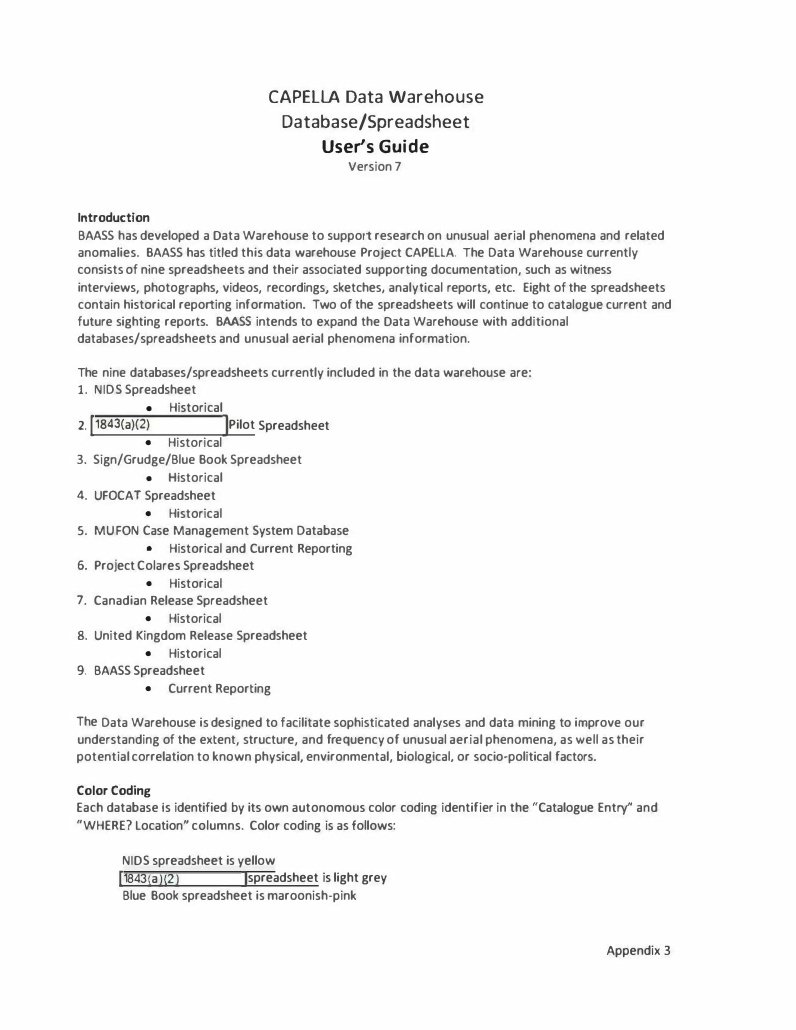
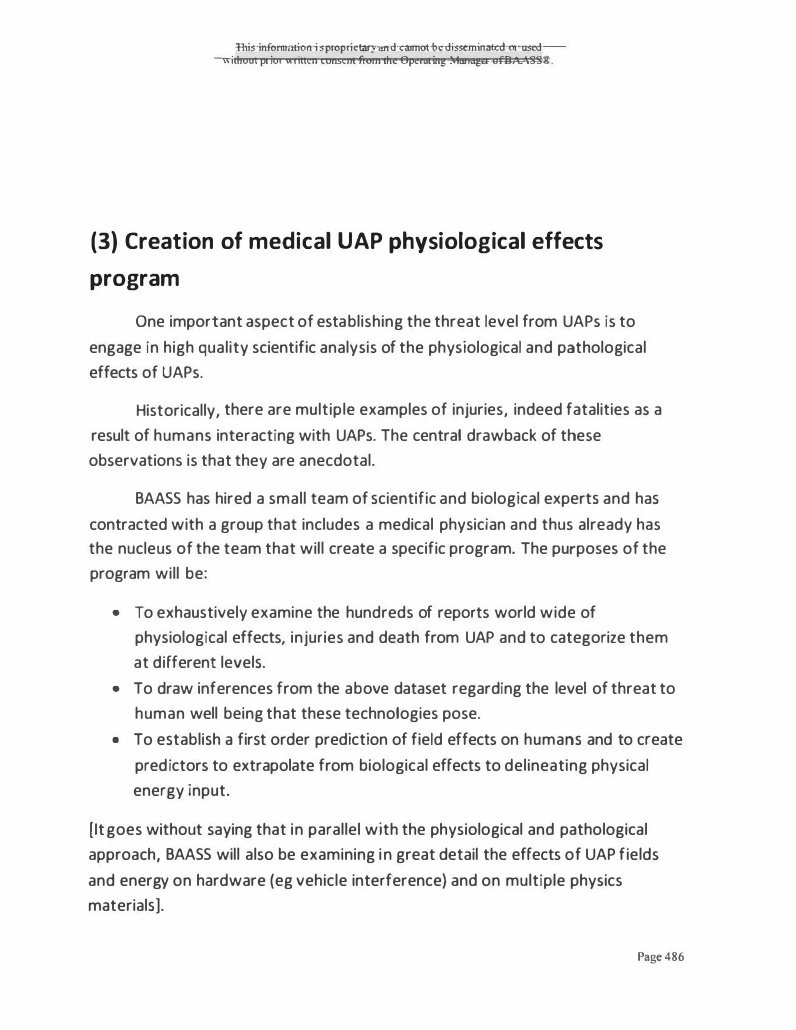
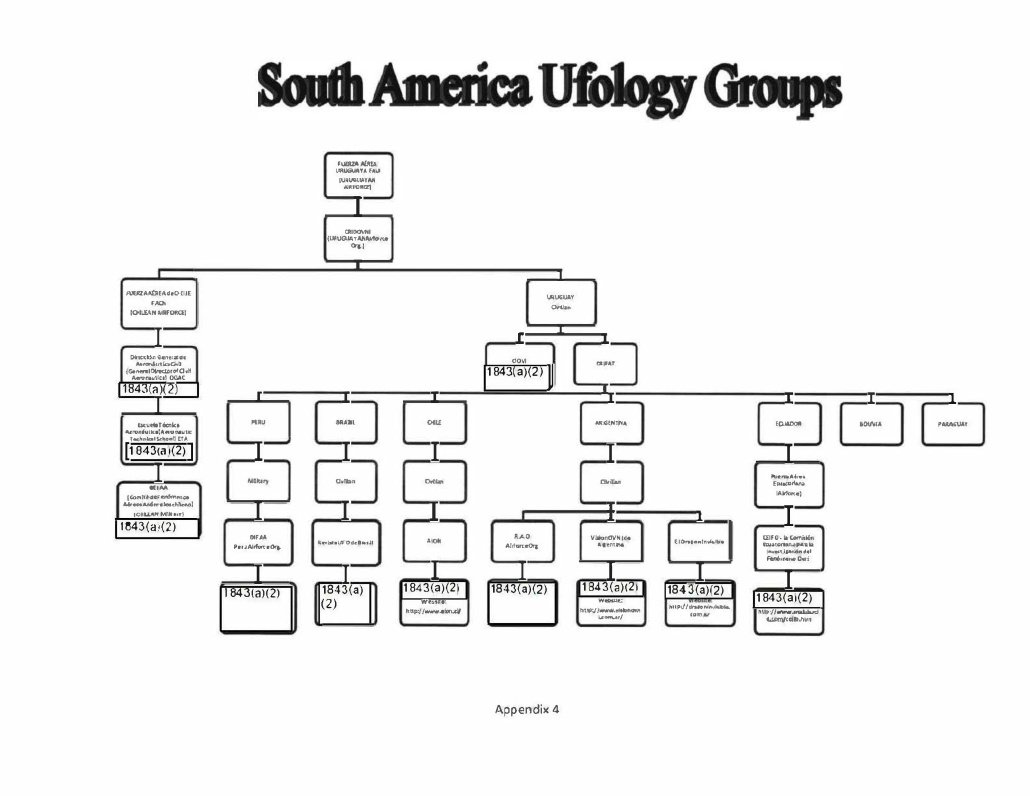
Date: April 2009 (manual); 30/07/2009 (organization chart)Location: not stated
BAASS, 2009: the special investigations division manual defines which UAP cases to investigate, how to interview witnesses and how to store evidence
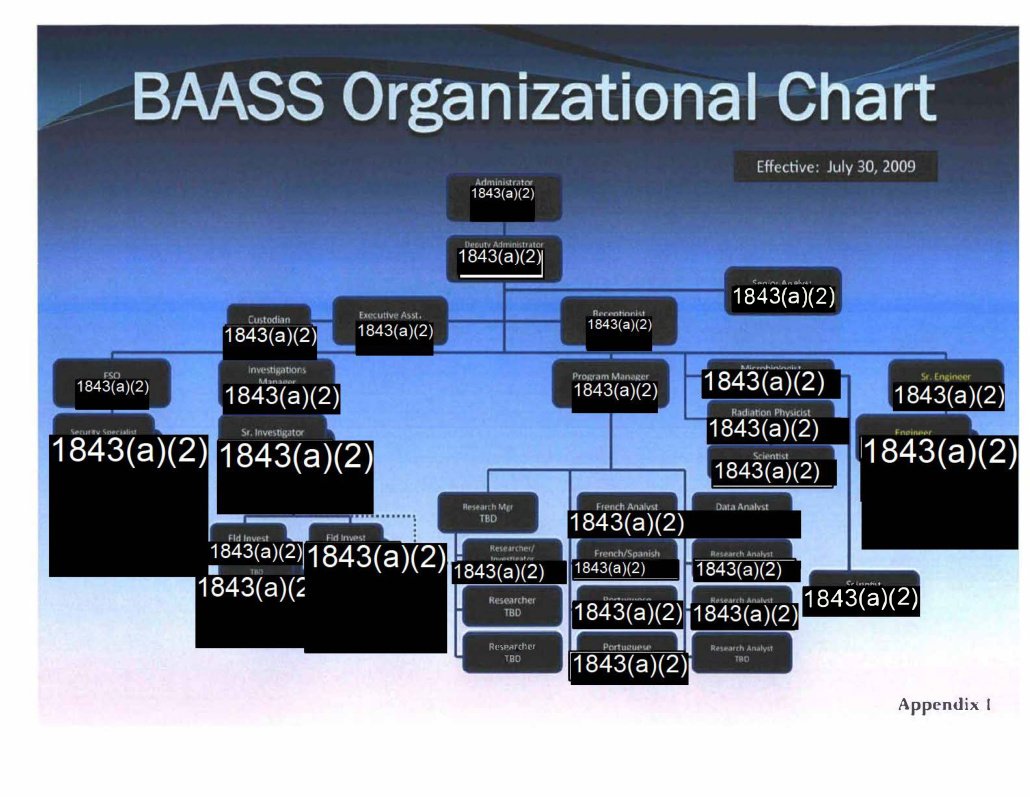
Two appendices to BAASS's ten-month report contain the company's organization chart and the procedures manual of its Special Investigations Division. The manual lists the criteria for accepting UAP reports, the rules for interviews and evidence collection, and says the ultimate mission was to exploit the technology the investigation revealed.
- Event date
- April 2009 (manual); 30/07/2009 (organization chart)
- Location
- not stated
- Topic
- AAWSAP and advanced technologies
- Source agencies
- DOW
- Documents
- 1 document · 538 pages
- Reading time
- 40 min
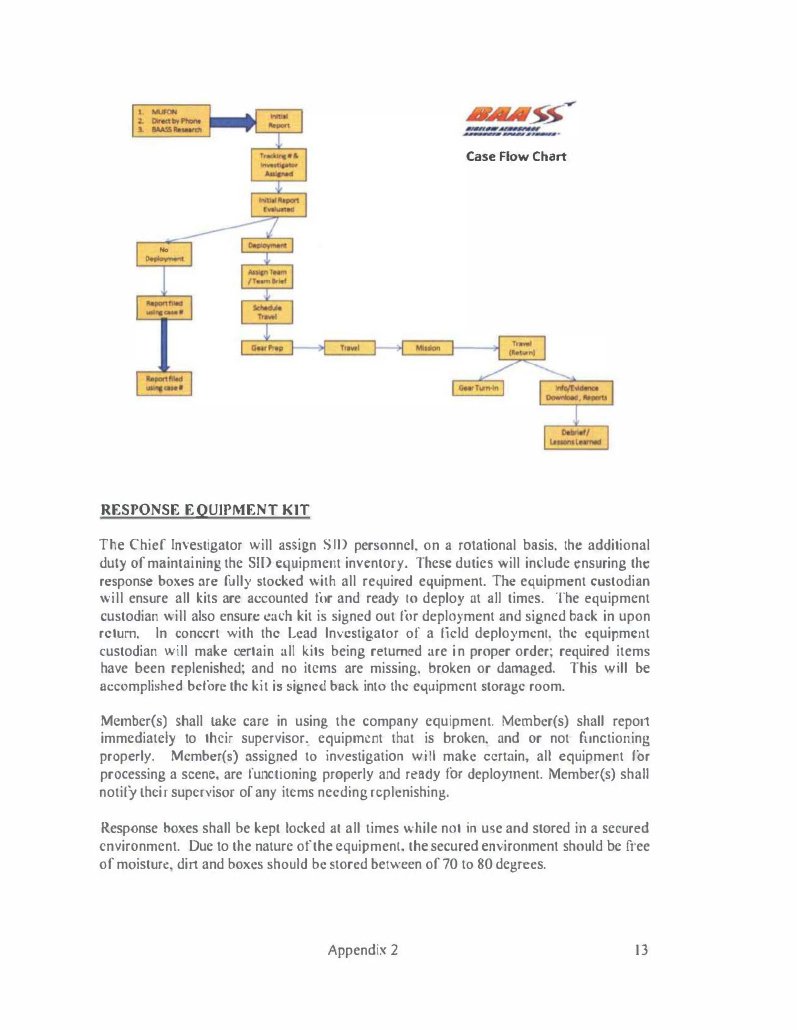 DiagramPhysical page 515
DOCUMENTARY SOURCES · DOW
What the records tell
Date: April 2009 for the manual, and July 30, 2009 for the organization chart. Location: not given on these pages. BAASS, the company contracted by the Defense Intelligence Agency under the AAWSAP program, attached to its ten-month report an organization chart (Appendix 1) and the standard operating procedures of its Special Investigations Division (Appendix 2). On the organization chart, almost all names are [redacted] with the marking 1843(a)(2). The positions are visible: administrator, senior and field investigators, data analysts, French, Spanish and Portuguese translators, a microbiologist, a radiation physicist and engineers.
The manual says only some UAP reports warranted investigation. The criteria were: a current case, occurring within the previous 96 hours; two or more witnesses; UAP at 600 feet or less; physical effects on people, animals, ground or vegetation; traces that could be collected; daytime observation; sounds; detailed description of lights at night; maneuvers; and a report from trained observers, such as police officers, military personnel, pilots and air traffic controllers. Cases with a single witness, or with witnesses from the same family, would be evaluated individually and would require an observer with an exceptional background or compelling evidence.
There are specific rules for reports coming from MUFON, a civilian organization with which BAASS had a contract. MUFON was to give immediate notice of any case in which someone had physical evidence, with no date limit. Photos, videos and drawings did not count as physical evidence. For cases from the previous eight weeks, notice was mandatory when there was a landing, ground marks, electromagnetic effects or a professionally trained witness. The manual prohibits BAASS personnel from giving direction or management to MUFON personnel and instructs them to avoid contact with the press as much as possible.
According to the text, BAASS's ultimate mission was, in simple terms, to exploit technology discovered through the investigation of UAP. For that reason investigators were to keep in mind twelve areas, called scientific elements of proof: lift, propulsion, control, power generation, space-time translation, materials, configuration, signature reduction, human interface, effects on humans, armament and peripheral areas. In interviews, the investigator was to let the witness tell the story freely and then guide them step by step, without ever leading or altering what they reported.
The manual details the routine. Each case received a number in the format year, month, day and sequence, such as 090301-1, and a six-section folder. A flowchart shows the path from the report to the decision whether or not to send a team. The field kit included a magnetometer, a Geiger counter, night vision goggles, plaster for casting footprints and tire marks, and biological protective suits. Evidence followed chain of custody and was kept in a locked room. The travel per diem was US$ 40.
What these pages show is the organization and method that BAASS said it adopted. They contain no case, analysis result or measurement. The criteria describe what kind of report the company considered useful, not how often such reports appeared. The text also instructs the investigator to observe the informal social network of small towns to find out whom residents turn to, and asks that witnesses provide as much identifying data as possible.
More images from the document
DIRECT READING OF THE FILE
The document, in the original
Physical pages 501 to 522 are translated in full in the page-by-page blocks, including the organizational chart, the table of contents, the flowchart and the equipment lists. Page 502 is blank.
EXCERPT 1 · PHYSICAL PAGE 501
Physical page 501, full page
R, \P,11ctwr
IRO
t;_Hn or>I" 6u,il.,._t
1 843(a)(2)
Cr ,.,ni,,,t
1 843(a)(2)
Appendix IEditorial note: Physical page 501 of DOW-UAP-D172-BAASS_Ten_Month_Report_July-2009.pdf.
Check the original PDF
R, \P,11ctwr
IRO
t;_Hn or>I" 6u,il.,._t
1 843(a)(2)
Cr ,.,ni,,,t
1 843(a)(2)
Appendix IView the document record ↗ · Physical page 501, counting the cover.
EXCERPT 2 · PHYSICAL PAGE 503
Physical page 503, full page
11IIEIIW IEIIIIPICE
11,1#CEI SPICE ITIIIEI ®
STANDARD OPERATING
PROCEDURES
SPECIAL INVESTIGATIONS DIVISION
Appendix 2
April 2009 Table of ContentsEditorial note: Physical page 503 of DOW-UAP-D172-BAASS_Ten_Month_Report_July-2009.pdf.
Check the original PDF
11IIEIIW IEIIIIPICE
11,1#CEI SPICE ITIIIEI ®
STANDARD OPERATING
PROCEDURES
SPECIAL INVESTIGATIONS DIVISION
Appendix 2
April 2009 Table of ContentsView the document record ↗ · Physical page 503, counting the cover.
EXCERPT 3 · PHYSICAL PAGE 504
Physical page 504, full page
Introduction
3
Unbecoming Conduct
3
Reporting Misconduct
3
3
Conformance to Law
3
Dissemination of Information
Gifts, Gratuities, or Rewards
3
Company Cellular Phones
4
Chain of Command
4
Responsibility
4
o Chief Investigator
4
o Senior Investigator
4
o Field Investigator
s
Cooperation with other agencies/companies
5
Investigation Operations
5
o Notification of Incident
7
o Telephonic lnterviews7
o Assignment of Investigation
7
o rndependence
7
o External Coordination
8
o Initial Actions
8
o Case File
9
o Reports
9
o Case Process
10
o Response Box/Equipment
12
Travel/Deployment
15
Arrive on scene
15
Search Operations
17
Evidence Collection
17
Chain of Custody
1 7
Protection of Evidence
18
Evidence Storage and Disposal
18
o Business hours
18
Security
18
o Security of Evidence Facility
18
o [n-House Security
19
o Equipment Security
19
o Personal Information
19
Attachments
20
Appendix 2
2Editorial note: Physical page 504 of DOW-UAP-D172-BAASS_Ten_Month_Report_July-2009.pdf.
Check the original PDF
Introduction
3
Unbecoming Conduct
3
Reporting Misconduct
3
3
Conformance to Law
3
Dissemination of Information
Gifts, Gratuities, or Rewards
3
Company Cellular Phones
4
Chain of Command
4
Responsibility
4
o Chief Investigator
4
o Senior Investigator
4
o Field Investigator
s
Cooperation with other agencies/companies
5
Investigation Operations
5
o Notification of Incident
7
o Telephonic lnterviews7
o Assignment of Investigation
7
o rndependence
7
o External Coordination
8
o Initial Actions
8
o Case File
9
o Reports
9
o Case Process
10
o Response Box/Equipment
12
Travel/Deployment
15
Arrive on scene
15
Search Operations
17
Evidence Collection
17
Chain of Custody
1 7
Protection of Evidence
18
Evidence Storage and Disposal
18
o Business hours
18
Security
18
o Security of Evidence Facility
18
o [n-House Security
19
o Equipment Security
19
o Personal Information
19
Attachments
20
Appendix 2
2View the document record ↗ · Physical page 504, counting the cover.
EXCERPT 4 · PHYSICAL PAGE 505
Physical page 505, full page
INTRODUCTION
The following information is not intended to be an all encompassing set of procedures,
simply a basic guideline for the conduct of field investigations for Bigelow Aerospace
Advanced Space Studies (BAASS). Assigned investigators should use this information
as a basic starting point in the conduct of a field investigation. This will be an ever
evolving set of procedures/guidelines.
Investigators, in concert with other BAASS
employees, should always bring suggestions for changes to the attention of the Special
Investigations Division (SID) Chief and/or senior BAASS management. One of the most
impo1tant aspects of the BAASS Investigative mindset must be to maintain an open
minded and, above all, unbiased mindset toward the investigative process. Ensuri.ng that
all investigative personnel pursue each investigation in a thorough, unbiased, :finder-of
tbe facts manner is imperative to the success of the BAASS Mission.
CONDUCT
o UNBECOMING CONDUCT:
Unbecoming conduct is conduct that is
prejudicial to the efficiency, integrity, or reputation of BAASS. Unbecoming
conduct shall include that conduct which reflects discredit on the person as a
member employed with BAASS, or can reasonably be expected to destroy
public respect for BAASS. Members shall not conduct themselves in a manner
which would reflect a negative image.
o REPORTING MISCONDUCT: Members shall report to the appropriate
supervisor any for on incompetence, misconduct, inefficiency or neglect of
duty for which the member has knowledge. Members shall report to their
immediate supervisor infonnation regarding violation of work and safety
issues, any expected breach of cofitract as it pertains to BAASS contractual
agreements signed by members, and any other conduct that would have a
negative impact on BAASS.
CONFORMANCE TO LAW
Members shall conform to and abide by the laws of the United States and the laws of all
other states and localities of the United States when subject to their jurisdiction.
DISSEMINATION OF INFORMATION
Members shall not disseminate, in any manner, any proprietary information ofBAASS or
its members, without proper authority.
GI FTS, GRATUITIES OR REW ARDS
Members will not solicit/or accept any gifts, gratuities, loans or fees where there is a
direct or indirect connection between the solicitation and their employment with BAASS.
Appendix 2
3Editorial note: Physical page 505 of DOW-UAP-D172-BAASS_Ten_Month_Report_July-2009.pdf.
Check the original PDF
INTRODUCTION
The following information is not intended to be an all encompassing set of procedures,
simply a basic guideline for the conduct of field investigations for Bigelow Aerospace
Advanced Space Studies (BAASS). Assigned investigators should use this information
as a basic starting point in the conduct of a field investigation. This will be an ever
evolving set of procedures/guidelines.
Investigators, in concert with other BAASS
employees, should always bring suggestions for changes to the attention of the Special
Investigations Division (SID) Chief and/or senior BAASS management. One of the most
impo1tant aspects of the BAASS Investigative mindset must be to maintain an open
minded and, above all, unbiased mindset toward the investigative process. Ensuri.ng that
all investigative personnel pursue each investigation in a thorough, unbiased, :finder-of
tbe facts manner is imperative to the success of the BAASS Mission.
CONDUCT
o UNBECOMING CONDUCT:
Unbecoming conduct is conduct that is
prejudicial to the efficiency, integrity, or reputation of BAASS. Unbecoming
conduct shall include that conduct which reflects discredit on the person as a
member employed with BAASS, or can reasonably be expected to destroy
public respect for BAASS. Members shall not conduct themselves in a manner
which would reflect a negative image.
o REPORTING MISCONDUCT: Members shall report to the appropriate
supervisor any for on incompetence, misconduct, inefficiency or neglect of
duty for which the member has knowledge. Members shall report to their
immediate supervisor infonnation regarding violation of work and safety
issues, any expected breach of cofitract as it pertains to BAASS contractual
agreements signed by members, and any other conduct that would have a
negative impact on BAASS.
CONFORMANCE TO LAW
Members shall conform to and abide by the laws of the United States and the laws of all
other states and localities of the United States when subject to their jurisdiction.
DISSEMINATION OF INFORMATION
Members shall not disseminate, in any manner, any proprietary information ofBAASS or
its members, without proper authority.
GI FTS, GRATUITIES OR REW ARDS
Members will not solicit/or accept any gifts, gratuities, loans or fees where there is a
direct or indirect connection between the solicitation and their employment with BAASS.
Appendix 2
3View the document record ↗ · Physical page 505, counting the cover.
EXCERPT 5 · PHYSICAL PAGE 506
Physical page 506, full page
COMPANY CELLULAR PHONE
The BAASS Administrator will be the final authority in the authorization and use of
company owned celluJar phones and associated billing records. Member(s) assigned a
company owned cellular phone is responsible for the use, care and control of the cellular
telephone. A cellular telephone may be shared at the scene of an incident among BAASS
employees for company purposes only. 1n the event of multiple users of a single company
owned cel.lular telephone, a sign in/out log will be employed to account for custody and
use at all times. Member(s) shall not use company owned cellular telephones for personal
USC.
CHAIN OF COMMAND
SID personnel will follow the chain of command established by BAASS administration.
Each member of the SJD will be provided with a copy of the BAASS Organizational
Chart. Refer to your Organizational Chart.
RESPONSlBJLlTY
o Cl IIEF INVESTIGATOR: The Chic!' Investigator reports to the BAASS Deputy
Administrator. He/she is responsible for management and guidance of the SID.
The Chief lnvestigator will manage the day-to-day operation of the SlD by
establishing and enforcing policies and procedures to ensure the efficient
operation of the SID. He/she will, in concert with the Deputy Administrator,
establish and administer performance standards for the Senior and Field
fnvestigators. The Chief will participate in the evaluation of repo1ts and the
process by which cases are accepted or declined. The Chief will be responsible
for assignment of cases accepted by BAASS to the subordinate investigators. The
Chief will also make the decisions as to team composition when BAASS
investigators arc deployed to investigate an event. The Chief of the SID will also
be prepared to participate in field investigations as needed and any other duties
and responsibilities as assigned by the BAASS Administrator or Deputy
Administrator.
o SENIOR INVESTIGATOR:
The senior investigators will assist the dtief
investigator in the development of policies and procedures to achieve efficiency
in functional responsibilities and to eITcct maximum uWization of available
resources.
Personnel assigned as a senjor investigator, will lead BAASS
investigations which meet the reporting criteria as established by BAASS
Management.
This criterion includes, but is not limited to: cold case
investigations, current event investigation, locating, and interviewing witnesses,
locating and processing an incident scene, collection and processing of evidence
and work in conjunction with other BAASS employees. The Senior Investigators
will be responsible to receive and analyze initial reports and present these reports
to the Chief Investigator for consideration of further investigation.
Senior
Appendix 2
4Editorial note: Physical page 506 of DOW-UAP-D172-BAASS_Ten_Month_Report_July-2009.pdf.
Check the original PDF
COMPANY CELLULAR PHONE
The BAASS Administrator will be the final authority in the authorization and use of
company owned celluJar phones and associated billing records. Member(s) assigned a
company owned cellular phone is responsible for the use, care and control of the cellular
telephone. A cellular telephone may be shared at the scene of an incident among BAASS
employees for company purposes only. 1n the event of multiple users of a single company
owned cel.lular telephone, a sign in/out log will be employed to account for custody and
use at all times. Member(s) shall not use company owned cellular telephones for personal
USC.
CHAIN OF COMMAND
SID personnel will follow the chain of command established by BAASS administration.
Each member of the SJD will be provided with a copy of the BAASS Organizational
Chart. Refer to your Organizational Chart.
RESPONSlBJLlTY
o Cl IIEF INVESTIGATOR: The Chic!' Investigator reports to the BAASS Deputy
Administrator. He/she is responsible for management and guidance of the SID.
The Chief lnvestigator will manage the day-to-day operation of the SlD by
establishing and enforcing policies and procedures to ensure the efficient
operation of the SID. He/she will, in concert with the Deputy Administrator,
establish and administer performance standards for the Senior and Field
fnvestigators. The Chief will participate in the evaluation of repo1ts and the
process by which cases are accepted or declined. The Chief will be responsible
for assignment of cases accepted by BAASS to the subordinate investigators. The
Chief will also make the decisions as to team composition when BAASS
investigators arc deployed to investigate an event. The Chief of the SID will also
be prepared to participate in field investigations as needed and any other duties
and responsibilities as assigned by the BAASS Administrator or Deputy
Administrator.
o SENIOR INVESTIGATOR:
The senior investigators will assist the dtief
investigator in the development of policies and procedures to achieve efficiency
in functional responsibilities and to eITcct maximum uWization of available
resources.
Personnel assigned as a senjor investigator, will lead BAASS
investigations which meet the reporting criteria as established by BAASS
Management.
This criterion includes, but is not limited to: cold case
investigations, current event investigation, locating, and interviewing witnesses,
locating and processing an incident scene, collection and processing of evidence
and work in conjunction with other BAASS employees. The Senior Investigators
will be responsible to receive and analyze initial reports and present these reports
to the Chief Investigator for consideration of further investigation.
Senior
Appendix 2
4View the document record ↗ · Physical page 506, counting the cover.
EXCERPT 6 · PHYSICAL PAGE 507
Physical page 507, full page
investigators will also conduct research and analysis of both historical and cun-ent
events in an effort to focus BAASS efforts. The Senior Investigators will provide
guidance and mentorship to the Field Investigators and ensure all assigned
personnel are aware of and adhere to current BAASS policy as directed by the
Chief of the SlD.
Senior investigators will report directly to tbe Chief
Investigator.
o FIELD INVESTIGATOR: Field investigators will be responsible for research,
analysis, and coordination of historical and current events as they relate to the
BAASS mission. They will conduct field investigations of events meeting the
established criteria and reporting protocol, to include but not limited to: cold case
investigation, current event investigation, locating, and inte1viewing witnesses,
locating and processing an incident scene, collection, processing and preservation
of evidence, and work in conjunction with other BAASS employees.
Field
investigators will report directly to the senior investigator to whom they are
assigned.
COOPERATION WITH OTHER AGENCIES/COMPANIES
Members shall not interfere with any public safety agencies protocol while on scene of an
incident. At times, there will be multiple persons on scene investigating the incident.
Members shall remain professional at all times and stay focused as to their mission and at
no time release any information pertinent to their investigation without prior
authorization.
Media Contact: Direct contact with media personnel should be kept to an absolute
minimum, or avoided if at alJ possible. Should any member of the SID be contactedŠ
media representatjve they should be polite and courteous and refer that person toš
!1843(a)(2)
I.
The person contacted should then follow up, as soon as
possible, and notify the Lnvestigator in char e of I.hat investigation and/or the Chlef
Investigator of the contact and referral to 1843(a)(2)
Members shall not communicate
to any person not an employee of BAASS any infom1ation concerning operations,
activities, or matters of business that would have an adverse impact on BAASS image,
operations, or administration.
INVESTIGATION OPERATIONS
BAASS will be receiving reports from vru-ious contractors and entities. BAASS
Investigator(s) will conduct a preliminary investigation on all reports meeting the
established BAASS criteria. The BAASS reporting guidelines for a UAP are as follows:
• Current Cases
• Multiple witnesses
• 600 feet or below
• Physical Effects
• Trace Evidence
Appendix 2
5Editorial note: Physical page 507 of DOW-UAP-D172-BAASS_Ten_Month_Report_July-2009.pdf.
Check the original PDF
investigators will also conduct research and analysis of both historical and cun-ent
events in an effort to focus BAASS efforts. The Senior Investigators will provide
guidance and mentorship to the Field Investigators and ensure all assigned
personnel are aware of and adhere to current BAASS policy as directed by the
Chief of the SlD.
Senior investigators will report directly to tbe Chief
Investigator.
o FIELD INVESTIGATOR: Field investigators will be responsible for research,
analysis, and coordination of historical and current events as they relate to the
BAASS mission. They will conduct field investigations of events meeting the
established criteria and reporting protocol, to include but not limited to: cold case
investigation, current event investigation, locating, and inte1viewing witnesses,
locating and processing an incident scene, collection, processing and preservation
of evidence, and work in conjunction with other BAASS employees.
Field
investigators will report directly to the senior investigator to whom they are
assigned.
COOPERATION WITH OTHER AGENCIES/COMPANIES
Members shall not interfere with any public safety agencies protocol while on scene of an
incident. At times, there will be multiple persons on scene investigating the incident.
Members shall remain professional at all times and stay focused as to their mission and at
no time release any information pertinent to their investigation without prior
authorization.
Media Contact: Direct contact with media personnel should be kept to an absolute
minimum, or avoided if at alJ possible. Should any member of the SID be contactedŠ
media representatjve they should be polite and courteous and refer that person toš
!1843(a)(2)
I.
The person contacted should then follow up, as soon as
possible, and notify the Lnvestigator in char e of I.hat investigation and/or the Chlef
Investigator of the contact and referral to 1843(a)(2)
Members shall not communicate
to any person not an employee of BAASS any infom1ation concerning operations,
activities, or matters of business that would have an adverse impact on BAASS image,
operations, or administration.
INVESTIGATION OPERATIONS
BAASS will be receiving reports from vru-ious contractors and entities. BAASS
Investigator(s) will conduct a preliminary investigation on all reports meeting the
established BAASS criteria. The BAASS reporting guidelines for a UAP are as follows:
• Current Cases
• Multiple witnesses
• 600 feet or below
• Physical Effects
• Trace Evidence
Appendix 2
5View the document record ↗ · Physical page 507, counting the cover.
EXCERPT 7 · PHYSICAL PAGE 508
Physical page 508, full page
•
Daylight Observations
• Noises
•
Detailed description of lights at Night
•
Maneuvers
• Sightings by trained credible observers
Current Cases. Cases that have occurred within 96 hours of reporting. Exceptions may
be made for events that have occurred in clusters (indicating intense activity) or when
documented Physical Effects or Trace Evidence persist. Any case older then 96 hours is
considered historic and will be added to MUFO 's database as per SOP. In some cases,
compelling evidence wiU extend the 96 hour '·current case" guideline.
Multiple Witnesses. Two or more witnesses. Cases that have an individual witness, or
family member witnesses, wiU be considered on a case-by-case basis. Such cases would
require a witness with an exceptional background (pilot. trained observer, etc.) and/or
compelling evidence.
600 Feet or Below. A solid altitude determination for reporting. Witnesses may have
difficulty determining altitude (various factors may affect this), so investigators must use
their discretion when determining the reporting facts.
Physical Effects. These are effects that are observable/testable and affect humans.
animals, soil,
and/or vegetation.
Residual Electromagnetic Radiation may not be
observable or testable, but could leave a physical effect on humans, plants, etc.
Trace Evidence. These are physical traces that have been transferred to other physical
objects and have the potential to be collected for scientific analysis.
Daylight Observations. Self-explanatory. Daylight dramaticaUy increases the ability to
observe UAPs and discern details.
Noises. Any audible noise or signature that can be directly attributable to a UAP, or the
presence of a UAP.
Detailed Description of Lights. Detailed information should include color, intensity,
size,
clarity,
brightness, color changes,
movement/maneuvers,
correlation
of
movement/maneuvers with other activity (human, animal, machinery, etc.)
Maneuvers. Information should include direction(s), speed, non-balJistic movement,
climb, bank, dive, and shapes that maneuvers may evolve into.
Sightings by Trained Credible Observers. These are individuals that have training in
observation and recording of fact. Examples may include: police officers, military
personnel, pilots, and air traffic controUers. This is by no means an all inclusive list and
investigators must use their discretion.
MUFON Reporting Cases To BAASS Criteria:
1. MUFO shall immediately report to BAASS any UAP/UFO sighting
when someone is in possession of physical evidence associated with the
sighting event. (Physical evidence does not include pictures, videos,
recordings, drawings, etc.) There is no time limit or restriction as to when
the sighting event occurred.
Appendix 2
6Editorial note: Physical page 508 of DOW-UAP-D172-BAASS_Ten_Month_Report_July-2009.pdf.
Check the original PDF
•
Daylight Observations
• Noises
•
Detailed description of lights at Night
•
Maneuvers
• Sightings by trained credible observers
Current Cases. Cases that have occurred within 96 hours of reporting. Exceptions may
be made for events that have occurred in clusters (indicating intense activity) or when
documented Physical Effects or Trace Evidence persist. Any case older then 96 hours is
considered historic and will be added to MUFO 's database as per SOP. In some cases,
compelling evidence wiU extend the 96 hour '·current case" guideline.
Multiple Witnesses. Two or more witnesses. Cases that have an individual witness, or
family member witnesses, wiU be considered on a case-by-case basis. Such cases would
require a witness with an exceptional background (pilot. trained observer, etc.) and/or
compelling evidence.
600 Feet or Below. A solid altitude determination for reporting. Witnesses may have
difficulty determining altitude (various factors may affect this), so investigators must use
their discretion when determining the reporting facts.
Physical Effects. These are effects that are observable/testable and affect humans.
animals, soil,
and/or vegetation.
Residual Electromagnetic Radiation may not be
observable or testable, but could leave a physical effect on humans, plants, etc.
Trace Evidence. These are physical traces that have been transferred to other physical
objects and have the potential to be collected for scientific analysis.
Daylight Observations. Self-explanatory. Daylight dramaticaUy increases the ability to
observe UAPs and discern details.
Noises. Any audible noise or signature that can be directly attributable to a UAP, or the
presence of a UAP.
Detailed Description of Lights. Detailed information should include color, intensity,
size,
clarity,
brightness, color changes,
movement/maneuvers,
correlation
of
movement/maneuvers with other activity (human, animal, machinery, etc.)
Maneuvers. Information should include direction(s), speed, non-balJistic movement,
climb, bank, dive, and shapes that maneuvers may evolve into.
Sightings by Trained Credible Observers. These are individuals that have training in
observation and recording of fact. Examples may include: police officers, military
personnel, pilots, and air traffic controUers. This is by no means an all inclusive list and
investigators must use their discretion.
MUFON Reporting Cases To BAASS Criteria:
1. MUFO shall immediately report to BAASS any UAP/UFO sighting
when someone is in possession of physical evidence associated with the
sighting event. (Physical evidence does not include pictures, videos,
recordings, drawings, etc.) There is no time limit or restriction as to when
the sighting event occurred.
Appendix 2
6View the document record ↗ · Physical page 508, counting the cover.
EXCERPT 8 · PHYSICAL PAGE 509
Physical page 509, full page
2. MUFON shall immediately report to BAASS any UAP/UFO sighting that
has occurred in the previous 8 weeks that includes any of the following:
a. Daytime Observation
i.
Multiple Witness sighting below 600' AGL, or
ii. Any sighting within 600' of a witness, or
iii. Any landing event, or
iv. Any event with ground trace evidence
(photos/video/recordings do not count as trace evidence), or
v. Any sighting below 600' AGL with photo/video evidence, or
vi. Any sighting reported by police officer, military service
member, professional pilot, air traffic controller, or other
professionally trained observer (e.g. Astronomer) whether
they are on or off duty, or
vii. Any sighting of object(s) with associated electromagnetic
effects or other associated anomalous events.
b. Night Observation
i. Multiple Witnesses within 600' of the objcct(s), or
ii. Any landing event, or
iii. Any event with ground trace evidence
(photos/video/recordings do not count as trace evidence), or
iv. Any sighting reported by police officer, military service
member, professional pilot, air traffic controller, or other
profcssionalJy trained observer (e.g. Astronomer) whether
they arc on or off duty, or
v. Any sighting of object(s) with associated electromagnetic
effects
Note: "Ground trace evidence'' includes: human, animal, or insect
physiological or pathological effects; marks, bums, scars, etc. to land,
vegetation, or manmadc objects; and physical materials associated with
object sightjngs
Al I cases will be thoroughly examined and questioned before further action is taken (such
as deployment). These actions provide valuable information that investigators need to
establish the facts of a case, and contributes to investigative dfrection.
All cases assigned to an investigator will be investigated in diligent and timely manner.
BAASS senior management may at times, assign cases they deem necessary, in addition
to the above criteria. It is also possible that cases may be assigned for their intrinsic
training value (ex: When new investigators come on board.), or when the facts of past
cases require verification, confirmation, and/or re-analysis.
NOTIFICATION OF INCJDENT: Upon being notified of an incident pertinent to the
BAASS Mission the following is the suggested course of action:
The investigator
receiving the initial information will record all pertinent facts as reported via the BAASS
Appendix 2
7Editorial note: Physical page 509 of DOW-UAP-D172-BAASS_Ten_Month_Report_July-2009.pdf.
Check the original PDF
2. MUFON shall immediately report to BAASS any UAP/UFO sighting that
has occurred in the previous 8 weeks that includes any of the following:
a. Daytime Observation
i.
Multiple Witness sighting below 600' AGL, or
ii. Any sighting within 600' of a witness, or
iii. Any landing event, or
iv. Any event with ground trace evidence
(photos/video/recordings do not count as trace evidence), or
v. Any sighting below 600' AGL with photo/video evidence, or
vi. Any sighting reported by police officer, military service
member, professional pilot, air traffic controller, or other
professionally trained observer (e.g. Astronomer) whether
they are on or off duty, or
vii. Any sighting of object(s) with associated electromagnetic
effects or other associated anomalous events.
b. Night Observation
i. Multiple Witnesses within 600' of the objcct(s), or
ii. Any landing event, or
iii. Any event with ground trace evidence
(photos/video/recordings do not count as trace evidence), or
iv. Any sighting reported by police officer, military service
member, professional pilot, air traffic controller, or other
profcssionalJy trained observer (e.g. Astronomer) whether
they arc on or off duty, or
v. Any sighting of object(s) with associated electromagnetic
effects
Note: "Ground trace evidence'' includes: human, animal, or insect
physiological or pathological effects; marks, bums, scars, etc. to land,
vegetation, or manmadc objects; and physical materials associated with
object sightjngs
Al I cases will be thoroughly examined and questioned before further action is taken (such
as deployment). These actions provide valuable information that investigators need to
establish the facts of a case, and contributes to investigative dfrection.
All cases assigned to an investigator will be investigated in diligent and timely manner.
BAASS senior management may at times, assign cases they deem necessary, in addition
to the above criteria. It is also possible that cases may be assigned for their intrinsic
training value (ex: When new investigators come on board.), or when the facts of past
cases require verification, confirmation, and/or re-analysis.
NOTIFICATION OF INCJDENT: Upon being notified of an incident pertinent to the
BAASS Mission the following is the suggested course of action:
The investigator
receiving the initial information will record all pertinent facts as reported via the BAASS
Appendix 2
7View the document record ↗ · Physical page 509, counting the cover.
EXCERPT 9 · PHYSICAL PAGE 510
Physical page 510, full page
SID format (attach 1 ). Included in the presentation of the facts will be the investigators
comments as to how the information was received (e.g. reporting agency, etc). At a
minimum, the investigator receiving the report will record the date and time of the event,
location of the event, and as much of the basic BAASS criteria as provided.
Additionally, the investigator should include in the comments the investigators initial
evaluation of the source of the information.
TELEPHONIC INTERVIEWS: Whenever possible, contact witnesses during day time
hours, (check time zone).
Remain professional, and identify who they are and the
purpose of the call. Personnel should try and obtain as much information as possible
about the witness, (refer to witness statement form, BA-WS, attach 2) including contact
details.
Note: Keep in mind that some witnesses may have an issue with providing personal
information. In spite of this, the Investigator taking the report must make every effort to
obtain suitable information to allow re-contacting that witness.
Once the initial reporting is complete the STD Chief (or his/her designee) will assign a
tracking number using the BAASS Case Tracking Log. The case numbers will be in the
following format: Year (YY), Month {MM), Day (DD) followed by the case identifier {l,
etc). The following is an example of a case opened on 1 March 2009: 090301-1. The
initial report will then be presented to BAASS Management for their evaluation. Should
the determinatjon be made further investigation is warranted, Management will endorse
the form and return it to the SID for assignment of a Lead Investigator.
Should
Management determine further investigation of the incident is NOT warranted; the form
will be endorsed and returned to the SID stating so. An incident not approved for further
investigation by Management ,viJI be maintained by the SID for their information. The
SID Chief will annotate the case tracking log to indicate the decision of Management.
ASSIGNMENT OF INVESTIGATIO : Upon approval by BAASS Management, the
STD Chief will assign the case to a Lead Investigator. This may or may not be the
Investigator receiving the initial notification. Based on the wide array of Subject Matter
Expertise (civil law enforcement, military experience etc), as well as case load of
individual investigators, a determination will be made for the assignment of the case.
Once the Lead Investigator is assigned a determination will be made as to the number of
investigators needed and these assignments will then be made.
INDEPENDENCE: BAASS SID personnel must keep in the forefront of their thought
process, while coordinating the initial receipt of the case, that all BAASS investigations
will be independent, thorough and complete. While information may be received from
known or trusted sources it will be properly documented and maintained; however,
whenever possible, all informa6on will be independently verified by a BAASS SID.
EXTERNAL COORDINATION: External coordination could take many forms.
Appendix 2
8Editorial note: Physical page 510 of DOW-UAP-D172-BAASS_Ten_Month_Report_July-2009.pdf.
Check the original PDF
SID format (attach 1 ). Included in the presentation of the facts will be the investigators
comments as to how the information was received (e.g. reporting agency, etc). At a
minimum, the investigator receiving the report will record the date and time of the event,
location of the event, and as much of the basic BAASS criteria as provided.
Additionally, the investigator should include in the comments the investigators initial
evaluation of the source of the information.
TELEPHONIC INTERVIEWS: Whenever possible, contact witnesses during day time
hours, (check time zone).
Remain professional, and identify who they are and the
purpose of the call. Personnel should try and obtain as much information as possible
about the witness, (refer to witness statement form, BA-WS, attach 2) including contact
details.
Note: Keep in mind that some witnesses may have an issue with providing personal
information. In spite of this, the Investigator taking the report must make every effort to
obtain suitable information to allow re-contacting that witness.
Once the initial reporting is complete the STD Chief (or his/her designee) will assign a
tracking number using the BAASS Case Tracking Log. The case numbers will be in the
following format: Year (YY), Month {MM), Day (DD) followed by the case identifier {l,
etc). The following is an example of a case opened on 1 March 2009: 090301-1. The
initial report will then be presented to BAASS Management for their evaluation. Should
the determinatjon be made further investigation is warranted, Management will endorse
the form and return it to the SID for assignment of a Lead Investigator.
Should
Management determine further investigation of the incident is NOT warranted; the form
will be endorsed and returned to the SID stating so. An incident not approved for further
investigation by Management ,viJI be maintained by the SID for their information. The
SID Chief will annotate the case tracking log to indicate the decision of Management.
ASSIGNMENT OF INVESTIGATIO : Upon approval by BAASS Management, the
STD Chief will assign the case to a Lead Investigator. This may or may not be the
Investigator receiving the initial notification. Based on the wide array of Subject Matter
Expertise (civil law enforcement, military experience etc), as well as case load of
individual investigators, a determination will be made for the assignment of the case.
Once the Lead Investigator is assigned a determination will be made as to the number of
investigators needed and these assignments will then be made.
INDEPENDENCE: BAASS SID personnel must keep in the forefront of their thought
process, while coordinating the initial receipt of the case, that all BAASS investigations
will be independent, thorough and complete. While information may be received from
known or trusted sources it will be properly documented and maintained; however,
whenever possible, all informa6on will be independently verified by a BAASS SID.
EXTERNAL COORDINATION: External coordination could take many forms.
Appendix 2
8View the document record ↗ · Physical page 510, counting the cover.
EXCERPT 10 · PHYSICAL PAGE 511
Physical page 511, full page
MUFO : Based on the contra tual relationship with MUFO
stablishing a
dialogu
earl
in th
in e tigati e pr e
and continuing that dialogue
throughout will assist in an ongoing exchange f infonnation as w II ac; en uring
a thorough and independent BAASS in e tigation into the e nt.
BAASS
per ·onnel mu. 1 keep the contractual limitation and requirement in mind al all
time • when dealing with MUFO
personnel - A T O TIME
"\,I ill BAA
personnel provide advice. consultation, or management to MUFO per onnel.
Law Enforcement: Th situation may ari
wh n l al law enforcement has
b en involved in an v nt.
s the pecific ca e dictate , consideration should be
given to making contact with lo al law enforcement as soon a possibl after
arri al in the area of th event. This could serve many purpose - It ma provide
th lnvestigator with lo al ar a familiarization information, such as what areas are
high crim ar as etc. Establish:ing rapport ith local officials can often lead to
m re trust on the part f the c mmunity as a whole as well as po sibly g:iving the
in est:igator access to official local record
if not bard copy erbal ace unt
f
the official information
Media Contact: As previously mentioned direct contact with media personnel
should be k pt to an ab olute minimum. or a aided if at all possible. If contact
cannot be a aided refer the media representati e to !1_8_43(_a__)(2)______
._
__ __
_.
Media information is normally a ailable thr ugh open sources such as internet
outlet
printed media or televi ion
hich should preclude th need for an
In estigator to contact the media directly for any information.
Maintaining
BAASS anonymity and independence should be the primary consideration when
considerng
i
media contact. While freedom of the press is a basic tenant of
democracy, in many cases media contact has impeded effective inquiries.
o
contact will be made without th prior approval of BAA
Manag ment.
INITIAL ACTIO
: When preparing to in estigate e ents BAASS In estigators mu t
be mindful of the 12 area of primary interest during all aspects of the in estigati e
process. For BAA
purposes these area can b referred t as the Scient;fic Elements of
Proof. These J 2 areas are:
Lift
Configuration
Propulsion
ignature Reduction
ontrol
Human Interface
Power Generation
Human ffects
patial-Temporal Tran lation
Armament
Materials
Other Peripheral Areas
These 1 2 areas are independent
et o erlapping.
Inve tigator must familiarize
themselves with these 1 2 topics through individual re earcb and di cussions with
memb rs of the scientific taff. In rder to further the ultimate mi ion of BAA
Appendix 2
9Editorial note: Physical page 511 of DOW-UAP-D172-BAASS_Ten_Month_Report_July-2009.pdf.
Check the original PDF
MUFO : Based on the contra tual relationship with MUFO
stablishing a
dialogu
earl
in th
in e tigati e pr e
and continuing that dialogue
throughout will assist in an ongoing exchange f infonnation as w II ac; en uring
a thorough and independent BAASS in e tigation into the e nt.
BAASS
per ·onnel mu. 1 keep the contractual limitation and requirement in mind al all
time • when dealing with MUFO
personnel - A T O TIME
"\,I ill BAA
personnel provide advice. consultation, or management to MUFO per onnel.
Law Enforcement: Th situation may ari
wh n l al law enforcement has
b en involved in an v nt.
s the pecific ca e dictate , consideration should be
given to making contact with lo al law enforcement as soon a possibl after
arri al in the area of th event. This could serve many purpose - It ma provide
th lnvestigator with lo al ar a familiarization information, such as what areas are
high crim ar as etc. Establish:ing rapport ith local officials can often lead to
m re trust on the part f the c mmunity as a whole as well as po sibly g:iving the
in est:igator access to official local record
if not bard copy erbal ace unt
f
the official information
Media Contact: As previously mentioned direct contact with media personnel
should be k pt to an ab olute minimum. or a aided if at all possible. If contact
cannot be a aided refer the media representati e to !1_8_43(_a__)(2)______
._
__ __
_.
Media information is normally a ailable thr ugh open sources such as internet
outlet
printed media or televi ion
hich should preclude th need for an
In estigator to contact the media directly for any information.
Maintaining
BAASS anonymity and independence should be the primary consideration when
considerng
i
media contact. While freedom of the press is a basic tenant of
democracy, in many cases media contact has impeded effective inquiries.
o
contact will be made without th prior approval of BAA
Manag ment.
INITIAL ACTIO
: When preparing to in estigate e ents BAASS In estigators mu t
be mindful of the 12 area of primary interest during all aspects of the in estigati e
process. For BAA
purposes these area can b referred t as the Scient;fic Elements of
Proof. These J 2 areas are:
Lift
Configuration
Propulsion
ignature Reduction
ontrol
Human Interface
Power Generation
Human ffects
patial-Temporal Tran lation
Armament
Materials
Other Peripheral Areas
These 1 2 areas are independent
et o erlapping.
Inve tigator must familiarize
themselves with these 1 2 topics through individual re earcb and di cussions with
memb rs of the scientific taff. In rder to further the ultimate mi ion of BAA
Appendix 2
9View the document record ↗ · Physical page 511, counting the cover.
EXCERPT 11 · PHYSICAL PAGE 512
Physical page 512, full page
ttachcd b hind OJ
impl
put - to e pl it the t chnology di co er d through th
in
tigation into
nexplajn d
rial Ph nomenon or
AP
ach of the
12 ar as
ntribut
to
under tanding t chnologie not currentl in us ar und th
arid.
od rn, accepted
definition of th principl
pre nted her cannot be allo ed to lin1it th
cop of th
in e tigation or mind t f th in e tigat r.
oned at th
ut t ofthi guid - An
pen unbi
d, find r- f-fa t in e ri ati
i k
to th
ucc
ful B
inve tigation.
cas fil will b
stabli h d for
·n
tigati n. Thi file h uJd b in
d r.
h lnv igator , • II pr par
I for th ou id
f th ti Id r hich
•
h uJd
ntain at a minimum
inf ormati n:
#:
um nt t
iti 1 R p rt. Th fi Id r
th
all infi rma •
d
btain d during th
ur
lig
ign d L d
at r i
ibl for maintaining the
fil in an
I
ann r. Thi
11 mu l b maintained and up-t -dat in the
e ent the
mu
gn d fi r
rea n. Th remaining tab
f th
i part
ti Id r wil
r
n th fi llo ·ng or r:
•
tat d ab
, th fir t tab will
ini tial r
rt.
•
nd tab ill
og
•
hird tab ill b
•
F urth tab wi II
•
Fi flh tab ·11
nal i Jn.!i rmation
•
•
i th and final t
b
ln e tigati n
• •
'
•
·11 b
T
riginal d
te
hoto
r g
photo . at a minim
c ntaining all ph t graphs t e
I b in lud d in th
REPORT
B
will
n r ports from
ariou
ontractor and
ntiti
a well as
authoring of B
rt . Th B
r porting guideline for a
AP ar as follows :
•
urr
•
Multipl wi
•
60 fe t or b lov
•
Ph sical Effi ct
ppendix 2
1 0Editorial note: Physical page 512 of DOW-UAP-D172-BAASS_Ten_Month_Report_July-2009.pdf.
Check the original PDF
ttachcd b hind OJ
impl
put - to e pl it the t chnology di co er d through th
in
tigation into
nexplajn d
rial Ph nomenon or
AP
ach of the
12 ar as
ntribut
to
under tanding t chnologie not currentl in us ar und th
arid.
od rn, accepted
definition of th principl
pre nted her cannot be allo ed to lin1it th
cop of th
in e tigation or mind t f th in e tigat r.
oned at th
ut t ofthi guid - An
pen unbi
d, find r- f-fa t in e ri ati
i k
to th
ucc
ful B
inve tigation.
cas fil will b
stabli h d for
·n
tigati n. Thi file h uJd b in
d r.
h lnv igator , • II pr par
I for th ou id
f th ti Id r hich
•
h uJd
ntain at a minimum
inf ormati n:
#:
um nt t
iti 1 R p rt. Th fi Id r
th
all infi rma •
d
btain d during th
ur
lig
ign d L d
at r i
ibl for maintaining the
fil in an
I
ann r. Thi
11 mu l b maintained and up-t -dat in the
e ent the
mu
gn d fi r
rea n. Th remaining tab
f th
i part
ti Id r wil
r
n th fi llo ·ng or r:
•
tat d ab
, th fir t tab will
ini tial r
rt.
•
nd tab ill
og
•
hird tab ill b
•
F urth tab wi II
•
Fi flh tab ·11
nal i Jn.!i rmation
•
•
i th and final t
b
ln e tigati n
• •
'
•
·11 b
T
riginal d
te
hoto
r g
photo . at a minim
c ntaining all ph t graphs t e
I b in lud d in th
REPORT
B
will
n r ports from
ariou
ontractor and
ntiti
a well as
authoring of B
rt . Th B
r porting guideline for a
AP ar as follows :
•
urr
•
Multipl wi
•
60 fe t or b lov
•
Ph sical Effi ct
ppendix 2
1 0View the document record ↗ · Physical page 512, counting the cover.
EXCERPT 12 · PHYSICAL PAGE 513
Physical page 513, full page
• Trace Evidence
•
Daylight Observations
• Noises
• Detailed description of lights at Night
• Maneuvers
•
Sightings by trained credible observers
All cases assigned to an investigator will be investigated in diligent and timely manner.
BAASS senior management may at times, assign cases they deem necessary, in addition
to the above criteria.
REPORT FORMAT All reports will have a common structure to maintain consistency
and enhance data input and analysis. The general report fields are as follows:
• Case Number
1. Year, month, day, number. EX: 090301-1.
• Date Opened
1. Date information received by BAASS.
• Date(s) of Information
1 . Date incident occurred. EX: 3 days before information received.
• Date Closed
1 . Case not pursued, closed on decision date
2. Case investigated .... TBD
• Date of Report
l . Date report submitted.
• Case Summary
1 . Short description stating incident, location, and time/date.
• Case Details
1 . Narrative (including methods of evidence collection)
2. Incident Timeline
3. Witness Statements
4. Information found by investigators (different and/or more specific.
• Evidence
1 . List of Evidence
2. Witness Statements
3. Photos / Videos
4. Physical Evidence
-Field Test Results
- Samples
- Lab Results from collected samples
•
Witness Description
1.
General description of witness and their ability to describe
incident/issue. EX: Reluctant/eager to talk, articulate, etc.
• Investigator(s) Comments
Appendix 2
1 1Editorial note: Physical page 513 of DOW-UAP-D172-BAASS_Ten_Month_Report_July-2009.pdf.
Check the original PDF
• Trace Evidence
•
Daylight Observations
• Noises
• Detailed description of lights at Night
• Maneuvers
•
Sightings by trained credible observers
All cases assigned to an investigator will be investigated in diligent and timely manner.
BAASS senior management may at times, assign cases they deem necessary, in addition
to the above criteria.
REPORT FORMAT All reports will have a common structure to maintain consistency
and enhance data input and analysis. The general report fields are as follows:
• Case Number
1. Year, month, day, number. EX: 090301-1.
• Date Opened
1. Date information received by BAASS.
• Date(s) of Information
1 . Date incident occurred. EX: 3 days before information received.
• Date Closed
1 . Case not pursued, closed on decision date
2. Case investigated .... TBD
• Date of Report
l . Date report submitted.
• Case Summary
1 . Short description stating incident, location, and time/date.
• Case Details
1 . Narrative (including methods of evidence collection)
2. Incident Timeline
3. Witness Statements
4. Information found by investigators (different and/or more specific.
• Evidence
1 . List of Evidence
2. Witness Statements
3. Photos / Videos
4. Physical Evidence
-Field Test Results
- Samples
- Lab Results from collected samples
•
Witness Description
1.
General description of witness and their ability to describe
incident/issue. EX: Reluctant/eager to talk, articulate, etc.
• Investigator(s) Comments
Appendix 2
1 1View the document record ↗ · Physical page 513, counting the cover.
EXCERPT 13 · PHYSICAL PAGE 514
Physical page 514, full page
1 . Any comments/information not included in other areas of report that
will contribute to understanding of incident.
CASE PROCESS
The investigator should review the initial report to determine the appropriate
investigative approach. These steps could include, but are not limited to; an open source
search on the incident may provide pertinent information. This search may reveal media
attention, other research organization involvement, law enforcement involvement, etc.
Obtain emergency contact numbers for the area of the incident. If possible obtain maps
of the area prior to deployment. 1l1is may not be possible until arrival in the specific
geographic area. Not only could this type information indicate the appropriate approach
to the incident, it may well identify potential sources of information, additional witnesses
to the incident, or potential pitfalls or areas to approach with caution.
The investigator assigned to the case is responsible for completing all required reporting.
The Report of Investigation (ROI) should be kept as up-to-date as possible.
Various fonns have been designed in an effort to assist investigative personnel. These
forms are not all encompassing and are intended as a guide to assist the investigator when
eliciting information from witnesses.
The forms include, but are not limited to,
information for radar operators, aircrew personnel, etc. Investigators are not expected to
be subject matter experts in all these areas; however, assigned personnel are expected to
familiarize themselves with these forms and the topics covered therein.
It is imperative all SID personnel maintain open lines of communication with all BAASS
personnel. Maintaining a close relationship between BAASS team members and seeking
advice and assistance from scientific personnel will ensure a proper and thorough
investigation.
Appendix 2
12Editorial note: Physical page 514 of DOW-UAP-D172-BAASS_Ten_Month_Report_July-2009.pdf.
Check the original PDF
1 . Any comments/information not included in other areas of report that
will contribute to understanding of incident.
CASE PROCESS
The investigator should review the initial report to determine the appropriate
investigative approach. These steps could include, but are not limited to; an open source
search on the incident may provide pertinent information. This search may reveal media
attention, other research organization involvement, law enforcement involvement, etc.
Obtain emergency contact numbers for the area of the incident. If possible obtain maps
of the area prior to deployment. 1l1is may not be possible until arrival in the specific
geographic area. Not only could this type information indicate the appropriate approach
to the incident, it may well identify potential sources of information, additional witnesses
to the incident, or potential pitfalls or areas to approach with caution.
The investigator assigned to the case is responsible for completing all required reporting.
The Report of Investigation (ROI) should be kept as up-to-date as possible.
Various fonns have been designed in an effort to assist investigative personnel. These
forms are not all encompassing and are intended as a guide to assist the investigator when
eliciting information from witnesses.
The forms include, but are not limited to,
information for radar operators, aircrew personnel, etc. Investigators are not expected to
be subject matter experts in all these areas; however, assigned personnel are expected to
familiarize themselves with these forms and the topics covered therein.
It is imperative all SID personnel maintain open lines of communication with all BAASS
personnel. Maintaining a close relationship between BAASS team members and seeking
advice and assistance from scientific personnel will ensure a proper and thorough
investigation.
Appendix 2
12View the document record ↗ · Physical page 514, counting the cover.
EXCERPT 14 · PHYSICAL PAGE 515
Physical page 515, full page
Case Flow Chart
Ho
RESPONSE EQUIPMENT KIT
The Chief Investigator will assign SII) personnel. on a rotational basis. the additional
duly of maintaining the SID equipment inventory. These duties will include ensuring the
response boxes are fully stocked with all required equipment. The equipment custodian
will ensure all kits are accounted for and ready to deploy at aJI times. The equipment
custodian will also ensure l;!aCh kit is signed out for deployment and signed back in upon
return. ln concert with the Lead lnvcstigator of a field deployment. the equipment
custodian will make certain all lits being returned are in proper order; required items
have been replenished; and no items are missing. broken or damaged. This will be
accomplished before the kit is signed back into the equipment storage room.
Member(s) shall take care in using the company equipment. Mcmber(s) shaJI report
immediately to their supervisor. equipment lhol is broken. and or not functioning
properly. Member(s) assigned to investigation will make certain. all equipment for
processing a scene. are functioning properly and ready for deployment. Member(s) shall
notify their supervisor of any items needing replenishing.
Response boxes shall be kept locked al all times while not in use and stored in a secured
environment. Due to the nature of the equipment. the secured environment should be free
of moisture. dirt and boxes should be stored between of 70 to 80 degrees.
Appendix 2
13Editorial note: Physical page 515 of DOW-UAP-D172-BAASS_Ten_Month_Report_July-2009.pdf.
Check the original PDF
Case Flow Chart
Ho
RESPONSE EQUIPMENT KIT
The Chief Investigator will assign SII) personnel. on a rotational basis. the additional
duly of maintaining the SID equipment inventory. These duties will include ensuring the
response boxes are fully stocked with all required equipment. The equipment custodian
will ensure all kits are accounted for and ready to deploy at aJI times. The equipment
custodian will also ensure l;!aCh kit is signed out for deployment and signed back in upon
return. ln concert with the Lead lnvcstigator of a field deployment. the equipment
custodian will make certain all lits being returned are in proper order; required items
have been replenished; and no items are missing. broken or damaged. This will be
accomplished before the kit is signed back into the equipment storage room.
Member(s) shall take care in using the company equipment. Mcmber(s) shaJI report
immediately to their supervisor. equipment lhol is broken. and or not functioning
properly. Member(s) assigned to investigation will make certain. all equipment for
processing a scene. are functioning properly and ready for deployment. Member(s) shall
notify their supervisor of any items needing replenishing.
Response boxes shall be kept locked al all times while not in use and stored in a secured
environment. Due to the nature of the equipment. the secured environment should be free
of moisture. dirt and boxes should be stored between of 70 to 80 degrees.
Appendix 2
13View the document record ↗ · Physical page 515, counting the cover.
EXCERPT 15 · PHYSICAL PAGE 516
Physical page 516, full page
The response boxes should be tasked organized based on the known detai ls of the event
to be investigated. For example. as sho\,\,n below, the laptop, all electronics. cameras and
forms \\ ill be contained in one case. The remaining evidence collection and preservation
items will be maintained in a separate case. The type of event will dictate the level of
response. The items required for a specific deployment will not always be lhe same. It
will be the responsibility of the Lead Investigator along \\ ith the members of his/her team
to deploy with the equipment required for each e\'ent.
BASIC EQUIPME T
•
Lap top. with reporting software
• Portable printer
• Portable scanner
• Paper
• Posse Box containing the following forms:
o Report Activity Log ( l 0)
o Response log/Continuation (25ea)
o Witness statement/Continuation (25/100)
o Consent to access (20)
o Confidentiality agreement (30)
o Property release (20)
o Photo log/Continuation (25ea)
o Evidence log/Continuation (25ea)
o Sketch Sheet (25)
o Level One Report (25)
o Questionnaire List (25)
o Expense Reports ( I 0)
•
Digital camera with lenses (zoom. macro, wide angle, flash, media disc)
• Camcorder with (media disc, night light)
• Digital audio recorder
• GPS
SPECIALIZED/SCIENTIFIC
• Ø1agnetomcter
• Geiger counter
•
igbt vision goggles/binocuJars
EVIDENCE COLLECTION/MISC
• Batteries for all electronic equipment
• Compass
• Collection lubes
o Small (10)
o Large (10)
• Polyjars
0 4 oz. (6)
0 6 07. (6)
Appendix 2
14Editorial note: Physical page 516 of DOW-UAP-D172-BAASS_Ten_Month_Report_July-2009.pdf.
Check the original PDF
The response boxes should be tasked organized based on the known detai ls of the event
to be investigated. For example. as sho\,\,n below, the laptop, all electronics. cameras and
forms \\ ill be contained in one case. The remaining evidence collection and preservation
items will be maintained in a separate case. The type of event will dictate the level of
response. The items required for a specific deployment will not always be lhe same. It
will be the responsibility of the Lead Investigator along \\ ith the members of his/her team
to deploy with the equipment required for each e\'ent.
BASIC EQUIPME T
•
Lap top. with reporting software
• Portable printer
• Portable scanner
• Paper
• Posse Box containing the following forms:
o Report Activity Log ( l 0)
o Response log/Continuation (25ea)
o Witness statement/Continuation (25/100)
o Consent to access (20)
o Confidentiality agreement (30)
o Property release (20)
o Photo log/Continuation (25ea)
o Evidence log/Continuation (25ea)
o Sketch Sheet (25)
o Level One Report (25)
o Questionnaire List (25)
o Expense Reports ( I 0)
•
Digital camera with lenses (zoom. macro, wide angle, flash, media disc)
• Camcorder with (media disc, night light)
• Digital audio recorder
• GPS
SPECIALIZED/SCIENTIFIC
• Ø1agnetomcter
• Geiger counter
•
igbt vision goggles/binocuJars
EVIDENCE COLLECTION/MISC
• Batteries for all electronic equipment
• Compass
• Collection lubes
o Small (10)
o Large (10)
• Polyjars
0 4 oz. (6)
0 6 07. (6)
Appendix 2
14View the document record ↗ · Physical page 516, counting the cover.
EXCERPT 16 · PHYSICAL PAGE 517
Physical page 517, full page
0
16 oz. (3)
• Storage boxes
o 8*8*8 (2)
o 12*12*12 (2)
0
13*8*4 (2)
•
Storage bags (paper)
o 7*4* 13.5 (25)
o 8*5.25*1 5.5 (25)
o 12*7*17 (5)
•
Sure seal (plastic)
o 4*9 (25)
o 6*9 (25)
o 9* 12 (25)
o 12*16 (25)
• Glassine envelopes (clear breathable paper) Trace evidence
o 2*3.5 (25)
o 2.75*4.25 (25)
o 5.5*5.75 (25)
•
Sterile cotton swabs
o 6'" swabs (25)
o Swab boxes suspect (25) control (25)
• Dial thennometer
•
Stainless trowel
•
Stream light flashlight (2)
•
Bio labels (roll of 50)
•
Half face respirator (2)
•
Respirator filters (4)
•
Bio suit kits (in stock to be placed in box prior to deployment)
•
Medical grade tweezer set
•
Micro flex gloves powder free (1 box)
• Magnetic rulers (3)
•
Mixing bowls
0
1 pint
o 1.5 quart
o 1 gallon
• Casting equipment
o Dental stone (10 lbs.)
o Snow wax (when needed)
o Sifter
• Casting boxes
o Footprint 19* 12*3 (3)
o Tire print 23*13*3 (3)
• Casting frames
o 7.25*10-18s(3)
o 12*15*28 (3)
Appendix 2
15Editorial note: Physical page 517 of DOW-UAP-D172-BAASS_Ten_Month_Report_July-2009.pdf.
Check the original PDF
0
16 oz. (3)
• Storage boxes
o 8*8*8 (2)
o 12*12*12 (2)
0
13*8*4 (2)
•
Storage bags (paper)
o 7*4* 13.5 (25)
o 8*5.25*1 5.5 (25)
o 12*7*17 (5)
•
Sure seal (plastic)
o 4*9 (25)
o 6*9 (25)
o 9* 12 (25)
o 12*16 (25)
• Glassine envelopes (clear breathable paper) Trace evidence
o 2*3.5 (25)
o 2.75*4.25 (25)
o 5.5*5.75 (25)
•
Sterile cotton swabs
o 6'" swabs (25)
o Swab boxes suspect (25) control (25)
• Dial thennometer
•
Stainless trowel
•
Stream light flashlight (2)
•
Bio labels (roll of 50)
•
Half face respirator (2)
•
Respirator filters (4)
•
Bio suit kits (in stock to be placed in box prior to deployment)
•
Medical grade tweezer set
•
Micro flex gloves powder free (1 box)
• Magnetic rulers (3)
•
Mixing bowls
0
1 pint
o 1.5 quart
o 1 gallon
• Casting equipment
o Dental stone (10 lbs.)
o Snow wax (when needed)
o Sifter
• Casting boxes
o Footprint 19* 12*3 (3)
o Tire print 23*13*3 (3)
• Casting frames
o 7.25*10-18s(3)
o 12*15*28 (3)
Appendix 2
15View the document record ↗ · Physical page 517, counting the cover.
EXCERPT 17 · PHYSICAL PAGE 518
Physical page 518, full page
• Evidence markers (100 flags)
•
Poncho (2)
•
Tentss/ Sleeping Bagss/ Heaterss/ Lanterns (as necessary)
•
Medical grade utility sheers
• Tape measure (hard 25')
• Tape measure (soft 100')
• Pens, pencils, sharpie markers
•
Small Power supply (cigarette outlet adaptable)
• Cigarette lighter (Sterilization)
TRAVEL / DEPLOYMENT
BAASS SID may be sent to locations around the United States and abroad to conduct
investigations. It may be necessary for member(s) to be on the scene of an incident
within hours of the initial call. Therefore it is imperative for members to have up to date
contact information provided to BAASS management at all times. BAASS management
will arrange all travel itineraries, rental vehic]e(s) (collision insurance wilJ be arranged by
BAASS Management), and lodging for member(s) that are required to travel.
Deploying personnel will be responsible for their daily expenses, within limits set by
BMI. The deploying personnel will maintain receipts for all their personal expenses.
These receipts, along with BAASS Expense Report (attach 4) will be submitted upon
completion of travel to the BAASS Executive Assistant. Reimbursement should be made
within two business days from filing the Expense Report. The reimbursement will be
made by check (direct deposit of these items is not possible).
•
$ 40.00 per day for daily expenses (as of April 7, 2009)
•
Notification of travel is a separate notification process from case notification, the
final determination for the make up of traveling investigative units will be
determined by the Chief [nvestigator.
•
Response Equipment Kits (as previously noted) will be deployed with
Investigators as needed.
There may be circumstances when a Response
Equipment Kit is not needed.
ARRIVING ON SCENE
Member(s) shall upon arriving on scene, start a response activity log. Member(s) shall
locate and interview witnesses in a timely manner. Member(s) should make themselves
familiar with their surroundings. By understanding the sensitivity of the case, members
would be best situated by establishing a rapport with the witness and/or witnesses.
Begin the interview process by eliciting a verbal account of the incident. Allow the
witness to provide their narrative of the event as they remember it. The interviewer
should take careful notes to facilitate the second portion of the interview, which will be to
walk the witness through their story in a methodical manner. The investigator must be
ever mindful of the BAASS mission and attempt to guide the interview, and statement, in
Appendix 2
16Editorial note: Physical page 518 of DOW-UAP-D172-BAASS_Ten_Month_Report_July-2009.pdf.
Check the original PDF
• Evidence markers (100 flags)
•
Poncho (2)
•
Tentss/ Sleeping Bagss/ Heaterss/ Lanterns (as necessary)
•
Medical grade utility sheers
• Tape measure (hard 25')
• Tape measure (soft 100')
• Pens, pencils, sharpie markers
•
Small Power supply (cigarette outlet adaptable)
• Cigarette lighter (Sterilization)
TRAVEL / DEPLOYMENT
BAASS SID may be sent to locations around the United States and abroad to conduct
investigations. It may be necessary for member(s) to be on the scene of an incident
within hours of the initial call. Therefore it is imperative for members to have up to date
contact information provided to BAASS management at all times. BAASS management
will arrange all travel itineraries, rental vehic]e(s) (collision insurance wilJ be arranged by
BAASS Management), and lodging for member(s) that are required to travel.
Deploying personnel will be responsible for their daily expenses, within limits set by
BMI. The deploying personnel will maintain receipts for all their personal expenses.
These receipts, along with BAASS Expense Report (attach 4) will be submitted upon
completion of travel to the BAASS Executive Assistant. Reimbursement should be made
within two business days from filing the Expense Report. The reimbursement will be
made by check (direct deposit of these items is not possible).
•
$ 40.00 per day for daily expenses (as of April 7, 2009)
•
Notification of travel is a separate notification process from case notification, the
final determination for the make up of traveling investigative units will be
determined by the Chief [nvestigator.
•
Response Equipment Kits (as previously noted) will be deployed with
Investigators as needed.
There may be circumstances when a Response
Equipment Kit is not needed.
ARRIVING ON SCENE
Member(s) shall upon arriving on scene, start a response activity log. Member(s) shall
locate and interview witnesses in a timely manner. Member(s) should make themselves
familiar with their surroundings. By understanding the sensitivity of the case, members
would be best situated by establishing a rapport with the witness and/or witnesses.
Begin the interview process by eliciting a verbal account of the incident. Allow the
witness to provide their narrative of the event as they remember it. The interviewer
should take careful notes to facilitate the second portion of the interview, which will be to
walk the witness through their story in a methodical manner. The investigator must be
ever mindful of the BAASS mission and attempt to guide the interview, and statement, in
Appendix 2
16View the document record ↗ · Physical page 518, counting the cover.
EXCERPT 18 · PHYSICAL PAGE 519
Physical page 519, full page
a manner which provides answers to the technological/scientific questions.
While
guiding the direction of the interview. the investigator must NEVER lead or otherwise
attempt to change the witness' details of the event.
Whenever possible obtain a written statement. This statement should be on a BAASS
Witness Statement (Form BA-WS). If the witness requires assistance in writing the
statement, ensure the opening portion of the statements clearly states the investigator is
assisting in the actual writing of the statement.
Dependent upon the circumstances, and the judgment of the investigator, consideration
should be given to recording the interview. The witness must be asked and give their
permission to record the interview. If permission is granted, the recording should begin
with an introduction by the investigator stating their name, the date, time and place of the
interview and the name of the person being interviewed.
One instance in which
recording of the interview could be important would be when interviewing a Subject
Matter Expert. The level of knowledge of these individuals as well as the technical
language and nuances of the subject may be important for later analysis. In tl1ese
situations requesting to record the interview should be a primary consideration.
In the event an incident scene is determined. obtajn pem1ission from the legal owner to
occupy the property. This consent should be recorded on BAASS Fom1 BA-CTA
(Consent to Access, attach 5).
Member(s) need to determine what resources are
necessary to process the scene, (e.g. personnel, equipment). There may at times, be other
investigative services on scene, (e. g. MUFO , Local Media, Emergency Services);
therefore it is imperative that members conduct themselves in a professional manner at all
times.
Other: Never overlook the social and cuJturaJ environment in the area of an event. The
informal social "food chain'. may be as, or more important than the official channels.
This is often very true in rural set1ings in the U.S. or in many overseas areas. Take the
time to assess your surroundings when arriving in an area. Be observant of the social
gathering places. Once these are identified it is often possible to establish the person or
group of persons the local populace looks to for advice when needed, and quite possibly
consent to discuss certrun issues. When possible exploit these connections to further the
investigation.
Investigative acti.vities will be documented on the BAASS Response Activity Log, Form
BA-RAL (attach 6). These forms will be maintained in the applicable case file folder.
The form will be completed as fully as possible for all activities. While it is
clearly understood some individuals will not want to provide certain identifying
data; it is the responsibility of the investigator to make the interviewee as
comfortable as possible in an effort to obtain as much of that data as possible.
The key to future contact with witnesses is this identifying data. At an absolute
minimum the foUowing items should be recorded: Name; Date and time of the
activity; Place of the activity.
Appendix. 2
17Editorial note: Physical page 519 of DOW-UAP-D172-BAASS_Ten_Month_Report_July-2009.pdf.
Check the original PDF
a manner which provides answers to the technological/scientific questions.
While
guiding the direction of the interview. the investigator must NEVER lead or otherwise
attempt to change the witness' details of the event.
Whenever possible obtain a written statement. This statement should be on a BAASS
Witness Statement (Form BA-WS). If the witness requires assistance in writing the
statement, ensure the opening portion of the statements clearly states the investigator is
assisting in the actual writing of the statement.
Dependent upon the circumstances, and the judgment of the investigator, consideration
should be given to recording the interview. The witness must be asked and give their
permission to record the interview. If permission is granted, the recording should begin
with an introduction by the investigator stating their name, the date, time and place of the
interview and the name of the person being interviewed.
One instance in which
recording of the interview could be important would be when interviewing a Subject
Matter Expert. The level of knowledge of these individuals as well as the technical
language and nuances of the subject may be important for later analysis. In tl1ese
situations requesting to record the interview should be a primary consideration.
In the event an incident scene is determined. obtajn pem1ission from the legal owner to
occupy the property. This consent should be recorded on BAASS Fom1 BA-CTA
(Consent to Access, attach 5).
Member(s) need to determine what resources are
necessary to process the scene, (e.g. personnel, equipment). There may at times, be other
investigative services on scene, (e. g. MUFO , Local Media, Emergency Services);
therefore it is imperative that members conduct themselves in a professional manner at all
times.
Other: Never overlook the social and cuJturaJ environment in the area of an event. The
informal social "food chain'. may be as, or more important than the official channels.
This is often very true in rural set1ings in the U.S. or in many overseas areas. Take the
time to assess your surroundings when arriving in an area. Be observant of the social
gathering places. Once these are identified it is often possible to establish the person or
group of persons the local populace looks to for advice when needed, and quite possibly
consent to discuss certrun issues. When possible exploit these connections to further the
investigation.
Investigative acti.vities will be documented on the BAASS Response Activity Log, Form
BA-RAL (attach 6). These forms will be maintained in the applicable case file folder.
The form will be completed as fully as possible for all activities. While it is
clearly understood some individuals will not want to provide certain identifying
data; it is the responsibility of the investigator to make the interviewee as
comfortable as possible in an effort to obtain as much of that data as possible.
The key to future contact with witnesses is this identifying data. At an absolute
minimum the foUowing items should be recorded: Name; Date and time of the
activity; Place of the activity.
Appendix. 2
17View the document record ↗ · Physical page 519, counting the cover.
EXCERPT 19 · PHYSICAL PAGE 520
Physical page 520, full page
It is clearly understood some interviewees may be reluctant, or clearly refuse, to
provide additional identifying data; however, every effort must be made to
document a minimum amount of identifying data. Additional effort must also be
given to obtaining contact data. Some amount of data must be documented in the
case file as to allow future investigators the ability to re-contact witnesses, or at a
minimum a starting point to trace that person. For example, if date and/or place
of birth cannot be obtained, the SI should make a note of the approximate age. It
is also clearly possible to engage a witness in casual conversation which may
present the opportunity to elicit some of th.is type of data in a non-threatening
manner.
SEARCH OPERA TIO NS
AJ I BAASS searches of incident scenes will be conducted in a professional, courteous
and efficient manner. SID personnel should utilize the guidelines provided in the
BAASS Incident Scene Search Guide, attached to this SOP (attach 7).
EVIDENCE COLLECTION
The importance of evidence collection in a case can not be underestimated. The
credibility and integrity of the evidence could affect the end result of the investigation. It
is not feasible to have protocol for every scenario involving the collection of physical
evidence.
Member(s) should, whenever uncertain, contact the BAASS SMEs for
guidance on the colJection, preservation and processing of evidence. When items are
removed from an incident scene the investigator will provide the owner with a detailed,
signed list of those items. This will be done via BAASS Form BA-PRF, Personal
Property Form (attach 8).
CHAIN OF CUSTODY
The integrity of the evidence collected not only depends on the method of collection. but
the chain of custody as well. Member(s) collecting evidence shall fill out the chain of
custody information on the collection container. When the member surrenders the
evidence to another member. a facility for testing, or to the evidence facility, it will be
properly documented. The recipient shall sign for the custody of the evidence. If the
evidence is being checked in to the evidence facility for storage, until processing can
occur, the member will make the recipient the evidence storage facility. The chain of
custody log will be kept with the evidence throughout the history of the evidence. The
evidence log wiJl return to the original case file once the evidence is of no further use and
is sent out for disposal.
Appendix 2
18Editorial note: Physical page 520 of DOW-UAP-D172-BAASS_Ten_Month_Report_July-2009.pdf.
Check the original PDF
It is clearly understood some interviewees may be reluctant, or clearly refuse, to
provide additional identifying data; however, every effort must be made to
document a minimum amount of identifying data. Additional effort must also be
given to obtaining contact data. Some amount of data must be documented in the
case file as to allow future investigators the ability to re-contact witnesses, or at a
minimum a starting point to trace that person. For example, if date and/or place
of birth cannot be obtained, the SI should make a note of the approximate age. It
is also clearly possible to engage a witness in casual conversation which may
present the opportunity to elicit some of th.is type of data in a non-threatening
manner.
SEARCH OPERA TIO NS
AJ I BAASS searches of incident scenes will be conducted in a professional, courteous
and efficient manner. SID personnel should utilize the guidelines provided in the
BAASS Incident Scene Search Guide, attached to this SOP (attach 7).
EVIDENCE COLLECTION
The importance of evidence collection in a case can not be underestimated. The
credibility and integrity of the evidence could affect the end result of the investigation. It
is not feasible to have protocol for every scenario involving the collection of physical
evidence.
Member(s) should, whenever uncertain, contact the BAASS SMEs for
guidance on the colJection, preservation and processing of evidence. When items are
removed from an incident scene the investigator will provide the owner with a detailed,
signed list of those items. This will be done via BAASS Form BA-PRF, Personal
Property Form (attach 8).
CHAIN OF CUSTODY
The integrity of the evidence collected not only depends on the method of collection. but
the chain of custody as well. Member(s) collecting evidence shall fill out the chain of
custody information on the collection container. When the member surrenders the
evidence to another member. a facility for testing, or to the evidence facility, it will be
properly documented. The recipient shall sign for the custody of the evidence. If the
evidence is being checked in to the evidence facility for storage, until processing can
occur, the member will make the recipient the evidence storage facility. The chain of
custody log will be kept with the evidence throughout the history of the evidence. The
evidence log wiJl return to the original case file once the evidence is of no further use and
is sent out for disposal.
Appendix 2
18View the document record ↗ · Physical page 520, counting the cover.
EXCERPT 20 · PHYSICAL PAGE 521
Physical page 521, full page
2.
PROTECTION OF EVIDENCE
Members shall not, under any circumstances, manufacture, destroy. improperly remove
from an incident scene or convert to their own use, any evidence or other material found
or recovered in connection with the investigation of an incident.
EVIDENCE STORAGE/DISPOSAL
The Chief Investigator is responsible for efficient and effective operations of the evidence
storage facility. As such the chief investigator shall ensure:
1. The evidence storage facility is maintained in a clean and orderly fashion.
Only authorized personnel have access to conduct business within the facility.
a. The key(s) to the facility will be kept secured at the security station.
b. The security personnel on duty will sign out the key only to Investigators.
3. The investigator accessing the facility will be responsible to document the
purpose of the visit on the Evidence Room Control Log ( attach 10).
4. Evidence is being protected from damage or deterioration. (check made twice
daily, beginning of day and end of day, to ensure cooling systems are operable
and the facility is free of contaminates)
5. When no longer needed, evidence will be properly disposed of in a timely
manner.
6. Proper documentation and accountability of all evidence is maintained, including
records of disposal.
BUSINESS HOURS:
onnal business hours shall be 0800 to 1700 hours, Monday
through Friday. In the event a team is returning from the field with evidence, the
investigator will notify his/her immediate supervisor to make arrangement to secure the
evidence.
SECURITY
SECURITY OF EVIDE CE FACILITY: The evidence facijjty shall be kept locked at
all times. Duplication or possession of the evidence facility keys is prohibited. Member(s)
shall sign in and sign out prior to entering and exiting the facility. The log shall require
the following:
• Name
• Time in
•
Purpose ( example: case #090328-l , item# I placed inside dry storage)
•
Time out
•
Signature (see evidence room control log)
Evidence will only be removed from the storage facility for authorized purposes. This
includes but is not limited to testing, analysis, shipment. and disposal. Whenever an item
of evidence is removed the chain of custody will be maintained. All evidence approved
Appendix 2
19Editorial note: Physical page 521 of DOW-UAP-D172-BAASS_Ten_Month_Report_July-2009.pdf.
Check the original PDF
2.
PROTECTION OF EVIDENCE
Members shall not, under any circumstances, manufacture, destroy. improperly remove
from an incident scene or convert to their own use, any evidence or other material found
or recovered in connection with the investigation of an incident.
EVIDENCE STORAGE/DISPOSAL
The Chief Investigator is responsible for efficient and effective operations of the evidence
storage facility. As such the chief investigator shall ensure:
1. The evidence storage facility is maintained in a clean and orderly fashion.
Only authorized personnel have access to conduct business within the facility.
a. The key(s) to the facility will be kept secured at the security station.
b. The security personnel on duty will sign out the key only to Investigators.
3. The investigator accessing the facility will be responsible to document the
purpose of the visit on the Evidence Room Control Log ( attach 10).
4. Evidence is being protected from damage or deterioration. (check made twice
daily, beginning of day and end of day, to ensure cooling systems are operable
and the facility is free of contaminates)
5. When no longer needed, evidence will be properly disposed of in a timely
manner.
6. Proper documentation and accountability of all evidence is maintained, including
records of disposal.
BUSINESS HOURS:
onnal business hours shall be 0800 to 1700 hours, Monday
through Friday. In the event a team is returning from the field with evidence, the
investigator will notify his/her immediate supervisor to make arrangement to secure the
evidence.
SECURITY
SECURITY OF EVIDE CE FACILITY: The evidence facijjty shall be kept locked at
all times. Duplication or possession of the evidence facility keys is prohibited. Member(s)
shall sign in and sign out prior to entering and exiting the facility. The log shall require
the following:
• Name
• Time in
•
Purpose ( example: case #090328-l , item# I placed inside dry storage)
•
Time out
•
Signature (see evidence room control log)
Evidence will only be removed from the storage facility for authorized purposes. This
includes but is not limited to testing, analysis, shipment. and disposal. Whenever an item
of evidence is removed the chain of custody will be maintained. All evidence approved
Appendix 2
19View the document record ↗ · Physical page 521, counting the cover.
EXCERPT 21 · PHYSICAL PAGE 522
Physical page 522, full page
for disposal is still the property of BAASS, and shall be not considered available for
personal use. All evidence shall be disposed of and have with it an associated rep01t
identifying the method of disposal. The disposal report shall be filed with the associated
case file. Additionally, should the item be destroyed in the testing process the Scientific
Staff will provide a memorandum to that end. That memo will be maintained in the case
file.
rN-HOUSE SECURITY:
• Incident Information. AJI Investigators should limit case information only
to those with a verified reason for needing the information. Case data and
witness contact information will not be indiscriminately disseminated.
• Any incidents should be brought to the attention of security and
investigative personnel.
• Be aware of perimeter security at our location, vehicles and individuals of
suspicious circumstances should be reported to security.
EQUIPMENT SECURITY: All equipment wilJ remain under the control of Investigators
when traveling, and will be stored in the designated areas (ie. Equipment Room) when
not being used in the field, or for training. All equipment will be accounted for.
•
Laptops. Laptops used by Investigators will be locked up and stored in the
Chief Investigator's office when not being used.
•
Laptops used in the field by Investigators will not have the same security
configuration as in-house desktop computers. This is due to the need for
Investigators to be able to copy information electronically in the field.
PERSONAL INFORMATION: lnformatioa of a personal nature will not be divulged to
parties not associated with BAASS while conducting investigations. The purpose ofthis
section is not to dictate terms for a person's conduct of their personal life, but to ensure
the protection of Investigators and Scientists and their families from identification,
inquiries, and harassment .
Appendix 2
20Editorial note: Physical page 522 of DOW-UAP-D172-BAASS_Ten_Month_Report_July-2009.pdf.
Check the original PDF
for disposal is still the property of BAASS, and shall be not considered available for
personal use. All evidence shall be disposed of and have with it an associated rep01t
identifying the method of disposal. The disposal report shall be filed with the associated
case file. Additionally, should the item be destroyed in the testing process the Scientific
Staff will provide a memorandum to that end. That memo will be maintained in the case
file.
rN-HOUSE SECURITY:
• Incident Information. AJI Investigators should limit case information only
to those with a verified reason for needing the information. Case data and
witness contact information will not be indiscriminately disseminated.
• Any incidents should be brought to the attention of security and
investigative personnel.
• Be aware of perimeter security at our location, vehicles and individuals of
suspicious circumstances should be reported to security.
EQUIPMENT SECURITY: All equipment wilJ remain under the control of Investigators
when traveling, and will be stored in the designated areas (ie. Equipment Room) when
not being used in the field, or for training. All equipment will be accounted for.
•
Laptops. Laptops used by Investigators will be locked up and stored in the
Chief Investigator's office when not being used.
•
Laptops used in the field by Investigators will not have the same security
configuration as in-house desktop computers. This is due to the need for
Investigators to be able to copy information electronically in the field.
PERSONAL INFORMATION: lnformatioa of a personal nature will not be divulged to
parties not associated with BAASS while conducting investigations. The purpose ofthis
section is not to dictate terms for a person's conduct of their personal life, but to ensure
the protection of Investigators and Scientists and their families from identification,
inquiries, and harassment .
Appendix 2
20View the document record ↗ · Physical page 522, counting the cover.
Dates and documentary context
- Event
- Not established — Normative document; does not describe an episode.
- Document
- 04/2009 — Manual dated April 2009; log entry recorded 'on April 7, 2009'; organizational chart in effect as of 30/07/2009.
- Publication
- Not established — Published by the U.S. Department of War on war.gov, release 08 of UAP files (2026).
Origin and release
Bigelow Aerospace Advanced Space Studies (BAASS), contractor of the Defense Intelligence Agency (DIA) in the AAWSAP program · DOW-UAP-D172-BAASS_Ten_Month_Report_July-2009.pdf
Physical pages 501 to 522 (Appendices 1 and 2).
undefined ↗ — undefined
Related accounts and their differences
- The BAASS management plan for AAWSAP
- MUFON reports to BAASS
- BAASS monthly report, June 2009
- The Capella database guide
Questions to continue the investigation
- How many reports received by BAASS met these criteria and led to a team being sent?
- Did the DIA approve or review the case selection criteria and the twelve areas of interest?
- Were the attachments cited in the manual (forms BA-WS, BA-CTA, BA-RAL, search guide) delivered together with the report?
GEOGRAPHY OF THE CASE
not reported
The pages do not indicate where the manual was written or a location of occurrence.
DOCUMENTARY TRAIL
Go back to the sources
References use physical pages of the PDF, counting the cover. Summaries are presented in English; the documents keep their original language.
- DOW-UAP-D172-BAASS_Ten_Month_Report_July-2009.pdf
Physical pages 501 to 522
DOW · 538 pages
Editorial summary based on the collection's research notes. How we read the documents.