Date: 10/12/1948Location: United States; intelligence study by the Department of the Air Force, with a map of reports up to 1º/08/1948
Washington, December 1948: secret Air Force analysis concludes that “some type of object” was being seen
The study Analysis of Flying Object Incidents in the U.S., classified top secret, examined about 210 reports and concluded that “some type of flying object” was being observed, without being able to say what it was. Among the hypotheses, it placed side by side American launches, natural phenomena and foreign aircraft, with emphasis on a possible Soviet origin.
- Event date
- 10/12/1948
- Location
- United States; intelligence study by the Department of the Air Force, with a map of reports up to 1º/08/1948
- Topic
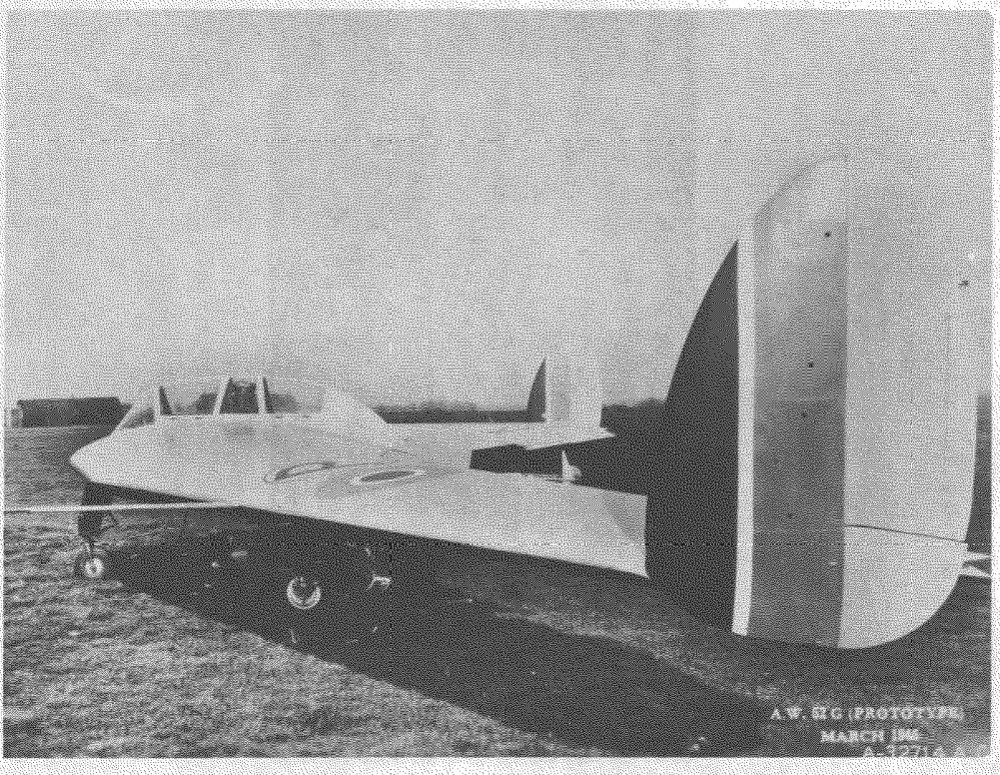
- History of the investigation
- Source agencies
- DOW
- Documents
- 2 documents · 101 pages
- Reading time
- 90 min
 MapPhysical page 18
DOCUMENTARY SOURCES · DOW
What the records tell
Dated December 10, 1948 and marked top secret, the study had a stated objective: to examine the pattern of tactics of the “flying discs” and draw conclusions about the possibility of their existence. An attached routing sheet requests the destruction of extra copies and limits circulation. The main text is four pages long; the appendices contain the detailed analysis (A), a map (B), selected reports (C) and data sheets on flying-wing aircraft (D). File D094 in the same archive contains another version of the study, identified as Air Intelligence Report n.º 100-203-79, and should not be counted as an independent study.
The central conclusion is cautious. For the authors, the frequency of the reports, the similarity of the descriptions and the quality of some of the observers supported the view that some type of flying object had been seen. Among the informants were Weather Bureau employees, rated officers, experienced civilian pilots and technicians on research projects. The report cites two observations, made by theodolite at the weather station in Richmond, Virginia, months before the flying discs reached the newspapers, as an argument against the idea that everything was press-driven contagion.
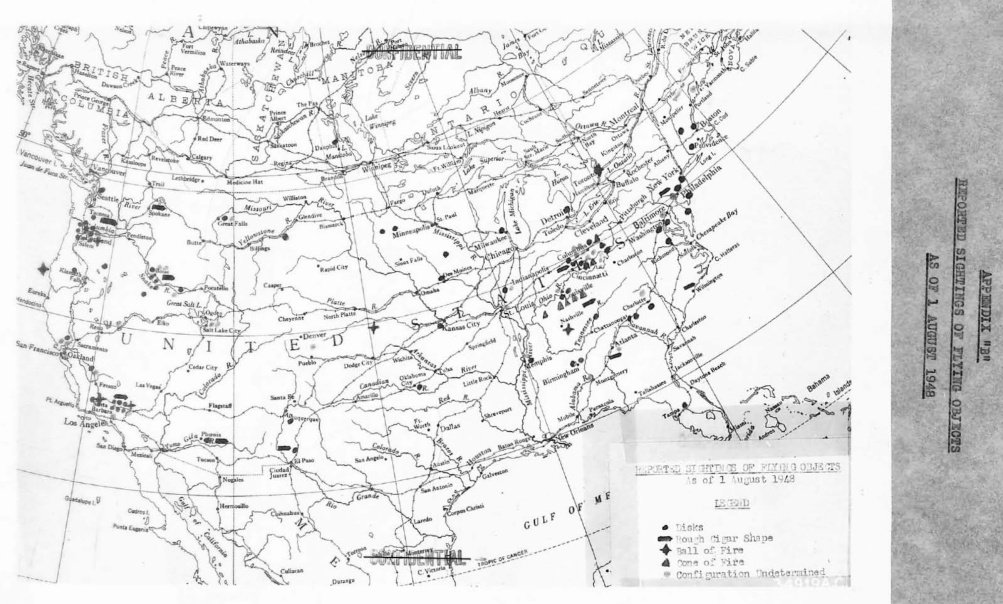
The descriptions were grouped into three shapes: disc, rough cigar and fireball. The report acknowledges that they might have been a single type of object seen from different angles. An attached map, with reports up to August 1º, 1948, shows the concentration in the Atlantic and Pacific coast states and in Ohio and Kentucky. The map records places of report, not confirmed objects, and mixes episodes of very different weight.
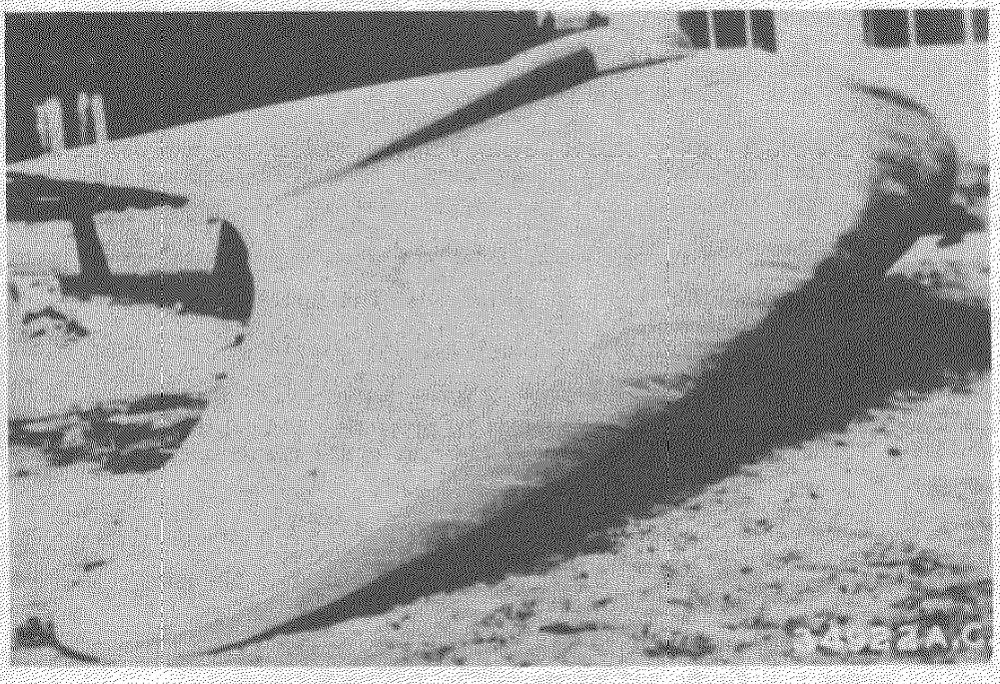
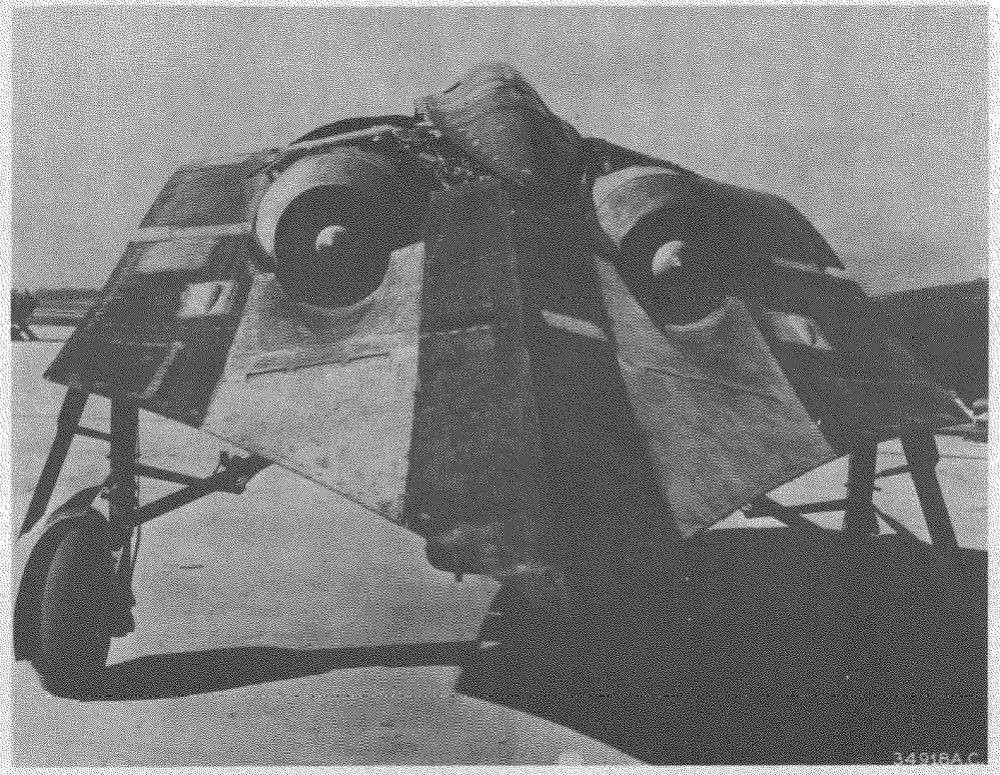
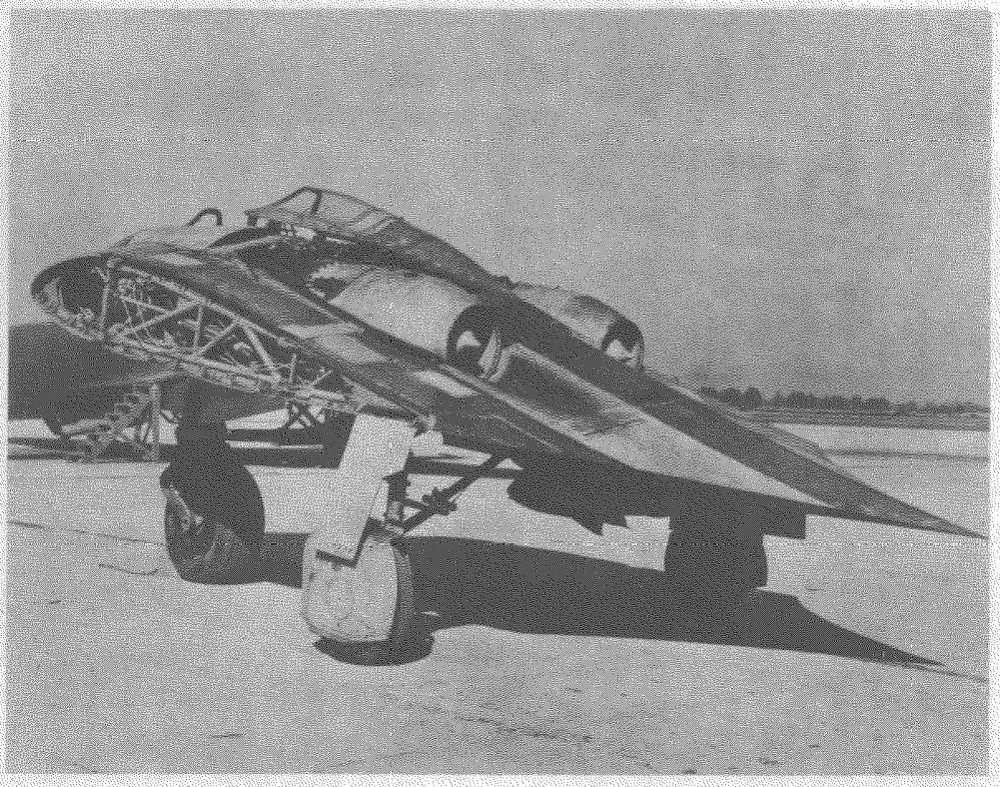
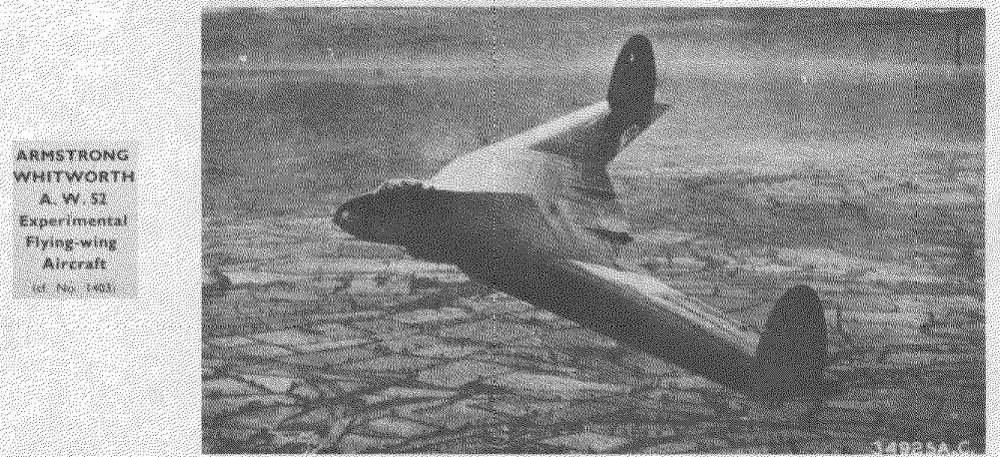
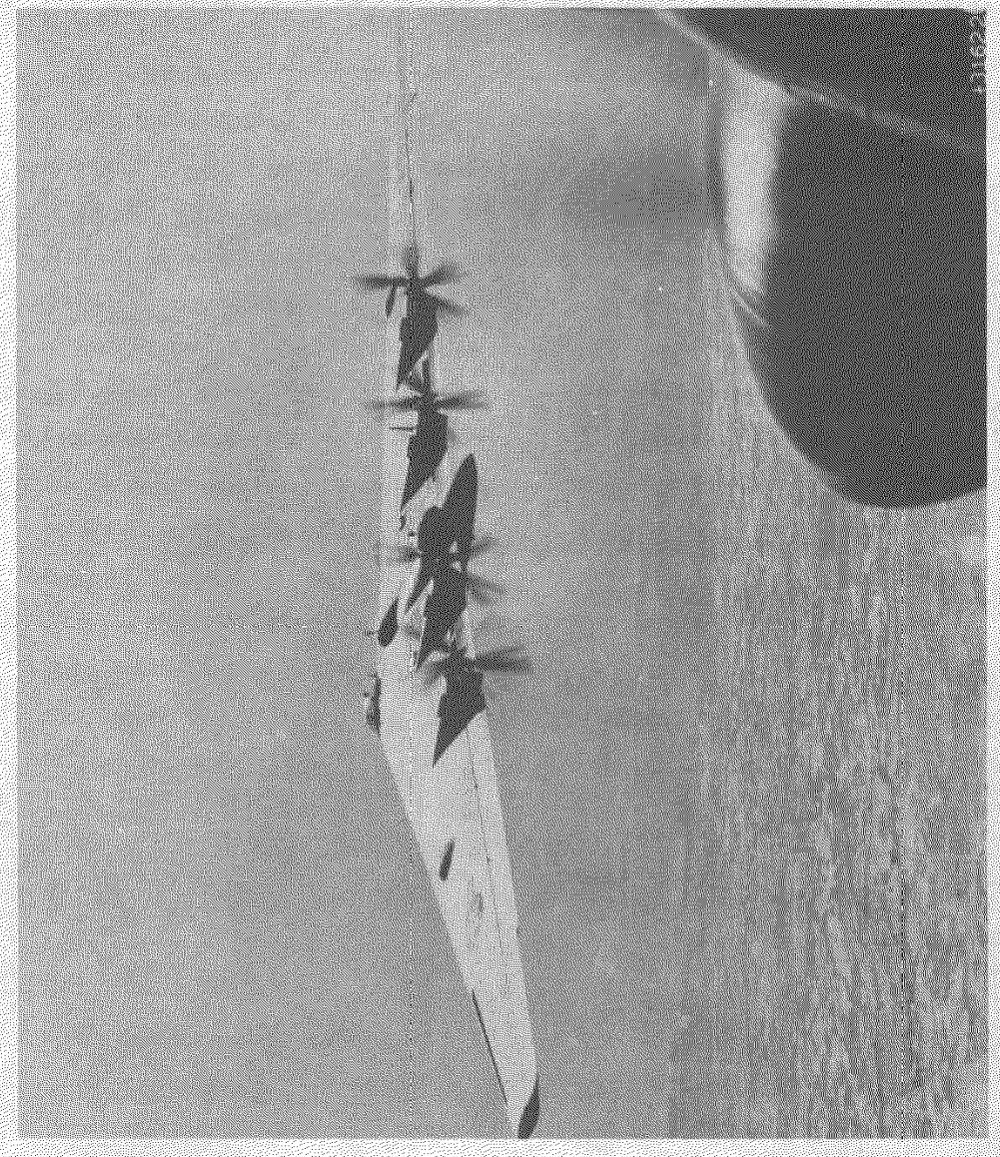
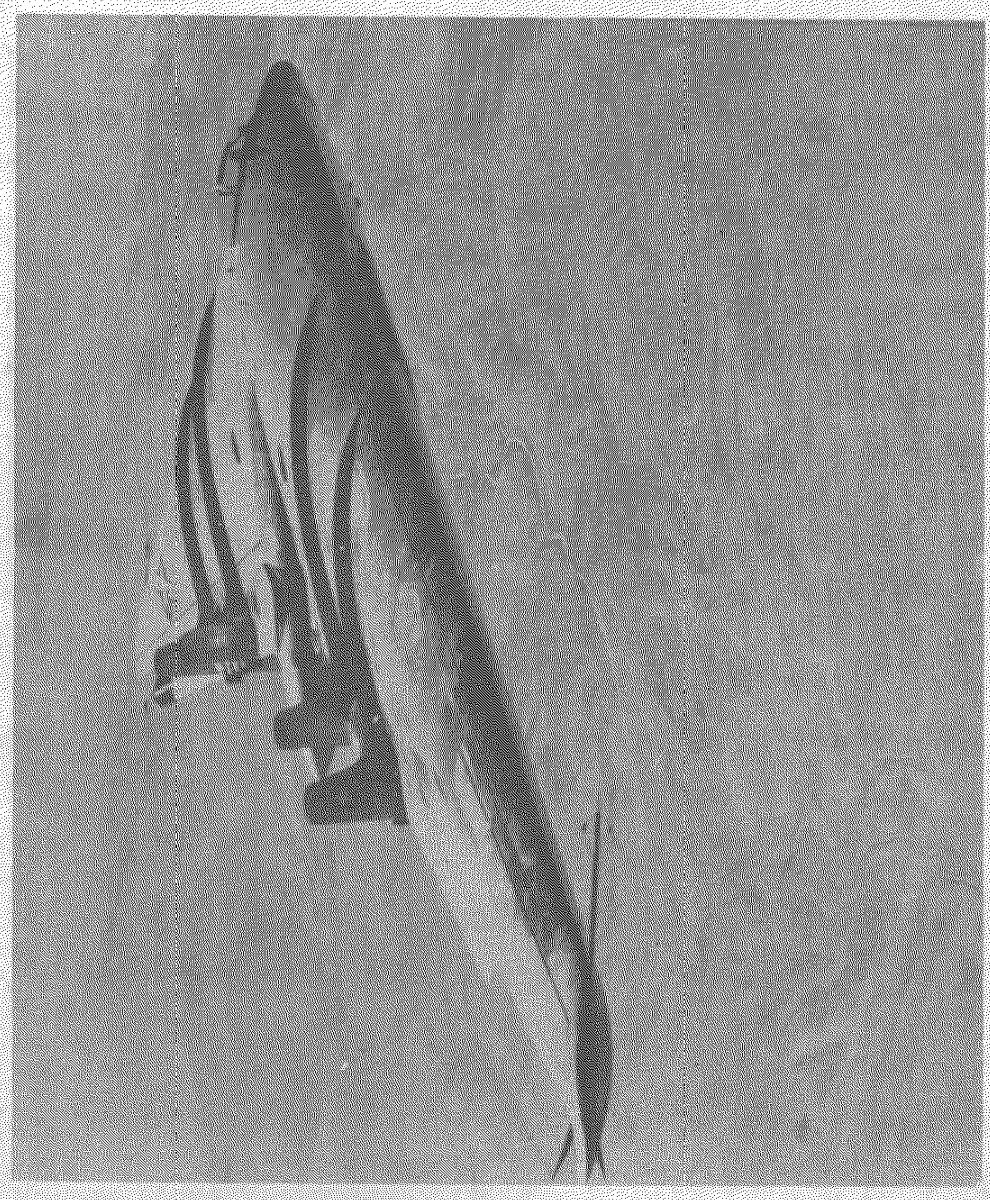
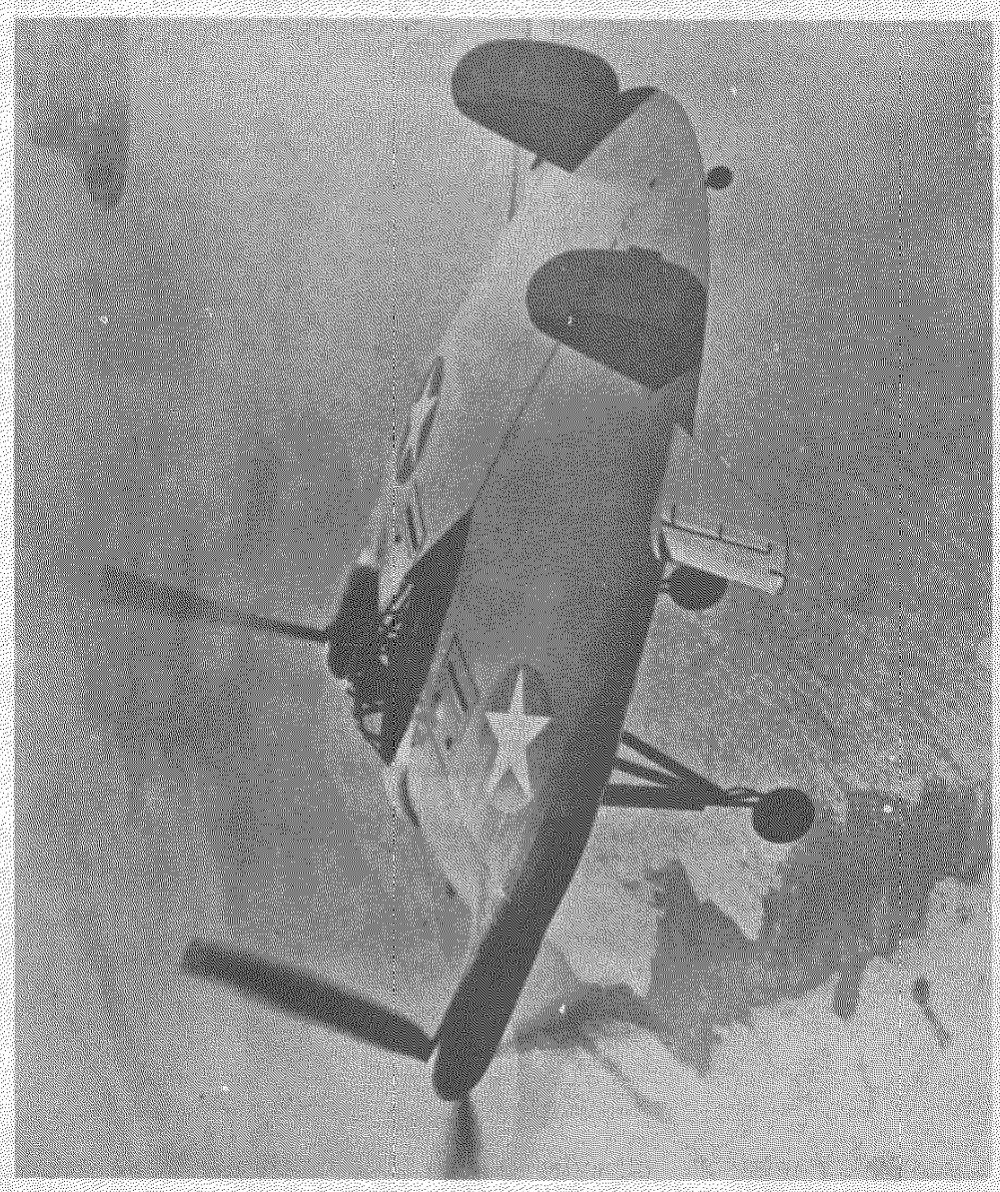
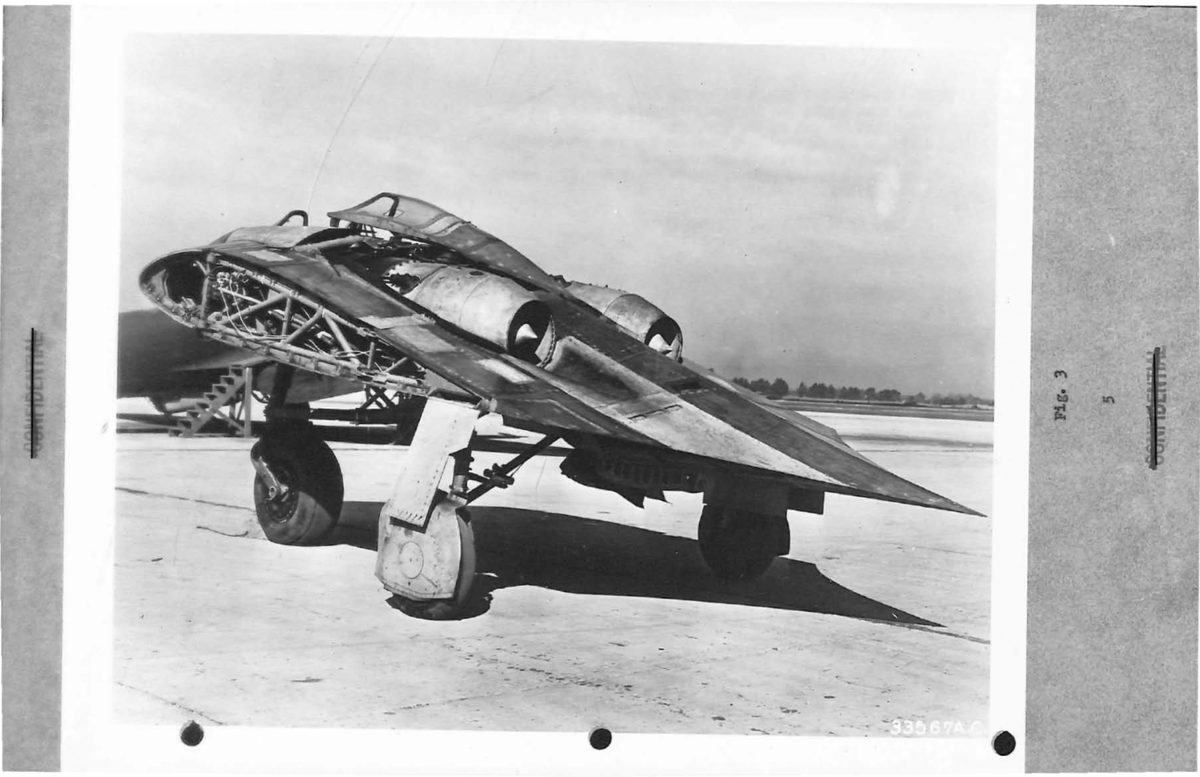
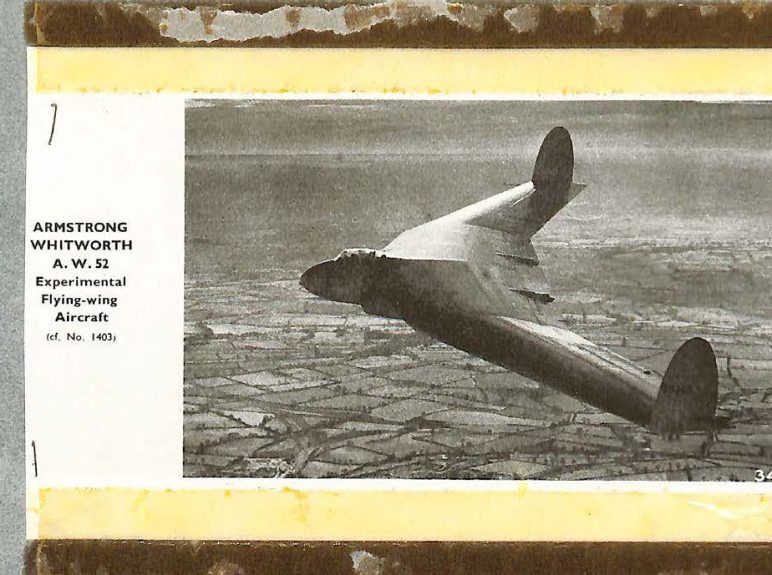
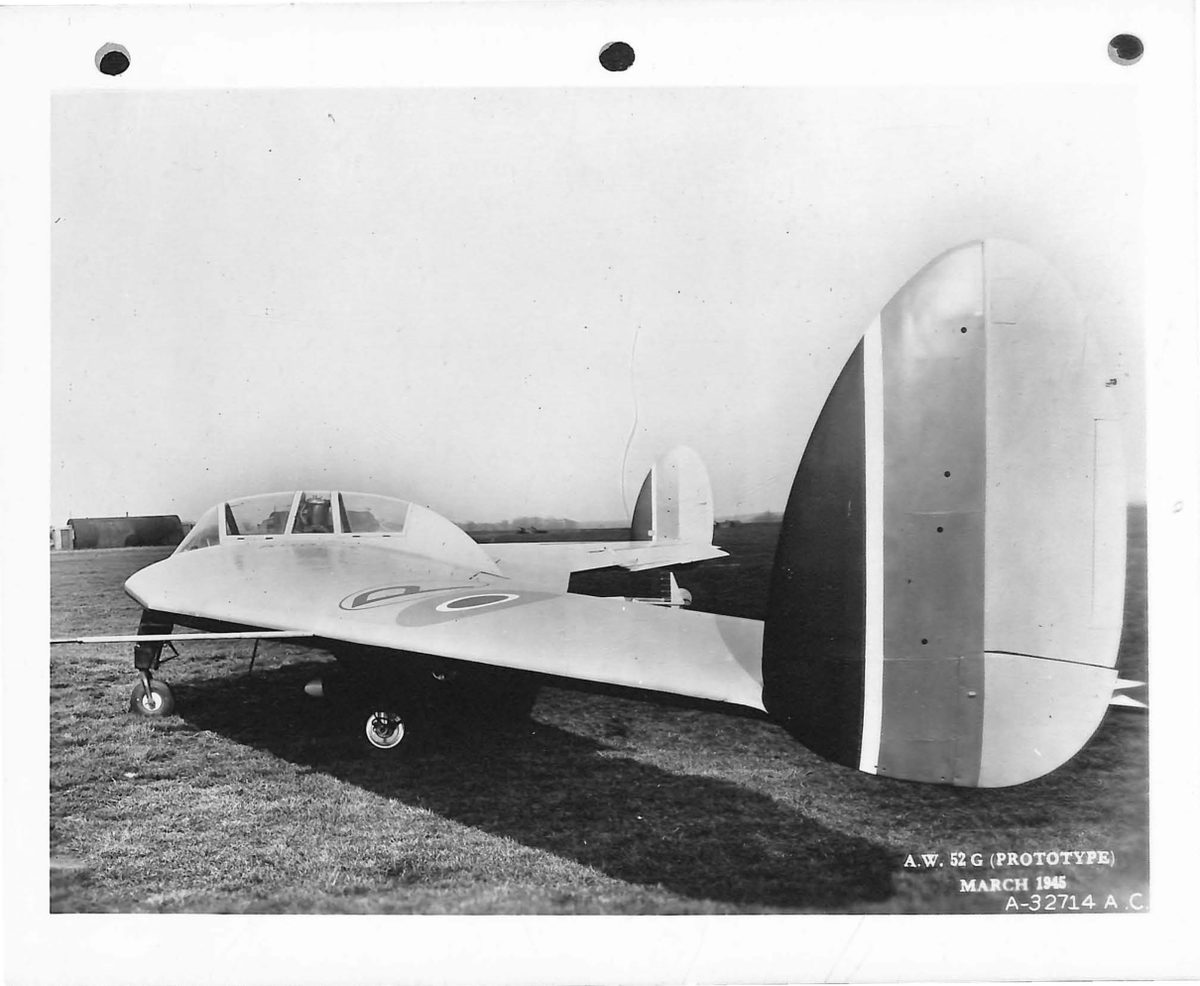
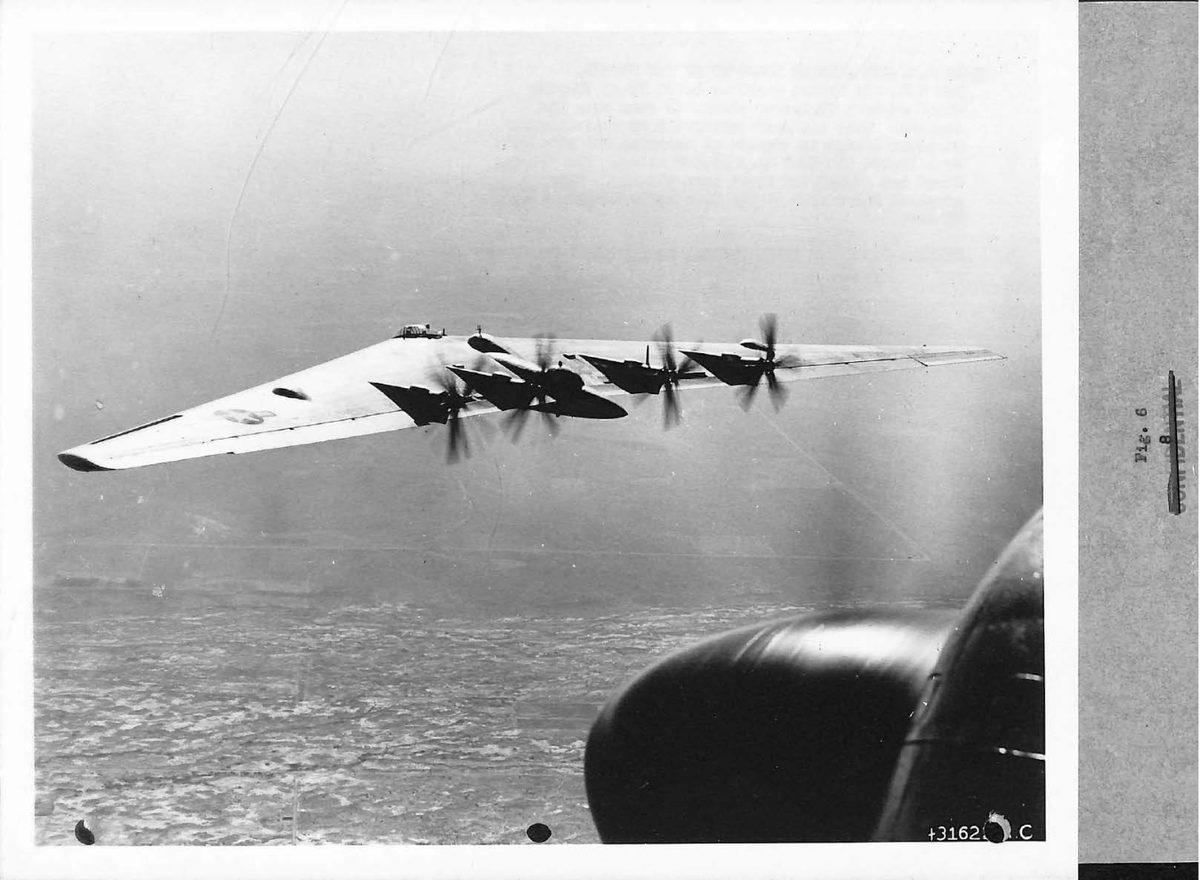
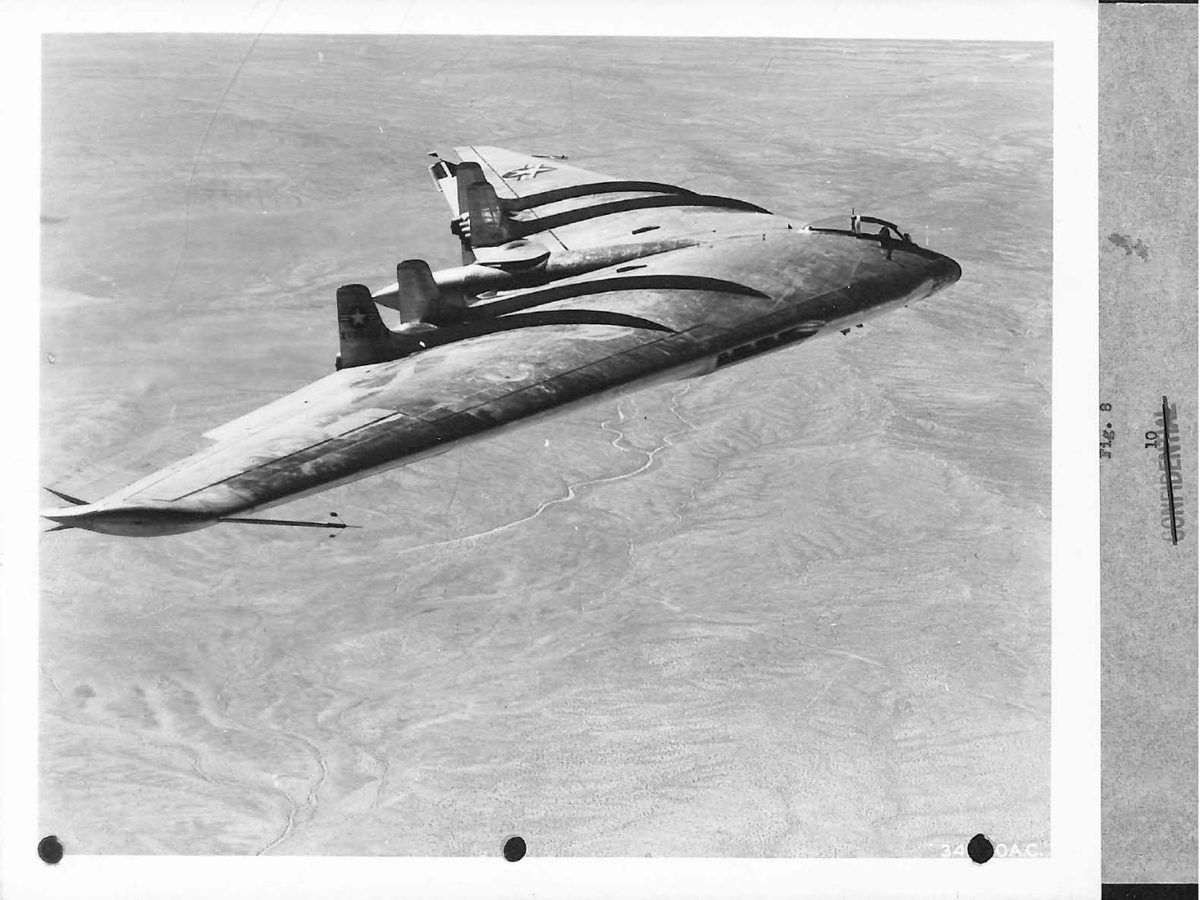
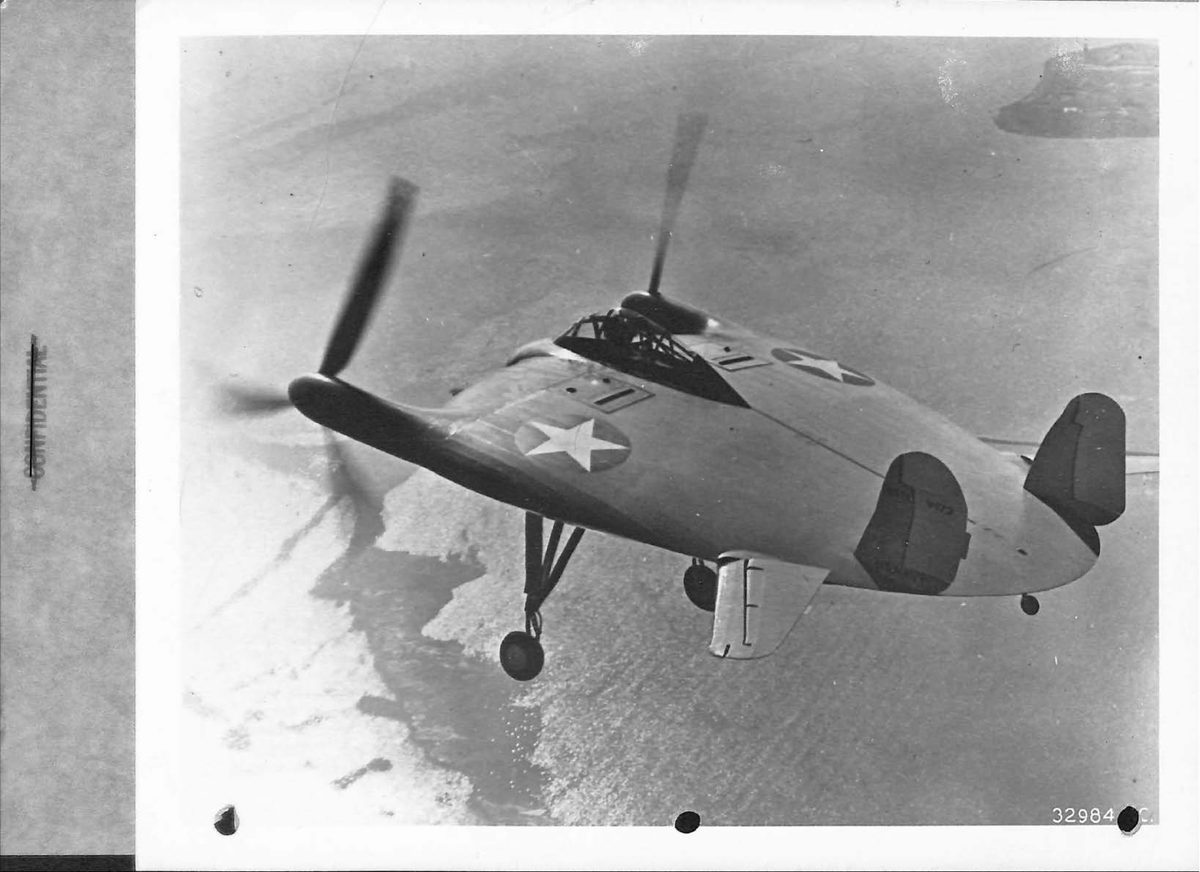
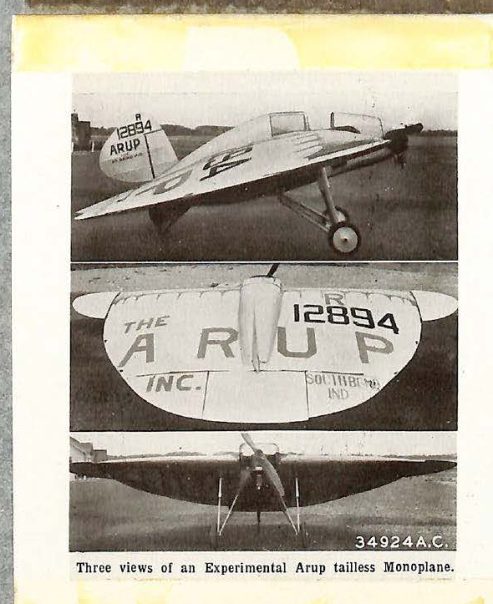
On the question of origin, the text admits two "reasonable" possibilities. In the first, they would be American artifacts, such as weather balloons, rockets or experimental flying-wing aircraft, and confirming this would require surveying all launches. In the second, they would be foreign, and in that case, the text says, the most logical assumption would be a Soviet source, drawing on German flying-wing projects such as the Horten 229. The report goes so far as to list hypothetical motives for these flights, such as photographic reconnaissance and testing of air defenses, but presents no evidence of any Soviet aircraft.
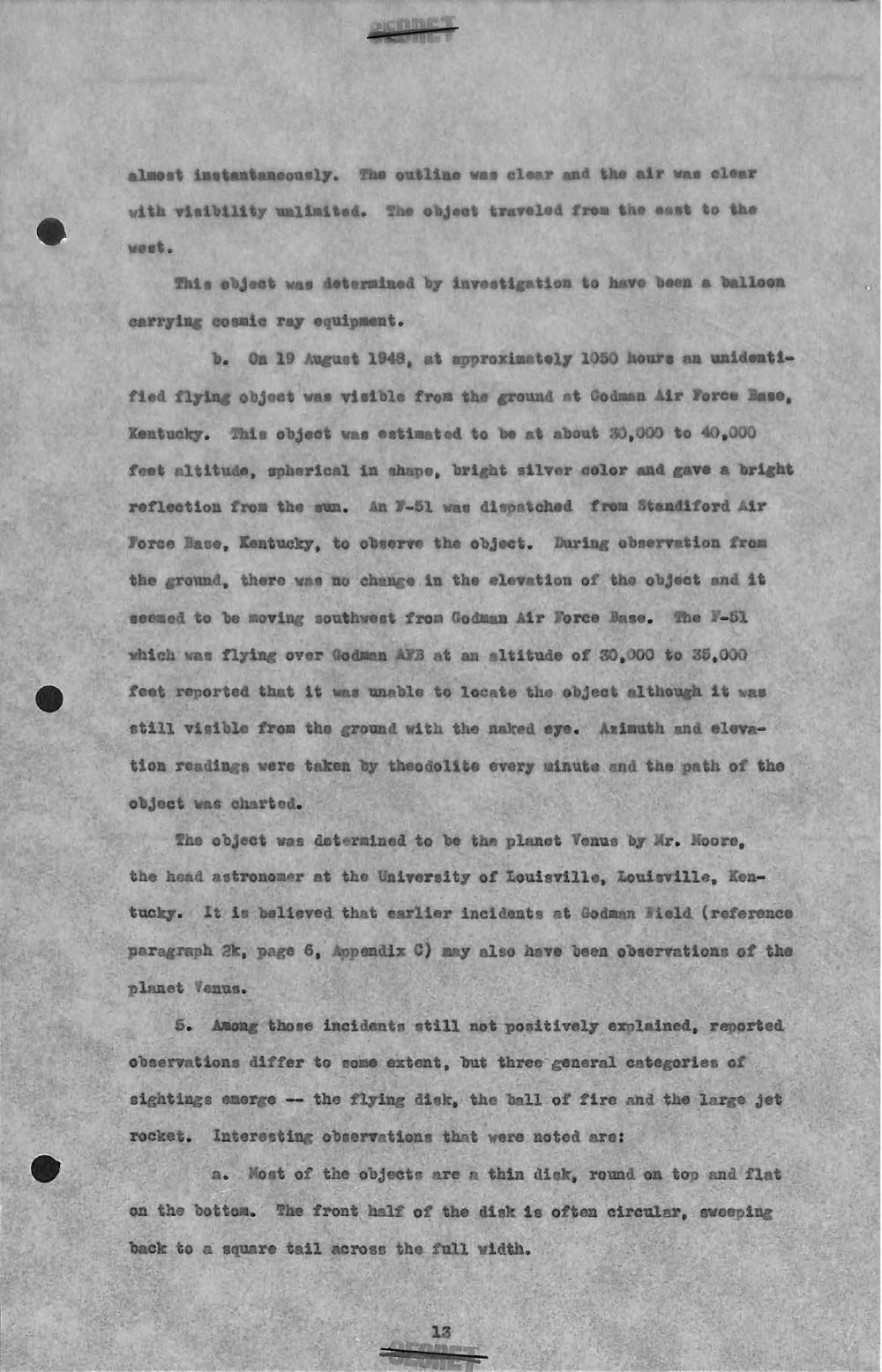
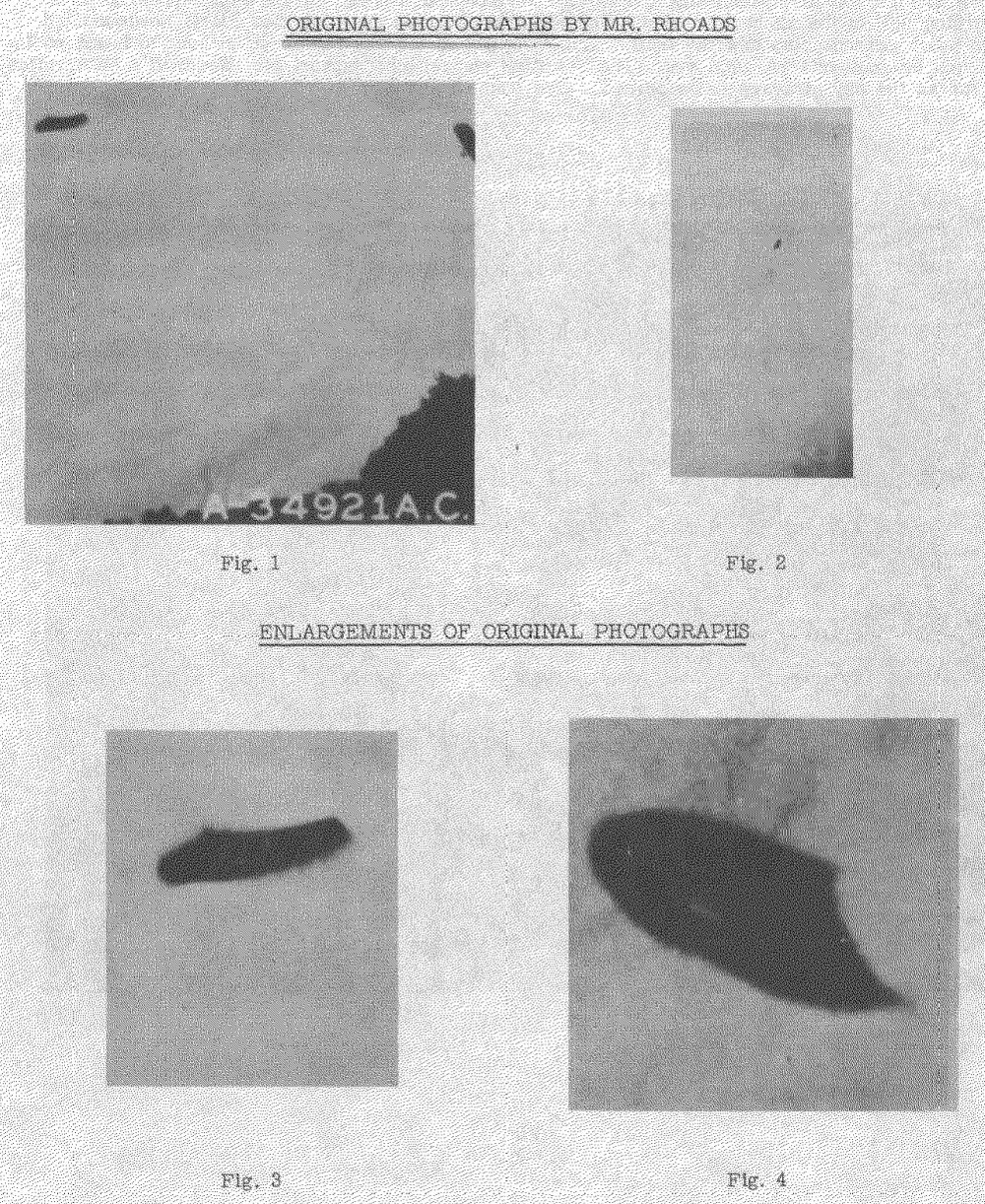
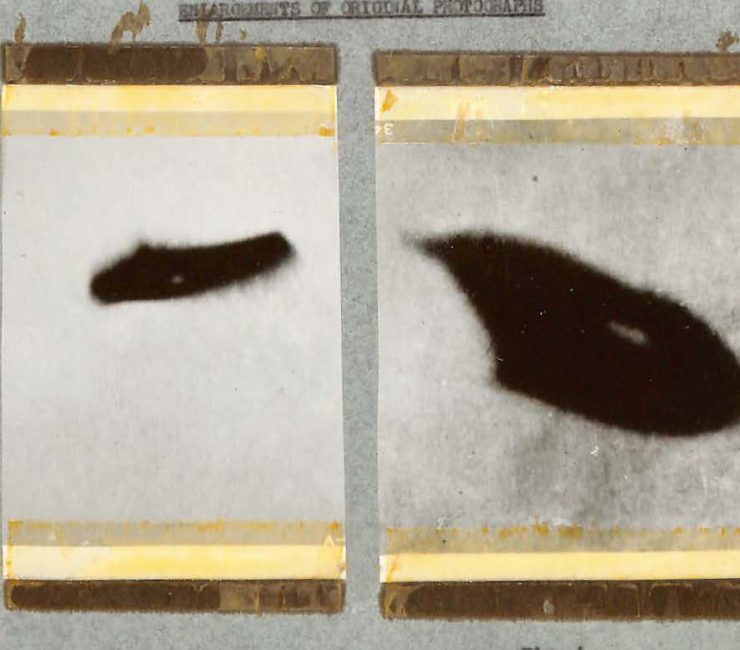
Appendix C summarizes cases considered significant, among them Richmond, the group that saw an object near the V-2 launch range at White Sands, the Portland police officers, the Phoenix photographs, the death of the pilot at Godman Field, Lieutenant Gorman's pursuit at Fargo and the encounter of three pilots near Andrews Field on November 18, 1948. It also states that the Air Materiel Command had reliably identified 18 of about 210 cases, such as a cosmic-ray balloon at Van Nuys and the planet Venus at Godman, in August 1948.
The last sentence of the conclusions sums up the tone of the document: it would be necessary to accept that some type of flying object had been observed, although its identification and origin could not be discerned, and it would be imprudent, for the sake of defense, to rule out that some of them were foreign. Months later, a U.S. Army study, also preserved in the collection, would arrive at a different emphasis: that there was no tangible evidence of foreign activity. The two texts show an assessment still taking shape, not a final position.
The copy of the study released as D094 has its own cover as Air Intelligence Report No. 100-203-79, dated April 28, 1949, which explains the year in the file name. It is copy 102 of 103 and carries the same text of December 10, 1948, identified as Air Intelligence Division Study No. 203, produced jointly by the Air Force Directorate of Intelligence and the Office of Naval Intelligence. Attached to it are a loan sheet with a return date of July 8, 1952 and a handling record opened on December 5, 1950, with signatures of officers who consulted it up to June 1952. The photos and drawings in appendices C and D appear in full in this copy.
The last sheet is a memorandum of June 5, 1952, drafted in the section of Captain Dewey J. Fournet Jr., who also signed the handling record the following day. A colonel had requested the declassification of the study. The search did not find the report with that number, but a draft with the same title and date, called D/I-ONI Study No. 203, which was presumed to be the same text. The recommendation was not to declassify, because the study contained a great deal of speculation about the origin of the objects, data on the Soviet air order of battle and atomic installations, information on American research and a treatise on possible Soviet intentions with controlled aerial missiles. The stamps show that the text was only released in 1985.
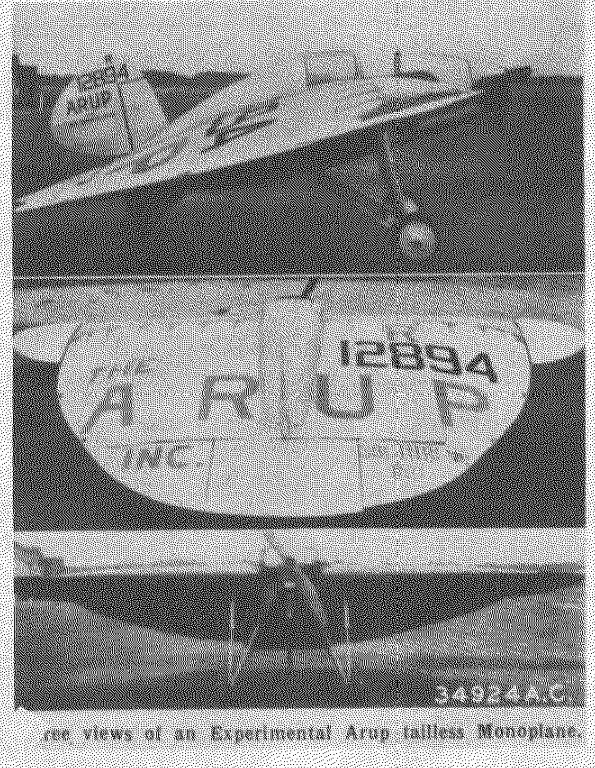
Read in full, Appendix C has date errors that the source files allow one to check: it places Kenneth Arnold on July 29, 1947, the Eastern Airlines encounter on July 25, 1948 and the Miles City report on June 15, 1948, with a "reddish glow," when the record card and the observer's letters speak of May 17 and a white light. Appendix D, in turn, says that the Arup tailless monoplane, filmed at South Bend in the 1930s, appears identical in some positions to the enlargement of the second Phoenix photo. This is a comparison made by the report, not an identification.
More images from the document
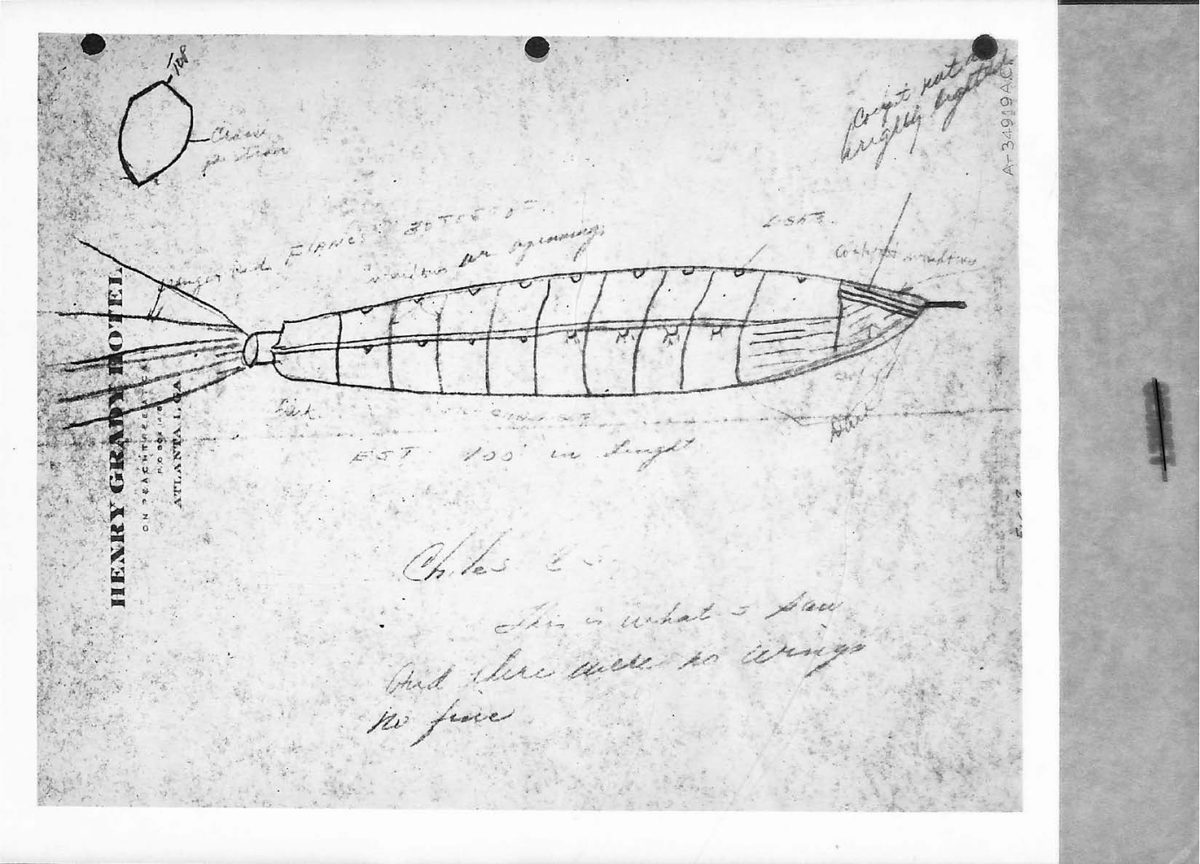
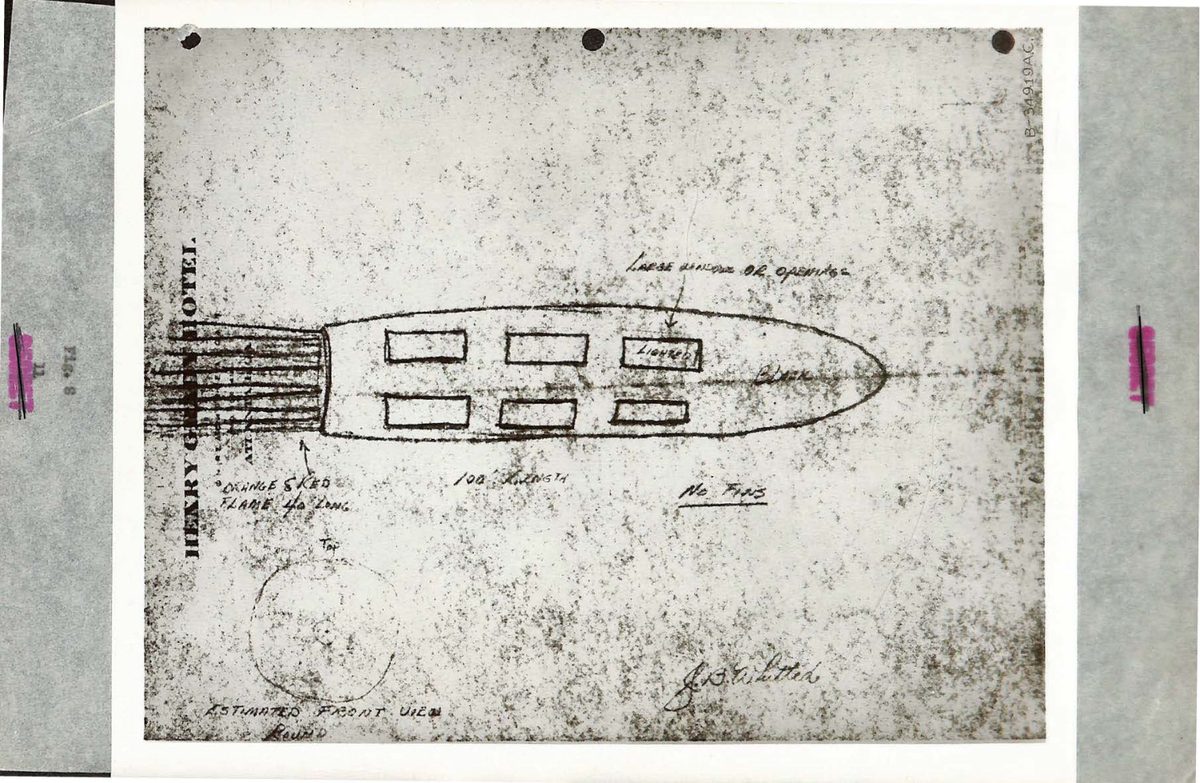
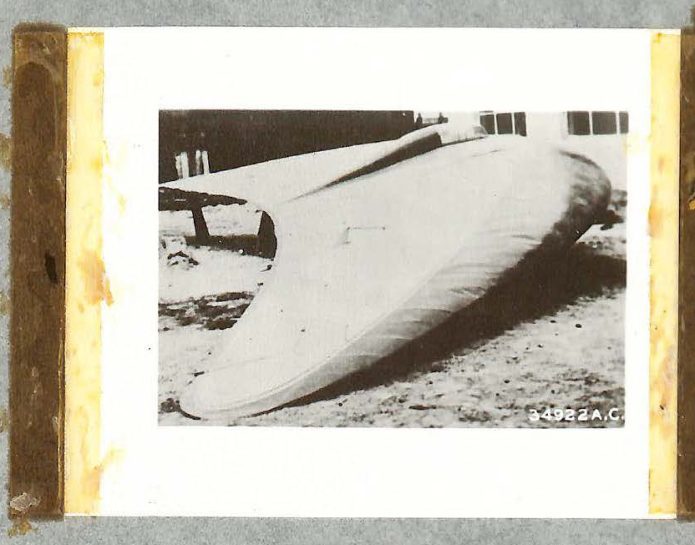
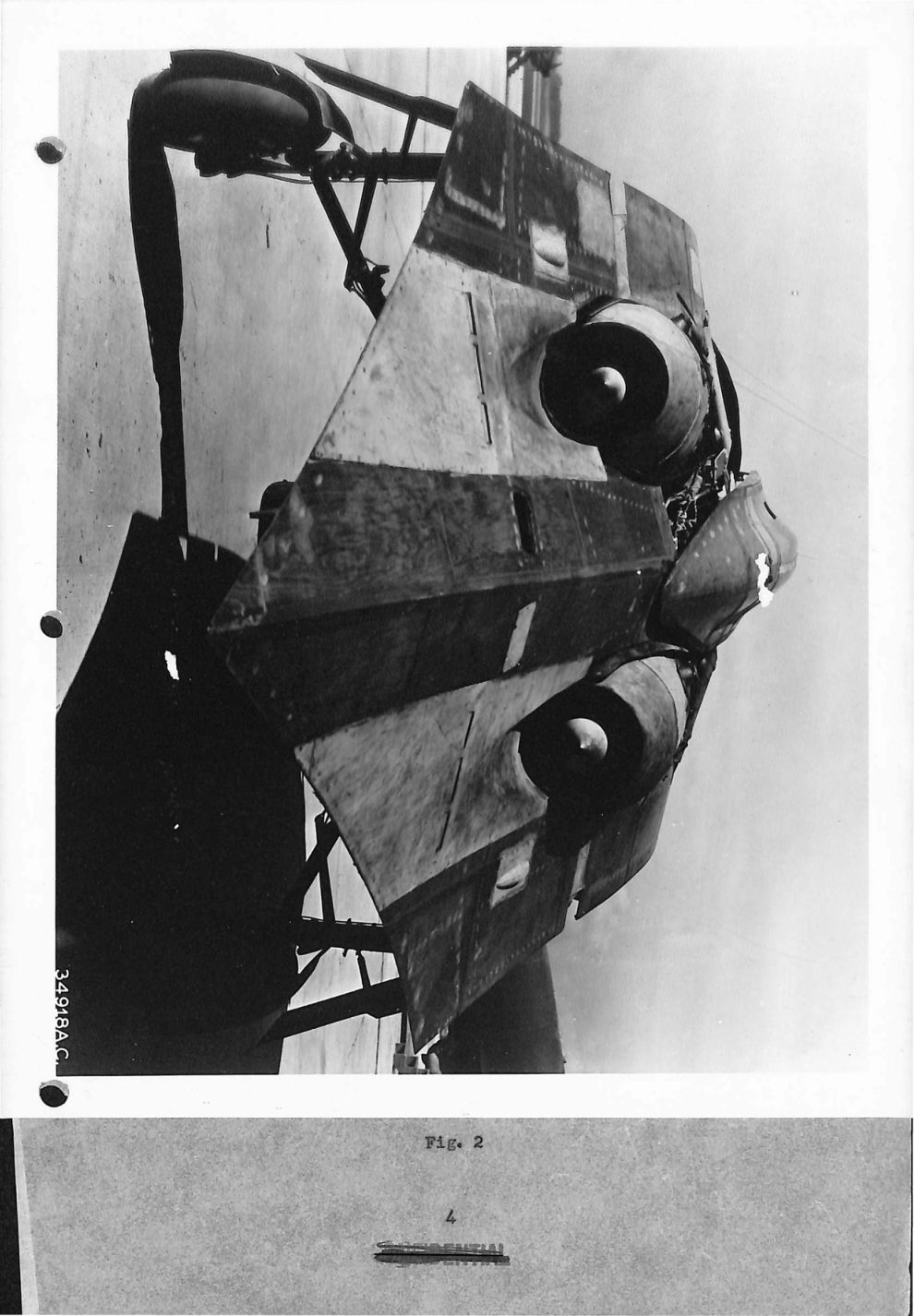
DIRECT READING OF THE FILE
The document, in the original
U.S. government documents. Both copies of Study No. 203 are translated in full and checked against the facsimile: the reissue of 28/04/1949 (D094, 34 pages, with loan sheet, handling record and 1952 memorandum) and the original copy No. 3 of 10/12/1948 (D093, 67 pages, with the photographs and drawings mounted on separate sheets). Where the typewritten text is identical, the D093 entries reproduce the checked translation from D094 and indicate the corresponding page. The hypotheses about Soviet aircraft are from the 1948 report, not from the portal.
EXCERPT 1 · PHYSICAL PAGE 1
D094, physical page 1: cover of folder 2-7341 (full legible text)
Authority:
NND 857011Editorial note: Cover with no content other than the folder number and the declassification label.
Check the original PDF
[Folder cover, landscape. Handwritten on the tab:] 2-7341. [Sticker:] DECLASSIFIED. Authority: NND 857011. NW 91376 DocId:34749006 Page 1.View the document record ↗ · Physical page 1, counting the cover.
EXCERPT 2 · PHYSICAL PAGE 3
Loan sheet, physical page 3 (full text)
,. ' 1 •
LO.Alf DOCUDIM' l
T/S COITIOL 10. 2-73.frl -'f
·----
OFYICE TO WHI~H LQlHD _____
AFOill-2.A. ___,__~ I ■ I ·-
•
89A DiT! DUi IN AFOIM-C/DD _,l_l_ul;r ~-~52
PLEASE RETURN THIS DOCUMF.JfT. OR DATE SPIClfliD !fK>VI TO AFOIN...C/DD. ROOII
• IO. 50116 J.TTIITIOlh M' WM! COlffftOL 01'FICD
•
When the attached docum•nt 1s withdrawn
the clses1f1cat1on of thi• .. ahe•t wil1 be
chan~•d to UlfCLASSIFIKD in accordance
with PAR 250, ll'R 205-1.i
...Editorial note: Handwritten notes "89A" and "598" not translated.
Check the original PDF
TOP SECRET [riscado]. LOAN DOCUMENT. T/S CONTROL NO. 2-7341. OFFICE TO WHICH LOANED: AFOIN-2A. DATE DUE IN AFOIN-C/DD: 8 July 1952. PLEASE RETURN THIS DOCUMENT ON DATE SPECIFIED ABOVE TO AFOIN-C/DD, ROOM NO. 5C116. ATTENTION: TOP SECRET [riscado] CONTROL OFFICER. When the attached document is withdrawn the classification of this sheet will be changed to UNCLASSIFIED in accordance with PAR 25c, AFR 205-1.View the document record ↗ · Physical page 3, counting the cover.
EXCERPT 3 · PHYSICAL PAGE 4
Title page, physical page 4 (full text)
...
Air Intelligence Report No. 100-203-79.
ANALYSIS OF FLYING OB ECT INCIDENTS IN THE U. S.
Air Intelligence Division Study No. 203
10 December 1948.
Directorate of Intelligence and Office of Naval Intelligence
DISTRIBUTION ''C''
WARNING: This document contains information affecting the national defense of the United States
within the meaning of the Espionage Act, 60 U.S.C., 31 and 32, as amended. Its transmission or
the revelation of its contents in any manner to an .. unauthorized person is prohibited by law.
Reproduction of the intelligence in this publication, under the provisions of Army Regulation
380-5, is authorized for United States military agencies provided the source is indicated.
Directorate of Intelligence Office of Naval Intelligence
Headquarters United States Air Force Navy Department
Washington, D. C,
DECLASSIFIEDCheck the original PDF
Air Intelligence Report No. 100-203-79. ANALYSIS OF FLYING OBJECT INCIDENTS IN THE U. S. Air Intelligence Division Study No. 203, 10 December 1948. Directorate of Intelligence and Office of Naval Intelligence. DISTRIBUTION "C". WARNING: This document contains information affecting the national defense of the United States within the meaning of the Espionage Act, 50 U.S.C., 31 and 32, as amended. Its transmission or the revelation of its contents in any manner to an unauthorized person is prohibited by law. Reproduction of the intelligence in this publication, under the provisions of Army Regulation 380-5, is authorized for United States military agencies provided the source is indicated. Directorate of Intelligence, Headquarters United States Air Force. Office of Naval Intelligence, Navy Department. Washington, D. C.View the document record ↗ · Physical page 4, counting the cover.
EXCERPT 4 · PHYSICAL PAGE 5
Table of contents, physical page 5 (full text)
••
..
ANALYSIS OF FLYING OB ECT lliCIDENTS IN THE U. S.
INDEX
Page
SUM:MARY AND CONCLUSIONS .......... , ............ , .. 1
APPENDIX "A" - ANALYSIS OF FLYING OB CT INCIDENTS IN THE U. S. It
3
Iritroduction . . . . . . . . . . . . . . . . . . . . . . 3
Some Aspects Regarding Flying Object Incidents 3
Possible Origin of Unusual Flying Objects . . . . . . . . ' . . 4
Possible Reasons or Tactics for the Use of Soviet
Unconventional Aircraft Over the U. S. . . . . . . . . . . . . . . . . 6
Conclusion
APPENDIX "B" -
APPENDIX "C,, - SELECTED REPORTS OF FLYING OBI CT INCIDENTS .. . 8 •
APPENDIX "D" - FLYING WING TYPE AIRCRAFT 17
Germany ... 17
Great Britain • • ♦ • • • • , . 21
United States . . . ' . . 23
. . . . . . .. . . . . . . . . . .
REPORTED SIGHTINGS OF FLYING CTS AS OF
6
' • 7
- i -Check the original PDF
ANALYSIS OF FLYING OBJECT INCIDENTS IN THE U. S. INDEX. SUMMARY AND CONCLUSIONS, 1. APPENDIX "A" - ANALYSIS OF FLYING OBJECT INCIDENTS IN THE U. S. AND HYPOTHETICAL TACTICS EMPLOYED, 3: Introduction, 3; Some Aspects Regarding Flying Object Incidents, 3; Possible Origin of Unusual Flying Objects, 4; Possible Reasons or Tactics for the Use of Soviet Unconventional Aircraft Over the U. S., 5; Conclusion, 6. APPENDIX "B" - REPORTED SIGHTINGS OF FLYING OBJECTS AS OF 1 AUGUST 1948, 7. APPENDIX "C" - SELECTED REPORTS OF FLYING OBJECT INCIDENTS, 8. APPENDIX "D" - FLYING WING TYPE AIRCRAFT, 17: Germany, 17; Great Britain, 21; United States, 23.View the document record ↗ · Physical page 5, counting the cover.
EXCERPT 5 · PHYSICAL PAGE 6
Summary and conclusions, paragraphs 1 to 7, physical page 6 (full text)
MP l!Clt!,
ANALYSIS OF FLYING OB ECT INCIDENTS IN THE U. S.
SUMMARY AND CONCLUSIONS
PROBLEM
1. TO EXA:MlNE pattern of tactics of "Flying Saucers" (hereinafter referred to as flying objects)
and to develop conclusions as to the possibility of existence.
FACTS AND DISCUSSION
2. A DETAILED discussion of information bearing on the problem as set forth above 1s attached
as Appendix "A". The main points established therein are summarized below.
3. THE FREQUENCY of reported incidents, the similarity in many of the characteristics attributed
to the observed objects and the quality of observers considered as a whole, support the contention
that some type of flying object has been observed. Approximately 210 incidents have been reported.
• Among the observers reporting on such incidents are trained and experienced U.S. Weather Bureau
personnel, USAF rated officers, experienced civilian pilots, technicians associated with various research projects and technicians employed. by commercial airlines.
4. THE POSSIBILITY that reported observations of flying objects over the U.S. were influenced by
previous sightings of unidentified phenomena in Europe, particularly over Scandinavia 1n 1948, • and
that the observers reporting such incidents may have been interested in obtaining personal pubUcity
have been considered as possible explanations. However, these posslb111t1es seem to be improbable
when certain selected reports such as the one from U.S. Weather Bureau at Richmond are examined.
During observations of weather balloons at the Richmond Bureau, one well trained observer has
sighted strange metallic disks on three occasions and another observer has sighted a similar object
on one occasion. The last observation of un1denttf1ed objects was in Apr1i, 1947. On all four occasions the weather balloon and the unidentified objects were in view through the theodolite. These
observations at the Richmond Bureau occurred several months before publ1city on the flying saucers
appeared in a U.S. newspaper.
5. DESCRIPTIONS OF the flying objects fall lnto three configurat1on categories: (1) disk-shaped
(2) rough cigar-shaped {3) balls of fire. Varying conditions of visibility and differences in angles
at which the objects may have been viewed introduces a possibility that a single type object may
have been observed rather than three different types. This possibility is further substantiated by
the fact that 1n the areas where such objects have been observed the ratio of the three general
configurations is approximately the same.
6. THEREFORE, IT appears that some object has been seen; however, the identification of that
object cannot be readily; accomplished on the basis of information reported on each incident. It
ls possible that the object, or objects, may have been domestically launched devices such as weather
balloons, rockets, experimental flying wlng aircraft, or celestial phenomena. It is necessary to
obtain information on such domestic activity to confirm or deny this possibility. Depending upon
the degree with which this may be accomplished, foreign devices must then be considered as a .. possibility.
7. THE PATTERN of sightings is definable. Sightings ~ave been most intense throughout the states
bordering the Atlantic and Pacific coast lines, and the central states of Ohio and Kentucky. A map
showing location of sightings is attached as Appendix "B"
~•• 11c11, - 1 -Check the original PDF
SUMMARY AND CONCLUSIONS. PROBLEM. 1. TO EXAMINE pattern of tactics of "Flying Saucers" (hereinafter referred to as flying objects) and to develop conclusions as to the possibility of existence. FACTS AND DISCUSSION. 2. A DETAILED discussion of information bearing on the problem as set forth above is attached as Appendix "A". The main points established therein are summarized below. 3. THE FREQUENCY of reported incidents, the similarity in many of the characteristics attributed to the observed objects and the quality of observers considered as a whole, support the contention that some type of flying object has been observed. Approximately 210 incidents have been reported. Among the observers reporting on such incidents are trained and experienced U.S. Weather Bureau personnel, USAF rated officers, experienced civilian pilots, technicians associated with various research projects and technicians employed by commercial airlines. 4. THE POSSIBILITY that reported observations of flying objects over the U.S. were influenced by previous sightings of unidentified phenomena in Europe, particularly over Scandinavia in 1946, and that the observers reporting such incidents may have been interested in obtaining personal publicity have been considered as possible explanations. However, these possibilities seem to be improbable when certain selected reports such as the one from U.S. Weather Bureau at Richmond are examined. During observations of weather balloons at the Richmond Bureau, one well trained observer has sighted strange metallic disks on three occasions and another observer has sighted a similar object on one occasion. The last observation of unidentified objects was in April, 1947. On all four occasions the weather balloon and the unidentified objects were in view through the theodolite. These observations at the Richmond Bureau occurred several months before publicity on the flying saucers appeared in a U.S. newspaper. 5. DESCRIPTIONS OF the flying objects fall into three configuration categories: (1) disk-shaped (2) rough cigar-shaped (3) balls of fire. Varying conditions of visibility and differences in angles at which the objects may have been viewed introduces a possibility that a single type object may have been observed rather than three different types. This possibility is further substantiated by the fact that in the areas where such objects have been observed the ratio of the three general configurations is approximately the same. 6. THEREFORE, IT appears that some object has been seen; however, the identification of that object cannot be readily accomplished on the basis of information reported on each incident. It is possible that the object, or objects, may have been domestically launched devices such as weather balloons, rockets, experimental flying wing aircraft, or celestial phenomena. It is necessary to obtain information on such domestic activity to confirm or deny this possibility. Depending upon the degree with which this may be accomplished, foreign devices must then be considered as a possibility. 7. THE PATTERN of sightings is definable. Sightings have been most intense throughout the states bordering the Atlantic and Pacific coast lines, and the central states of Ohio and Kentucky. A map showing location of sightings is attached as Appendix "B".View the document record ↗ · Physical page 6, counting the cover.
EXCERPT 6 · PHYSICAL PAGE 7
Summary and conclusions, paragraphs 8 to 12, physical page 7 (full text)
8. THE ORIGIN of the devices is not ascertainable. There are two reasonable possibllltles:
(1) The objects are domestic devices, and if so, their identification or origin can be established
by a survey of all launchings of airborne objects. Domestic flying wing type aircraft observed
in various aspects of flight might be responsible for some of the reported flying objects, particularly those described as disks and rough cigar shapes. (See Appendices "C" and ''D" .) Among
those which have been operational in recent years are the XF5U-1 ("Flying Flap3ack") developed
by Chance-Vaught, the Northrup B-35, and the turbo-jet powered Northrup YB-49. · The present
.existence of any privately developed flying-wing type aircraft has not been determined but one
such aircraft, the Arup tailless monoplane, was operational at South Bend, Indiana, prior to 1935.
(2) Objects are foreign, and l:f so, it would seem most logical to consider that they are from a
Soviet source. The Soviets possess information on a number of German flying-wing type aircraft
such as the Gotha P60A, Junkers EF 130 long-range, high-speed jet bomber and the Horten 229
twin-jet fighter, which particularly resembles some of the description of un1denttfied flying objects
(See Appendix "D"). As early as 1924 Tscheranowsky developed a "Parabola" aircraft, an all
wing • design, which was the outcome of considerable Soviet experimentation with gliders of the
same general form. Soviet aircrait based on such designs might have speeds approaching trans
~;onic speeds attributed to some flying objects or greater over-all performance assuming the
successful development of some unusual propulsion device such as atomic energy engine.
9. THAT THE Soviets have a current interest in flying-wing type aircraft is suggested by their
utilization of Dr. Guenther Bock who, at the end of. World Wa:r IT, was in charge of the flylngwlng program in Germany (See Appendix ''A", paragraph 3, page 4 ) . Achievements satisfactory
to the U.S.S.R. are indirectly indicated by the personal recognition he is reported to be receiving
in the U.S.S.R. Recently 1t has been reported that the U.S.S.R. 1s planning to build a fleet of
1,800 Horten flying-wing aircraft. Information· of low evaluation has been received stating that a
regiment of jet night fighters, Model Horten xm, is at Kuzm1kha, an air base two mE.es southwest of Irkutsk. Kuzmikha is identified as one of a number of airfields for the protection of an
atomic energy plant at Irkutsk. The Horten XIII as developed by Germany was a glider,
10. ASSUMING THAT the objects might eventually be identified as foreign or foreign-sponsored
devices, the possible reason for their appearance over the U.S. requires consideration. Several
possible explanations appear noteworthy, vi.z:
a. To negate U.S. confidence in the atom bomb as the most advanced and decisive weapon
in warfare.
b. To perform photographic reconnaissance missions,
c. To test U. S. air defenses.
d. To conduct familiarization flights over U.S. territory.
CONCLUSIONS
11. SINCE the Air Force is responsible for control of the air in the defense of the U.S., it is
imperative that a.ll other agencies cooperate in confirming or denying the possibility that these
objects have a domestic origin. Otherwise, if it is firmly indicated that there 1s no domestic
explanation, the objects are a threat and warrant more active efforts of 1dent1fication and interception.
12. rr MUST be accepted that some type of flying objects have bean observed, although their
identification and origin are not d1scernable. In the interest of national defense it would be
unwise to overlook the possibility that some of these objects may be of foreign origin.
- 2 -
-Editorial note: The original's spellings kept in the English ("Chance-Vaught", "Northrup"); in the translation we use the current forms Chance-Vought and Northrop. The hypotheses about Soviet aircraft are those of the 1948 report.
Check the original PDF
8. THE ORIGIN of the devices is not ascertainable. There are two reasonable possibilities: (1) The objects are domestic devices, and if so, their identification or origin can be established by a survey of all launchings of airborne objects. Domestic flying wing type aircraft observed in various aspects of flight might be responsible for some of the reported flying objects, particularly those described as disks and rough cigar shapes. (See Appendices "C" and "D".) Among those which have been operational in recent years are the XF5U-1 ("Flying Flapjack") developed by Chance-Vaught, the Northrup B-35, and the turbo-jet powered Northrup YB-49. The present existence of any privately developed flying-wing type aircraft has not been determined but one such aircraft, the Arup tailless monoplane, was operational at South Bend, Indiana, prior to 1935. (2) Objects are foreign, and if so, it would seem most logical to consider that they are from a Soviet source. The Soviets possess information on a number of German flying-wing type aircraft such as the Gotha P60A, Junkers EF 130 long-range, high-speed jet bomber and the Horten 229 twin-jet fighter, which particularly resembles some of the description of unidentified flying objects (See Appendix "D"). As early as 1924 Tscheranowsky developed a "Parabola" aircraft, an all wing design, which was the outcome of considerable Soviet experimentation with gliders of the same general form. Soviet aircraft based on such designs might have speeds approaching transonic speeds attributed to some flying objects or greater over-all performance assuming the successful development of some unusual propulsion device such as atomic energy engine. 9. THAT THE Soviets have a current interest in flying-wing type aircraft is suggested by their utilization of Dr. Guenther Bock who, at the end of World War II, was in charge of the flying-wing program in Germany (See Appendix "A", paragraph 3, page 4). Achievements satisfactory to the U.S.S.R. are indirectly indicated by the personal recognition he is reported to be receiving in the U.S.S.R. Recently it has been reported that the U.S.S.R. is planning to build a fleet of 1,800 Horten flying-wing aircraft. Information of low evaluation has been received stating that a regiment of jet night fighters, Model Horten XIII, is at Kuzmikha, an air base two miles southwest of Irkutsk. Kuzmikha is identified as one of a number of airfields for the protection of an atomic energy plant at Irkutsk. The Horten XIII as developed by Germany was a glider. 10. ASSUMING THAT the objects might eventually be identified as foreign or foreign-sponsored devices, the possible reason for their appearance over the U.S. requires consideration. Several possible explanations appear noteworthy, viz: a. To negate U.S. confidence in the atom bomb as the most advanced and decisive weapon in warfare. b. To perform photographic reconnaissance missions. c. To test U.S. air defenses. d. To conduct familiarization flights over U.S. territory. CONCLUSIONS. 11. SINCE the Air Force is responsible for control of the air in the defense of the U.S., it is imperative that all other agencies cooperate in confirming or denying the possibility that these objects have a domestic origin. Otherwise, if it is firmly indicated that there is no domestic explanation, the objects are a threat and warrant more active efforts of identification and interception. 12. IT MUST be accepted that some type of flying objects have been observed, although their identification and origin are not discernable. In the interest of national defense it would be unwise to overlook the possibility that some of these objects may be of foreign origin.View the document record ↗ · Physical page 7, counting the cover.
EXCERPT 7 · PHYSICAL PAGE 8
Appendix A, items 1 and 2, physical page 8 (full text)
.iaa IEIIIE'l 0
APPENDIX "A"
ANALYSIS OF FLYING OB· CT INCIDENTS IN THE U. S.
AND HYPOTHETICAL TACTICS EMPLOYED
1. INTRODUCTION. To formulate the possible tactics of flying objects reported over the U. S.
assumes ?rom he outset that firm conclusions have been reached on .both the existence and origin
o! the reported flying objects. The current status of information on such incidents and over•all
analysis does not allow substantiation for such conclusions. However, the lack of such firm conclusions points to the necessity for an immediate and sound statistical analysis of every aspect of
the situation and does not preclude a concurrent examination of the reported incidents to develop
explanations of their possible tactics. The latter will be useful at some future date should the
existence and origin of the flying objects be definitely established. Therefore, the following analysis of available information is advanced in order to present evidence on the actual existence of
some type flying object and to relate same to tactical purposes for which the objects are possibly
designed. The following discussion must be considered a provisional analysis, pending a further
detailed analysis of all aspects of the problem.
2. SOME ASPECTS REGARDING FLYING OB CT INCIDENTS. A cursory examination of evidence
on repo n s poss certain generalities which it appears
may be borne out when detailed analyses have been completed.
Among the incidents reported there are many statements by reliable and experienced persons
whlch tend to confirm that flying objects have been seen. The description of such objects seems
to fall roughly into three categories: (1) Silver disks or balls, approximating a Horten wing type
aircraft; (2) Balls of fire of various colors and intensities; (3) Cigar or pencil-shaped objects
similar in appearance to V-2 type rockets in horizontal flight. The numbers of configurations
might be further reduced with the following considerations in mind: Silver disks or balls have,
for the greater part, been observed in daylight and a number under clear weather conditions with
visibility unlimited. Iri most instances, balls of fire have been observed at night. Cigar, or
pencil-shaped objects have been sighted in fewer numbers but with about equal distrlbuUon 1n
dayllght and at night. A few accounts tell of the disks having a rough cigar-shape when viewed
while maneuvering. Some of the disks are described as having luminosity in daylight. It therefore is possible that a single type of object may be involved in all slghtlngs, and differences ln
description may result from viewing the objects at various angles and under dlffering conditions
of visibility.
The above tends to indicate that some type object ha~ been seen and the possibility exists
that the object or objects seen are conventional domestic devices, such as weather balloons, test
rockets, or jet-equipped aircraft with pancake or flying wing configurations.
The possibillty exists that the reporting of flying objects may have been influenced by earlier
reports on similar incidents in Scandinavia and Central Europe. The publication in newspaper of
details on such incidents, both foreign and domestic, may have induced eome of the description
provided in reported domestic incidents. However, one of the earliest reported sightings in the
U.S. was the one observed by U.S. Weather Bureau personnel in April 1947, at Richmond, Virginia,
and on the basis of this one report it appears that the disks are not balloons. It would seem that
this sighting was not influenced by the reports of foreign incidents, the newspaper accounts of
domestic incidents, nor by misident1.f1cation of a conventional object.
:. 3 -Check the original PDF
APPENDIX "A". ANALYSIS OF FLYING OBJECT INCIDENTS IN THE U. S. AND HYPOTHETICAL TACTICS EMPLOYED. 1. INTRODUCTION. To formulate the possible tactics of flying objects reported over the U. S. assumes from the outset that firm conclusions have been reached on both the existence and origin of the reported flying objects. The current status of information on such incidents and over-all analysis does not allow substantiation for such conclusions. However, the lack of such firm conclusions points to the necessity for an immediate and sound statistical analysis of every aspect of the situation and does not preclude a concurrent examination of the reported incidents to develop explanations of their possible tactics. The latter will be useful at some future date should the existence and origin of the flying objects be definitely established. Therefore, the following analysis of available information is advanced in order to present evidence on the actual existence of some type flying object and to relate same to tactical purposes for which the objects are possibly designed. The following discussion must be considered a provisional analysis, pending a further detailed analysis of all aspects of the problem. 2. SOME ASPECTS REGARDING FLYING OBJECT INCIDENTS. A cursory examination of evidence on reported incidents has been made and it is possible to cite certain generalities which it appears may be borne out when detailed analyses have been completed. Among the incidents reported there are many statements by reliable and experienced persons which tend to confirm that flying objects have been seen. The description of such objects seems to fall roughly into three categories: (1) Silver disks or balls, approximating a Horten wing type aircraft; (2) Balls of fire of various colors and intensities; (3) Cigar or pencil-shaped objects similar in appearance to V-2 type rockets in horizontal flight. The numbers of configurations might be further reduced with the following considerations in mind: Silver disks or balls have, for the greater part, been observed in daylight and a number under clear weather conditions with visibility unlimited. In most instances, balls of fire have been observed at night. Cigar, or pencil-shaped objects have been sighted in fewer numbers but with about equal distribution in daylight and at night. A few accounts tell of the disks having a rough cigar-shape when viewed while maneuvering. Some of the disks are described as having luminosity in daylight. It therefore is possible that a single type of object may be involved in all sightings, and differences in description may result from viewing the objects at various angles and under differing conditions of visibility. The above tends to indicate that some type object has been seen and the possibility exists that the object or objects seen are conventional domestic devices, such as weather balloons, test rockets, or jet-equipped aircraft with pancake or flying wing configurations. The possibility exists that the reporting of flying objects may have been influenced by earlier reports on similar incidents in Scandinavia and Central Europe. The publication in newspaper of details on such incidents, both foreign and domestic, may have induced some of the description provided in reported domestic incidents. However, one of the earliest reported sightings in the U.S. was the one observed by U.S. Weather Bureau personnel in April 1947, at Richmond, Virginia, and on the basis of this one report it appears that the disks are not balloons. It would seem that this sighting was not influenced by the reports of foreign incidents, the newspaper accounts of domestic incidents, nor by misidentification of a conventional object.View the document record ↗ · Physical page 8, counting the cover.
EXCERPT 8 · PHYSICAL PAGE 9
Appendix A, items 2 (end) and 3, physical page 9 (full text)
Although reported domestic incidents are widely scattered throughout the U.S., frequency of
sighting and number of observers per sighting assumes a definable pattern. There ls a large concentration of sightings along the Eastern Seaboard; another large concentration throughout the
Western Coast states, and a few sightings in the Middle West. Distribution of. incidents by con- •
figuration af object and description of maneuverability is approximately equal 1n each of these
areas and this ls belleved to further substantiate the possibility that one type of object might have . k
been observed In dl:fferent aspects of flight.
?f sightings are induced by rumor, it seems unusual that more incidents have not been reported
from the areas with high concentration of population. Reports from such areas would also have
greater facility 1n channeling either to newspaper or official reporting agencies. For the most part,
sightings have been made in fairly open country where there are few restrictions to visibility, which
may indicate that obstructed vision has reduced sightings 1n bullt-up areas.
It therefore seems that some type of flying object has been observed; the ldentlftcatlon of
its origin requires the compet1on of other analyses.
3. POSSIBLE ORlGIN OF UNUSUAL FLYING O CTS. Provided, upon the completion of. analyses,
it is'ln<nciite~ffiar-iroi:ne01::-S:!rof'truri:wor1:ec bjects over the U.S. are of foreign origin,
the objects could from a logical viewpoint, be considered Soviet. It is evident' from the pertormance characteristics attributed to the unidentified objects at this time that if they are foreign, they
involve efficiencies of performance which have not been realized in any operational airborne device
in this country. It would, therefore, be a mistake to analyze the technical aspects of the situation
within the limits of our own knowledge of practical developments. n ls more desirable to consider
then the outer limits of possible .soviet developments and objectives ln attempting to formulate some
idea of the tactics which might be involved.
First of all, the scientific objectives of the U .S.S.R. have been stated many times and Jndicated
1n many forms. The most clearcut statement of this objective ls probably the one contained in the
preamble to the Fourth Five-year Plan (1946-1950} which states that the objective of Soviet .science
ls to overtake and surpass the scientific and technical developments of the capitalist nations. It
apparently would be an impossible task for the Soviet Union to accomplish such an objective by proceeding step-by-step along the same lines of development already achieved in the capitalist nations.
This would mean that. lt would be necessary to rapidly proceed through each phase of aeronautical
development that has already been accomplished in this country, and this obably would never• have
any prospects of accelerating Soviet development beyond any point reach by the U.S. The obvious
answer to accomplish their objective of not only overtaking, but surpassing the capitalist countries
would be a scient1flc shortcut. This possibllity ls not so remote when examined on the basis of
our knowledge of the current situation 1n the U .S.S.R. Provided Soviet emphasis was given to the
most promising and advanced ideas acquired from Germany 1n 1946 and the work aided by German
scientists, the possibility of catching up and possibly .surpassing other nations 1n technical developments becomes more realistic. • It becomes even more realistic l:f the Soviets have shown a tendency
to concentrate on certain developments which have still not received a maximum of priority in our
own programs.
n 1s known that the U.S.S.R. has since 1945 enlisted the services of Dr. Guenther Bock, a
German who headed all development of low aspect ratio (flying wing) type aircraft in Germany.
Dr. Bock is believed to be the top German scientist In charge at TSAGI and TSIAM which are
"Air Materiel Command" type organizatlons ln the U.S.S.R. Further, it is believed that Dr. Bock
has made available all German plans for flying wing type aircraft to the Soviets. Among the designs considered by the Germans and possibly explolted by the U.S.S.R., are jet-propelled, flying
wing type aircraft whose configuration would be similar to descriptions of certain objects reported
flying over the U.S. The estimated speeds of such aircraft are within range of the lower limits.
of speed attributed to flying objects over the U.s. It ls not impossible that emphasis on surpassing
foreign developments has led to unusual progress 1n fuels and propulsion by the U .S.S.R. In connection with possible advancements 1n the field at fuels and propulsion, it should be observed that
- 4 -Editorial note: The paragraph continues on page 10.
Check the original PDF
Although reported domestic incidents are widely scattered throughout the U.S., frequency of sighting and number of observers per sighting assumes a definable pattern. There is a large concentration of sightings along the Eastern Seaboard; another large concentration throughout the Western Coast states, and a few sightings in the Middle West. Distribution of incidents by configuration of object and description of maneuverability is approximately equal in each of these areas and this is believed to further substantiate the possibility that one type of object might have been observed in different aspects of flight. If sightings are induced by rumor, it seems unusual that more incidents have not been reported from the areas with high concentration of population. Reports from such areas would also have greater facility in channeling either to newspaper or official reporting agencies. For the most part, sightings have been made in fairly open country where there are few restrictions to visibility, which may indicate that obstructed vision has reduced sightings in built-up areas. It therefore seems that some type of flying object has been observed; the identification of its origin requires the competion of other analyses. 3. POSSIBLE ORIGIN OF UNUSUAL FLYING OBJECTS. Provided, upon the completion of analyses, it is indicated that some or all of the reported flying objects over the U.S. are of foreign origin, the objects could from a logical viewpoint, be considered Soviet. It is evident from the performance characteristics attributed to the unidentified objects at this time that if they are foreign, they involve efficiencies of performance which have not been realized in any operational airborne device in this country. It would, therefore, be a mistake to analyze the technical aspects of the situation within the limits of our own knowledge of practical developments. It is more desirable to consider then the outer limits of possible Soviet developments and objectives in attempting to formulate some idea of the tactics which might be involved. First of all, the scientific objectives of the U.S.S.R. have been stated many times and indicated in many forms. The most clearcut statement of this objective is probably the one contained in the preamble to the Fourth Five-year Plan (1946-1950) which states that the objective of Soviet science is to overtake and surpass the scientific and technical developments of the capitalist nations. It apparently would be an impossible task for the Soviet Union to accomplish such an objective by proceeding step-by-step along the same lines of development already achieved in the capitalist nations. This would mean that it would be necessary to rapidly proceed through each phase of aeronautical development that has already been accomplished in this country, and this probably would never have any prospects of accelerating Soviet development beyond any point reached by the U.S. The obvious answer to accomplish their objective of not only overtaking, but surpassing the capitalist countries would be a scientific shortcut. This possibility is not so remote when examined on the basis of our knowledge of the current situation in the U.S.S.R. Provided Soviet emphasis was given to the most promising and advanced ideas acquired from Germany in 1945 and the work aided by German scientists, the possibility of catching up and possibly surpassing other nations in technical developments becomes more realistic. It becomes even more realistic if the Soviets have shown a tendency to concentrate on certain developments which have still not received a maximum of priority in our own programs. It is known that the U.S.S.R. has since 1945 enlisted the services of Dr. Guenther Bock, a German who headed all development of low aspect ratio (flying wing) type aircraft in Germany. Dr. Bock is believed to be the top German scientist in charge at TSAGI and TSIAM which are "Air Materiel Command" type organizations in the U.S.S.R. Further, it is believed that Dr. Bock has made available all German plans for flying wing type aircraft to the Soviets. Among the designs considered by the Germans and possibly exploited by the U.S.S.R., are jet-propelled, flying wing type aircraft whose configuration would be similar to descriptions of certain objects reported flying over the U.S. The estimated speeds of such aircraft are within range of the lower limits of speed attributed to flying objects over the U.S. It is not impossible that emphasis on surpassing foreign developments has led to unusual progress in fuels and propulsion by the U.S.S.R. In connection with possible advancements in the field of fuels and propulsion, it should be observed thatView the document record ↗ · Physical page 9, counting the cover.
EXCERPT 9 · PHYSICAL PAGE 10
Appendix A, item 3 (end) and item 4, subitems a to c, physical page 10 (full text)
•
the Russian oll situation (regardless of estimated 011 reserves) is quite dl:fferent from that 1n the
U.S. For example, U.S. oil industry 1s prepared to turn out tremendous quantities of highly fractionated petroleum products, while the U .S.S.R. cannot reasonably approach such capabilities. This
consideration dictates different solutions on fuels for propulsion 1n the two countries and in turn,
dictates the direction taken in development of jet motors or the use of other propulsive devices.
We must therefore, arrive at the. conclusion that any Soviet device which may have made its
appearance over the U.S. as descrlb~d, would possess unusual performance characterist1cs which,
in all probability, would include unusual range. The poss1b111ty that they could have been launched
at fairly close range should not be discarded.
4. POSSIBLE REASONS OR TACTICS FOR THE USE OF SOVIET UNCONVENTIONAL AIRCRAFT
ego o
fi ve 15 flown over the U.S. for one, all, or a combination of the following reasons:
a. TO NEGATE U.S. CONFIDENCE IN ATOM BOMB AS THE MOST ADVANC DECISIVE
a sense,
tliaf1lie'Soviets would choose first to frighten pro-American nations in Europe with the appearance
of a radically new weapon to counteract the ability of the U.S. to obtain full propaganda effectiveness with the atom bomb. It will be remembered that strange objects first appeared over the
Scandinavian countries 1n 1946. The objects observed there had unusual range and unusual performance characteristics. As this demonstration over the Scandinavian countries occurred the
U.S. was making a vigorous campaign for the economic and political allgnment of these nations
with other pro-American Western European nations. When these incidents. subsided, strange flying
objects began to be observed at an increasing rate over the U.S. The conclusion on thls point is
that flying objects may have been used to frighten both European nations and the U.S. by the appearance of a new device, and that failure to identify such a Soviet object would give them invaluable
indication that U.s. development is far behind that of the Soviets. Except for this indication, it is
beUeved that the use of the objects to promote fear has been worthless 1n that the U.S. public has
tended to characterize these incidents entirely as halluclnations by "crack pots", m1sident1ficat1on
of conventional objects, or that they represent a secret American project which should not be publicized. Any fear· that might result from Soviet use will come only by a discovery that the objects
have been Soviet aircraft and that they involve radical developments which are in advance of. our
own accomplishments.
b. FOR PHOTOGRAPHIC RECONNAISSANCE. It ls possible that the Soviets have employed the
flying o ec or e co ec on p o ograp c intelligence or the mapping of certain areas in the
U.S. The evasive action employed by all objects sighted indicates not so much an attempt to avoid
pelng sighted, as an attempt to prevent disclosure of the exact type of flying craft and its mission.
The sighting of objects over the U.S. has been most intense in Eastern and Western Coastal States.
In addition, sightings of flying objects have been made near Oak Ridge, Tenn., Las Cruces, N. M.,
and in the general area o! the Hanford Works in Oregon. Generally, sightings have not been made
over what we consider strategic industrial areas. The reason for this. might be either that the.
flying objects have been observed only enroute to or from missions over these more concentrated
strategic areas, or that the Soviets obtained sufficient information during their World War Il liaison
with U.S. industry to satisfy their intelligence requirements and have a more active requirement
for information on industries and areas which were not available to them during World War TI contacts. This 1s of interest in connection with the sightings near Oak Ridge, Las Cruces, and in the
general area of the Hanford· Works since these establishments were not, and are not, accessible to
Soviet collectors of photographic intelligence .
. c. TEST OF U. S. DEFENSES. It 1s possible that the use of Soviet flying objects over the U.S.
is inten o y o e erm e e ability of the U.S. defenses to spot foreign aircraft. This would
be of extreme importance to the U .S.S.R. 1n the event that a one-way all-out attack of Soviet strate ... gic bombers ls planned. Ability to operate over the U.S. unlnhlblted at a time when the U. S. is
supposedly re-arming and putting great stress on defenses would provide valuable lnf ormation on
which to base estimates for probability of success in bombing strategic objectives in the U. S.
SIP 1!1111 I•"' - 6 -Editorial note: "Hanford Works in Oregon" appears this way in the original (the Hanford facilities are in the state of Washington); kept in the translation, without silent correction.
Check the original PDF
the Russian oil situation (regardless of estimated oil reserves) is quite different from that in the U.S. For example, U.S. oil industry is prepared to turn out tremendous quantities of highly fractionated petroleum products, while the U.S.S.R. cannot reasonably approach such capabilities. This consideration dictates different solutions on fuels for propulsion in the two countries and in turn, dictates the direction taken in development of jet motors or the use of other propulsive devices. We must therefore, arrive at the conclusion that any Soviet device which may have made its appearance over the U.S. as described, would possess unusual performance characteristics which, in all probability, would include unusual range. The possibility that they could have been launched at fairly close range should not be discarded. 4. POSSIBLE REASONS OR TACTICS FOR THE USE OF SOVIET UNCONVENTIONAL AIRCRAFT OVER THE U.S. Predicated on all the foregoing assumptions, Soviet unconventional aircraft may have been flown over the U.S. for one, all, or a combination of the following reasons: a. TO NEGATE U.S. CONFIDENCE IN ATOM BOMB AS THE MOST ADVANCED AND DECISIVE WEAPON. If the objects have been used in a propaganda sense, it would be reasonable to assume that the Soviets would choose first to frighten pro-American nations in Europe with the appearance of a radically new weapon to counteract the ability of the U.S. to obtain full propaganda effectiveness with the atom bomb. It will be remembered that strange objects first appeared over the Scandinavian countries in 1946. The objects observed there had unusual range and unusual performance characteristics. As this demonstration over the Scandinavian countries occurred the U.S. was making a vigorous campaign for the economic and political alignment of these nations with other pro-American Western European nations. When these incidents subsided, strange flying objects began to be observed at an increasing rate over the U.S. The conclusion on this point is that flying objects may have been used to frighten both European nations and the U.S. by the appearance of a new device, and that failure to identify such a Soviet object would give them invaluable indication that U.S. development is far behind that of the Soviets. Except for this indication, it is believed that the use of the objects to promote fear has been worthless in that the U.S. public has tended to characterize these incidents entirely as hallucinations by "crack pots", misidentification of conventional objects, or that they represent a secret American project which should not be publicized. Any fear that might result from Soviet use will come only by a discovery that the objects have been Soviet aircraft and that they involve radical developments which are in advance of our own accomplishments. b. FOR PHOTOGRAPHIC RECONNAISSANCE. It is possible that the Soviets have employed the flying objects for the collection of photographic intelligence or the mapping of certain areas in the U.S. The evasive action employed by all objects sighted indicates not so much an attempt to avoid being sighted, as an attempt to prevent disclosure of the exact type of flying craft and its mission. The sighting of objects over the U.S. has been most intense in Eastern and Western Coastal States. In addition, sightings of flying objects have been made near Oak Ridge, Tenn., Las Cruces, N. M., and in the general area of the Hanford Works in Oregon. Generally, sightings have not been made over what we consider strategic industrial areas. The reason for this might be either that the flying objects have been observed only enroute to or from missions over these more concentrated strategic areas, or that the Soviets obtained sufficient information during their World War II liaison with U.S. industry to satisfy their intelligence requirements and have a more active requirement for information on industries and areas which were not available to them during World War II contacts. This is of interest in connection with the sightings near Oak Ridge, Las Cruces, and in the general area of the Hanford Works since these establishments were not, and are not, accessible to Soviet collectors of photographic intelligence. c. TEST OF U. S. DEFENSES. It is possible that the use of Soviet flying objects over the U.S. is intended only to determine the ability of the U.S. defenses to spot foreign aircraft. This would be of extreme importance to the U.S.S.R. in the event that a one-way all-out attack of Soviet strategic bombers is planned. Ability to operate over the U.S. uninhibited at a time when the U. S. is supposedly re-arming and putting great stress on defenses would provide valuable information on which to base estimates for probability of success in bombing strategic objectives in the U. S.View the document record ↗ · Physical page 10, counting the cover.
EXCERPT 10 · PHYSICAL PAGE 11
Appendix A, item 4d and conclusion, physical page 11 (full text)
Ill 111111!,Y
d. FAMILIARIZATION FLIGHTS OVER U.S. TERRITORY. This possible reason ls perhaps the
most lmproo Ele. It r assum d: th t. hoti.la Hi£ purpose oe involved, other purposes are probably also accomplished in its execution. Provided the U .S.S.R. has wiusually high performance
aircraft they might. find 1t advantageous to familiarize themselves with the topography of the U.S.
1n antlclpation of future combat missions to strategic targets.
6. CONCLUSION. The conclusion that some type of flying object has been observed over the U.S.
see~tantiated. It 1s not known at thls time whether these observations are xn1sidentiflcations of domestically launched devices, natural phenomena, or foreign unconventional aircraft·. It
ls, therefore•, impossible to make any rellable explanation for their appearance over the U.S. or the
tactics wh1ch they may employ 1f the objects observed include any forelgn developments 1n aeronautical fields. It 1s likewise impossible ·at this time to contain discussions of possible performance characteristics or tactics within limits of practical reason, i:f for no other reason than the
fact that proof of. the existence of a foreign development of this type would necessarily . introduce
considerations of new principals and means not yet considered practical possibll1t1es 1n our own
research and development.
- 6 -Check the original PDF
d. FAMILIARIZATION FLIGHTS OVER U.S. TERRITORY. This possible reason is perhaps the most improbable. It is assumed that, should this purpose be involved, other purposes are probably also accomplished in its execution. Provided the U.S.S.R. has unusually high performance aircraft they might find it advantageous to familiarize themselves with the topography of the U.S. in anticipation of future combat missions to strategic targets. 5. CONCLUSION. The conclusion that some type of flying object has been observed over the U.S. seems to be substantiated. It is not known at this time whether these observations are misidentifications of domestically launched devices, natural phenomena, or foreign unconventional aircraft. It is, therefore, impossible to make any reliable explanation for their appearance over the U.S. or the tactics which they may employ if the objects observed include any foreign developments in aeronautical fields. It is likewise impossible at this time to contain discussions of possible performance characteristics or tactics within limits of practical reason, if for no other reason than the fact that proof of the existence of a foreign development of this type would necessarily introduce considerations of new principals and means not yet considered practical possibilities in our own research and development.View the document record ↗ · Physical page 11, counting the cover.
EXCERPT 11 · PHYSICAL PAGE 12
Appendix B, map title, physical page 12
&Ill PIDI n,u,rAPPENDIX "B"
REPORTED SICHITINClS OF FLYING OBI CT8
AS Of' 1 AUGUST 1948
•
•
.C 11 fll I II ,11111'1! • 7 •Editorial note: In this copy the map was photographed rotated 90 degrees, in dark tones, and the legend is illegible; the same map, sharper, is already in the dossier from the other copy (D093).
Check the original PDF
APPENDIX "B". REPORTED SIGHTINGS OF FLYING OBJECTS AS OF 1 AUGUST 1948.View the document record ↗ · Physical page 12, counting the cover.
EXCERPT 12 · PHYSICAL PAGE 13
Appendix C, items 1 and 2a to 2f, physical page 13 (full text)
APPENDIX "C"
SELECTED REPORTS OF FLYING OBJECT INCIDENTS
1. A NUMBER of reports on unidentified flying objects come from observers who, because of their
technical background and experience do not appear to be influenced by unfounded sensatlonallsm nor
inclined to report explainable phenomena as new types of airborne devices. Some of the details of
their reports are presented in this appendix, along with those from possibly less reliable sources
who have reported evidence which 1s of. such a nature that it cannot be entirely ignored.
2. DESCRIPTIONS OF significant incidents, arranged chronologically, follow:
a. During April 1947, two employees of the Weather Bureau Station at Richmond, Virginia reported seeing a strange metallic disk on three occasions through the theodolite while making PIBAL
observations. One observation was at 16,000 feet when a disk was followed for 15 seconds. The
disk appeared metallic, shaped something like an ellipse with a flat bottom and a round top. It
appeared below the balloon and was much larger in size. The disk appeared to be moving rather
rapidly, aithough it was impossible to estimate its speed. The other observations were made at
27,000 feet in like manner.
b. The following month, Byron B. Savage, a field engineer for Radio Corporation of America,
reported a disk flying near his home in Oklahoma City, Oklahoma. The object was thought to be
at an altitude between 10,000 feet and 18,000 feet, and was moving toward the north at a high rate
of speed, leaving no trailing effects.
c. While flylng at 10,000 feet on a course of 300 degrees, 30 miles northwest of Lake Meade,
Nevada, an Air Force lieutenant rE:tported seeing flve or six white circular objects in close formation and traveling at an estimated speed of 286 miles per hour. This sighting occurred on 28 June
1947.
d. The followl.ng day a party of three, two of them scientists, were motoring along Highway 17
toward the White Sand, New Mexico, V-2 firing grounds and reported seeing a large disk or sphere
moving horizontally at a high speed and an estimated altitude of 10,000 feet. It was of uniform
shape and had no protruding surfaces such as wings. The object was in sight for about 60 seconds
before 1t disappeared to the northeast. The three observers agreed on the details of the sighting
except that one thought he had seen vapor trails.
e. On 7 July 1947, five Portland, Oregon police officers reported varying numbers of disks flying over differell.t parts of the city. All observations were made within a minute or two of 1305
hours.
f. On the same day, William Rhoads of Phoenix, Arizona. allegedly saw a disk ci'rcling his
locality during sunset and took two photographs. The resulting pictures (page 9) show a disk-like
object with a round front and a square tail in plan torm. These photographs have been examined
by experts who state they are true photographic images and do not appear to be imperfection ln
the emulsion or imperfections 1n the lens. (See Figs. 1, 2, 3 and 4.)
- 8 -Editorial note: "Lake Meade", "White Sand", and "Rhoads" appear this way in the original; the portal's dossiers use Lake Mead, White Sands, and Rhodes. The original does not name the lieutenant in item c or the three travelers in item d.
Check the original PDF
APPENDIX "C". SELECTED REPORTS OF FLYING OBJECT INCIDENTS. 1. A NUMBER of reports on unidentified flying objects come from observers who, because of their technical background and experience do not appear to be influenced by unfounded sensationalism nor inclined to report explainable phenomena as new types of airborne devices. Some of the details of their reports are presented in this appendix, along with those from possibly less reliable sources who have reported evidence which is of such a nature that it cannot be entirely ignored. 2. DESCRIPTIONS OF significant incidents, arranged chronologically, follow: a. During April 1947, two employees of the Weather Bureau Station at Richmond, Virginia reported seeing a strange metallic disk on three occasions through the theodolite while making PIBAL observations. One observation was at 15,000 feet when a disk was followed for 15 seconds. The disk appeared metallic, shaped something like an ellipse with a flat bottom and a round top. It appeared below the balloon and was much larger in size. The disk appeared to be moving rather rapidly, although it was impossible to estimate its speed. The other observations were made at 27,000 feet in like manner. b. The following month, Byron B. Savage, a field engineer for Radio Corporation of America, reported a disk flying near his home in Oklahoma City, Oklahoma. The object was thought to be at an altitude between 10,000 feet and 18,000 feet, and was moving toward the north at a high rate of speed, leaving no trailing effects. c. While flying at 10,000 feet on a course of 300 degrees, 30 miles northwest of Lake Meade, Nevada, an Air Force lieutenant reported seeing five or six white circular objects in close formation and traveling at an estimated speed of 285 miles per hour. This sighting occurred on 28 June 1947. d. The following day a party of three, two of them scientists, were motoring along Highway 17 toward the White Sand, New Mexico, V-2 firing grounds and reported seeing a large disk or sphere moving horizontally at a high speed and an estimated altitude of 10,000 feet. It was of uniform shape and had no protruding surfaces such as wings. The object was in sight for about 60 seconds before it disappeared to the northeast. The three observers agreed on the details of the sighting except that one thought he had seen vapor trails. e. On 7 July 1947, five Portland, Oregon police officers reported varying numbers of disks flying over different parts of the city. All observations were made within a minute or two of 1305 hours. f. On the same day, William Rhoads of Phoenix, Arizona allegedly saw a disk circling his locality during sunset and took two photographs. The resulting pictures (page 9) show a disk-like object with a round front and a square tail in plan form. These photographs have been examined by experts who state they are true photographic images and do not appear to be imperfection in the emulsion or imperfections in the lens. (See Figs. 1, 2, 3 and 4.)View the document record ↗ · Physical page 13, counting the cover.
EXCERPT 13 · PHYSICAL PAGE 14
Appendix C, photograph plate, physical page 14 (captions)
•
Fii. 1
•
ORIGINAL PHOTOGRAPHS BY MR. RHOADS
ENLARGE:UENTS OJ<' ORIGINAL PHOTOGRAPI!8
Fig. 4
111111,,Editorial note: Page numbered 9 in the report.
Check the original PDF
ORIGINAL PHOTOGRAPHS BY MR. RHOADS. Fig. 1. Fig. 2. ENLARGEMENTS OF ORIGINAL PHOTOGRAPHS. Fig. 3. Fig. 4. [Na Fig. 1, inscrição fotográfica: A-34921 A.C.]View the document record ↗ · Physical page 14, counting the cover.
EXCERPT 14 · PHYSICAL PAGE 15
Appendix C, item 2g, physical page 15 (full text)
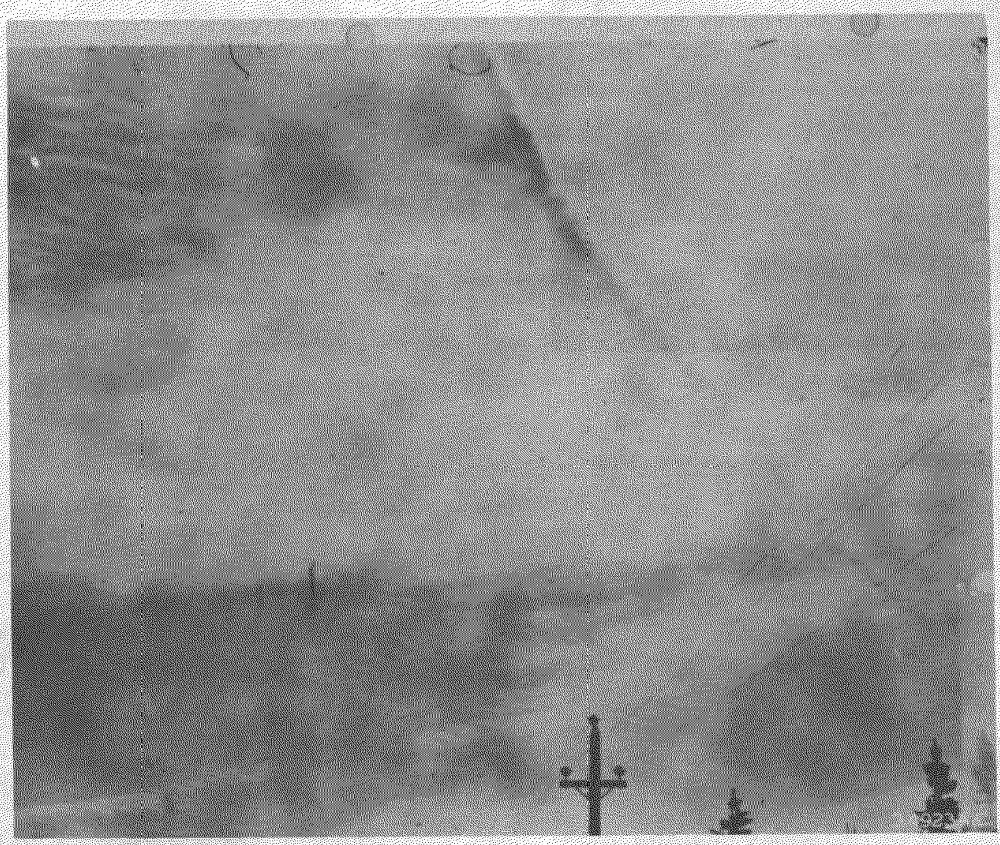
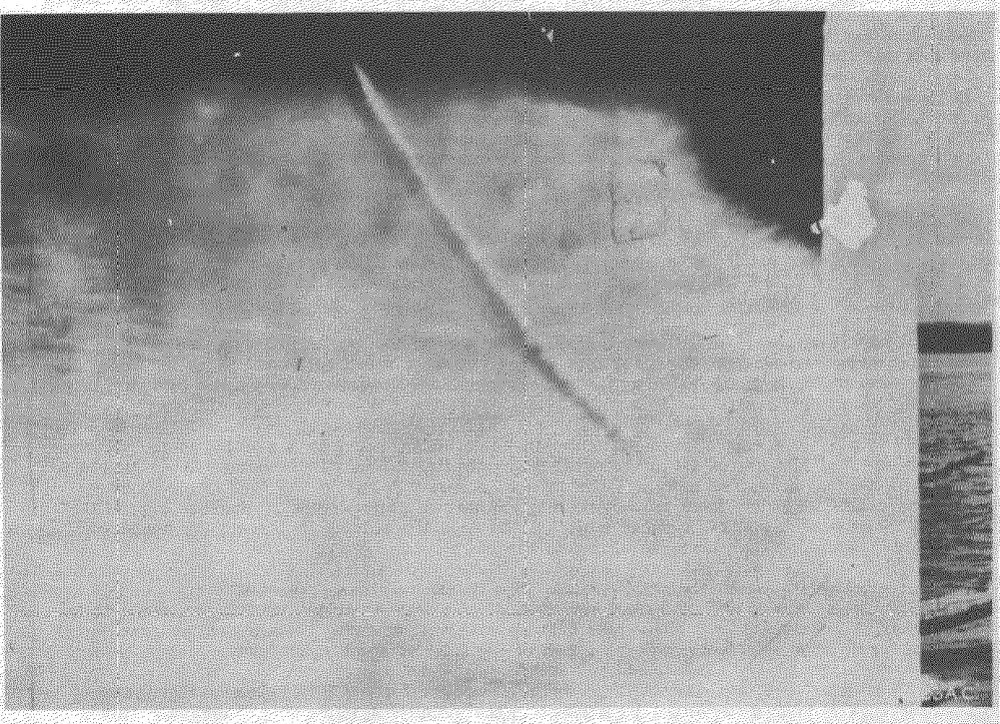
g. On 10 July lQ-4?, Mr. Wocilrutf, a Pan-American Airways mechanic reported a clrcula.r object
flying at high velocUy, parallelln,r the earth's surface and leavitli a trail which appeared ns a
"hurnini \Ip" of the cloud formation. The sl,.bt1ng occurred near Ha:rmo11 Fteld, Newfo\U1dle.nd.
Two other perso11s also saw !htl trail which remained ln the aky for about nn hour and was phot<,
gr..phed by another PAA employee. Tha reault!ng photograph• eu.,port M:r. Woodrutf'e obtm:rvation
as fa.r as the eky oleava&e Is co11cerlled. (Sea E'lgs. e and 6.)
•
Fig. 5
• 10 • ...IECIEf"
•Editorial note: Page numbered 10.
Check the original PDF
g. On 10 July 1947, Mr. Woodruff, a Pan-American Airways mechanic reported a circular object flying at high velocity, paralleling the earth's surface and leaving a trail which appeared as a "burning up" of the cloud formation. The sighting occurred near Harmon Field, Newfoundland. Two other persons also saw the trail which remained in the sky for about an hour and was photographed by another PAA employee. The resulting photographs support Mr. Woodruff's observation as far as the sky cleavage is concerned. (See Figs. 5 and 6.) Fig. 5.View the document record ↗ · Physical page 15, counting the cover.
EXCERPT 15 · PHYSICAL PAGE 16
Appendix C, items 2h to 2j, physical page 16 (full text)
•
• Pig. (l
h. Ol:l 20 July 11147, Kenmth Arnold, wh!le flyl:og near Ta.coma, WMhtniiton, reported a forxnatlcn
of flyil'.lll objeots. Hls slmtch of their 9h•P& oorreeponds C\lo•el'y to that ehown ln tha photoira1ihs
made by Mr. Rhoads. On tha sa.ma day, two U. S. Air Force pilots rit Hamilton Fhtld reported
two !lylo,: disks trailing a P-80, following It toward Oakland, Caltlornla.
L On 4 August 11147, the JJllot. and co-pilot of a DC-3, flying fo.r one Al Jonei,, near Bethel,
Alask•, raported a tlylng disk ls.rger th!l!l their· air,mut. Thla disk crossed their path at abot1t
1,000 feet and they turned to give chase. The DC-3 was !Jyini at 170 mph, but the disk flew out
of ~iil1t !n four mlnute11.
j. On Ul November 1947, two llyini disks trallillg Jet-like streams of fi:ro wore reportedly
sighted from the bridge of the 1anker 'l'lconderoia, e.ccor,lllli,' to the saoo11d officc:r. The Tlconderos•
was 20 miles off th& Oregon shore. '!'his officer salt! the disks w0re in l!lght 45 aeconde, mOYillg
at a ~peed osti,m,tad at 700-900 mph, curvlnff in a long, low arc.Editorial note: The original dates Kenneth Arnold's sighting to July 29, 1947; the episode is from June 24, 1947 (see its own dossier). Error kept in the translation and logged in corrections. The same date appears in the December 1947 study (D100).
Check the original PDF
Fig. 6. h. On 29 July 1947, Kenneth Arnold, while flying near Tacoma, Washington, reported a formation of flying objects. His sketch of their shape corresponds closely to that shown in the photographs made by Mr. Rhoads. On the same day, two U. S. Air Force pilots at Hamilton Field reported two flying disks trailing a P-80, following it toward Oakland, California. i. On 4 August 1947, the pilot and co-pilot of a DC-3, flying for one Al Jones, near Bethel, Alaska, reported a flying disk larger than their aircraft. This disk crossed their path at about 1,000 feet and they turned to give chase. The DC-3 was flying at 170 mph, but the disk flew out of sight in four minutes. j. On 12 November 1947, two flying disks trailing jet-like streams of fire were reportedly sighted from the bridge of the tanker Ticonderoga, according to the second officer. The Ticonderoga was 20 miles off the Oregon shore. This officer said the disks were in sight 45 seconds, moving at a speed estimated at 700-900 mph, curving in a long, low arc.View the document record ↗ · Physical page 16, counting the cover.
EXCERPT 16 · PHYSICAL PAGE 17
Appendix C, items 2k to 2s, physical page 17 (full text)
-lilll!T
k. On 7 January 1948, a National Guard pilot was killed while attempting to chase an unidentified
object up to 30,000 feet. • While it is presumed that this pilot suffered anoxia, resulting in his crash,
his last message to the tower was, "it appears to be metallic object....of tremendous size....directly
ahead and slightly above....I am trying to close for a better book."
1. On 6 April 1948, three trained balloon observers from the Geophysics Laboratory Section,
Watson Laboratories, N.J. reported seeing· a round, indistinct object 1n the vicinity of Rollman Air
'Force Base, New Mexico. It was very high and fast, and appeared to execute violent maneuvers • •.
at high speed. The object was under observation for approximately 30 seconds and disappeared suddenly. •
m. A yellow or light colored sphere, 25 to 40 feet in diameter was reported by Lt. Comdr.
Marcus L. Lowe, USN, just south of Anacostia Naval Air Station, D.C., while he was flying on
30 April 1948. It was moving at a speed of approximately 100 miles per hour at an altitude of
about 4,500 feet. Although winds aloft were from the north-northwest, its course was to the
north.
n. On 1 July 1948, twelve disks were reported over the Rapid City Air Base by Major Hammer.
These disks were oval-shaped, about 100 feet long, flying at a speed estimated to be .ln excess of
500 mph. Descending from 10,000 feet, these disks made a 30-degree to 40-degree climbing turn
accelerating very rapidly until out of sight.
o. On 17 July 1948, a report from Klrtlan.d Alr Force Base describes a sighting in the vicinity
of San Acacia, New Mexico, of seven unidentified objects flying in a ''J" f ormatlon at an estimated
height of 20,000 feet above the terrain. The formation varied from "J" to "L" to circle after
passing the zenith. Flashes from the objects were observed after passing 30 degrees beyond the
zen.ith but there was no smoke or vapor trail. If the reported altitude is correct the speed was
estimated a't 1,500 miles per hour, according to the report.
p. other sightings of lights and trails, rather than disks, have been reported, viz:
(1) On 12 September 1947, the pilot and co-pilot of a Pan American aircraft, en route from
Midway to Honolulu, saw a blue-white light approaching, changing to twin reddish glows upon
withdrawal. The pilot estimated the speed of the light at about 1,000 knots.
(2) On 15 June 1948, Mr. Booneville, territory manager for the B.F. Goodrich Company,
observed a reddish glow with a jet exhaust in the vicinity of Miles City, Montana. This
glowing light made no sound, traveled about twice the speed of a conventional aircraft and
flew from noth to south several times in a wide arc, finally disappearing over the horizon.
q. During the early morning of 26 July 1948, two Eastern Airlines pilots reported having seen
a huge flying craft similar to a. V-2 pass their aircraft in flight. (See- 'Figs, 7 and 8.) The
attached drawings made by these two observers very closely resemble a flying object reported to
have been seen on 20 July 1948, by A. D. otter, chief investigator of Court of Damage Inquiry, and
his daughter at Arnham, Netherlands. This object appeared to be a wingless aircraft having two
decks. The craft, sighted four times through scattered clouds and unlimited vlsibillty, was traveling at hi.gh speed at a high altitude. A sound similar to that made by a V-2 was reported.
r. An object, similar in shape to the one in the preceding incident was reported by an experienced
American newspaper reporter about 25 kilometers northeast of Moscow on 3 August 1948. A Russian
acquaintance identified it as a rigid airship but the reporter disagrees because it flew at a high, but
not excessive speed.
s. On 1 October 1948 at approximately 2030 hours the pilot of a F-51 aircraft, 2nd Lt. George
F. Gorman (North Dakota Air National Guard), flying near Fargo, North Dakota, sighted an intermittent white light about 3,000 feet below his 4,500 feet cruising altitude. The pilot pursued the
light which appear6d to then take evasive tactics. The object or light out-turned, out-speeded, and
out-climbed the F -51 in every instance during the attempt to intercept. The pilot lost contact 27
- 12 -Editorial note: The 1948 summary states that the ground witnesses saw the same light; the current dossier text notes that Jensen's statement describes a single pass in a straight line. Both readings are recorded.
Check the original PDF
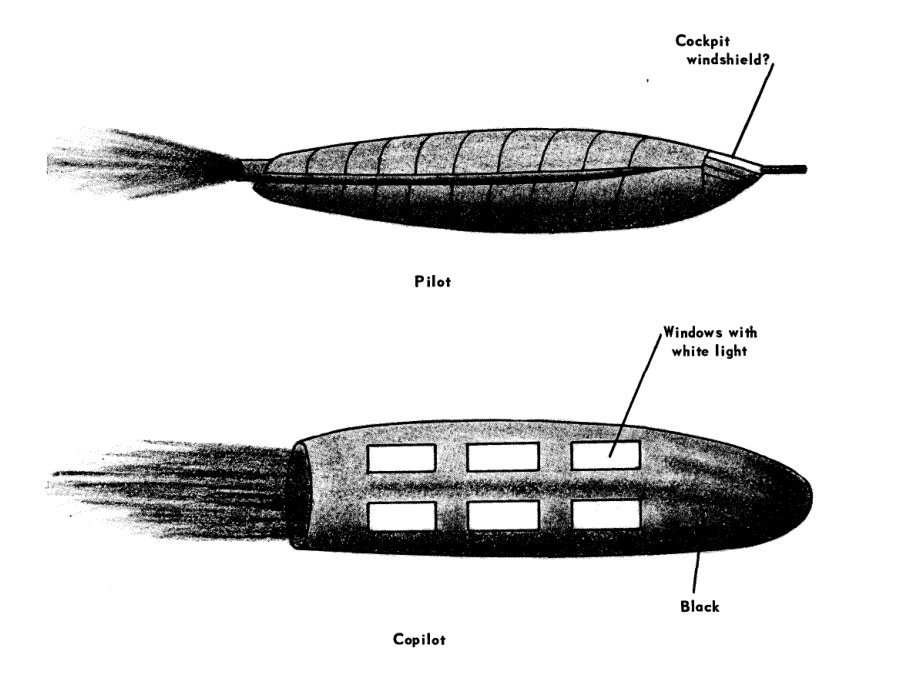
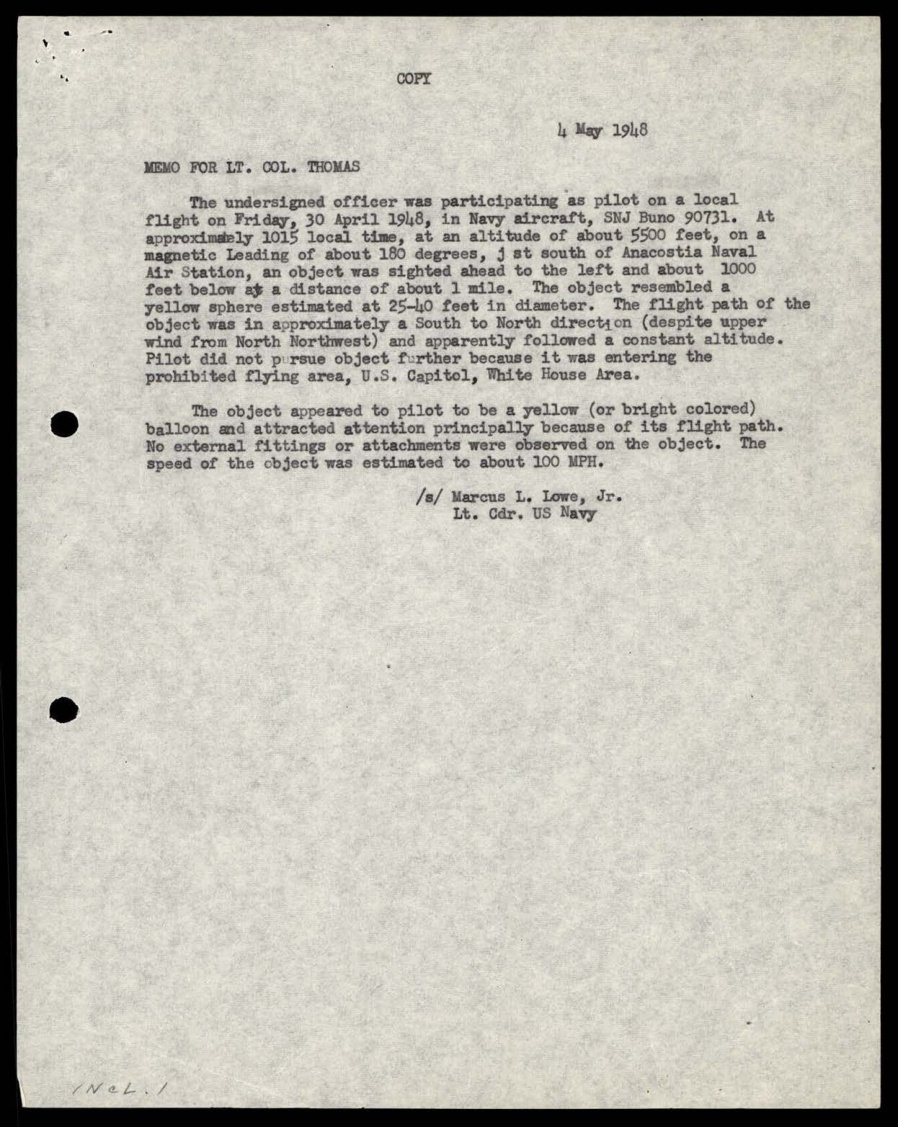
k. On 7 January 1948, a National Guard pilot was killed while attempting to chase an unidentified object up to 30,000 feet. While it is presumed that this pilot suffered anoxia, resulting in his crash, his last message to the tower was, "it appears to be metallic object....of tremendous size....directly ahead and slightly above....I am trying to close for a better look." l. On 5 April 1948, three trained balloon observers from the Geophysics Laboratory Section, Watson Laboratories, N.J. reported seeing a round, indistinct object in the vicinity of Hollman Air Force Base, New Mexico. It was very high and fast, and appeared to execute violent maneuvers at high speed. The object was under observation for approximately 30 seconds and disappeared suddenly. m. A yellow or light colored sphere, 25 to 40 feet in diameter was reported by Lt. Comdr. Marcus L. Lowe, USN, just south of Anacostia Naval Air Station, D.C., while he was flying on 30 April 1948. It was moving at a speed of approximately 100 miles per hour at an altitude of about 4,500 feet. Although winds aloft were from the north-northwest, its course was to the north. n. On 1 July 1948, twelve disks were reported over the Rapid City Air Base by Major Hammer. These disks were oval-shaped, about 100 feet long, flying at a speed estimated to be in excess of 500 mph. Descending from 10,000 feet, these disks made a 30-degree to 40-degree climbing turn accelerating very rapidly until out of sight. o. On 17 July 1948, a report from Kirtland Air Force Base describes a sighting in the vicinity of San Acacia, New Mexico, of seven unidentified objects flying in a "J" formation at an estimated height of 20,000 feet above the terrain. The formation varied from "J" to "L" to circle after passing the zenith. Flashes from the objects were observed after passing 30 degrees beyond the zenith but there was no smoke or vapor trail. If the reported altitude is correct the speed was estimated at 1,500 miles per hour, according to the report. p. Other sightings of lights and trails, rather than disks, have been reported, viz: (1) On 12 September 1947, the pilot and co-pilot of a Pan American aircraft, en route from Midway to Honolulu, saw a blue-white light approaching, changing to twin reddish glows upon withdrawal. The pilot estimated the speed of the light at about 1,000 knots. (2) On 15 June 1948, Mr. Booneville, territory manager for the B.F. Goodrich Company, observed a reddish glow with a jet exhaust in the vicinity of Miles City, Montana. This glowing light made no sound, traveled about twice the speed of a conventional aircraft and flew from noth to south several times in a wide arc, finally disappearing over the horizon. q. During the early morning of 25 July 1948, two Eastern Airlines pilots reported having seen a huge flying craft similar to a V-2 pass their aircraft in flight. (See Figs. 7 and 8.) The attached drawings made by these two observers very closely resemble a flying object reported to have been seen on 20 July 1948, by A. D. Otter, chief investigator of Court of Damage Inquiry, and his daughter at Arnham, Netherlands. This object appeared to be a wingless aircraft having two decks. The craft, sighted four times through scattered clouds and unlimited visibility, was traveling at high speed at a high altitude. A sound similar to that made by a V-2 was reported. r. An object, similar in shape to the one in the preceding incident was reported by an experienced American newspaper reporter about 25 kilometers northeast of Moscow on 3 August 1948. A Russian acquaintance identified it as a rigid airship but the reporter disagrees because it flew at a high, but not excessive speed. s. On 1 October 1948 at approximately 2030 hours the pilot of a F-51 aircraft, 2nd Lt. George F. Gorman (North Dakota Air National Guard), flying near Fargo, North Dakota, sighted an intermittent white light about 3,000 feet below his 4,500 feet cruising altitude. The pilot pursued the light which appeared to then take evasive tactics. The object or light out-turned, out-speeded, and out-climbed the F-51 in every instance during the attempt to intercept. The pilot lost contact 27View the document record ↗ · Physical page 17, counting the cover.
EXCERPT 17 · PHYSICAL PAGE 18
Appendix C, figures 7 and 8, physical pages 18 and 19
•
•
7
• 13
-Editorial note: These are the sketches by the two Eastern Airlines pilots cited in item 2q; the handwritten notes are [illegible] in this reproduction. The same sketches come from another copy of the study (D093) in a package not yet published; for that reason they are not repeated here as an image.
Check the original PDF
Fig. 7 / Fig. 8. [Esboços a lápis sobre papel timbrado "HENRY GRADY HOTEL", com anotações manuscritas pouco legíveis.]View the document record ↗ · Physical page 18, counting the cover.
EXCERPT 18 · PHYSICAL PAGE 19
D094, physical page 19 (p. 14): Fig. 8, facsimile of a witness drawing on hotel letterhead (full legible text)
•
•
8
• 14 •Editorial note: Witness drawing (cigar-shaped object with two rows of windows and flames at the tail) merely filed by the Air Force; it was not authored by the government. It corresponds to the Chiles-Whitted case of July 1948, covered in its own dossier, and is cataloged in the images section.
Check the original PDF
SECRET [struck]. [Photostat of a witness sketch on hotel letterhead:] HENRY GRADY HOTEL. [Handwritten annotations around the drawing, mostly illegible in the copy; legible fragments: '... blue ...', '... flame ...', 'Mr. Reid [uncertain]'.] Fig. 8. - 14 -. SECRET [struck]. NW 91376 DocId:34749006 Page 19.View the document record ↗ · Physical page 19, counting the cover.
EXCERPT 19 · PHYSICAL PAGE 20
Appendix C, items 2s (end) and 2t; item 3 (radar); item 4a, physical page 20 (full text)
minutes after the initial sighting. The same light was observed by three other witnesses from the
ground! Mr. L. D. Jensen, Air Traffic Controller, Mr. Manuel E. Johnson, Assistant Traffic Controller.> and Dr. L. N. Cannon, Oculist. A comparison of all testimony revealed that one object
was sighted and that it consisted only of a small round ball of clear white light with no apparent
shape attached.· It was about 6 to 8 inches in diamter. At times it traveled faster than the F-51
and performed maneuvers in an evasive manner. When first sighted the ball of light was travel t ing at an estimated 250 miles per hour. Under this condition, the light was not continuous but
blinked off and on. At high performance the white light was continuous, Subsequent investigation
eliminated the possibility that this incident may have been another aircraft or a meteorological
balloon.
t. On 18 November 1948 at approximately 2145 hours, three reserve pilots, 2nd Lt. Kenwood
W. Jackson, 2nd Lt. Glen L. Stalker, and 2nd Lt. Henry G. Combs, flying near Andrews Field,
Maryland, encountered an unidentified flying object. When first sighted, it appeared to be lighted
and flying at about 1,700 feet. Three or four passes were made in an attempt to identify it. The
pilot of the aircraft stated that while diving his aircraft at approximately 240. miles per hour, the
object would climb vertically and then would drop below the aircraft from behind and continue to
circle. On the last pass, the landing light was switched on and momentarily a dull gray glow
from the object was observed. Lt. Combs stated he maintained contact for about ten minutes with
the object flying between the lights of Washington, D. C. and his aircraft. All that could be
observed was an oblong ball with one light, no wings and no exhaust flame. It finally made a
very tight turn and headed toward the east coast at all estimated 500 to 600 miles per hour. At
the same time Staff Sergeant John J. Kushner observed from the ground an unusual object in the
air over Andrews Field. He stated that it was not very high and that it did not look like an
aircraft.
3. REPORTS OF radar intercepts point to unusual air activity which may be related td flying
objects.
a. On 1 July 1947, a GCA radar at Hokkaido, Japan picked up an unidentified target at 16 miles,
with a speed in excess of 500 mph. This target split into two targets, each estimated to be larger
than a P-51.
b. On 16 September 1947, an MEW radar at Fukuoka, Japan, picked up a target at 89 miles and
trailed it to 19 miles, where it faded. Speed was 840-900 mph. The speed measurement, made
by a good crew through a 70-mlle track, is believed accurate.
4. Investigations conducted by Headquarters, Air Materiel Command, have definitely established
the identification of 18 of approximately 210 so-called flying saucers which have been reported.
Approximately nine per cent· of the total number of incidents are, therefore, eliminated from
further specific consideration. Among those incidents positively explained, three were hoaxes,
two were from unreliable witnesses. In the remaining 13 eliminated incidents, objects were
actually seen but investigation has shown that they were celestial bodies or phenomena, meteorological and carnival balloons, and airborne cosmic ray experimental equipment. The following
examples are presented for comparison of the information reported by witnesses and true identification of the object involved:
a. On 22 July 1948, Captain Henry Glover (Ordnance Reserve) and his wife observed at Van
Nuys, Calliornia, an object which they were unable to positively ldenttfy. Object at :first appeared
to be round and looked like a weather balloon at about 2,000 feet but there was no characteristic
bobbing. The wind was blowing on the ground but the object was quite steady. During the time
it was under observation, about an hour, it traveled through a vertical arc of about twenty-:flve
{250) degrees or more. The observer concluded that it was not a celestial body. It has a bluish
luminescence and as the sun set, the object's color gradually changed to orange at dusk and ceased
to be illuminated almost instantaneously. The outline was clear and the air was clear with
visibility unlimited. The object traveled from the east to the west.
This object was determined by investigation to have been a balloon carrying cosmic ray • equipment.
- 15 -Editorial note: "diamter" is a typo in the original. The summary of the Andrews incident mixes up the two aircraft and different times that appear in the original forms (see its own dossier).
Check the original PDF
minutes after the initial sighting. The same light was observed by three other witnesses from the ground: Mr. L. D. Jensen, Air Traffic Controller, Mr. Manuel E. Johnson, Assistant Traffic Controller, and Dr. L. N. Cannon, Oculist. A comparison of all testimony revealed that one object was sighted and that it consisted only of a small round ball of clear white light with no apparent shape attached. It was about 6 to 8 inches in diamter. At times it traveled faster than the F-51 and performed maneuvers in an evasive manner. When first sighted the ball of light was traveling at an estimated 250 miles per hour. Under this condition, the light was not continuous but blinked off and on. At high performance the white light was continuous. Subsequent investigation eliminated the possibility that this incident may have been another aircraft or a meteorological balloon. t. On 18 November 1948 at approximately 2145 hours, three reserve pilots, 2nd Lt. Kenwood W. Jackson, 2nd Lt. Glen L. Stalker, and 2nd Lt. Henry G. Combs, flying near Andrews Field, Maryland, encountered an unidentified flying object. When first sighted, it appeared to be lighted and flying at about 1,700 feet. Three or four passes were made in an attempt to identify it. The pilot of the aircraft stated that while diving his aircraft at approximately 240 miles per hour, the object would climb vertically and then would drop below the aircraft from behind and continue to circle. On the last pass, the landing light was switched on and momentarily a dull gray glow from the object was observed. Lt. Combs stated he maintained contact for about ten minutes with the object flying between the lights of Washington, D. C. and his aircraft. All that could be observed was an oblong ball with one light, no wings and no exhaust flame. It finally made a very tight turn and headed toward the east coast at an estimated 500 to 600 miles per hour. At the same time Staff Sergeant John J. Kushner observed from the ground an unusual object in the air over Andrews Field. He stated that it was not very high and that it did not look like an aircraft. 3. REPORTS OF radar intercepts point to unusual air activity which may be related to flying objects. a. On 1 July 1947, a GCA radar at Hokkaido, Japan picked up an unidentified target at 16 miles, with a speed in excess of 500 mph. This target split into two targets, each estimated to be larger than a P-51. b. On 16 September 1947, an MEW radar at Fukuoka, Japan, picked up a target at 89 miles and trailed it to 19 miles, where it faded. Speed was 840-900 mph. The speed measurement, made by a good crew through a 70-mile track, is believed accurate. 4. Investigations conducted by Headquarters, Air Materiel Command, have definitely established the identification of 18 of approximately 210 so-called flying saucers which have been reported. Approximately nine per cent of the total number of incidents are, therefore, eliminated from further specific consideration. Among those incidents positively explained, three were hoaxes, two were from unreliable witnesses. In the remaining 13 eliminated incidents, objects were actually seen but investigation has shown that they were celestial bodies or phenomena, meteorological and carnival balloons, and airborne cosmic ray experimental equipment. The following examples are presented for comparison of the information reported by witnesses and true identification of the object involved: a. On 22 July 1948, Captain Henry Glover (Ordnance Reserve) and his wife observed at Van Nuys, California, an object which they were unable to positively identify. Object at first appeared to be round and looked like a weather balloon at about 2,000 feet but there was no characteristic bobbing. The wind was blowing on the ground but the object was quite steady. During the time it was under observation, about an hour, it traveled through a vertical arc of about twenty-five (25°) degrees or more. The observer concluded that it was not a celestial body. It has a bluish luminescence and as the sun set, the object's color gradually changed to orange at dusk and ceased to be illuminated almost instantaneously. The outline was clear and the air was clear with visibility unlimited. The object traveled from the east to the west. This object was determined by investigation to have been a balloon carrying cosmic ray equipment.View the document record ↗ · Physical page 20, counting the cover.
EXCERPT 20 · PHYSICAL PAGE 21
Appendix C, items 4b and 5, physical page 21 (full text)
I
b. On 19 August 1848, at approximately 1060 hours an unidentified flying object was, visible
from the ground at Godman Air Force Base, Kentucky. This object was estimated to be at about
30,000 to 40,000 feet altitude, spherical in shape, bright silver color and gave a bright reflection
from the sun. An F-61 was dispatched from standi:ford Air Force Base, Kentucky, to observe
the object. During observation from the ground, there was no change in the elevation of the object
and it seemed to be moving southwest from God.man Air Force Base. The F-61 which was flying
over Gedman AFB at an altitude of 30,000 to 35,000 feet reported that it was unable to locate the
object although it was still visible :from the ground with the naked eye. Azimuth and elevation
readings were taken by theodolite every minute and the path of the object was charted.
The object was determined to be the planet Venus by Mr. Moore, the head astronomer at
the University of Louisville, Louisville, Kentucky. It 1s believed that earller incidents at Gedman
Fleld (reference paragraph 2k, page 12, Appendix "C0 ) may also have been observations of the
planet Venus.
6. AMONG THOSE incidents still not positively explained, reported observations differ to some
extent, but three general categories of sightings emerge -- the flying disk, the ball of flre and
the large jet rock~. Interesting observations that were noted are:
a. Most of the objects are a thin disk, round on top and flat on the bottom. The front half
of the disk is often circular, sweeping back to a square tall across the full width.
b. A high rate of cllmb as well as the apparent abllity to remain motionless or hover for a
considerable length of time is indicated.
c. Reported sizes have varied from that of a 25-cent piece to 260 feet ln diameter, and from
the size of a pursuit plane to the bulk of six B-29 airplanes.
d. Speeds have been estimated throughout the entire range from very slow or hovering to
supersonic.
e. Sounds and visual trails are not normally associated with the sightings.
- 16 - ~:II 111"Editorial note: The paragraph 2k referred to is the one about the pilot's death at Godman, on January 7, 1948.
Check the original PDF
b. On 19 August 1948, at approximately 1050 hours an unidentified flying object was visible from the ground at Godman Air Force Base, Kentucky. This object was estimated to be at about 30,000 to 40,000 feet altitude, spherical in shape, bright silver color and gave a bright reflection from the sun. An F-51 was dispatched from Standiford Air Force Base, Kentucky, to observe the object. During observation from the ground, there was no change in the elevation of the object and it seemed to be moving southwest from Godman Air Force Base. The F-51 which was flying over Godman AFB at an altitude of 30,000 to 35,000 feet reported that it was unable to locate the object although it was still visible from the ground with the naked eye. Azimuth and elevation readings were taken by theodolite every minute and the path of the object was charted. The object was determined to be the planet Venus by Mr. Moore, the head astronomer at the University of Louisville, Louisville, Kentucky. It is believed that earlier incidents at Godman Field (reference paragraph 2k, page 12, Appendix "C") may also have been observations of the planet Venus. 5. AMONG THOSE incidents still not positively explained, reported observations differ to some extent, but three general categories of sightings emerge -- the flying disk, the ball of fire and the large jet rocket. Interesting observations that were noted are: a. Most of the objects are a thin disk, round on top and flat on the bottom. The front half of the disk is often circular, sweeping back to a square tail across the full width. b. A high rate of climb as well as the apparent ability to remain motionless or hover for a considerable length of time is indicated. c. Reported sizes have varied from that of a 25-cent piece to 250 feet in diameter, and from the size of a pursuit plane to the bulk of six B-29 airplanes. d. Speeds have been estimated throughout the entire range from very slow or hovering to supersonic. e. Sounds and visual trails are not normally associated with the sightings.View the document record ↗ · Physical page 21, counting the cover.
EXCERPT 21 · PHYSICAL PAGE 22
Appendix D, items 1 and 2a to 2d, physical page 22 (full text)
APPENDIX "D"
FLYING WING TYPE Arn.CRAFT
1. AERONAUTICAL ENGINEERS in several countries have been engaged for some tlme in the
design, construction, and flight of flying wing type aircraft. The study of flying objects requires,
at least, a brief examination of proposed and existing unconventional aircraft whose configurations,
when seen by the uninitiated, could lead to reports of strange flying devices. A description of
some of. the more significant types by country follows, •
2. GERMANY. At the end of World War II, German aircraft designers had numerous projects
under way concerning tailless air.craft which conceivably could be mistaken for "Fly~g Saucers"
or disc-like objects. It is not clear just what the Soviets are doing in the way of developing
these projects but it is considered that German studies on taflless, delta.-wlng, and related configurations are available to the U .S.S.R.
a. ARADO NIGHT AND BAD WEATHER FIGHT I. This is a tailless, low-wing
monop ane w swept- g a long, narrow fuselage.
Span 80.3 feet
Length 42.5 feet
Power Plant 2 Hes 011 turbo jet units
Max. Speed (sea level) 441 mph
Max. Speed (29,500 feet) 503 mph
b. ARADO E 581-4. A high-wing tailless single-seater with a single jet unit mounted in the
fuselage. bi and ruader units are mounted on the wing midway between fuselage and wing tip
at the trailing edge.
Span 29.3 feet
Length 18.4 feet
Power Plant 1 HeS 011 turbo jet unit
Max. Speed (sea level)
Max. Speed (service celling)
c. GOTHA P 60 A. This was the first of the P 60 series of jet fighters. It ls a flying wing
type ~ot and observer 11e prone, there is no projecting canopy, thus permitting a
particularly clean design. The jet.units are mounted at the rear of the center sect1on1 one above
and one below. •
Span 40 feet 8 1/2 in.
Wing Area 604 square feet
Power Plant 2 BMW 003 turbo jet units
Max. Speed (23,000 feet) 596 miles per hour
d. HEINKEL P 1080. This is a single-seat fighter with a sharply swept-back wing, resembling
a flyi~having a single fin and rudder with no tail plane.
Span 29.2 feet
Wing Area 218 square feet
No performance estimates are available . •
..,.,1111,1M. - 17 -Editorial note: The figures are design data cited by the report, not verified performance.
Check the original PDF
APPENDIX "D". FLYING WING TYPE AIRCRAFT. 1. AERONAUTICAL ENGINEERS in several countries have been engaged for some time in the design, construction, and flight of flying wing type aircraft. The study of flying objects requires, at least, a brief examination of proposed and existing unconventional aircraft whose configurations, when seen by the uninitiated, could lead to reports of strange flying devices. A description of some of the more significant types by country follows. 2. GERMANY. At the end of World War II, German aircraft designers had numerous projects under way concerning tailless aircraft which conceivably could be mistaken for "Flying Saucers" or disc-like objects. It is not clear just what the Soviets are doing in the way of developing these projects but it is considered that German studies on tailless, delta-wing, and related configurations are available to the U.S.S.R. a. ARADO NIGHT AND BAD WEATHER FIGHTER, PROJECT I. This is a tailless, low-wing monoplane with swept-back wing of large root chord and having a long, narrow fuselage. Span 60.3 feet; Length 42.5 feet; Power Plant 2 HeS 011 turbo jet units; Max. Speed (sea level) 441 mph; Max. Speed (29,500 feet) 503 mph. b. ARADO E 581-4. A high-wing tailless single-seater with a single jet unit mounted in the fuselage. Fin and rudder units are mounted on the wing midway between fuselage and wing tip at the trailing edge. Span 29.3 feet; Length 18.4 feet; Power Plant 1 HeS 011 turbo jet unit; Max. Speed (sea level) --; Max. Speed (service ceiling) --. c. GOTHA P 60 A. This was the first of the P 60 series of jet fighters. It is a flying wing type and, since the pilot and observer lie prone, there is no projecting canopy, thus permitting a particularly clean design. The jet units are mounted at the rear of the center section, one above and one below. Span 40 feet 8 1/2 in.; Wing Area 504 square feet; Power Plant 2 BMW 003 turbo jet units; Max. Speed (23,000 feet) 596 miles per hour. d. HEINKEL P 1080. This is a single-seat fighter with a sharply swept-back wing, resembling a flying wing type, but having a single fin and rudder with no tail plane. Span 29.2 feet; Wing Area 218 square feet. No performance estimates are available.View the document record ↗ · Physical page 22, counting the cover.
EXCERPT 22 · PHYSICAL PAGE 23
Appendix D, items 2e to 2g and figure 1, physical page 23 (full text)
Iii IU! 1111 J ii ii IHI
e, JUNKERS~ Of tlle flying w!ug type, this project was established a.s a long-range,
high-~
Span 78,8 feet
Wini A:rea 1290 l!QUa.re feet
Power Plallt 4 HnS 011 turb:1 j&t imlts
Max, Sp<l•d. 620 miles per hour
Range 3700 mlles
f. ME: 329. This is a tail.lass mld.-wlng monoplane driven by two pueher propallers with the
e>Df,'lnes centrally loe:,ted in the w!n&'11 on each side of th" stobby round.ed. fuaelege.
Span 513 feet
Length 35.4 feet
Max. Speed 456-466 miles per hour
Power Plant 2 DB 603 reo!1,rocatlng engines
I!· HORTEN WING. The closest .resemblsnce to the estl.maied con!1guratlon of "Flying Dll'lts"
Is re~Ho:rten Wini al:rcraft. Work on tJie I{orten 229, a tw!n jet flgbtel', had pro.
i,'ressed to the final 11t11.ge11 at the end of World War II. !ts prototyps, a Horten illder, succeslil- •
!{ully soared to an) altitode of H,200 feet as early as 11138, provlni,' tlla 1>0!11'.ldnoss ot this delillgn.
Flge, 1, 2 and 3
•
Fig. 1
IIIFllllllliLCheck the original PDF
e. JUNKERS EF 130. Of the flying wing type, this project was established as a long-range, high-speed jet bomber. Span 78.8 feet; Wing Area 1290 square feet; Power Plant 4 HeS 011 turbo jet units; Max. Speed 620 miles per hour; Range 3700 miles. f. ME 329. This is a tailless mid-wing monoplane driven by two pusher propellers with the engines centrally located in the wings on each side of the stubby rounded fuselage. Span 56 feet; Length 25.4 feet; Max. Speed 455-465 miles per hour; Power Plant 2 DB 603 reciprocating engines. g. HORTEN WING. The closest resemblance to the estimated configuration of "Flying Disks" is represented by the Horten Wing aircraft. Work on the Horten 229, a twin jet fighter, had progressed to the final stages at the end of World War II. Its prototype, a Horten glider, successfully soared to an altitude of 14,200 feet as early as 1938, proving the soundness of this design. (Figs. 1, 2 and 3) Fig. 1.View the document record ↗ · Physical page 23, counting the cover.
EXCERPT 23 · PHYSICAL PAGE 24
Appendix D, figures 2 and 3, physical pages 24 and 25
• •Editorial note: Pages with only photographs of a flying-wing aircraft on the ground, linked to item 2g (Horten). Registration numbers are blurry.
Check the original PDF
Fig. 2. [inscrição fotográfica: 34926 A.C.] / Fig. 3.View the document record ↗ · Physical page 24, counting the cover.
EXCERPT 24 · PHYSICAL PAGE 25
D094, physical page 25 (p. 20): Fig. 3, photograph of a flying wing aircraft (full legible text)
Sais
ng
Ne
ASHE
oo
Se
a
SEEN SE
mi SS
ROR
eS RE
UCREditorial note: Photograph from appendix D, illustrating German flying-wing designs cited by the study as a possible origin of the reported shapes; the aircraft is not identified on the page. It is cataloged in the images section.
Check the original PDF
CONFIDENTIAL [struck]. [Photograph, landscape, printed sideways: a tailless flying-wing aircraft on the ground, three-quarter front view.] Fig. 3. - 20 -. CONFIDENTIAL [struck]. NW 91376 DocId:34749006 Page 25.View the document record ↗ · Physical page 25, counting the cover.
EXCERPT 25 · PHYSICAL PAGE 26
Appendix D, item 3a and figure 4, physical page 26 (full text)
~ II Pl I Ii NJIAli
3. GREA'I' BRITAill.
a, G WHI'I'WORTH. The AW 52 G, t1 g.lldar, and the AW 68, a twl!i-jat air,
plane, are B llircra:!t. The vertical sta.bll!zere are located at the tips
of the swept-back wing. (Figa. <l and 6) Data c>n the AW 52 appear bolow.
Spiln 00 feet
Lai:,gth 37 feet
Mro,:, Speed (sea level) 435 knots
Mro,:. Speed {20,000 !eat) 435 knots
Mu. Bp<ted (3fl,OOO feet) 417 knota
Range 1300 nautical m!l,m
Power Plant 2 Nene 11 turbo jet ,mlts
• •aMITIIO"tO
'#MITWOaTH
l',,'#,U
.......ia.•nW .,,1......,...
,.,,~NIil
~•t--,,-..: i.-;
• Fig. 4
IIIFIPlll'llllrCheck the original PDF
3. GREAT BRITAIN. a. THE ARMSTRONG WHITWORTH. The AW 52 G, a glider, and the AW 52, a twin-jet airplane, are British designs of tailless aircraft. The vertical stabilizers are located at the tips of the swept-back wing. (Figs. 4 and 5) Data on the AW 52 appear below. Span 90 feet; Length 37 feet; Max. Speed (sea level) 435 knots; Max. Speed (20,000 feet) 435 knots; Max. Speed (36,000 feet) 417 knots; Range 1300 nautical miles; Power Plant 2 Nene II turbo jet units. [Etiqueta junto à foto:] ARMSTRONG WHITWORTH A.W. 52 Experimental Flying-wing Aircraft. Fig. 4.View the document record ↗ · Physical page 26, counting the cover.
EXCERPT 26 · PHYSICAL PAGE 27
Appendix D, figure 5, physical page 27
• •Editorial note: The inscription is blurry and the year was read with caution.
Check the original PDF
Fig. 5. [inscrição na fotografia:] A.W. 52 G (PROTOTYPE) MARCH 1945.View the document record ↗ · Physical page 27, counting the cover.
EXCERPT 27 · PHYSICAL PAGE 28
Appendix D, item 4a and figure 6, physical page 28
l'Olll'lltl'!N'I'~
4. UNITED S'l'ATES . ~36. This is a flyir1g wing typ!I aircraft, powe-rdd by fom• 1·eclproce.tlng ,mglnes
and haa ., !nii span ' 172 f10et arid a lmigth of only 63 !eet. (SN• Fig. 6)
•
•
• 23 ~Check the original PDF
4. UNITED STATES. a. NORTHROP B-35. This is a flying wing type aircraft, powered by four reciprocating engines and has a wing span of 172 feet and a length of only 53 feet. (See Fig. 6) Fig. 6.View the document record ↗ · Physical page 28, counting the cover.
EXCERPT 28 · PHYSICAL PAGE 29
Appendix D, item 4b and figure 7, physical page 29
b. NORTHROP YB 41l. Powered by elghl. turb()-jet en~ines, this airplane ls the jat-prop&lled.
versl~'lylng Wing (B 35). ~9~" Fli, 7)
•
•
7Check the original PDF
b. NORTHROP YB 49. Powered by eight turbo-jet engines, this airplane is the jet-propelled version of the Northrop Flying Wing (B 35). (See Fig. 7) Fig. 7.View the document record ↗ · Physical page 29, counting the cover.
EXCERPT 29 · PHYSICAL PAGE 30
Appendix D, item 4c and figure 8, physical page 30
c:. CHANCE-VAUGHT XF5U-1. De11<tloped by Cbon<;e-Va~ht Alrcro1t, this l'ililkal des\in
prom!Ml! y low Apeed per:!orm•nce, PoweN,d by two R-2000-!J er~!ne.l!l,
the altplane will have a speed range of from 40 to 425 m!l,sH, pe:r lm1.1t·. (S&e P'li;. 8)
•
•
,.
8
,,
,,, 25 ..Editorial note: The original's spelling "Vaught" corrected to Vought only in the translation.
Check the original PDF
c. CHANCE-VAUGHT XF5U-1. Developed by Chance-Vaught Aircraft, this radical design promises the reality of high and low speed performance. Powered by two R-2000-2 engines, the airplane will have a speed range of from 40 to 425 miles per hour. (See Fig. 8) Fig. 8.View the document record ↗ · Physical page 30, counting the cover.
EXCERPT 30 · PHYSICAL PAGE 31
Appendix D, item 4d, figure 9 and item 5, physical page 31 (full text)
,Jl!!'U! Cl 1111 !!!iii IrlJ l
'
ct ARU:P TAILLESS MONOPLANE. Jane's "All the World's Aircraft" (1.113~ edition) describes
this a.e " m e with a 70 h.p. L"Blond engine.... Thia hni, a high aspect
ratio wlni wl.th straight leadlllfC-edQ'e and bunt in nacelle...." In plan form, the wing is almost
eaml-clrcu1ar.
An Alr Force film, "A"ronauiicol Oddilie~", ehowe thin airplana !n !liiht at South Bflnd,
Indiana and In some att1tucle11 appaars !d,mt!cnl to the photograi;,h included in Appendix "C" as
Figura 4. Although it ls beli.,...ed that the A."'tUP 'Manufactm:-ing Co. I.a no longer In exllltence,
il la pos31bl0 that later models of tbis or similar U.S. ol'fll ~.lrcra:rt may !Jave been obeerved.
Span 22 feet
Length 19 ieet
Pow,,r Plant 1 LeBlond enr;!llli
Max. SpHd 86 miles per hot1l'
•·
•
f>. ALTHOUGH APPENDIX "D" is not Intended to <IX!)laln eonoluslvely the ph&nomeno11 o:f "Flying
Sane&rs" the posslb!llty of ru1cor1vent!onal type aircro:tt being the caune of flying disk raport11 must
not he overlooked.Editorial note: "Figure 4" of Appendix C is the enlargement of the second Rhoads (Rhodes) photograph, on physical page 14: the report therefore compares the Phoenix photo to the Arup monoplane.
Check the original PDF
d. ARUP TAILLESS MONOPLANE. Jane's "All the World's Aircraft" (1935 edition) describes this airplane as "a two-seat machine with a 70 h.p. LeBlond engine.... This has a high aspect ratio wing with straight leading-edge and built in nacelle...." In plan form, the wing is almost semi-circular. An Air Force film, "Aeronautical Oddities", shows this airplane in flight at South Bend, Indiana and in some attitudes appears identical to the photograph included in Appendix "C" as Figure 4. Although it is believed that the ARUP Manufacturing Co. is no longer in existence, it is possible that later models of this or similar U.S. civil aircraft may have been observed. Span 22 feet; Length 19 feet; Power Plant 1 LeBlond engine; Max. Speed 86 miles per hour. [Legenda da fotografia:] Three views of an Experimental Arup tailless Monoplane. [inscrição: 34924 A.C.] 5. ALTHOUGH APPENDIX "D" is not intended to explain conclusively the phenomenon of "Flying Saucers" the possibility of unconventional type aircraft being the cause of flying disk reports must not be overlooked.View the document record ↗ · Physical page 31, counting the cover.
EXCERPT 31 · PHYSICAL PAGE 33
Top secret material handling record, physical page 33 (legible fields)
DIVISION
REGISTER OF PERSONNEL
HANDLING TOP SECRET MATERIAL
D/I Us.il' 4B 85~-Pentagon
tlBJE.CT A ESCRIPTION.OQF INC Air el Rpt fl 0-2 ~9. Cy fl02 of 103
SubA.Oi'OilT U S
fl ............_______ _
e.s. CON!. I
USAJ'
DATE Af,,,..
D~p5
0 FF ICE
NUM8ER OF PAG _ OF I NCLOSURES
BASIC 0
INC LS.
INSTRUCTIONS
The above described Top-Secret document has been received in this office this date. The circulation of
thi• material will be limited to the minimum number of person• necessary for completion of the required
action, The name• of all peraons handlina or havin4 knowledae of the subject docuMent will be record•d
below a• indicated.
The document will be returned to the Tor-Secret Control Officer (Rooa ______) for record prior to
dispatch from thi• office or other disposition, Thi• forM will not be removed from the subject document
except by him when lorwardin,.
NAME DATE TIME
5 Dec 0900
....
MEMORANDUM FOR THE RECORD
PURPOSE
Processing
ALL PAPER
ATTACHED
yes
.. ,
AF HS FORM 6 PREVIOUS EDITIONS OF THIS FORM 9-836,J.F 26 ,J LY 1~8 ARE OBSOLETE,Editorial note: Only typed or legible names were transcribed; the other signatures were marked. Fournet's year is partially legible ("5[2]"), consistent with the memorandum of 05/06/1952 on page 34.
Check the original PDF
REGISTER OF PERSONNEL HANDLING TOP SECRET MATERIAL. T.S. CONT. # [2-7341], D.I. HQ USAF. DATE: DEC 5 1950. DIVISION: D/I USAF, 4B 854-Pentagon. SUBJECT AND DESCRIPTION OF INCLOSURES: Air Intel Rpt #100-203-79, Cy #102 of 103, Sub: AFOIIT U S [leitura incerta]. NUMBER OF INCLOSURES: 0. INSTRUCTIONS: The above described Top-Secret document has been received in this office this date. The circulation of this material will be limited to the minimum number of persons necessary for completion of the required action. The names of all persons handling or having knowledge of the subject document will be recorded below as indicated. The document will be returned to the Top-Secret Control Officer (Room ___) for record prior to dispatch from this office or other disposition. This form will not be removed from the subject document except by him when forwarding. NAME / DATE / TIME / PURPOSE / ALL PAPERS ATTACHED: Roy E Ostrem, 5 Dec, 0900, Processing, yes; [assinatura ilegível], [idem], 1130, Review; Capt Alfred Pritchard, 2 Jan 51, 1540, Processing, yes; [assinatura], Capt, 5 Jan 51, 1025, Processing; [assinatura ilegível], 8 Jan 1951, 1605, Processing; Dewey J. Fournet Jr, 6 June 5[2], 1645, Information, yes; William H. Clark, 24 Jun 1952, 1425, Route; [assinatura], [idem], 1445, Logging; [assinatura], 24 June 1952, 1505, Logging, yes; [assinatura], 24 June 52, 1515, Logging. MEMORANDUM FOR THE RECORD [em branco]. AF HQ FORM 6, 26 JULY 1948.View the document record ↗ · Physical page 33, counting the cover.
EXCERPT 32 · PHYSICAL PAGE 1
D093, physical page 1: cover of the Study No. 203 folder (full legible text)
DEClASSIFIED
J
YSIS OF FLYING 0BJJ£CT INCi
IN THE UNITED STATES
203
~ ·--= - - -- -- - ·~- -- - ~Editorial note: D093 is copy no. 3 of the original 1948 study; D094 is the 28/04/1949 reissue of the same text. The D093 entries reproduce, page by page, the checked translation in D094, with the differences in pagination and markings noted.
Check the original PDF
[Black folder cover. Sticker:] DECLASSIFIED. Authority: NND 857011. [Red-bordered label, stamps over it:] TOP SECRET [struck]. AIR INTELLIGENCE DIVISION STUDY (DI/USAF-ONI). ANALYSIS OF FLYING OBJECT INCIDENTS IN THE UNITED STATES. Study No. 203. 10 DECEMBER 1948. [Stamps:] 2 6167; T.S. Cont. [control] No. DI-Hq. USAF; DECLASSIFIED, AF INA Memo 5/5/85 [handwritten, partly over the label].View the document record ↗ · Physical page 1, counting the cover.
EXCERPT 33 · PHYSICAL PAGE 2
D093, physical page 2: blank sheet (full text)
•Check the original PDF
[Blank sheet with three punched holes.]View the document record ↗ · Physical page 2, counting the cover.
EXCERPT 34 · PHYSICAL PAGE 3
D093, physical page 3: routing slip (DD Form 95) with annotation dated 06/12/1951 (full text)
MEMO ROUTING SLIP NEVE., -E~PROVALS, DISAPPROVALS,
-CONCURRENCES, OR SIMILAR ACTIONS
1 NAME OR TITLE INITIALS
ORGANIZATION AND LOCATION DATE
2
3
4
REMARKS
CIRCULATE
COORDINATION
FILE
INFORMATION
NECESSARY
ACTION
NOTE AND RETURN
SEE ME
SIGNATURE
/4·~6r-F7
r/~·~
.~£k._ .
w,·~ ~~~~----,;;,--.....pre,//"'-A.
~ ~- 7.7Y/
.Q~GANJZATIGN AND L8CATION TELEPHONE
. D Ff.GERM~,.,. 9__ -_ 5 ReplacesDAAGOFortn895,1Apr48,andAFRQ 16-48487""' GPO D 1 vu _ Form 12, 10 Nov 47, whibb may be used. --.Editorial note: The December 1951 annotation records the destruction of the other copies of the study and links this copy to control 2-7341, the same as the D094 folder.
Check the original PDF
MEMO ROUTING SLIP. NEVER USE FOR APPROVALS, DISAPPROVALS, CONCURRENCES, OR SIMILAR ACTIONS. 1-4 NAME OR TITLE / ORGANIZATION AND LOCATION / INITIALS / DATE: [blank]. [Check boxes: CIRCULATE, COORDINATION, FILE, INFORMATION, NECESSARY ACTION, NOTE AND RETURN, SEE ME, SIGNATURE: none checked.] REMARKS: [handwritten] All extra copies of this document were ordered to be destroyed. Cy being kept for record purposes only. Not to be disseminated without permission of AFOIN-A. See 2-7341. FROM NAME OR TITLE: [signature] Wandolf [uncertain]. DATE: 6 Dec 51. DD FORM 95, 1 FEB 50. Replaces DA AGO Form 895, 1 Apr 48, and AFHQ Form 12, 10 Nov 47, which may be used. 16-48487-4 GPO.View the document record ↗ · Physical page 3, counting the cover.
EXCERPT 35 · PHYSICAL PAGE 4
D093, physical page 4: title page of Study No. 203, with distribution and copy No. 3 (full text)
t..trasucm nr1JIS10:1 srurn:
OI/USAF-'Ol-0:} ••
,
!ll!¾1S:: or,, rtm•o oa.Bar nicnr~:ij;s n1 THE u.s.
20) 10 nccembc,r 1948
J:1T.Sr~IµUl'IC l
Air r.ntel eq Ulv land 3
Air E1tio3~B
ODI 2
•
4
A1r Intel DiV
. 3
-Editorial note: In the 1949 reissue (D094, page 4) this sheet was given report number 100-203-79 and the Espionage Act notice; here there is only the distribution of the five copies.
Check the original PDF
TOP SECRET [struck]. [Stamps:] 2 6167; T.S. Cont. No. DI-Hq. USAF. AIR INTELLIGENCE DIVISION STUDY (DI/USAF-ONI). ANALYSIS OF FLYING OBJECT INCIDENTS IN THE U.S. Study No. 203. 10 December 1948. DISTRIBUTION | COPY NO. Air Intel Req Div | 1 and 3. Air Estimates Branch | 4. ONI | 2. Air Intel Div | 5. [Stamp:] DECLASSIFIED. Authority: AF INA Memo 5/5/85. By [initials] NARS Date 3/7/85. COPY NO. 3. TOP SECRET [struck].View the document record ↗ · Physical page 4, counting the cover.
EXCERPT 36 · PHYSICAL PAGE 5
D093, physical page 5: index of appendices (full text)
•
.
• ' ot fl.TI:na l) t
ct1daEditorial note: Unlike the paginated index of D094, this one lists only the four appendices.
Check the original PDF
TOP SECRET [struck]. ANALYSIS OF FLYING OBJECT INCIDENTS IN THE U.S. INDEX. APPENDIX "A" - Analysis of Flying Object Incidents in the U.S. and Hypothetical Tactics Employed. APPENDIX "B" - Reported Sightings of Flying Objects as of 1 August 1948. APPENDIX "C" - Selected Reports of Flying Object Incidents. APPENDIX "D" - Flying Wing Type Aircraft. TOP SECRET [struck].View the document record ↗ · Physical page 5, counting the cover.
EXCERPT 37 · PHYSICAL PAGE 6
D093, physical page 6 (p. 1): Problem, facts and discussion, paragraphs 1 to 4 (full text; text identical to D094, page 6)
mrra
1. To e:P:uune ttom or tnctico or ~Flying SAucnr:.U (ht'1'Gimftar
roforre;l to oo .tl.ylnJ objeota) and to devolop oonclum,ona aa to thi
JX)Cllib1.llty of eximnca.
JU,crs A~ DISCUSSIO.i
2 .. . A dotnUed di:ccwmion of inforoatio:l f.)~ on 'the F,Oblc
a.c =t forth above 10 otttiched. WJ Ap::, n<li.x rAo. Tho rm.n pointo oottibliuhed thereiJ:l nra au=nrl~od bol<m.
3. 'l'ha f'r4qu 07 or reported :tnc1d:mtn, tho oinilarity !i.t mny o!
t..~ elmractoti.ctice1 nttrib"i1t«l to -th:, obue:nrcd object nntl tho qunlj.ty
- a.r obtiorv rs comdderod ,aa 'O halo, aupport th cont,ntio.11 t~t co
t~ or flyiriG objmct ma b:lan obaorwd. A!)!Jroxit!.n.tol_y 210 itwi<Wntlil
lmv-s been ,:,.oportod. AnonB the obsorvarc r porting on auch incidantu
•
nra tr.:iinad and cxp,rienoed u.s. ll'eather nur~u ~ nnel., USAF rated
~accn, •~<.l!lced CiViliOJl piloto, toobnicuuts cumociatea m.th
vat""lO>JD resoarch p.rojcsctc and techhid.nn• emplo d by ~oiol nirl1ne••
4• Th• po s1b1l1ty t •t reported ob nation ot flJ1ng object■
overt e u.s. r~ 1nn,umced by previcma lli(l21t1ne or lOidentut d
in nurop , rt1culnrl7 over "caDllinavia :1n 1946, and tl t
t. oblervara raoortit'lJl ~ in'.!ldents bavc, int rafted in bnin 1 _tXlbl.1.eity t.!J.V Cl C •
-
1-", t.ho pOS•lb'i 11 ti.ea itlprobabl.e lecttd
report• CWl II t C from u.5. exadl.n ' strmtion• or t ~ ba.llooo■ u., •
11 tMd "1'Vttr • ai Ud stran
.-,o • a: cl ano 11" ,arver 1 11 tt1 1Llilil.sr o ;j ct ~ neEditorial note: Same text as the 1949 reissue, without the title 'Summary and Conclusions' and with a TOP SECRET marking. Translation reproduced from the D094 entry, page 6.
Check the original PDF
TOP SECRET [struck]. 10 December 1948. ANALYSIS OF FLYING OBJECT INCIDENTS IN THE U.S. PROBLEM. 1. TO EXAMINE pattern of tactics of "Flying Saucers" (hereinafter referred to as flying objects) and to develop conclusions as to the possibility of existence. FACTS AND DISCUSSION. 2. A DETAILED discussion of information bearing on the problem as set forth above is attached as Appendix "A". The main points established therein are summarized below. 3. THE FREQUENCY of reported incidents, the similarity in many of the characteristics attributed to the observed objects and the quality of observers considered as a whole, support the contention that some type of flying object has been observed. Approximately 210 incidents have been reported. Among the observers reporting on such incidents are trained and experienced U.S. Weather Bureau personnel, USAF rated officers, experienced civilian pilots, technicians associated with various research projects and technicians employed by commercial airlines. 4. THE POSSIBILITY that reported observations of flying objects over the U.S. were influenced by previous sightings of unidentified phenomena in Europe, particularly over Scandinavia in 1946, and that the observers reporting such incidents may have been interested in obtaining personal publicity have been considered as possible explanations. However, these possibilities seem to be improbable when certain selected reports such as the one from U.S. Weather Bureau at Richmond are examined. During observations of weather balloons at the Richmond Bureau, one well trained observer has sighted strange metallic disks on three occasions and another observer has sighted a similar object on one occasion. [continues on page 7]. TOP SECRET [struck].View the document record ↗ · Physical page 6, counting the cover.
EXCERPT 38 · PHYSICAL PAGE 7
D093, physical page 7 (p. 2): paragraphs 4 (end) to 8 (beginning) (full text; text identical to D094, pages 6 and 7)
ocoolicm. \'bD laat obi,a~tion at \oidcnt1tiod ol>,,1eot,s wao 1n Al)rl.l..
. 194?• 0\ all tour ocoaaiono too tbcJi' Uoon and tl uninantifi-1
objcota wen !rt v1'n thr-<mgb thi tbeodolito. Thoco obotnat.1.ona at.
Rio~d nurcau occ~ •w.ntl 1:10ntha before i,.iblloity on tbiJ tl11nc
~aera a peared in • u.s. nG'Jfopap;r.
s. Deecrl.ptiQ.'1\1 ot the tly:ln objoote till into thN• CnntiB\ir&...
tion cutagorioa, (l) diak-ahapcd {2) rou · cl~b:lpc,d (3) balls ct
fJN,. -~lo/,Ul!l conditions ot Y.i.o1b1.Uty and ditfeNUco, 1U angleo at
wlloh thtt objecto may havo been v1aw d :lntroducaB a pooo1b111ty, t a
o1nl9,a tYJ>l,I objc,o~ f/JAY hDv bOcn ob1orvad rtt.t.lier tl1IJ\ thr d.1.tt:•ront.
~a. Thia ~bility 11 f"llrtbcr nbatlntiate.d by tho taot that in
tM 'Wbo1'W auah ob,3eota bt&fl been obeetrvod U- t4nt1o ot tho three
em oaor~t1on1 io •P~tol-1 tm
'tm S.dtnt1ttcatlon of that obj a\ ®rlnot bet raadU¥ acccul)llebed on tb
bii11 of inl'ormation l'epottod 01:1 oacb incidtnt. tt, 11 po1otbla tha\
obj.ct, or objoot1, 7 betm do!lorltica~ 1&111chad dm.cCNI web
wetmr ballo=a, rook.9t.~ Mr ntal n.,,ttl(! ffinC aircratt, or' cele
ttal phenanana, It la n•o1N11&.\'7 to obtain tnto
aoti"fity to ~firm or deny t.~11 p1>anib1Uty. pendJ.na upon.
With whtoh thie 7 ae<impltehld, tora1 dffloeD 1:l\111\ n con-
•1d• d Bl a po1n1D111ty.
7. 'lh8 pt.item ot •1ftit1n u detinable, 1 tin haw be
t 1n t the ltatea bof'der1n Atlantic clfio
at JJ.ne•• 1r1d c.t.ral 1ta • ot Ohio «nd ent\ieij. A
loc&Uon of el in ;9 1e at obtd •• A paidUt o "•
. den • s., not; qo 1.ri&bla.
(1)
ruEditorial note: Translation reproduced from the D094 entries, pages 6 and 7.
Check the original PDF
TOP SECRET [struck]. The last observation of unidentified objects was in April, 1947. On all four occasions the weather balloon and the unidentified objects were in view through the theodolite. These observations at the Richmond Bureau occurred several months before publicity on the flying saucers appeared in a U.S. newspaper. 5. DESCRIPTIONS OF the flying objects fall into three configuration categories: (1) disk-shaped (2) rough cigar-shaped (3) balls of fire. Varying conditions of visibility and differences in angles at which the objects may have been viewed introduces a possibility that a single type object may have been observed rather than three different types. This possibility is further substantiated by the fact that in the areas where such objects have been observed the ratio of the three general configurations is approximately the same. 6. THEREFORE, IT appears that some object has been seen; however, the identification of that object cannot be readily accomplished on the basis of information reported on each incident. It is possible that the object, or objects, may have been domestically launched devices such as weather balloons, rockets, experimental flying wing aircraft, or celestial phenomena. It is necessary to obtain information on such domestic activity to confirm or deny this possibility. Depending upon the degree with which this may be accomplished, foreign devices must then be considered as a possibility. 7. THE PATTERN of sightings is definable. Sightings have been most intense throughout the states bordering the Atlantic and Pacific coast lines, and the central states of Ohio and Kentucky. A map showing location of sightings is attached as Appendix "B". 8. THE ORIGIN of the devices is not ascertainable. There are two reasonable possibilities: (1) The objects are domestic devices, and if so, their identification or origin can be established by a survey of all launchings of airborne objects. Domestic flying wing type aircraft observed in various aspects of flight might be responsible for some of the [continues on page 8]. 2. TOP SECRET [struck].View the document record ↗ · Physical page 7, counting the cover.
EXCERPT 39 · PHYSICAL PAGE 8
D093, physical page 8 (p. 3): paragraphs 8 (continued) and 9 (full text; text identical to D094, page 7)
reportod flying objecto, particularly those described ae disk~ and
rough oi~r _aha~a. (Seo Append1eea "C11 and nn11 .) Among those which
Jiave been operational in recent yeara are the XF5U-l ("Flying Flapjack")
. developed by Obance-Vaugb:tt, tM Northrup B-35, and the turbo-jet powered
Northrup YB-49• Tb& ~osent exiatence of any privately developed fiyingwing type aircraft baa not been determined but one ouch aircraft, the . I
Aru.p taille$8 monoplane, was operational at south Bend, lndiana, prior
to 1935. {2) Objects are fore:i."1, snd it ao, it would aeem most logical to consider that they are from a Soviet eouree. The Sovieto posoese • l, ' ' "
intormtion on a number of Oenian ni,.ng-1iringt1P9 aircraft such aa the
G>tha P60A, Junkers EF 1~ long-range, high-speed j~t bomber and the
Horten 229 twin-jet fighter, -whioh p-:irticularly reaablea ooe ot the
descr1pt1ona of unidentified flying objects (See Appendix 11 011 ). As
early aa 1924 Tncheran01rt1k7 devoloped a "Parabola" airorart, an all
wing de&ilJl, which wno the outcoms of oonm.darabls Soviet experimentation
with gliderD or the oame general. form. SOYiet aircraft baf!led on ouch
deaigna m.1.ght bave speeds approaching trnnsonio •peeda attributsd to aome
flying object ■ or greater overall performance assuming the succ&as.ful
developxnent at eome unueual propulaion d~ce aaeh aa atomic energy
engine.
9. That tb9 Soviet■ have a current interest 1n flyinc•'Wing type
•iroraft 1• auggeated by their utilization of nr. OuS1ther BOolc who, at
the end ot world rrar n, •• 1n charge ot the nyJ.ng-wtng progru in
Germany' (see Appendix ttA", ~•graph 3, page 4). Aobievementa aat1•
taotory to tbs u.s.s.R. are indirectly indicated by the pereooal recognition h• 1• report.ed to be NoetTing in the u.s.s.n. Recently it ha11
been repoi-ted tt»t the u.s.s.R. 1• planning to build a n ..t of 1,800
- Horten flying-Wing aircraft. Informati(m of low evaluation baa baon
reoeind etatintr t!nt a regl.lns.nt ot jet m.ght .tishtere, Hod•l Ilorten
XIII, 11 at Kumm:f kha, an air base two miles t1outl'Pfea\ of Iiokutak.Editorial note: Translation reproduced from the D094 entry, page 7; the hypotheses about Soviet aircraft are those of the 1948 report.
Check the original PDF
TOP SECRET [struck]. reported flying objects, particularly those described as disks and rough cigar shapes. (See Appendices "C" and "D".) Among those which have been operational in recent years are the XF5U-1 ("Flying Flapjack") developed by Chance-Vaught, the Northrup B-35, and the turbo-jet powered Northrup YB-49. The present existence of any privately developed flying-wing type aircraft has not been determined but one such aircraft, the Arup tailless monoplane, was operational at South Bend, Indiana, prior to 1935. (2) Objects are foreign, and if so, it would seem most logical to consider that they are from a Soviet source. The Soviets possess information on a number of German flying-wing type aircraft such as the Gotha P60A, Junkers EF 130 long-range, high-speed jet bomber and the Horten 229 twin-jet fighter, which particularly resembles some of the description of unidentified flying objects (See Appendix "D"). As early as 1924 Tscheranowsky developed a "Parabola" aircraft, an all wing design, which was the outcome of considerable Soviet experimentation with gliders of the same general form. Soviet aircraft based on such designs might have speeds approaching transonic speeds attributed to some flying objects or greater over-all performance assuming the successful development of some unusual propulsion device such as atomic energy engine. 9. THAT THE Soviets have a current interest in flying-wing type aircraft is suggested by their utilization of Dr. Guenther Bock who, at the end of World War II, was in charge of the flying-wing program in Germany (See Appendix "A", paragraph 3, page 4). Achievements satisfactory to the U.S.S.R. are indirectly indicated by the personal recognition he is reported to be receiving in the U.S.S.R. Recently it has been reported that the U.S.S.R. is planning to build a fleet of 1,800 Horten flying-wing aircraft. Information of low evaluation has been received stating that a regiment of jet night fighters, Model Horten XIII, is at Kuzmikha, an air base two miles southwest of Irkutsk. [continues on page 9]. 3. TOP SECRET [struck].View the document record ↗ · Physical page 8, counting the cover.
EXCERPT 40 · PHYSICAL PAGE 9
D093, physical page 9 (p. 4): paragraphs 9 (end) to 12, conclusions and list of enclosures (full text; text identical to D094, page 7)
Kurm;ti kha. is identified as one of a number of airfields for the pro-
- tection ot an atomic energy plant at Irkutsk. The Horten XllI as
developed by Oermny ,ms o. glider.
10. Assu.idng that the objects might t,ventually be identifiod as
forei~ or foreign-sponsored dev-lces, the possible reason for their
appe,arance over the u.s. requires consideration. Several posoible explanations appsnr noteworthy,, v.i.zi
a. To ne~te u.s. confidence in the a.tom bomb as tho moot
advanced ond decisive weapon in warfare .
b. To perform photographic reconnaissance missions.
c. To test u.s. air defenoeo.
d. To conduct :f'ami.liari~ation £lights over u.s. territoey.
OONCLUSI<llS
u . Since tm .Ur r.-orce is reaponsiblo for control or the air in
- the dofcnae of the u.s~, it is 1.mperativn that all other agenoies oo-
opsratc, 1n confirming or denying the poeoibility that theae obje-,ts
have a domestic or1:61n• otherwiao, if it is fir.inly indicated t.bat
there 1a no d01ne1t10 explanation, tM object• are a throa~ and warrant
m.ore activo etforta of identification and intorc~tion.
12. It mua-t be accepted tmt some type of fi1ina obj•ots ha'Ye been
obae"11d, although their identification and origin are not diaoernabl.e.
Di the intereot ot' national defense it would bj un'rfiN to overlook the
po~sibility that e e ot tmee objects i:ny bs of toreia;i origin•
4 Inole1
l~ " d1X "A" - Analyaie of Flying Objeot Inoidents in tbl u.s. and
Hypoth9t1oal Taotios Employed
.Appendix "B• - Plot or Flying Objeo'b S1Sht,1np in the U.S.
Appendix II C1' .. Selected Reports of Plying ObJeot Incident•
Appl.tldb. ?tD• - FlJing lfinl Type AirorattEditorial note: Translation reproduced from the D094 entry, page 7, with this copy's own list of attachments.
Check the original PDF
TOP SECRET [struck]. Kuzmikha is identified as one of a number of airfields for the protection of an atomic energy plant at Irkutsk. The Horten XIII as developed by Germany was a glider. 10. ASSUMING THAT the objects might eventually be identified as foreign or foreign-sponsored devices, the possible reason for their appearance over the U.S. requires consideration. Several possible explanations appear noteworthy, viz: a. To negate U.S. confidence in the atom bomb as the most advanced and decisive weapon in warfare. b. To perform photographic reconnaissance missions. c. To test U.S. air defenses. d. To conduct familiarization flights over U.S. territory. CONCLUSIONS. 11. SINCE the Air Force is responsible for control of the air in the defense of the U.S., it is imperative that all other agencies cooperate in confirming or denying the possibility that these objects have a domestic origin. Otherwise, if it is firmly indicated that there is no domestic explanation, the objects are a threat and warrant more active efforts of identification and interception. 12. IT MUST be accepted that some type of flying objects have been observed, although their identification and origin are not discernable. In the interest of national defense it would be unwise to overlook the possibility that some of these objects may be of foreign origin. 4 Incls: Appendix "A" - Analysis of Flying Object Incidents in the U.S. and Hypothetical Tactics Employed. Appendix "B" - Plot of Flying Object Sightings in the U.S. Appendix "C" - Selected Reports of Flying Object Incidents. Appendix "D" - Flying Wing Type Aircraft. 4. TOP SECRET [struck].View the document record ↗ · Physical page 9, counting the cover.
EXCERPT 41 · PHYSICAL PAGE 10
D093, physical page 10 (Appendix A, p. 1): introduction and beginning of item 2 (full text; text identical to D094, page 8)
APPEiDIX llAlf
ANALYSIS OF FLYilTG OBJECT IUCIDENTS Ilf Tlm U.S.
AND HTPOTHETIOAL TAOTICS l'?iPLOXED
l. Introduction. To formulate tho possible tactic• of
jects reported ovor the U.S. assumes from the outGet that firm conclusions have beon reached on both the exiotonce pnd origin of the r oported
flying objects. The current status of information on such incidents
and overall analys1o doec not cllow subotentiation for auoh concluaione.
However. the lack of such firm concluaions points to the necessity for
an immodiato and sound statisticnl annl7oiA of every nepect of the aituo.
tion and doeo not proclude a concurrent examination of the reported incidents to develop explanatione of their possible tactioe. The latter
will be useful at oome future date ohould tho exictencea.ndoririn of the
flying objocts be definitely e•tabliahed. Theroforc , tho followint;
anolyais of availablo information ii advanced in order to praeent evidence on the actunl exhtenoa of somo tn,e fl7ill(; object and to relate
samo to tactical purposen for which the objects are pose1bly deeiEned.
The foJ.lovin,:; dhcueslo.n mu.at be cone1derod a provi111onal o.nalycie,
pend1n6 a further dotailod analyaio of all aspects of the problem.
2. Somn J1.1rpoota RMIU'tllM F171na ObJeot Incld~nt4. A. cureory
cxaM1nat1on of evidence on reported incident ■ haa been mnde o.nd it 1•
po111ble to cite certain genorAlltiee which it npp~nre MQ.1 be borne out
when detailed a.nal71os ha~• been completed.
Amo~ the 1noidentB reported there are m&IJ.1' otatemonta by
reliable and experienced pereone which t~nd to confirll that fl7lng obj~ote havo been aeon. The detcription of ouch objeot~ 1nem• to fall
rou«hl7 into thre• catogor1$ ■: (1) 811••r dieke or balls. &pproxil0at1n&
- a Horton will«$ tn>e aircraft; (a) Dal.le Qf fire ot Tnrlous colore and
lntenei\101; (3) Ott r or p noil-shaped object, atmtl~r i~ apponronce
\o V-2 type rockets in horliontal flight. ihe numbere of configurations
1Editorial note: Text identical to that of the 1949 reissue. Translation reproduced from the D094 entry, page 8.
Check the original PDF
TOP SECRET [struck]. APPENDIX "A". ANALYSIS OF FLYING OBJECT INCIDENTS IN THE U. S. AND HYPOTHETICAL TACTICS EMPLOYED. 1. INTRODUCTION. To formulate the possible tactics of flying objects reported over the U. S. assumes from the outset that firm conclusions have been reached on both the existence and origin of the reported flying objects. The current status of information on such incidents and over-all analysis does not allow substantiation for such conclusions. However, the lack of such firm conclusions points to the necessity for an immediate and sound statistical analysis of every aspect of the situation and does not preclude a concurrent examination of the reported incidents to develop explanations of their possible tactics. The latter will be useful at some future date should the existence and origin of the flying objects be definitely established. Therefore, the following analysis of available information is advanced in order to present evidence on the actual existence of some type flying object and to relate same to tactical purposes for which the objects are possibly designed. The following discussion must be considered a provisional analysis, pending a further detailed analysis of all aspects of the problem. 2. SOME ASPECTS REGARDING FLYING OBJECT INCIDENTS. A cursory examination of evidence on reported incidents has been made and it is possible to cite certain generalities which it appears may be borne out when detailed analyses have been completed. Among the incidents reported there are many statements by reliable and experienced persons which tend to confirm that flying objects have been seen. The description of such objects seems to fall roughly into three categories: (1) Silver disks or balls, approximating a Horten wing type aircraft; (2) Balls of fire of various colors and intensities; (3) Cigar or pencil-shaped objects similar in appearance to V-2 type rockets in horizontal flight. The numbers of configurations [continues on page 11]. 1. TOP SECRET [struck]. View the document record ↗ · Physical page 10, counting the cover.
EXCERPT 42 · PHYSICAL PAGE 11
D093, physical page 11 (Appendix A, p. 2): item 2, continued (full text; text identical to D094, pages 8 and 9)
>
might be further roduced wi the follow~ conoideratione i n mind:
Silver disks or balls have, or the greater part, been observed in
daylight nnd a number under lear weather conditions with visibility
unlit1i~edt In aost instanc a. balla of fire have been oboerved at
night. Oie;ar. or pencil-sh od objects have been aig~tod in fe\fer
nwnbers but ~,ith about equa distribution in daylight and at nieht.
A few accounts toll of ·eks havil'.l,f; u rough eigar- ahapo whon
viewed vh1lo maneuvering. me of the dioka are described no having
lw:ninoa1t7 in daylight. hereforo is poseible that e sin&lo type
of object J11a1 be involved i cightinga. and diffo~onceo in deecription n1A7 reault from vi ng tho objects at variouo ~lee and
under diftoring conditiona vieib1lit1.
Tho n.boTo indicate that some type object h:l.e been oeen
and tho poseibil ity t tho object or obJecta aeen aro conventional domestic deviceG, ru e.a we&thor balloons, test rockets, or Jetequ.ipped aircraft with pane or flyi~ will£ oonfigur~tiona.
The nos1ibility e ate that the reportiJ:I& of f~ill8 objects
may have rliar reports on similar inoidente in
Soondino.via. and OllXltral Ilur The publication in newaq>npera of details on auch incidents. bo foreign and dom~atic. 1187 hove induced
eo~o of the description pro ded in reported domeatic inoidenta. However,
one of the enrlieot reporte 1ightiD4t~ in thou.a. wae the one obaencd
by U.S. Weather Dureau per1 el in April 1947, at lliobmon,, \irginia.
and on \hG baei• ot report lt appears that the diek• are not
bulloonn. It vould aeem \ thin aighttng w•• not lnflueno~d by the report• of forGt n 1nc1dontm, be nev~Bfer aooou.nte of domoetic lnoidente,
- nor by mieldentiflcation of conTcntional object.
Altho~h reported mestie 1noidonte are l.1id.oly aoetterod throughout the u.s., fregy.ency of ,;htl:ng a.nd n'U.lllber of obeervors per sighUue;Editorial note: Text identical to that of the 1949 reissue. Translation reproduced from the D094 entry, pages 8 and 9.
Check the original PDF
TOP SECRET [struck]. might be further reduced with the following considerations in mind: Silver disks or balls have, for the greater part, been observed in daylight and a number under clear weather conditions with visibility unlimited. In most instances, balls of fire have been observed at night. Cigar, or pencil-shaped objects have been sighted in fewer numbers but with about equal distribution in daylight and at night. A few accounts tell of the disks having a rough cigar-shape when viewed while maneuvering. Some of the disks are described as having luminosity in daylight. It therefore is possible that a single type of object may be involved in all sightings, and differences in description may result from viewing the objects at various angles and under differing conditions of visibility. The above tends to indicate that some type object has been seen and the possibility exists that the object or objects seen are conventional domestic devices, such as weather balloons, test rockets, or jet-equipped aircraft with pancake or flying wing configurations. The possibility exists that the reporting of flying objects may have been influenced by earlier reports on similar incidents in Scandinavia and Central Europe. The publication in newspaper of details on such incidents, both foreign and domestic, may have induced some of the description provided in reported domestic incidents. However, one of the earliest reported sightings in the U.S. was the one observed by U.S. Weather Bureau personnel in April 1947, at Richmond, Virginia, and on the basis of this one report it appears that the disks are not balloons. It would seem that this sighting was not influenced by the reports of foreign incidents, the newspaper accounts of domestic incidents, nor by misidentification of a conventional object. Although reported domestic incidents are widely scattered throughout the U.S., frequency of sighting and number of observers per sighting [continues on page 12]. 2. TOP SECRET [struck]. View the document record ↗ · Physical page 11, counting the cover.
EXCERPT 43 · PHYSICAL PAGE 12
D093, physical page 12 (Appendix A, p. 3): end of item 2 and beginning of item 3 (full text; text identical to D094, page 9)
. '
'asouoes a definable pattern." There is a large concentration of aightinga along the ~stern Seaboard. another large concentration throU(;hout the 1t'ostern Coast states, and a . few sightiru?s- '-n the Mi ddle ,1est.
Distribution of incidonts by configuration of object snd description
of maneuverability is approximately equal in each of theoo araaa and
this i o believed to further 'substanti ate the possibility tbet one type
of object mieht have been observed in different asneots of fli €ht.
If sightings are induced by rumor, it seeca unusU£>1 t.lult more
incidenta have not been reported from tho vreas with hi€h concentrat 1on of population. Reports from such areas would also hnve creater
facility in channel1IJG either to newspapers or official reporting ngonclee. For the most part, _o1ght1J1€;s have b~en made 1n fairly onen country
where there are few ro,trictione to vhibilit7, .·~-hich may indicate that .
obstructod vision hn.o reduced oightingo in bu11,-up aroas.
It thorofore Geems th.at aome type of flying objoct has been observed; tho identification of ita origin requires tho co~!pletion of other
3. Eoaa1blo Or1«1~ of UnuoU4l J'lrlns Objnpt1& Provided, upon the
completion of annlyaeB, it 1c inrlicated that nome or nll of the reported
flyill8 objects over the U.S. nro of foreign or1&in, the objectc could
from a logical viewpoint, be couaidered Soviet. It is evident from the
perforaance character1et1oe attributed to the un1dnntified objectn at
thiu time that 1f they are foreign, the1 involve efficiencies of porformanoe which hnve not been ro&liz•d in nn~ op~rat1ollt\l airborne device in thie country. It would, therefo•e, be o. rnietake to analyae the
technical n,weets of the situation within th• limtt, of our cwn knowledge of p~actinnl dcvelopmentn. It is more deeirable to consider then
the 0\1ter llmiti, of poealble Soviet develop11entfl and objecti1.ve11 in nt•
tEJmptlng to !c,rmul&.te aom idea of the tectic" whioh might be involved.Editorial note: Text identical to that of the 1949 reissue. Translation reproduced from the D094 entry, page 9.
Check the original PDF
TOP SECRET [struck]. assumes a definable pattern. There is a large concentration of sightings along the Eastern Seaboard; another large concentration throughout the Western Coast states, and a few sightings in the Middle West. Distribution of incidents by configuration of object and description of maneuverability is approximately equal in each of these areas and this is believed to further substantiate the possibility that one type of object might have been observed in different aspects of flight. If sightings are induced by rumor, it seems unusual that more incidents have not been reported from the areas with high concentration of population. Reports from such areas would also have greater facility in channeling either to newspaper or official reporting agencies. For the most part, sightings have been made in fairly open country where there are few restrictions to visibility, which may indicate that obstructed vision has reduced sightings in built-up areas. It therefore seems that some type of flying object has been observed; the identification of its origin requires the competion of other analyses. 3. POSSIBLE ORIGIN OF UNUSUAL FLYING OBJECTS. Provided, upon the completion of analyses, it is indicated that some or all of the reported flying objects over the U.S. are of foreign origin, the objects could from a logical viewpoint, be considered Soviet. It is evident from the performance characteristics attributed to the unidentified objects at this time that if they are foreign, they involve efficiencies of performance which have not been realized in any operational airborne device in this country. It would, therefore, be a mistake to analyze the technical aspects of the situation within the limits of our own knowledge of practical developments. It is more desirable to consider then the outer limits of possible Soviet developments and objectives in attempting to formulate some idea of the tactics which might be involved. [continues on page 13]. 3. TOP SECRET [struck]. View the document record ↗ · Physical page 12, counting the cover.
EXCERPT 44 · PHYSICAL PAGE 13
D093, physical page 13 (Appendix A, p. 4): item 3, continued (full text; text identical to D094, page 9)
of all, the objectiveG of ihe u.s.s.R. ha.ve
- been st tod many times and indicatod i n many f orms, The most clearcut statement of this obJoctive is prob bl7 the one contained in the
prea ble to the ourth five- year Plan (1946-1950) which states that
the objective of Soviet science ie to overt ke and surp an the seienti-
.fio and technical development ,of the ca 1tali t nat1ona~ It appar ntly
.would be· n imnosoible tosk for the Goviet Union to ocoopliah such an
.objoctive by proce ding st~- by- atep lone; the same lines of development already achieved in the capitalist tione. This would menn that
it would b-e ne oossary to rapidly proceed through en.ch phase of aeron utic I development that bae lr aa,- been accomplished in thia country, and
this ~robably would never have any pro pecto of ace ler ti Soviet dev lopment b yond any point re ched by the U. S. Th obviou an wer to coomplioh their objoct1v of not onl7 overt kin , but surpassing the capitalist
oountrioa would b a sci nt1f1c shortcut. Thi poe 1b1lity 1 not so r -
mote when examined on the b aio of our knowl dge of th curr nt ituation
in th U. S. S.R. Provi~ d Soviot eophasis was ·iven to the mot promieing
and dvaneed idea ncquir d fro Ge ny in 1945 and th work aided by
Germ n aoientiote, the po e1b111t7 of catchi ~ and pooaibly Ul'p ssin
other n tion int ohnic 1 dev lopment, b comes mor re 11at1c. It becomes ev n oor re 11 tio if th Soviet hav shown t ndency to ooncentr te on cort in d8velopm nte whioh have still not reoe1v d llaltimum of
priority in our own progr •
It is know that the u~ .s.R. hae sine 1946 enli ted the Irvie of Vr . nther oc, German who head d all develop nt of low
Uo (flyin wi ) t aircraft in Ge Y'• Dr. ook: 111 bulteved
to b th op ci ntie in cl re t !' I.AM whio re
"1r h 7urth r, 1
1• oc e fr fly1 t airer f 0 he vi t • • co ld rd
4Editorial note: Text identical to that of the 1949 reissue. Translation reproduced from the D094 entry, page 9.
Check the original PDF
TOP SECRET [struck]. First of all, the scientific objectives of the U.S.S.R. have been stated many times and indicated in many forms. The most clearcut statement of this objective is probably the one contained in the preamble to the Fourth Five-year Plan (1946-1950) which states that the objective of Soviet science is to overtake and surpass the scientific and technical developments of the capitalist nations. It apparently would be an impossible task for the Soviet Union to accomplish such an objective by proceeding step-by-step along the same lines of development already achieved in the capitalist nations. This would mean that it would be necessary to rapidly proceed through each phase of aeronautical development that has already been accomplished in this country, and this probably would never have any prospects of accelerating Soviet development beyond any point reached by the U.S. The obvious answer to accomplish their objective of not only overtaking, but surpassing the capitalist countries would be a scientific shortcut. This possibility is not so remote when examined on the basis of our knowledge of the current situation in the U.S.S.R. Provided Soviet emphasis was given to the most promising and advanced ideas acquired from Germany in 1945 and the work aided by German scientists, the possibility of catching up and possibly surpassing other nations in technical developments becomes more realistic. It becomes even more realistic if the Soviets have shown a tendency to concentrate on certain developments which have still not received a maximum of priority in our own programs. It is known that the U.S.S.R. has since 1945 enlisted the services of Dr. Guenther Bock, a German who headed all development of low aspect ratio (flying wing) type aircraft in Germany. Dr. Bock is believed to be the top German scientist in charge at TSAGI and TSIAM which are "Air Materiel Command" type organizations in the U.S.S.R. Further, it is believed that Dr. Bock has made available all German plans for flying wing type aircraft to the Soviets. Among the designs considered by [continues on page 14]. 4. TOP SECRET [struck]. View the document record ↗ · Physical page 13, counting the cover.
EXCERPT 45 · PHYSICAL PAGE 14
D093, physical page 14 (Appendix A, p. 5): end of item 3 and beginning of item 4a (full text; text identical to D094, pages 9 and 10)
• . the Germans o.nd possibly
- flyi ng wing ty-pa aircraft w se confi[;Uration would be sinilor to des~
cr1r tions of cortain r eported flyinc ovor the U. S. The eatimated q,eeds of such range of the lower limits of
- speed attributed to flyin,e o jecta over the U. S. It ia not 1I!Jposs1ble ~
.
that emphaois on surpas~ll'lo oroii;n developments haa led to unuoual progres& in fucloandpropulaio by the u.s.s.R. In connection with posa1ble advancemento in the fi ld of fuelo and propuloion. 1t:shou.ld be
observed that tho Russian o oituation (regardless of eotimated oil
reaorvor,) io quite differont from t~t in the U. s. i"or e~le, u.s.
oil industry is preparod to urn out tremendous qunntit1ea of hi~hly
fractionotod petroleum pro tq, while the u.~.s.R. cannot reasonebly
approach ouch c~pab111tiee. Thie consideration dictates d1f!orent solutions on fuel~ for propuls1o 1n the two countrieo and 1n turn, dictnte1
- the direction taken in dev~~ omont of jat motors or the U88 of other propuloiv& dovicoa. We must tl rcfora. arrive .at the concluoion that anySoviet aevice which mar have made ite s~penranoe over the u.s. as described, would possaeo unusUR performance charaot~ristioa ~hioli, in all
probability, would include renge. The poo1ibilit7 th~t they could
' unconventional aircraft moy ~ve been flown ov~r tho U.S. tor ono, all, or
a oombinntion of the followi g reasons:
ha•• b~eu used in• propB&&nda eonao. it
would be r easonable to assum thnt the Goviete would mooee ttret to
fri«hten pro-Aoler:l.oan no.tton in .filu.rope with the ap_p•aranoe of a rnd.1.ooll;y
5Editorial note: Text identical to that of the 1949 reissue. Translation reproduced from the D094 entry, pages 9 and 10.
Check the original PDF
TOP SECRET [struck]. Among the designs considered by the Germans and possibly exploited by the U.S.S.R., are jet-propelled, flying wing type aircraft whose configuration would be similar to descriptions of certain objects reported flying over the U.S. The estimated speeds of such aircraft are within range of the lower limits of speed attributed to flying objects over the U.S. It is not impossible that emphasis on surpassing foreign developments has led to unusual progress in fuels and propulsion by the U.S.S.R. In connection with possible advancements in the field of fuels and propulsion, it should be observed that the Russian oil situation (regardless of estimated oil reserves) is quite different from that in the U.S. For example, U.S. oil industry is prepared to turn out tremendous quantities of highly fractionated petroleum products, while the U.S.S.R. cannot reasonably approach such capabilities. This consideration dictates different solutions on fuels for propulsion in the two countries and in turn, dictates the direction taken in development of jet motors or the use of other propulsive devices. We must therefore, arrive at the conclusion that any Soviet device which may have made its appearance over the U.S. as described, would possess unusual performance characteristics which, in all probability, would include unusual range. The possibility that they could have been launched at fairly close range should not be discarded. 4. POSSIBLE REASONS OR TACTICS FOR THE USE OF SOVIET UNCONVENTIONAL AIRCRAFT OVER THE U.S. Predicated on all the foregoing assumptions, Soviet unconventional aircraft may have been flown over the U.S. for one, all, or a combination of the following reasons: a. TO NEGATE U.S. CONFIDENCE IN ATOM BOMB AS THE MOST ADVANCED AND DECISIVE WEAPON. If the objects have been used in a propaganda sense, it would be reasonable to assume that the Soviets would choose first to frighten pro-American nations in Europe with the appearance of a radically [continues on page 15]. 5. TOP SECRET [struck]. View the document record ↗ · Physical page 14, counting the cover.
EXCERPT 46 · PHYSICAL PAGE 15
D093, physical page 15 (Appendix A, p. 6): item 4a (continued) and beginning of 4b (full text; text identical to D094, page 10)
aligru:ient of these nations
be observod at an increaoine rote over the u. s.
pean nations and the u.s. b~ tho appearance of a new
foilure to i dentify such a
. S. dovelopm
to characterize the&e incid tn entirely_
. ,
nev we~pon to counteract abilit~ of the U. S. t o obtain full propaganda
effectivenees with the atom It will be remeI!l'berad t hat strange
objects first appeared over he Scandinavian coUhtriee in 1946. The objects observed there had unu ual range and unusual performance oharacteristics. As this demonstration over tho Scandinavian countries occurred
tho U. S. was making a v1goro s campaign for t he economic and political
th other pro~merican ieatern ~uropean nations. \?hen subsidod, strange flyine; objPcts bocan to
The conclusion on this
point is that flyill(; object may h~ve been used to frighten both Eurodevice, and thnt
object would give them inval uable indication that U i s far behind that of tho Soviets.
Except for thi1J i e believed that the uce of tho objects
to promoto fear hleaa 1n that the U. S. public has tended
an ho.llucinationE1 by ''crack pote11 ,
misldentific~t1on of convent onal objecta, or that they repres~nt a secret
American project not be publici~ed. Any fear that micht reault from Soviet e only b~ a discovery that the objects h4ve
been Soviet aircraft and t they involve radical developmanta which
ore 1n advance of our
objeot~ for the cellecticn ~hotograph1o intGlligence or the mappil'IB
of certain aren1 in the U.S The evaaive action emplo7ed by all objocta
•16hted an attempt to avoid bei!l€ aightod. na an
~ttcmpt to prevent d11clo1u of the ex&ct t;vpe of fl1ing crmtt and it•
miaeion. !rhe ~l~ht1nc of o eets over the U.S. ru o ~een most intense 1A
Eaetorn and
•
Westorn Coa~t ln addition, Jightitl&• of flying ooJeote
6Editorial note: Text identical to that of the 1949 reissue. Translation reproduced from the D094 entry, page 10.
Check the original PDF
TOP SECRET [struck]. new weapon to counteract the ability of the U.S. to obtain full propaganda effectiveness with the atom bomb. It will be remembered that strange objects first appeared over the Scandinavian countries in 1946. The objects observed there had unusual range and unusual performance characteristics. As this demonstration over the Scandinavian countries occurred the U.S. was making a vigorous campaign for the economic and political alignment of these nations with other pro-American Western European nations. When these incidents subsided, strange flying objects began to be observed at an increasing rate over the U.S. The conclusion on this point is that flying objects may have been used to frighten both European nations and the U.S. by the appearance of a new device, and that failure to identify such a Soviet object would give them invaluable indication that U.S. development is far behind that of the Soviets. Except for this indication, it is believed that the use of the objects to promote fear has been worthless in that the U.S. public has tended to characterize these incidents entirely as hallucinations by "crack pots", misidentification of conventional objects, or that they represent a secret American project which should not be publicized. Any fear that might result from Soviet use will come only by a discovery that the objects have been Soviet aircraft and that they involve radical developments which are in advance of our own accomplishments. b. FOR PHOTOGRAPHIC RECONNAISSANCE. It is possible that the Soviets have employed the flying objects for the collection of photographic intelligence or the mapping of certain areas in the U.S. The evasive action employed by all objects sighted indicates not so much an attempt to avoid being sighted, as an attempt to prevent disclosure of the exact type of flying craft and its mission. The sighting of objects over the U.S. has been most intense in Eastern and Western Coastal States. In addition, sightings of flying objects [continues on page 16]. 6. TOP SECRET [struck]. View the document record ↗ · Physical page 15, counting the cover.
EXCERPT 47 · PHYSICAL PAGE 16
D093, physical page 16 (Appendix A, p. 7): items 4b (end), 4c and 4d (full text; text identical to D094, pages 10 and 11)
J
have been made near Oak Ridge, Tenn.; :Uo.s Cruces. n, H. , and in the
·- general area of the Hanford Works in ' Orogon_. Gonernlly, aightinis have
not been made over what we consider strategic industrial arooe . The
reason for thia mi~ht be either thnt the flying_objecto have boen observed only enroute to or from misoiono over tbeGe .oore concentrated
strategic arena, or that the Soviets obtained sufficient information
. during thoir World War II liaioon with u.s. industry to natiafy tho1r
intelligence reQuirements and have a more active requir~~ent for in~oroation on industrioe and area~ which were not available to the~ during
World Uar It contacts. This 12 of inter~st in connection with the
sightinca near Oak Ridge, LaG Cruces, and in tha general area of the Hanford
Works nince theee eetabliohmnnts wrenot, end ara not, acocsaibl~ to Soviet
collectoro of photo~raphic intelli-~onco.
lt is poffolblo thnt the use of 5oviot f1Yill6 objects over
the U. S. io int~ndcd oni,- to dotormine the ability of the U.3. defenses
to npot ioreign aircraft. Thie would be of extreme laportanoe to the
U.G.S.R. in tho event that a one-way all-out attack of Soviet atre.teg1o bombers 1o plcnned. Ability to operQto oYer the U.S. unin'W.bitod
at a time when the u.s. is suppoced.17 ro-a1'1i21ng and puttin« greBt atrea1
on defenaee would provide yaluable informatiott on which to base e1tlmate1
for probnbilit7 of suocftoe in bombing stratoeic obJectiTe1 1n the U. S.
d. Ew;l1l111rbetiop Zl,ittht1....2If'I£ U.8. T0n:1to;a.
This poaolbl~ reacon le ptrbnp$ the mott improbable. lt
ie aooumod thnt, ohould thie 1;1urpooo bo involved, other purposori are
prob bl1 nl~o ccoolllpllahed ln ite execution. Frov1dcd the u.n.s.n. het
- unUoutilly hlsh pl!rformnnee a1rcreft they ~1{:ht find it ~dv.ontaeeoue to
famllit1rhe the11eo).Toe '11th the tol)o,;ro.pbf of the C'.8. in anticipation
ot futuro combat mi~aione to ~tratee1o tarcote •
..,Editorial note: Text identical to that of the 1949 reissue. Translation reproduced from the D094 entry, pages 10 and 11.
Check the original PDF
TOP SECRET [struck]. have been made near Oak Ridge, Tenn., Las Cruces, N. M., and in the general area of the Hanford Works in Oregon. Generally, sightings have not been made over what we consider strategic industrial areas. The reason for this might be either that the flying objects have been observed only enroute to or from missions over these more concentrated strategic areas, or that the Soviets obtained sufficient information during their World War II liaison with U.S. industry to satisfy their intelligence requirements and have a more active requirement for information on industries and areas which were not available to them during World War II contacts. This is of interest in connection with the sightings near Oak Ridge, Las Cruces, and in the general area of the Hanford Works since these establishments were not, and are not, accessible to Soviet collectors of photographic intelligence. c. TEST OF U. S. DEFENSES. It is possible that the use of Soviet flying objects over the U.S. is intended only to determine the ability of the U.S. defenses to spot foreign aircraft. This would be of extreme importance to the U.S.S.R. in the event that a one-way all-out attack of Soviet strategic bombers is planned. Ability to operate over the U.S. uninhibited at a time when the U. S. is supposedly re-arming and putting great stress on defenses would provide valuable information on which to base estimates for probability of success in bombing strategic objectives in the U. S. d. FAMILIARIZATION FLIGHTS OVER U.S. TERRITORY. This possible reason is perhaps the most improbable. It is assumed that, should this purpose be involved, other purposes are probably also accomplished in its execution. Provided the U.S.S.R. has unusually high performance aircraft they might find it advantageous to familiarize themselves with the topography of the U.S. in anticipation of future combat missions to strategic targets. 7. TOP SECRET [struck]. View the document record ↗ · Physical page 16, counting the cover.
EXCERPT 48 · PHYSICAL PAGE 17
D093, physical page 17 (Appendix A, p. 8): item 5, conclusion (full text; text identical to D094, page 11)
• I •
5. Concluaioa. !he conclusion thot some tYPe of flying object
has been observed ovor the U.S. seems to be substantiated. It is not
known at this time whether these obae:r"V'at1ono are mioidontifieations
of do~estically launched devices, natural phenomenn, or foreien unconventional aircraft. It is, therefore, impossible to noke any reliable oxplanation for their ar,pearanco over the U~S• or the tact1cB
which they may- employ 1f the objects oboerved includo any foreign
developmente in aeronautical fields. It is likewise i.Jp.possible at
this time to contain diecuesiona of posoi~le perfornance charaotoristice
or tactics within limits of practical reason, if for no other reason
than the faot that proof of the existence of a foreign development of ,.. i.
this tn>e would neoesearily introduce considerations of new principals
D.nd means not ¥et conoidercd practical poeaibilitiee in our own reeeorch and devol0pment.
8Editorial note: Text identical to that of the 1949 reissue. Translation reproduced from the D094 entry, page 11.
Check the original PDF
TOP SECRET [struck]. 5. CONCLUSION. The conclusion that some type of flying object has been observed over the U.S. seems to be substantiated. It is not known at this time whether these observations are misidentifications of domestically launched devices, natural phenomena, or foreign unconventional aircraft. It is, therefore, impossible to make any reliable explanation for their appearance over the U.S. or the tactics which they may employ if the objects observed include any foreign developments in aeronautical fields. It is likewise impossible at this time to contain discussions of possible performance characteristics or tactics within limits of practical reason, if for no other reason than the fact that proof of the existence of a foreign development of this type would necessarily introduce considerations of new principals and means not yet considered practical possibilities in our own research and development. 8. TOP SECRET [struck]. View the document record ↗ · Physical page 17, counting the cover.
EXCERPT 49 · PHYSICAL PAGE 18
D093, physical page 18 (Appendix B): map of sightings reported up to August 1, 1948 (full text)
•
...........
_....
• r iol's
- ''Oll ·h •~::ur sh19e
♦ '1.111 o" Fir.,
41 nO"'· n: '•'it'"
Co"l~i~:1ti<m •·nct,-;te
·
ni.n~q..
All llGVN
;
i
t1
fJ)
M
rJ
I
H
Sc ~ en
0
""J a
~
• r.,
0
~ 1111
ij
r.oEditorial note: The map is cataloged in the dossier's image section; the symbols are concentrated on the East and West Coasts and in Ohio and Kentucky, as paragraph 7 of the study states.
Check the original PDF
CONFIDENTIAL [struck]. [Tab, sideways:] APPENDIX "B". REPORTED SIGHTINGS OF FLYING OBJECTS AS OF 1 AUGUST 1948. [Map of the United States and southern Canada, landscape, with plotted symbols. Legend box:] REPORTED SIGHTINGS OF FLYING OBJECTS as of 1 August 1948. LEGEND: Disks; Rough Cigar Shape; Ball of Fire; Cone of Fire; Configuration Undetermined. [Stamp, lower right:] MADE BY [rest illegible]. CONFIDENTIAL [struck].View the document record ↗ · Physical page 18, counting the cover.
EXCERPT 50 · PHYSICAL PAGE 19
D093, physical page 19: blank sheet with CONFIDENTIAL stamp (full text)
1JEditorial note: Flyleaf before Appendix C.
Check the original PDF
[Blank sheet.] CONFIDENTIAL [struck]. View the document record ↗ · Physical page 19, counting the cover.
EXCERPT 51 · PHYSICAL PAGE 20
D093, physical page 20 (Appendix C, p. 1): items 1 and 2a to 2c (full text; text identical to D094, page 13)
APPENDIX II011
SEIEC.CED REPORTS (I!' FLYnrn OBJECT INCIDENTS
A nunber ot reports on unidentified fly;l.ng objects come trom
observer• fflio, beonuas o! their teobnioal background and experience do
not appear to be infiuenoed by unfounded senaationallam nor ino,linod to
report explahable phena1uma as new types 0£ airborne devices. Some of .
the detailB of their reports are presented in this appendix~ slang with
those from posDibly le3s reliable sources who have reported evidence
which is of such a nature that it cannot be entirely ignored. >
2. Descriptions ot Bifi'}liticant :inoidente, arranged ohronologically, ,
follow.a
a. During April 1947, two employeea ot tbs wentber Bureau
Statioa at Richmond, Virginia reported aee1ng a stranee metallic diak
cm three ooc&aion• through the "tbeodolite while_. making PIBAL observat.ion•• One observation was at 15,000 feet when a disk waa followed for
15 seconds. The diak appeared metallic, baped 10tt10thing liko an ellip1e
with a flat bottaa and a ro\ll'ld top. It appeared balcnY the balloon and
waa much larger in Bise. The di k appeared to be moving rather rapidly,
altboue)l it waa impouaible to eatimate its apsed. The otb!tr obaervationa
""'"' Jllllda at 27,000 t eet :in like manner.
b. The tollorin1 lit0Xlth, Byron B. Savage, a field engl.noer f or
:""Hiii!\rt1.n, iWl>oned a diak tlying near hiu homo in
eot no thought to be at an alt itude
eet, and waa novinR toward t he north
feet on a courM of ))0 d•~os,
, Nevada, an .ill' force lieutenant r~
oiroular object , in cloea tormat1on auia_.
t Yelin at an etimated •P d of 28S mil•• pol' hour. Thi• ei6ht1ng
occurred on~ June 1947.Editorial note: Text identical to that of the 1949 reissue. Translation reproduced from the D094 entry, page 13. Stains from aged adhesive tape cover part of the lines of items b and c in this copy.
Check the original PDF
SECRET [struck]. APPENDIX "C". SELECTED REPORTS OF FLYING OBJECT INCIDENTS. 1. A NUMBER of reports on unidentified flying objects come from observers who, because of their technical background and experience do not appear to be influenced by unfounded sensationalism nor inclined to report explainable phenomena as new types of airborne devices. Some of the details of their reports are presented in this appendix, along with those from possibly less reliable sources who have reported evidence which is of such a nature that it cannot be entirely ignored. 2. DESCRIPTIONS OF significant incidents, arranged chronologically, follow: a. During April 1947, two employees of the Weather Bureau Station at Richmond, Virginia reported seeing a strange metallic disk on three occasions through the theodolite while making PIBAL observations. One observation was at 15,000 feet when a disk was followed for 15 seconds. The disk appeared metallic, shaped something like an ellipse with a flat bottom and a round top. It appeared below the balloon and was much larger in size. The disk appeared to be moving rather rapidly, although it was impossible to estimate its speed. The other observations were made at 27,000 feet in like manner. b. The following month, Byron B. Savage, a field engineer for Radio Corporation of America, reported a disk flying near his home in Oklahoma City, Oklahoma. The object was thought to be at an altitude between 10,000 feet and 18,000 feet, and was moving toward the north at a high rate of speed, leaving no trailing effects. c. While flying at 10,000 feet on a course of 300 degrees, 30 miles northwest of Lake Meade, Nevada, an Air Force lieutenant reported seeing five or six white circular objects in close formation and traveling at an estimated speed of 285 miles per hour. This sighting occurred on 28 June 1947. 1. SECRET [struck]. View the document record ↗ · Physical page 20, counting the cover.
EXCERPT 52 · PHYSICAL PAGE 21
D093, physical page 21 (Appendix C, p. 2): items 2d to 2f and captions of figures 1 and 2 (full text; text identical to D094, page 13)
d. Tll day a party of thi-ee, t,To of' tliem soicmtinta,
re motJiAg a llllr"l!ll~ .... ~-•"• Sand, Ile l!exico,' V-2 lC • 9# • .~_,.-:~
!ir_Jng gr!>undo a., ropor ~ s or sphere moVin8 horJ.-
12;anto~a Q! o an or 10,000 f t
" ~ .... ¥ ..
r mis ot uni:for::i aQ!ipc Md hld no protru • G o coo such as mngo. Th~
object r.ns in sight tor about 60 tieconds ooforo it dis.a.ppJared to the
nortbe.:icrt. Tho tbro observe1·a acreod on tho dotl1lo of the uightini.;
except that cne thought bO hld aoan vapor trails.
e . On 7 July 1947, five Portland, Orecc,n police o.fficerc report d vnryinc n\lmb::1•0 o.r dioka flying over dif£cr&nt port:;; o! tho city.
All obs8rvations \T.lre m.,.dc '1ithin a mnute or trro of 1305 houra .
t . on the Oam!) da1, William Rhonda or Pho nix., Arizona alltJgedly enw a diok ctrolinn his locality .during ounoet
form. Tl»ec photoc;rapho
- mv been • cx1io:trietf'
iJ:llf'!lS nnd do not op~nr to be io rtect,1on in the :ul.oion or irl~
.feotiono in the lenc. (SaG F1go. 1, 2, 3, and 4.)
ootar AL 'rll">TJMAPHS DY m. ntl )(\n~Editorial note: Text identical to that of the 1949 reissue. Translation reproduced from the D094 entry, page 13. In this copy the original Rhoads photographs (Figs. 1 and 2) were removed; tape marks remain. An ink smudge covers part of the line of item f.
Check the original PDF
SECRET [struck]. d. The following day a party of three, two of them scientists, were motoring along Highway 17 toward the White Sand, New Mexico, V-2 firing grounds and reported seeing a large disk or sphere moving horizontally at a high speed and an estimated altitude of 10,000 feet. It was of uniform shape and had no protruding surfaces such as wings. The object was in sight for about 60 seconds before it disappeared to the northeast. The three observers agreed on the details of the sighting except that one thought he had seen vapor trails. e. On 7 July 1947, five Portland, Oregon police officers reported varying numbers of disks flying over different parts of the city. All observations were made within a minute or two of 1305 hours. f. On the same day, William Rhoads of Phoenix, Arizona allegedly saw a disk circling his locality during sunset and took two photographs. The resulting pictures (page 9) show a disk-like object with a round front and a square tail in plan form. These photographs have been examined by experts who state they are true photographic images and do not appear to be imperfection in the emulsion or imperfections in the lens. (See Figs. 1, 2, 3 and 4.) ORIGINAL PHOTOGRAPHS BY MR. RHOADS. [Three blank rectangles where the prints were once taped; only tape marks remain.] Fig. 1. Fig. 2. 2. SECRET [struck]. View the document record ↗ · Physical page 21, counting the cover.
EXCERPT 53 · PHYSICAL PAGE 22
D093, physical page 22 (Appendix C, p. 3): enlargements of the Rhoads photographs (Figs. 3 and 4) and item 2g (full text)
n.' n.c. 4
0\ 10 Ju1:r 1947, r. OOC'.lrutt. a Fllll""ft'JIID oan iltr'llaJa •ohlnle
r.pc,rted • ot:roular 6bj4tc\ tl11n1 a, hi wlooi\7, pu-alltlln1 t.be tlllr'th'•
.urn.ca d 1e&nn1 at-nil 1oh appeaftd •• a "tiarnln up" ot \be •load
bal!'llll'Nd. nlff "8.rianrl Fltld~ MtfCDldlan4. NO
O\tiv pwam• alao NW ob ~••n!nel s.n bl •kJ' ~ r allau\ an
\o&ftpbl4 bJat \bal' A~• flw N,\11.\inl lo--
Of.i'lbl ana~r\ • oodfutr•• obelM'lt.1.on u tar •• '111 •kr eliaft ll
aerao..-n-4. ( • 1sa., 81\d •>Editorial note: Item g reproduces the translation from D094, page 15. Figs. 3 and 4 are the William Rhoads photographs (Phoenix, 07/07/1947) preserved in this copy and cataloged in the image section.
Check the original PDF
SECRET [struck]. ENLARGEMENTS OF ORIGINAL PHOTOGRAPHS. [Two contact prints taped to the page: dark silhouettes of an object against a light sky; the left one is a flattened shape with a small bright spot, the right one a rounded shape with a lighter spot.] Fig. 3. Fig. 4. g. On 10 July 1947, Mr. Woodruff, a Pan-American Airways mechanic reported a circular object flying at high velocity, paralleling the earth's surface and leaving a trail which appeared as a "burning up" of the cloud formation. The sighting occurred near Harmon Field, Newfoundland. Two other persons also saw the trail which remained in the sky for about an hour and was photographed by another PAA employee. The resulting photographs support Mr. Woodruff's observation as far as the sky cleavage is concerned. (See Figs. 5 and 6.) Fig. 5. 3. SECRET [struck]. View the document record ↗ · Physical page 22, counting the cover.
EXCERPT 54 · PHYSICAL PAGE 23
D093, physical page 23 (Fig. 5): photograph of the trail over Harmon Field, Newfoundland (full text)
. _;::.,-- .
. G . . ..
,.,
. .
.
I
..
. .
/ / .Editorial note: Photograph of 10/07/1947 taken by a Pan American employee at Harmon Field (item 2g), reproduced in D094 page 14 on a reduced plate; here at full page. Cataloged in the image section.
Check the original PDF
[Photograph, landscape, mounted sideways: cloud layer with a dark diagonal trail cutting through it; utility pole and treetops in the foreground. Negative number in the corner:] 34923 A.C. [Tab:] Fig. 5. 4. CONFIDENTIAL [struck]. View the document record ↗ · Physical page 23, counting the cover.
EXCERPT 55 · PHYSICAL PAGE 29
D093, physical page 29 (Appendix C, p. 6): items 2h to 2l (full text; text identical to D094, page 16)
'
J.. 4 A t l9A7a
tt tlltlr .uc,-tt,. Thi• 4Ui Cr, I
111d thn7 turned to fJlTe clmae. The '00-3 • tl)1ng at; 170 IIPll, t
d1a 11.ew GU\ ot cd.{tll in .!tour as.rm: ••
l• Cb 12 '~ 191.1, t1y1nrz dl•a \rolling 3•t;..lln
-~.-u of 'fire • -re np0rtea_1J n lto4 frClll brld or h ~r
Ttconduor,a, aoaonU.na to tht no«td orttcor. f 1'10 _clffO WlllJ
20 mtleo otf t.lw
tdeb:t; 4S IJDCCXlWI, ~Ba\ • ·~ ..ur:atcd at '700-900 t; cm-vins
in a la, , low uo.
~ 01 "I d&l'Nf1'1 l9J.81 • ;aUo:uil GdlU'd pUot I ldllad Jdiile
at,ttlqp11.inG to ohan an Qi1denW'~4"1 objoct ~ to ~,ooo :en. 'ffld.l.• it
ia Pl'Oiln4 tbat thi1 pilot slittcm anO;d.a1 NIU,ltlJlu in h1e Cl'llih, ht.a
laat lle8Glllfl to th• tower' wao, ntt •P9.t!U'8 to bo ~ta.W.o ob.1,octefl•• f4
~doua nae.... d1notl,f ahead and lll.1~i,- •'bow••.... I e::i t1;ty1pg
to oloae ~or • bettor l~.,.
, , . ~ca . laboratory . Sect.ion,. atson J.ibaratol"5.eo. r.. J., ~
~ A r'OWld, !nd1otinct object 1n -ttn .,,_m.nS.ty o.t Hollmn Air ~
. l)la,ro co. I\ WU VtJ%7 hi~ .and t'aat1 and •~to uooute . .
violtnt llllll'USUYOX'~ at b1r;b ~- fbe object ... under- Obllll'V't\tlon tor
•and ~m,eal"Od.Editorial note: Text identical to that of the 1949 reissue. Translation reproduced from the D094 entry, page 16.
Check the original PDF
SECRET [struck]. Fig. 6. h. On 29 July 1947, Kenneth Arnold, while flying near Tacoma, Washington, reported a formation of flying objects. His sketch of their shape corresponds closely to that shown in the photographs made by Mr. Rhoads. On the same day, two U. S. Air Force pilots at Hamilton Field reported two flying disks trailing a P-80, following it toward Oakland, California. i. On 4 August 1947, the pilot and co-pilot of a DC-3, flying for one Al Jones, near Bethel, Alaska, reported a flying disk larger than their aircraft. This disk crossed their path at about 1,000 feet and they turned to give chase. The DC-3 was flying at 170 mph, but the disk flew out of sight in four minutes. j. On 12 November 1947, two flying disks trailing jet-like streams of fire were reportedly sighted from the bridge of the tanker Ticonderoga, according to the second officer. The Ticonderoga was 20 miles off the Oregon shore. This officer said the disks were in sight 45 seconds, moving at a speed estimated at 700-900 mph, curving in a long, low arc. 6. SECRET [struck]. View the document record ↗ · Physical page 29, counting the cover.
EXCERPT 56 · PHYSICAL PAGE 30
D093, physical page 30 (Appendix C, p. 7): items 2m to 2p(2) (full text; text identical to D094, page 17)
•• A~ "' t,
Lt. t
-
• • ~
1 a a speed ot p Alt.l,tudo ot
4SOf> t• ,. lltbw n I
•
1'H' 1an n,111 1n exoea or an eatJJaltea 500 •• na110t11d1n& .tNII
ao ..t1nn-, r7 r, p.'1413 mtd.1 out ot at~.
o. 17 -~1943, • ropon ~ ltinland AU- ore•
1~ ot
20, ' feet abcm, varied ~ bJlt to "L" to
eu-oi. att.ar ~B
.
por trill. It t.~ repo~d alUtws. 1• oon-eot, th• ~
ted a, l,00 a1le1s po,. hour, aocaniins to th• ZoOpOrt.
P.• othar aichWi oI lisbt. apd tr.u., Mnor thRo d1~
2a l) Npor\ctd, ViJst
(l.) n112 a~l»r l.947, tm pilot and ~ot or a
Pei Atmrican aircraft., en. rout9 fro. US.dway o
ncnolulu, u:11' a bl~to li~i; ll);>rcCf,Oblrifb
cllrlntJ.nB to tw.l.n ted.d.11b fil.t1WS upon mthdmtial. ,
tlte ~ed ot i~ l.ki,.ij at about
1,000 ~ots.
\Ct1 25 Juno l ey.· •ear
'for tm ~. r. lX\.:'JY· ar«ktioh
.
• unt in • aEditorial note: Text identical to that of the 1949 reissue. Translation reproduced from the D094 entry, page 17.
Check the original PDF
SECRET [struck]. k. On 7 January 1948, a National Guard pilot was killed while attempting to chase an unidentified object up to 30,000 feet. While it is presumed that this pilot suffered anoxia, resulting in his crash, his last message to the tower was, "it appears to be metallic object....of tremendous size....directly ahead and slightly above....I am trying to close for a better look." l. On 5 April 1948, three trained balloon observers from the Geophysics Laboratory Section, Watson Laboratories, N.J. reported seeing a round, indistinct object in the vicinity of Hollman Air Force Base, New Mexico. It was very high and fast, and appeared to execute violent maneuvers at high speed. The object was under observation for approximately 30 seconds and disappeared suddenly. m. A yellow or light colored sphere, 25 to 40 feet in diameter was reported by Lt. Comdr. Marcus L. Lowe, USN, just south of Anacostia Naval Air Station, D.C., while he was flying on 30 April 1948. It was moving at a speed of approximately 100 miles per hour at an altitude of about 4,500 feet. Although winds aloft were from the north-northwest, its course was to the north. n. On 1 July 1948, twelve disks were reported over the Rapid City Air Base by Major Hammer. These disks were oval-shaped, about 100 feet long, flying at a speed estimated to be in excess of 500 mph. Descending from 10,000 feet, these disks made a 30-degree to 40-degree climbing turn accelerating very rapidly until out of sight. o. On 17 July 1948, a report from Kirtland Air Force Base describes a sighting in the vicinity of San Acacia, New Mexico, of seven unidentified objects flying in a "J" formation at an estimated height of 20,000 feet above the terrain. The formation varied from "J" to "L" to circle after passing the zenith. Flashes from the objects were observed after passing 30 degrees beyond the zenith but there was no smoke or vapor trail. If the reported altitude is correct the speed was estimated at 1,500 miles per hour, according to the report. p. Other sightings of lights and trails, rather than disks, have been reported, viz: (1) On 12 September 1947, the pilot and co-pilot of a Pan American aircraft, en route from Midway to Honolulu, saw a blue-white light approaching, changing to twin reddish glows upon withdrawal. The pilot estimated the speed of the light at about 1,000 knots. (2) On 15 June 1948, Mr. Booneville, territory manager for the B.F. Goodrich Company, observed a reddish glow with a jet exhaust in the vicinity of Miles [continues on page 31]. 7. SECRET [struck]. View the document record ↗ · Physical page 30, counting the cover.
EXCERPT 57 · PHYSICAL PAGE 31
D093, physical page 31 (Appendix C, p. 8): items 2p(2) (end) to 2s (full text; text identical to D094, pages 17 and 20)
z
Clt7. Mont •• '1h11 glovtnc ll&bt 1118.do o •ouna,
trav•l•4 abou\ tvloo, oped of n oonventloJ:ld
alroreft o.nd tlev troa nortll to eouth no•eral tltl •
tn a v1de arc, finallT d.i app•ai-1-ng o-.or th• horlson.
Cl• nu-1.ng th• earl7110rnln& of 25 lul11948, \vo atern
.Ui-111101 pt.lot• roporte4 ba'flng ••cm a huBe fl71Dtt craft 11atlu to •
Y-a ~••s their alrornft in fll~ht. (S•e Jtge.? an4 8.) fho a,te.cho4
4ra"tn&a made b7 thee• two ob1enor■ Tel''f olo•el.7 reauble ~ tl71n,r obJect !'OJ)Orto4 to ha•o bocn uacn ou 20Jul71948• b7 A. D. Ottor, chiot
inToati$ator of Oourt ot ~• lnquir7, and h1• dauahter v.t Arnhall,
Heth~rlanla. !bl• obJec~ npp••red \o bft a v1nclo•• a1rcrat\ haT1JtC tvo
decks. Th• craft, oSChted four Umea throuah •ca\tered cloud,: ' and tm11 1ted -Ylalb1Ut1. vaa tro"folin6 at .htch oed at a high altitude, J.
aound. elmilar to that m:i.cta b7 a. V- 2 waa reported.
r. M object, ltlil11r in t'!htq:,• to tile one in tho proced1Jl8
incident v11• rCJ.Poned 01 an expnrleneed .American novlJ)B.yer reporter
about 25 Jd.lometers northeaet ot Koccov on 3 Augutt 1948. /.. &ca1an
- acquaintanoo identified 1t ae a rigid airahip btlt th~ reporter dtaagr•o•
becauae lt tlev at a high, but not exce11lve speed.
: . Oil l October 1948 nt o:;,:prox1mte11 2030 hours tho :pilot
ot a r-51 aircraf't, 2nd '.Lt. George F. C-orman (Wort h lalcota Air DaUonal
Ouard), tlY1D4 near nr401 Uorth Dakota. a1pted on 1ntemltteDt vh1to
lipt about 3,000 taet below hie 4600 1'eot eruloint; o.ltUude. 'l'he
, pilot ruroued the 11€ht which aFpoared to then tako evaaive tActlcs.
!he objoet or light out-tu.rned; out-apoeded, and out-climbed the J'-51
in e-.cr7 inatonce cluring the attempt to intercept. 'l'he pilot loot;·
contect i!f/ ninutes aft er the initial e~hting. The Mme l1«bt waa
observed by three other witnosces tro~ the ground, Kr. L. D. Jensen,
41r iraf!ic Oontrollor~ Mr. ~nnuel ~- Jo~110n. Aenista.o.t ~r~fflc Controller. and _'Dr. t . n. Cannon •. Oceuliet. :
A coJl!)ari1on of all testlt!ol\1' .
9Editorial note: Text identical to that of the 1949 reissue. Translation reproduced from the D094 entry, pages 17 and 20.
Check the original PDF
SECRET [struck]. City, Montana. This glowing light made no sound, traveled about twice the speed of a conventional aircraft and flew from noth to south several times in a wide arc, finally disappearing over the horizon. q. During the early morning of 25 July 1948, two Eastern Airlines pilots reported having seen a huge flying craft similar to a V-2 pass their aircraft in flight. (See Figs. 7 and 8.) The attached drawings made by these two observers very closely resemble a flying object reported to have been seen on 20 July 1948, by A. D. Otter, chief investigator of Court of Damage Inquiry, and his daughter at Arnham, Netherlands. This object appeared to be a wingless aircraft having two decks. The craft, sighted four times through scattered clouds and unlimited visibility, was traveling at high speed at a high altitude. A sound similar to that made by a V-2 was reported. r. An object, similar in shape to the one in the preceding incident was reported by an experienced American newspaper reporter about 25 kilometers northeast of Moscow on 3 August 1948. A Russian acquaintance identified it as a rigid airship but the reporter disagrees because it flew at a high, but not excessive speed. s. On 1 October 1948 at approximately 2030 hours the pilot of a F-51 aircraft, 2nd Lt. George F. Gorman (North Dakota Air National Guard), flying near Fargo, North Dakota, sighted an intermittent white light about 3,000 feet below his 4,500 feet cruising altitude. The pilot pursued the light which appeared to then take evasive tactics. The object or light out-turned, out-speeded, and out-climbed the F-51 in every instance during the attempt to intercept. The pilot lost contact 27 minutes after the initial sighting. The same light was observed by three other witnesses from the ground: Mr. L. D. Jensen, Air Traffic Controller, Mr. Manuel E. Johnson, Assistant Traffic Controller, and Dr. L. N. Cannon, Oculist. A comparison of all testimony [continues on page 32]. 8. SECRET [struck]. View the document record ↗ · Physical page 31, counting the cover.
EXCERPT 58 · PHYSICAL PAGE 32
D093, physical page 32 (Appendix C, p. 9): items 2s (end), 2t and 3 (full text; text identical to D094, page 20)
NYealed that one obJeot wa• •lgbt•d and t~t lt on1l1ted onl7 ot •
al'l round ball of clep vbttc, lltbt vlth :no ttp •nt ehap• attach• •
11 vaD abQut 8 to B inch•• in dill!le\er. At ttae 1t trawled foator
than the -61 and pertomod tilll8U'Ver■ ln nn eTnd " mannor. tillon flr11'
1ighted the ball of llght ns traveltn« •' ,Ill ftt mated 250 atloaper
hour. der thie eontlitton, the light val uo\ tlnuous ut blinked
o:tt and on. At h~h p•~to!'IIQDee the whUo li(!ht • contluuoua. itub
••4'16nt tnYegt1gatlon •lbtln~ted the ,o ai~llity h~t \ht• illclden,
IDA7 hsv been l!llother aircraft or n mot•oroloalcr b:Slloon.
, • . On 18 Xoftllbor 1948 ct 03>Proximatftl ~145 houri. throe ff•
ne"e pilot ■, 21:1.d Lt. Xouwocl u. Jnok11on, 2D.d Lt. Glen L. Stalker. and
2nd Lt. Henrr o. Comba, flrin« noar .Anu.rm11 Flel ,,~r,rltllld, encountered.
aa untdentlf1able n11~ obJect. \'!hen od, it 11ppoared to be
ltr,hte4 and flyi~ 3.t About 1700 fe•t. !l'hroe or our pAuea verc, med•
1D au cttc:ipt to tdentt~T tt. 9he pilot ot tho rcratt Dtatnd th.Qt
vh11• dlvln~ h1• aircr4ft at u_pproxillt\tol7 240 ai co per hour, tho
object vould cU·r:tb Tftrtice.117 end then "°ul4 dro below tho .aircraft
from behind and continue to circle. On tho lo.nt ~~a. tho l!lnclhls lit;ht
vae ,witched on and momontnr117 ~ dull srA7 clov rom tho object wan ob-
•!erved. Lt. Comb1 •tate4 ho Daint~inod eont~et £ r a'bout ten minut•~
-vith tne o~ject flying between the lls}lte of ~es naton, D. C. and hi«
aircraft. All that could. be obr.orved wa1 nn obl o r; l:l~l with one light,
no vine• and no e.xhauat nlJl'!te. It finall7 madt, .a vor-j tight turn and
headed toaard tho eae~ coa1t ~t Oll 'oatimatwd 500 o 600 mile~ per hour.
A~ tho 11ane t1110 Sta.t't Sorceant John J . lunbner o •encd from tho
g~o'lllld an unusual oojeot in tho ir ovC!r :Andr"8t1t1 ield. H" ctatea that
it van not v~r, high arul th~t it d1d not look 11 &n,aircra:.ft.
3. Rcl_?orts of r~d31" 1ntorcopt# _point
vhic~ 1:1.~7 08 rclnted .to tl7ing ~bjeeta. , 'Editorial note: Text identical to that of the 1949 reissue. Translation reproduced from the D094 entry, page 20.
Check the original PDF
SECRET [struck]. revealed that one object was sighted and that it consisted only of a small round ball of clear white light with no apparent shape attached. It was about 6 to 8 inches in diamter. At times it traveled faster than the F-51 and performed maneuvers in an evasive manner. When first sighted the ball of light was traveling at an estimated 250 miles per hour. Under this condition, the light was not continuous but blinked off and on. At high performance the white light was continuous. Subsequent investigation eliminated the possibility that this incident may have been another aircraft or a meteorological balloon. t. On 18 November 1948 at approximately 2145 hours, three reserve pilots, 2nd Lt. Kenwood W. Jackson, 2nd Lt. Glen L. Stalker, and 2nd Lt. Henry G. Combs, flying near Andrews Field, Maryland, encountered an unidentified flying object. When first sighted, it appeared to be lighted and flying at about 1,700 feet. Three or four passes were made in an attempt to identify it. The pilot of the aircraft stated that while diving his aircraft at approximately 240 miles per hour, the object would climb vertically and then would drop below the aircraft from behind and continue to circle. On the last pass, the landing light was switched on and momentarily a dull gray glow from the object was observed. Lt. Combs stated he maintained contact for about ten minutes with the object flying between the lights of Washington, D. C. and his aircraft. All that could be observed was an oblong ball with one light, no wings and no exhaust flame. It finally made a very tight turn and headed toward the east coast at an estimated 500 to 600 miles per hour. At the same time Staff Sergeant John J. Kushner observed from the ground an unusual object in the air over Andrews Field. He stated that it was not very high and that it did not look like an aircraft. 3. REPORTS OF radar intercepts point to unusual air activity which may be related to flying objects. 9. SECRET [struck]. View the document record ↗ · Physical page 32, counting the cover.
EXCERPT 59 · PHYSICAL PAGE 33
D093, physical page 33 (Fig. 7): drawing by Captain Chiles on Henry Grady Hotel letterhead (full legible text)
;.. '-,
....
....
A .~ ~ lrY-ft~.
~Yl.
I
I ~ I
'(I
-~~=···#~: ,,.
<{
tl
'Editorial note: Pencil annotations, partially erased; the measurement written after 'flames' is [illegible]. The same sheet appears as a faint, reversed copy in DOW-UAP-D088, physical page 136, and in DOW-UAP-D094, physical page 18. Drawing by the witness, not by the government.
Check the original PDF
[Photostat of a pencil sketch on HENRY GRADY HOTEL, ATLANTA, GA. letterhead, mounted sideways: cigar-shaped body with two rows of windows, flame at the rear. Handwritten labels, partly legible:] Top [small oval sketch]; Windows for openings; wedge-ish; Blue [uncertain]; Est. 100' in length; [right:] Aft. [Handwritten note:] Chiles E-[illegible]. This is what I saw and there were no wings, no fins. [Upper right, handwritten:] Don't [uncertain] not so brightly lighted. [Negative number:] A-34919 A.C. [Tab:] Fig. 7. 10. SECRET [struck]. View the document record ↗ · Physical page 33, counting the cover.
EXCERPT 60 · PHYSICAL PAGE 34
D093, physical page 34: back of Fig. 7, blank with stamp (full text)
•
0
!JENTIAlCheck the original PDF
[Blank reverse.] CONFIDENTIAL [struck]. View the document record ↗ · Physical page 34, counting the cover.
EXCERPT 61 · PHYSICAL PAGE 36
D093, physical page 36 (Fig. 8): drawing by First Officer Whitted on Henry Grady Hotel letterhead (full legible text)
, . .., ', ,. .
.
'-\." •'
..
·"
..
.:
• I
If
!S
- 'I ·" ...
<
....
.
.•
..
..
.
.. . . ~~ ? ~ ,:..-: • I • :. .,
tEditorial note: Same sheet as physical page 135 of DOW-UAP-D088 and page 19 of DOW-UAP-D094.
Check the original PDF
[Photostat of a pen sketch on HENRY GRADY HOTEL letterhead, mounted sideways: cigar-shaped body, pointed at the right, with two rows of three rectangular windows and a flame at the left end. Labels:] Large window or openings; Lighted; Back; No fins; 100' length; Orange-red flame 40' long; Top [small circle]; Estimated front view, round. [Signature:] J. B. Whitted. [Negative number:] B-34919 A.C. [Tab:] Fig. 8. 11. SECRET [struck]. View the document record ↗ · Physical page 36, counting the cover.
EXCERPT 62 · PHYSICAL PAGE 37
D093, physical page 37: back of Fig. 8, blank with stamp (full text)
~q':IENTIAlCheck the original PDF
[Blank reverse.] CONFIDENTIAL [struck]. View the document record ↗ · Physical page 37, counting the cover.
EXCERPT 63 · PHYSICAL PAGE 38
D093, physical page 38: guard sheet 'Fig. 8' (full text)
1
lCheck the original PDF
SECRET [struck]. [Blank sheet.] Fig. 8. 11. SECRET [struck]. View the document record ↗ · Physical page 38, counting the cover.
EXCERPT 64 · PHYSICAL PAGE 39
D093, physical page 39 (Appendix C, p. 12): items 3a, 3b and 4, with case 4a (full text; text identical to D094, page 20)
•• en l lul-7 1,g47, a O A !'ad.Ar al kkaido. I &11 piclted
ui, en ti.entttle4 tarcet a\ 1G llilH, vUh a ••d 1n excoaa ot tol
ll. Thie tarp\ swllt Into two tar~t•• ach eatlmat d to
t an a l?-01.
b. 0J.1 1.G Bepteaber lfM?. on MDf radar at i'ukuolra. lapllll,
plclmd up a tar •t nt 89 11lle• and trallod it to 19 ml••• wo~ :lt
. tadou. eod va• 840-900 ~b. iho wpoed ,monaur~en\, ot1de 1>1 auod
crcv thrQ\IGh n 70-milo tr~ek, is believed o.cClll'ate.
4. InToaU at1ou, conducted b7 Hea4qunrtoro. Air Mc~~riol Comman4. havo tlotinitel7 e1tablinhe4 the \dont1fioat1on ot 18 ot cpprorlmatei, .a10 cs-o-callecl fl.Jlng aoucc:ir• which ?ui.-vo been reported. ~rozlmatel.7 nine por cent of the total ~Wlbcr ot 1no1dentu •re, ther•fo:re,
elbainatad fro~ turth•r opeci!ic cona1derntton. Aaona thooo incldenta
poa1t1v•l1 axplnlned, \hNo were houea, tvo 1oro trom wirol1~blo ~1tne1ne1. In \he roJDaining 1~ cl1mlnato4 1neldenti, objcetc yore actually
11een lnit il1TeeUgut1on ha• oho-.,n that tl1G7 were cele1tial bol11eo or
phonomona. moteorologlcal and eamiTal balloon•• and airborne c:oamic rq
expei-luental equipment. Tho following etxallple!> arc preaent$d for eompariaon of the inforr.w.tion re_porbed b7 vitncneeo and truo idantifieation
of tha obJect 1nvolvod:
. o . On 22 .Tuly 1918• Cai>ta1n Roney Olovor {01•dnanco .lloaarvo)
a.nd his ~ifo oboer:v•d at fan Ifuira, Colifomia 1 an object vhi~ the7
vere unnble to pooit1vel7 1dent1t7: ObJect nt first appeared to be
round and looked like ~~nthor balloon ~t.~~out 2 ,000 foet but there
' • "' vao no ehnracter1stic bobbing. '?ho wind vaa blowi~ on the crounrl bu.t
. ' the object \f:ln quite ctea'1,y. 0\11"in.; the time it vaa under ob~~rvat1ont
about an hour, it tr~velod throoah ·a vertical arc of ~bout t~ent7-f1To ·
. . Tho observor conelud~d that it vus not a celectiol . . • . . ... .
duok and ceased to be illuminated ,
.. '
bo~. - It had e b1uio.h lUDine~ccru,o and aa tho sun ~et, the objeot• e . . . . color groduall7 ohtui~ed toEditorial note: Text identical to that of the 1949 reissue. Translation reproduced from the D094 entry, page 20.
Check the original PDF
SECRET [struck]. a. On 1 July 1947, a GCA radar at Hokkaido, Japan picked up an unidentified target at 16 miles, with a speed in excess of 500 mph. This target split into two targets, each estimated to be larger than a P-51. b. On 16 September 1947, an MEW radar at Fukuoka, Japan, picked up a target at 89 miles and trailed it to 19 miles, where it faded. Speed was 840-900 mph. The speed measurement, made by a good crew through a 70-mile track, is believed accurate. 4. Investigations conducted by Headquarters, Air Materiel Command, have definitely established the identification of 18 of approximately 210 so-called flying saucers which have been reported. Approximately nine per cent of the total number of incidents are, therefore, eliminated from further specific consideration. Among those incidents positively explained, three were hoaxes, two were from unreliable witnesses. In the remaining 13 eliminated incidents, objects were actually seen but investigation has shown that they were celestial bodies or phenomena, meteorological and carnival balloons, and airborne cosmic ray experimental equipment. The following examples are presented for comparison of the information reported by witnesses and true identification of the object involved: a. On 22 July 1948, Captain Henry Glover (Ordnance Reserve) and his wife observed at Van Nuys, California, an object which they were unable to positively identify. Object at first appeared to be round and looked like a weather balloon at about 2,000 feet but there was no characteristic bobbing. The wind was blowing on the ground but the object was quite steady. During the time it was under observation, about an hour, it traveled through a vertical arc of about twenty-five (25°) degrees or more. The observer concluded that it was not a celestial body. It has a bluish luminescence and as the sun set, the object's color gradually changed to orange at dusk and ceased to be illuminated almost instantaneously. The outline was clear and the air was clear with visibility unlimited. The object traveled from the east to the west. This object was determined by investigation to have been a balloon carrying cosmic ray equipment. [continues on page 40]. 12. SECRET [struck]. View the document record ↗ · Physical page 39, counting the cover.
EXCERPT 65 · PHYSICAL PAGE 40
D093, physical page 40 (Appendix C, p. 13): end of item 4a, item 4b and beginning of item 5 (full text; text identical to D094, page 21)
al a\ i ,tant eou•l7. outline va ■ clear and the l r wa■ clear
wl\h 'Yl lbtllty 'Wllla1ted. fhe obJ•c\ tru 1•4 from t e • st to he
!his o J•ot ~o• deteraalu4 07 inYo tt,:ation to hav beano lloon
b. Ob 19 Aucuet 1948. al approx1aat•l1 1050 houra an un1den.t1-
fted t~ obJect was vletble fro• the croun6 nt Co~n. Air tore• ,e.
Itentuelq. lo object va1 e1tiaat~d to be al about 30,000 to 40.ooo
~o•t nltl\u •• ~erlcnl in ahnpa, brl~ht ilYer color and eaY• a brlCh\
re~lcct1on fro• the eun. An F-51 wae d119pa,ched frog St•ndlford Atr
7orce Daoe. Ientuo)q, to obtervo tho obJect. llw-1.na ob1enation from
tho cro'AD4, thero v~s no chr::wa• ln the elevation of tho obJect and it
aeccd to be 11ovlgg aoutbweot fror:i Oodman Alr t"orce llaae. ~o Ji'-51
vhleh a• fiying ov~r Oodlrlen AiB nt an elt1tu.4e ot 30,000 to 35.oon
- te•t reported that lt we wiable to locate tho obJcot nltho~h 1, ~a•
otlll viaiblo from tho ,:round with the naked •1•• l111luth and elevation rco.d1v.1t wero taken. bf theodolite ever¥ ,nnut• end tho path of the
obJoct vai chartod.
fhe object was dt:lterminod to· be the planot Yonus bf Kr. Mooro.
the head astronom~r at tho Un1TGr•it7 0£ Louisvillo, t.ouinille. Ken- . tucq. It i D belic,ved that earlier incident:, at God.man :iiold (reference
paras.mph 2k, pnp 6, :PPendix C)
~
,:i:q also have oeen ob er-rotloD.c of -th8
;plmlet Ventto.
5. Aaong tboee inciden.tn '1till not po_aitivel.7 explained, reported
obeel"'fat1ons differ to eome extent. but three--general categories ot . . ctehtin,ge emerae -- the fl71J18 diek.• the 'ball of fire ®d the _larce. Jet
roekot. Intere~ttntt obs~not1ona that were notod are :
a . Moat of the obJooti ,11re a t~in diok. round on top end fl«t ~
on the bottom. · The f~ont halt ot the diek ie often circular, Clteeptnc
a squore tail across the full wldtb~Editorial note: Text identical to that of the 1949 reissue. Translation reproduced from the D094 entry, page 21.
Check the original PDF
SECRET [struck]. b. On 19 August 1948, at approximately 1050 hours an unidentified flying object was visible from the ground at Godman Air Force Base, Kentucky. This object was estimated to be at about 30,000 to 40,000 feet altitude, spherical in shape, bright silver color and gave a bright reflection from the sun. An F-51 was dispatched from Standiford Air Force Base, Kentucky, to observe the object. During observation from the ground, there was no change in the elevation of the object and it seemed to be moving southwest from Godman Air Force Base. The F-51 which was flying over Godman AFB at an altitude of 30,000 to 35,000 feet reported that it was unable to locate the object although it was still visible from the ground with the naked eye. Azimuth and elevation readings were taken by theodolite every minute and the path of the object was charted. The object was determined to be the planet Venus by Mr. Moore, the head astronomer at the University of Louisville, Louisville, Kentucky. It is believed that earlier incidents at Godman Field (reference paragraph 2k, page 12, Appendix "C") may also have been observations of the planet Venus. 5. AMONG THOSE incidents still not positively explained, reported observations differ to some extent, but three general categories of sightings emerge -- the flying disk, the ball of fire and the large jet rocket. Interesting observations that were noted are: a. Most of the objects are a thin disk, round on top and flat on the bottom. The front half of the disk is often circular, sweeping back to a square tail across the full width. [continues on page 41]. 13. SECRET [struck]. View the document record ↗ · Physical page 40, counting the cover.
EXCERPT 66 · PHYSICAL PAGE 41
D093, physical page 41 (Appendix C, p. 14): items 5b to 5e (full text; text identical to D094, page 21)
• .l bl rte f liab • w11 •• arent ab111,, to
tl lea• or ho••r fore on•ld•rable 1
Oated.
o. oned al1e1 ye Yarle4 fro• Iba\ of• 25-cent pleoe
to 260 foet ln dlaa ter. n:nd f:roa tho s11e or a pur ut, pl e to tho
bulk ot •lx 29 alrpl ••
a. Speeds hnY boon et1tl tod thro~out the en\1r r
tro •or7 nlov or hovorlng to• ereon1c.
e. undo c.ind 'Yieual trail• are not nora 117 aaao010t•d with
the 1 ti • •
14Editorial note: Text identical to that of the 1949 reissue. Translation reproduced from the D094 entry, page 21.
Check the original PDF
SECRET [struck]. b. A high rate of climb as well as the apparent ability to remain motionless or hover for a considerable length of time is indicated. c. Reported sizes have varied from that of a 25-cent piece to 250 feet in diameter, and from the size of a pursuit plane to the bulk of six B-29 airplanes. d. Speeds have been estimated throughout the entire range from very slow or hovering to supersonic. e. Sounds and visual trails are not normally associated with the sightings. 14. SECRET [struck]. View the document record ↗ · Physical page 41, counting the cover.
EXCERPT 67 · PHYSICAL PAGE 42
D093, physical page 42 (Appendix D, p. 1): items 1, 2, 2a and 2b (full text; text identical to D094, page 22)
AFl?l9DlX •121t
lJ,TlUG WING TJPD AtaOllAff.
1. Ae~onautlolll engineere in ceyeral. oountrtoe h~vo beon •ncaced
tor ,omft tiae in tho design, construction. and flight of ~lyip,e wing
t7Pe aircraft. 'l'he ,tudy of flTin& objecto require,. at leaat. a brief
examination of propo1ed and exieting unconventional aircraft whole con•
fi~rnttons. when seen b7 the uninitiated. could lead to report• of
1trange flying devices. A deacription of aome of the more significant
typeo b~ country followe.
2• llnrmnn:y:
At the end of World War II. German aircraft deeicn.ere had
n'Ulllerous projects under we.7 concerning taille11 aircraft which conceivl.lbly could be mistaken for "Flying Bauoors" or disc-like objoote.
It is not clear Just what the Soviets are <loin£ in the way of dovelop1n6 these projects but it iso,neiderod that Gorman studies on tailless,
deltn- winr.. and related configurations are available to the u.s.s.R.
a. Arado Night p.nd Ban WeRther J'ightor, Project I
This h a 1aillosa. low-win& monoplane witll e\'fOJ)t-ba.ck ...
wi~ of large root chord o.nd having a lo~. ne.rro" fuselDge.
Span 60.3 feet
Length 42.5 feet .. Power Plant 2 HeS Oll turbo jet units
Max. Speod (sea level) 441 t1ph.
Max. Speed (a9,500 feet) 503 mph.
Arndo E 681-4
,,. A hith- wing t~illess single-ceater with a single jet unit
mounted in the fuselago. Ii'in ruid rudder units are mounted on the wing
midway betw6en fuselage and wing tip at the trailing edge.
Span 29.3 feet
Leneth 18.4 feet
Power Plant 1 HeS 011 turbo jet unit '· Max. Speed (eoa level)
Max. Speed (service ceiling) -Editorial note: Text identical to that of the 1949 reissue. Translation reproduced from the D094 entry, page 22.
Check the original PDF
CONFIDENTIAL [struck]. APPENDIX "D". FLYING WING TYPE AIRCRAFT. 1. AERONAUTICAL ENGINEERS in several countries have been engaged for some time in the design, construction, and flight of flying wing type aircraft. The study of flying objects requires, at least, a brief examination of proposed and existing unconventional aircraft whose configurations, when seen by the uninitiated, could lead to reports of strange flying devices. A description of some of the more significant types by country follows. 2. GERMANY. At the end of World War II, German aircraft designers had numerous projects under way concerning tailless aircraft which conceivably could be mistaken for "Flying Saucers" or disc-like objects. It is not clear just what the Soviets are doing in the way of developing these projects but it is considered that German studies on tailless, delta-wing, and related configurations are available to the U.S.S.R. a. ARADO NIGHT AND BAD WEATHER FIGHTER, PROJECT I. This is a tailless, low-wing monoplane with swept-back wing of large root chord and having a long, narrow fuselage. Span 60.3 feet; Length 42.5 feet; Power Plant 2 HeS 011 turbo jet units; Max. Speed (sea level) 441 mph; Max. Speed (29,500 feet) 503 mph. b. ARADO E 581-4. A high-wing tailless single-seater with a single jet unit mounted in the fuselage. Fin and rudder units are mounted on the wing midway between fuselage and wing tip at the trailing edge. Span 29.3 feet; Length 18.4 feet; Power Plant 1 HeS 011 turbo jet unit; Max. Speed (sea level) --; Max. Speed (service ceiling) --. 1. CONFIDENTIAL [struck]. View the document record ↗ · Physical page 42, counting the cover.
EXCERPT 68 · PHYSICAL PAGE 43
D093, physical page 43 (Appendix D, p. 2): items 2c to 2g, beginning (full text; text identical to D094, pages 22 and 23)
-
fhia ~u• tho t1r~t of. tho P GO eerie ■ of Je• figbtera.
It ion tl11DB wi~ t1P• and. eince the pilot and observer lie prone,
there ie no proJeot1ng oanopT, \hua permitting ape.r\icu.luly clean
~eai~n, The jet units a.e mo'1111ted ot the rear of the oenter eeotion,
one above and one below.
Spd!l 40 feet en- 1n.
WiQ& Area 504 aquare teat
Power Pl.iint 2 l3MW 003 turbo Jet unit&
Max. Speed (J3,000 feot) 598 milea per hour
a. H,tngl .. P 1Q8Q
This is a eingle-aeat· tighter with a ahat-ply ••~a--
type, but having a sin&le fin and ro.do tail plane.
Span • 29 .a feet
~ing ar~a 218 square f9et
Bo performance e~timGtes are available.
Junkerg lilJI 130
Of the flfin& ving type, this project was
, h1gh-epeed Jet bomber.
Span 78.8 feet
Wing Aren 1290 aquare f eot
Power Plant 4 Hes 011 turbo
Max. ~eed 620 miles -o~r ho
llange 3700 oiloe .
·•, ..it.
This in a tail'less mid-wing mono1>lane driven 'by- two
pusher propellors with the engines contrall1 located in the win~s on.
.
each side of the stubby rounded fuselage. ,
Span 56 feet
Length • 25.4 feet
!tax. Spaed 455-465 miles per hour
Power Plant 2 Dl3 603 reciprocating enginee
g. Horten Wing . '
~he closest resemblance to the~estimatod configuration
of "Flying D!ek-s 11 1e represented by the Horte?! Wing aircraft. Work onEditorial note: Text identical to that of the 1949 reissue. Translation reproduced from the D094 entry, pages 22 and 23. Adhesive tape stains cover part of the lines of items d and e in this copy.
Check the original PDF
CONFIDENTIAL [struck]. c. GOTHA P 60 A. This was the first of the P 60 series of jet fighters. It is a flying wing type and, since the pilot and observer lie prone, there is no projecting canopy, thus permitting a particularly clean design. The jet units are mounted at the rear of the center section, one above and one below. Span 40 feet 8 1/2 in.; Wing Area 504 square feet; Power Plant 2 BMW 003 turbo jet units; Max. Speed (23,000 feet) 596 miles per hour. d. HEINKEL P 1080. This is a single-seat fighter with a sharply swept-back wing, resembling a flying wing type, but having a single fin and rudder with no tail plane. Span 29.2 feet; Wing Area 218 square feet. No performance estimates are available. e. JUNKERS EF 130. Of the flying wing type, this project was established as a long-range, high-speed jet bomber. Span 78.8 feet; Wing Area 1290 square feet; Power Plant 4 HeS 011 turbo jet units; Max. Speed 620 miles per hour; Range 3700 miles. f. ME 329. This is a tailless mid-wing monoplane driven by two pusher propellers with the engines centrally located in the wings on each side of the stubby rounded fuselage. Span 56 feet; Length 25.4 feet; Max. Speed 455-465 miles per hour; Power Plant 2 DB 603 reciprocating engines. g. HORTEN WING. The closest resemblance to the estimated configuration of "Flying Disks" is represented by the Horten Wing aircraft. Work on [continues on page 44]. 2. CONFIDENTIAL [struck]. View the document record ↗ · Physical page 43, counting the cover.
EXCERPT 69 · PHYSICAL PAGE 44
D093, physical page 44 (Appendix D, p. 3): end of item 2g and Fig. 1, Horten glider (full text)
\b.e ler\ea aao. • \wla J•' tlght•r• had pncr•u•t to •b.• tlaal •~•
a\ the ead of orld Var U. lt11 prototne, a a.nea cltuw, nooe11-
tully •oar•d ... an altitude •f 1•,aoo teet •• ••i-17 •• 1938, pNTIJl&' the
,owuln••• of thl1 de1lcu. (~le•• l, 2, and 3)
:rtg. lEditorial note: Text reproduced from D094, page 23; the photograph of the Horten glider is cataloged in the images section.
Check the original PDF
CONFIDENTIAL [struck]. the Horten 229, a twin jet fighter, had progressed to the final stages at the end of World War II. Its prototype, a Horten glider, successfully soared to an altitude of 14,200 feet as early as 1938, proving the soundness of this design. (Figs. 1, 2 and 3) [Photograph taped to the page: a tailless flying-wing glider resting on the ground beside a hangar, seen from behind; negative number 34922 A.C.] Fig. 1. 3. CONFIDENTIAL [struck]. View the document record ↗ · Physical page 44, counting the cover.
EXCERPT 70 · PHYSICAL PAGE 45
D093, physical page 45 (Fig. 2): photograph of the Horten 229 (full text)
I •1,
' I I
'
Fig. 2Editorial note: Official USAF photograph of the captured German prototype, at Wright Field; cataloged in the images section.
Check the original PDF
[Photograph, mounted sideways: front view of the Horten 229 twin-jet flying wing on the ground, nose-up on its landing gear, the two jet intakes flanking the cockpit; negative number 34918 A.C.] Fig. 2. 4. CONFIDENTIAL [struck]. View the document record ↗ · Physical page 45, counting the cover.
EXCERPT 71 · PHYSICAL PAGE 46
D093, physical page 46: back of Fig. 2, with the typed caption (full text)
• • •
d:!:?:I~ r·mm: S~~St ~ i'J~j.7L~_s
t~"i:::~::.:;~g ~]~·:;;. f i,~...i d.1i!".(;
"; ·::lt.:i ;j::fi t:t·J r;ilo't of thi3
c~:i:t :t.: ta::, :no-sa ,1 ths t"t.-o J;)'t, un.:lt.s ,., ...
t!:.io tlesign ~7:.6 !JZ'·Ovcd OS ce.:rly B.S
..~··.:.::s e~.. 1~·:i,_JI: !} ~~o·t~t~:~-~ 01-: ..t-tt}
....
1 a.-. 1-
1\-9200
C:T( C: --·o,.,_.oEditorial note: Air Force photographic archive caption, pasted on the back of the copy; the copy on page 49 repeats the text with negative number 33567 A.C.
Check the original PDF
[Reverse of the print.] WRIGHT FIELD, OHIO -- The Horten 229, flying wing twin-engine jet fighter, was in its finishing stages at the end of the war. The pilot of this airplane sat in the nose, between the two jet units. The soundness of this design was proved as early as 1938 when a Horten glider, prototype of the 229, soared to an altitude of 14,200 feet. CREDIT: "U.S. AIR FORCE PHOTO., WASH. D.C."View the document record ↗ · Physical page 46, counting the cover.
EXCERPT 72 · PHYSICAL PAGE 47
D093, physical page 47: guard sheet 'Fig. 2' (full text)
..
Fig. 2
4Check the original PDF
CONFIDENTIAL [struck]. [Blank sheet.] Fig. 2. 4. CONFIDENTIAL [struck]. View the document record ↗ · Physical page 47, counting the cover.
EXCERPT 73 · PHYSICAL PAGE 48
D093, physical page 48 (Fig. 3): three-quarter view photograph of the Horten 229 (full text)
-..
_-----
-
C"\
tlO•
t
..::
-
.... ......
-•Editorial note: Cataloged in the images section; it is the photo reproduced in D094, page 25.
Check the original PDF
[Photograph, landscape: three-quarter front view of the Horten 229 on a paved apron, cockpit open, jet nacelles visible on the wing; negative number 33567 A.C.] Fig. 3. 5. CONFIDENTIAL [struck]. View the document record ↗ · Physical page 48, counting the cover.
EXCERPT 74 · PHYSICAL PAGE 49
D093, physical page 49: back of Fig. 3, with the typed caption (full text)
• •
33567 A. w,....+.,..fl ~9, fqina
-wing 1 finichillg
Otatr.) t ... this
a1rp Jet un1
t)
•
Th, oorl7
1938 229.,
to
CRED : . .c. tt
•
•Check the original PDF
[Reverse of the print.] 33567 A.C. WRIGHT FIELD, OHIO -- The Horten 229, flying wing twin-engine jet fighter, was in its finishing stages at the end of the war. The pilot of this airplane sat in the nose, between the two jet units. The soundness of this design was proved as early as 1938 when a Horten glider, prototype of the 229, soared to an altitude of 14,200 feet. CREDIT: "U.S. AIR FORCE PHOTO., WASH. D.C."View the document record ↗ · Physical page 49, counting the cover.
EXCERPT 75 · PHYSICAL PAGE 50
D093, physical page 50: guard sheet 'Fig. 3', with tape marks from two removed photos (full text)
ae prety oF cannot 9 artempaicey 5 Lae joo ube, antitig, te
Phe. 3Editorial note: The two photographs that this sheet held were removed; the loose Fig. 3 is on page 48.
Check the original PDF
CONFIDENTIAL [struck]. [Sheet with two rectangles of tape residue where prints were once mounted; an ink blot at the upper left.] Fig. 3. 5. CONFIDENTIAL [struck]. View the document record ↗ · Physical page 50, counting the cover.
EXCERPT 76 · PHYSICAL PAGE 51
D093, physical page 51 (Appendix D, p. 6): item 3a, Armstrong Whitworth, and Fig. 4 (full text; text identical to D094, page 26)
jifififl!iluiRE
a. Wat metron,c Whityortb
The AW 52 G, s glider, ud the AW 53, a twin-Jet ain>lane.
are ~rtti1h dee1gna of tailles ■ a1raraft. !he Tertical stabilizer■ aN
looated at the tlp• of the ■wept back vine• (rte,. 4 ana 5) Data on the
AW 52 appear below.
Span 90 f'..t
lieat h 37 feet
Max. ~eed (1ea leY•l) 436 mot ■
Max. Speed (20, 000 feet) 436 knot ■
Max. Speed (36, 000 feet) 417 knota
RaJl&e 1300 nautical mil••
Pov•r Plant 2 5ene II turbo Jet unit ■
ARMSTRONG
WHITWORTH
A.W.52
Ex pe rime ntal
Flying-wing
Aircraft
(cl. No. I 031
6
f[?JIJ.Editorial note: Text identical to that of the 1949 reissue. Translation reproduced from the D094 entry, page 26. 'Lenth' (for 'Length') appears this way in this copy.
Check the original PDF
CONFIDENTIAL [struck]. 3. GREAT BRITAIN. a. THE ARMSTRONG WHITWORTH. The AW 52 G, a glider, and the AW 52, a twin-jet airplane, are British designs of tailless aircraft. The vertical stabilizers are located at the tips of the swept-back wing. (Figs. 4 and 5) Data on the AW 52 appear below. Span 90 feet; Length 37 feet; Max. Speed (sea level) 435 knots; Max. Speed (20,000 feet) 435 knots; Max. Speed (36,000 feet) 417 knots; Range 1300 nautical miles; Power Plant 2 Nene II turbo jet units. [Etiqueta junto à foto:] ARMSTRONG WHITWORTH A.W. 52 Experimental Flying-wing Aircraft. Fig. 4. [Clipped printed photograph taped to the page: the AW 52 flying wing in flight over farmland; caption at left: ARMSTRONG WHITWORTH A.W. 52 Experimental Flying-wing Aircraft (cf. No. 1403); negative number 34925 A.C.] 6. CONFIDENTIAL [struck]. View the document record ↗ · Physical page 51, counting the cover.
EXCERPT 77 · PHYSICAL PAGE 52
D093, physical page 52: back of page 51, with stamp on the back of the photo (full legible text)
- . . ..
- •
l • . . ... ~ ~ -, . .Check the original PDF
[Reverse; typed text shows through mirrored. Stamp on the back of the mounted print:] - AIR FORCE PHOTO - HEADQUARTERS U.S.A.F. WASH, D.C. CONFIDENTIAL [struck]. View the document record ↗ · Physical page 52, counting the cover.
EXCERPT 78 · PHYSICAL PAGE 54
D093, physical page 54: back of Fig. 5, with caption (full text)
A<327l4 A.C.
• Pro
IT: "U o .,Check the original PDF
[Reverse of the print.] A-32714 A.C. Armstrong Whitworth A.W. 52 G. Prototype March 1945. SECRET [struck] - CREDIT: "U.S. AIR FORCE PHOTO., WASH. D.C." [Stamp:] SECRET [struck].View the document record ↗ · Physical page 54, counting the cover.
EXCERPT 79 · PHYSICAL PAGE 55
D093, physical page 55: guard sheet 'Fig. 5' (full text)
•
•Check the original PDF
CONFIDENTIAL [struck]. [Blank sheet.] Fig. 5. 7. CONFIDENTIAL [struck]. View the document record ↗ · Physical page 55, counting the cover.
EXCERPT 80 · PHYSICAL PAGE 57
D093, physical page 57: back of Fig. 6, with caption (full text)
31602 A.C,-I0S ARGEIZS
The U.S, Air Forces
casts a
This
000 Ib.
«Pomp.
hes @
a a i
—— eeeEditorial note: Air Force promotional caption; the range and payload figures are those of the publicity text of the time.
Check the original PDF
[Reverse of the print.] 31622 A.C. LOS ANGELES LOOKS UP AT THE FUTURE. The U.S. Air Forces Northrop built XB-35 "Flying Wing" casts a shadow of things to come over Los Angeles. This radical departure from conventional airplane design is capable of carrying the atom bomb or a 10,000 lb. bomb load 10,000 miles. The "Flying Wing" has completed first test flights. This airplane has a span of 172 feet and a length of only 53 feet. CREDIT: "U.S. AIR FORCE PHOTO., WASH. D.C."View the document record ↗ · Physical page 57, counting the cover.
EXCERPT 81 · PHYSICAL PAGE 58
D093, physical page 58 (Appendix D, p. 8): item 4a, Northrop B-35 (full text; text identical to D094, page 28)
•
() -'• llaUt!l ltett•
8 • l'Qvbron, »-i55
Ible ia a fl71ne ving trpo aircraf, powered by four reo1prooat1ng engine1 and hat a wing epan ot 172 ft t nnd a lencth ot
only 53 :feet. (Dee Ftg. 6)Editorial note: Text identical to that of the 1949 reissue. Translation reproduced from the D094 entry, page 28.
Check the original PDF
CONFIDENTIAL [struck]. 4. UNITED STATES. a. NORTHROP B-35. This is a flying wing type aircraft, powered by four reciprocating engines and has a wing span of 172 feet and a length of only 53 feet. (See Fig. 6) Fig. 6. 8. CONFIDENTIAL [struck]. View the document record ↗ · Physical page 58, counting the cover.
EXCERPT 82 · PHYSICAL PAGE 59
D093, physical page 59 (Fig. 7): aerial photograph of the Northrop YB-49 (full text)
' '
•Editorial note: Cataloged in the images section; corresponds to Fig. 7 of D094, page 29.
Check the original PDF
[Photograph, landscape: the eight-jet Northrop YB-49 flying wing in flight over desert terrain, seen from above and behind; negative number 34420 A.C.] Fig. 7. 9. CONFIDENTIAL [struck]. View the document record ↗ · Physical page 59, counting the cover.
EXCERPT 83 · PHYSICAL PAGE 60
D093, physical page 60: back of Fig. 7, with caption (full text)
34h20 A.C. -Aerial view of the YB-b9, jet-propalled
version of the Rorthrop Flying Wing. Fastest
large bosiber yet built for the U.S. Air Farce, the
¥B is powered by eight jet engines. It is
undergoing extensive tests eat Muroc Air Force Base,
California, where thie photograrh was matic.
CREDIT: "U.S. AIR FORCE PHOTO., WASE. D.C.”
?Check the original PDF
[Reverse of the print.] 34420 A.C. Aerial view of the YB-49, jet-propelled version of the Northrop Flying Wing. Fastest large bomber yet built for the U.S. Air Force, the YB-49 is powered by eight jet engines. It is undergoing extensive tests at Muroc Air Force Base, California, where this photograph was made. CREDIT: "U.S. AIR FORCE PHOTO., WASH. D.C."View the document record ↗ · Physical page 60, counting the cover.
EXCERPT 84 · PHYSICAL PAGE 61
D093, physical page 61 (Appendix D, p. 10): item 4c, Chance-Vought XF5U-1, with marks from the removed photo (full text; text identical to D094, page 30)
ce-VnUP,h' Airer f\, this radical deign promic~s the reality o h~b ond low ~eedpAr!ormance. Powered
07 two ll'- 2000-.?. enginc11, th airplane will havo a apeud ranee of from
40 to 425 miles per hour,
f '
..Editorial note: Text identical to that of the 1949 reissue. Translation reproduced from the D094 entry, page 30. In this copy the photo came loose from the page and is on page 62. The original's spelling 'Vaught' corrected to Vought only in the translation.
Check the original PDF
CONFIDENTIAL [struck]. c. CHANCE-VAUGHT XF5U-1. Developed by Chance-Vaught Aircraft, this radical design promises the reality of high and low speed performance. Powered by two R-2000-2 engines, the airplane will have a speed range of from 40 to 425 miles per hour. (See Fig. 8) [Two smudged tape marks where the print was mounted.] Fig. 8. 10. CONFIDENTIAL [struck]. View the document record ↗ · Physical page 61, counting the cover.
EXCERPT 85 · PHYSICAL PAGE 63
D093, physical page 63: back of Fig. 8, with caption (full text)
• •
I
' j
•Editorial note: Publicity caption; no credit line in this copy.
Check the original PDF
[Reverse of the print.] 32984 A.C. NAVY EXPERIMENTS WITH NEW HIGH-LOW SPEED FIGHTER. Developed by Chance-Vought Aircraft is a revolutionary new Navy fighter, designated XF5U-1, which promises the reality of extremely high and low speeds in the same plane, and has the added feature of one engine being able to turn over both propellers in the event of a failure. Powered by two R-2000-2 engines, the plane will have a speed range of from 40 to 425 miles per hour.View the document record ↗ · Physical page 63, counting the cover.
EXCERPT 86 · PHYSICAL PAGE 64
D093, physical page 64 (Appendix D, p. 9): item 4b, Northrop YB 49 (full text; text identical to D094, page 29)
'b,. llgrtlu:Rn ID 49 0
Powered by eight turbo•Jftt ~nginon, thio nirplo.ne 1a the
Jat..ipropelled veroion of th• Northrop Fl)'i.D(; Willg {! ~6). (Bee Big. 7)Editorial note: Text identical to that of the 1949 reissue. Translation reproduced from the D094 entry, page 29. In this copy the sheet is bound out of order, after Fig. 8.
Check the original PDF
CONFIDENTIAL [struck]. b. NORTHROP YB 49. Powered by eight turbo-jet engines, this airplane is the jet-propelled version of the Northrop Flying Wing (B 35). (See Fig. 7) Fig. 7. 9. CONFIDENTIAL [struck]. View the document record ↗ · Physical page 64, counting the cover.
EXCERPT 87 · PHYSICAL PAGE 65
D093, physical page 65 (Appendix D, p. 11): item 4d, Arup monoplane, and Fig. 9 (full text; text identical to D094, page 31)
•• NIP ta111111 leaoplant
\hle drplaa• •• Ma \wo-,eat aolune with a 70 h.p. Le~lead •aa,;1u•.••
ln nao•lle•••• 1 Ia plaa fora, the vine it alaoat eemi-olrcular.
All Air force fila, 1.A.eronautlcal Oddlt1e11 , 1.bow1 thi1
airplane in flight a\ South Jead, Indiana and in eoae attitude■ appears
ldenttoal to the photograph included hi ~p•adlx "0" a1 llgure 4. Al- --·
thou«h it h belieYed th.at the JJmP Muutacturinc Oo. le no longer in
exl1tenoe 1 lt le poealble thilt later mod•l• of thie or 11allar U. B. ciril
alroraft lllAJ' ~Te boen obeened.
Span 22 toe\
L•mcth 19 feet
•
Power Plsat
Max. l_peed
l J.eBl ond ea«lne
88 Iii.le, pei- hour
Three views of an Experimental Arup tailless Monoplane .
•Editorial note: Text identical to that of the 1949 reissue. Translation reproduced from the D094 entry, page 31. In this copy item 5 (final paragraph of the appendix) does not appear; the page ends at Fig. 9.
Check the original PDF
CONFIDENTIAL [struck]. d. ARUP TAILLESS MONOPLANE. Jane's "All the World's Aircraft" (1935 edition) describes this airplane as "a two-seat machine with a 70 h.p. LeBlond engine.... This has a high aspect ratio wing with straight leading-edge and built in nacelle...." In plan form, the wing is almost semi-circular. An Air Force film, "Aeronautical Oddities", shows this airplane in flight at South Bend, Indiana and in some attitudes appears identical to the photograph included in Appendix "C" as Figure 4. Although it is believed that the ARUP Manufacturing Co. is no longer in existence, it is possible that later models of this or similar U.S. civil aircraft may have been observed. Span 22 feet; Length 19 feet; Power Plant 1 LeBlond engine; Max. Speed 86 miles per hour. [Legenda da fotografia:] Three views of an Experimental Arup tailless Monoplane. [inscrição: 34924 A.C.] [Printed photograph taped to the page: three views of the Arup monoplane, registration R 12894, with the caption:] Three views of an Experimental Arup tailless Monoplane. 34924 A.C. Fig. 9. 11. CONFIDENTIAL [struck]. View the document record ↗ · Physical page 65, counting the cover.
EXCERPT 88 · PHYSICAL PAGE 66
D093, physical page 66: back of page 65, with stamp on the back of the photo (all legible text)
---
- I
•
•Check the original PDF
[Reverse; typed text shows through mirrored. Stamp on the back of the mounted print:] - AIR FORCE PHOTO - HEADQUARTERS U.S.A.F. WASH, D.C. CONFIDENTIAL [struck]. View the document record ↗ · Physical page 66, counting the cover.
EXCERPT 89 · PHYSICAL PAGE 67
D093, physical page 67: second copy of page 9 of Appendix D (item 4b), with release marking (full text)
.1/:~
• ~ >... •
- . . . -- -. - r---.~,------<lil.o-
/
tower~a lY· ef(&h.i t.\iri>o..~J(:}t; ;e:n~iAe.$:~ .th.l-~ a.t~lan_e'- .i.$. • th~
J·tit-pt()jelle4·:Y~·ts'i:t:>n ·:of ·tP.e •J;i(iir~·ht~p:·tiftng·. wtn.g ..(~.3$.) c1 (~ee -_1'ig. 7)
\
I •
,J
• , ·,
.'
' '
£'11Bftt1At ____ _,. __, .. __________ :,_____
NW 91410
Oocld:347~097;8 Page 46i
IEditorial note: Lower-quality photocopy of the same sheet as page 64, with a release marking from another batch (NW 91410), attached at the end of the PDF.
Check the original PDF
CONFIDENTIAL [struck]. b. NORTHROP YB 49. Powered by eight turbo-jet engines, this airplane is the jet-propelled version of the Northrop Flying Wing (B 35). (See Fig. 7) Fig. 7. 9. CONFIDENTIAL [struck]. NW 91410 DocId:34750978 Page 46.View the document record ↗ · Physical page 67, counting the cover.
EXCERPT 90 · PHYSICAL PAGE 116
full page
.1 . :-..:. 1/1 aoaa1 Jw 10 IJ7
,. 2 . ...if'IJ 41f1Ua
~t'l'Oll•~1aw• r,, 16 hl lq
1/1
'J . t:1.r.,i r '>!' cibj ct!J Iii
9 . ::J:it-t.'-1,e, ot <'bjtto t'rn, ob, rv.Jr 1/1
l l . "lt 1 t.udo .,.
12. Sp u1 1/1
l}. :)fr >C 1fir. of fl'ir.ht 1/1
·:.i. T•.r:lics 1/8
l.. So 1r t! e, 1/S
16. Sh " 1/S
17. ,;<'l or al;l,v
16. :;h.-,po '-ll-ebapef
19 . Oder d "Jl.• ot1.1d .,.
c'(' . ..r,• or'1:-:t ,.,,,,c~ru'!tion 1/1
21 . £1.h•,u~t. trails 1/1
n . ,f nLhur oond1ti ~na 1/1
23. Brr ,c-1. ('In ~louda 1/1
z .. S~(,tobt1 s t11' photo,;rupha ...
25. • M(;J' of dlsopp.>ar.1noo 1/1
26. 'ftomuka, Qa 1~ la~ rr r: • _,. Ute ...... flat
nnl ..... la S Cr, ._, •.u_, 11&11, wre t1 ._--• ._ rlq la
Sa ...... le &II & M f1 ..,.,.. ff .....Uaa .t ~ ~Editorial note: Record of incident 38 of the flying object analysis: a rumor, recorded in a 1947 weekly intelligence summary, about silvery balls seen in the Hungarian countryside.
Check the original PDF
.1 . :-..:. 1/1 aoaa1 Jw 10 IJ7
,. 2 . ...if'IJ 41f1Ua
~t'l'Oll•~1aw• r,, 16 hl lq
1/1
'J . t:1.r.,i r '>!' cibj ct!J Iii
9 . ::J:it-t.'-1,e, ot <'bjtto t'rn, ob, rv.Jr 1/1
l l . "lt 1 t.udo .,.
12. Sp u1 1/1
l}. :)fr >C 1fir. of fl'ir.ht 1/1
·:.i. T•.r:lics 1/8
l.. So 1r t! e, 1/S
16. Sh " 1/S
17. ,;<'l or al;l,v
16. :;h.-,po '-ll-ebapef
19 . Oder d "Jl.• ot1.1d .,.
c'(' . ..r,• or'1:-:t ,.,,,,c~ru'!tion 1/1
21 . £1.h•,u~t. trails 1/1
n . ,f nLhur oond1ti ~na 1/1
23. Brr ,c-1. ('In ~louda 1/1
z .. S~(,tobt1 s t11' photo,;rupha ...
25. • M(;J' of dlsopp.>ar.1noo 1/1
26. 'ftomuka, Qa 1~ la~ rr r: • _,. Ute ...... flat
nnl ..... la S Cr, ._, •.u_, 11&11, wre t1 ._--• ._ rlq la
Sa ...... le &II & M f1 ..,.,.. ff .....Uaa .t ~ ~View the document record ↗ · Physical page 116, counting the cover.
EXCERPT 91 · PHYSICAL PAGE 144
full page
C
i . :'.it~ 9 Jaa le
2 . '!'inu 1/1
3. lC1c:.tjr-n ---~ ~ ~,,...,.
&.
!,. :u,n•; of nbr.,..r w r Ill' AJlri.t • .._
~. Oc~upt.tion of ob:;orV':lr 1/1
6. ,,r!dr·::.:i of obsorvor 1/S • p1dllN. 'IIJ) Sa CO ..,. 'bit,~,
nl.-,.4ftta1-'tl1e,1~.
7 . f'lc..c , of oba, n'1, tion JllaorS.lle1 r,.
''• • Hw,h, r of obj"ots l
1
,,
v . Ti:"lo in sit;~'lt .,.
u . i-lt it.udo 1/1
12. Sr,,· •}d 1/1
15. . Dir,,ct.h,n cf fl\,:ht Int
l • • 3 "Urd 1/1
l'>. ~ito 1/1
l7. Ct-lor 1/1
1~, . OdM' dat ootod 1/1
20. ,-ppMont eotiatl'\lot1on 1/1
21. C:x!lt1Ubt tn.ila 1-..U f4 ... OI' .,.,..,
' .
??. ifo~thor oonditions i/1
Etr~ot on ~louda 1/1
S1'otohua or photcgrnphe .,._ . ~ ..
llnnncrr ot dh1.1ppo•rnno~ /.,....,._Editorial note: Incident 49 sheet: radio report of January 9, 1948 about a couple who saw, near Danville, Kentucky, a pencil-shaped object with a long trail.
Check the original PDF
C
i . :'.it~ 9 Jaa le
2 . '!'inu 1/1
3. lC1c:.tjr-n ---~ ~ ~,,...,.
&.
!,. :u,n•; of nbr.,..r w r Ill' AJlri.t • .._
~. Oc~upt.tion of ob:;orV':lr 1/1
6. ,,r!dr·::.:i of obsorvor 1/S • p1dllN. 'IIJ) Sa CO ..,. 'bit,~,
nl.-,.4ftta1-'tl1e,1~.
7 . f'lc..c , of oba, n'1, tion JllaorS.lle1 r,.
''• • Hw,h, r of obj"ots l
1
,,
v . Ti:"lo in sit;~'lt .,.
u . i-lt it.udo 1/1
12. Sr,,· •}d 1/1
15. . Dir,,ct.h,n cf fl\,:ht Int
l • • 3 "Urd 1/1
l'>. ~ito 1/1
l7. Ct-lor 1/1
1~, . OdM' dat ootod 1/1
20. ,-ppMont eotiatl'\lot1on 1/1
21. C:x!lt1Ubt tn.ila 1-..U f4 ... OI' .,.,..,
' .
??. ifo~thor oonditions i/1
Etr~ot on ~louda 1/1
S1'otohua or photcgrnphe .,._ . ~ ..
llnnncrr ot dh1.1ppo•rnno~ /.,....,._View the document record ↗ · Physical page 144, counting the cover.
EXCERPT 92 · PHYSICAL PAGE 150
full page
--Editorial note: Folder divider labeled "check sheets 51-100", which opens the next block of incidents.
Check the original PDF
[p. 150: página sem texto, com etiqueta lateral de pasta]View the document record ↗ · Physical page 150, counting the cover.
Dates and documentary context
- Event
- 10/12/1948 — Date of the study (physical page 6 and distribution sheet, page 4). The reports analyzed range from 1947 to November 1948.
- Document
- 10/12/1948 — Date printed on the main study.
- Publication
- Not established — Publication in the Department of War collection without a verified batch date.
Origin and release
Department of the U.S. Air Force (USAF), Air Intelligence Division (Directorate of Intelligence); institutional authorship · DOW-UAP-D093_Analysis-of-Flying-Object-Incidents-in-the-US_1948.pdf
Related accounts and their differences
- Richmond, 1947: theodolite observations
- Chiles–Whitted and Gorman, 1948
- Godman Field, January 7, 1948
- Godman, August 1948
- Van Nuys, 1948
- Twining's opinion, 1947
- First report of Project Sign, 1948
- The Army's assessment, 1949
Questions to continue the investigation
- Was the survey of domestic launches that the report called for ever carried out?
- Which specific reports went into the map of August 1, 1948, symbol by symbol?
- Was there a formal response to the request for cooperation from other agencies made in the conclusions?
GEOGRAPHY OF THE CASE
United States (nationwide study)
Analysis document with no single observation location; the map in appendix B distributes reports across the whole country.
DOCUMENTARY TRAIL
Go back to the sources
References use physical pages of the PDF, counting the cover. Summaries are presented in English; the documents keep their original language.
- DOW-UAP-D093_Analysis-of-Flying-Object-Incidents-in-the-US_1948.pdf
Physical pages 1, 4, 6 to 10, 17 and 18: cover, distribution, main study of 10/12/1948, appendix A and appendix B map · Physical pages 20, 21, 29, 31, 32, 39 to 41: appendix C, selected cases and identified cases
DOW · 67 pages - DOW-UAP-D094_Analysis-of-Flying-Object-Incidents-in-the-US_1949.pdf
Physical pages 1 to 34: cover of 28/04/1949, loan sheet, study of 10/12/1948 with appendices A to D, handling record and memorandum of 05/06/1952
DOW · 34 pages
Editorial summary based on the collection's research notes. How we read the documents.