Date: translations since late March 2009; report of July 2009Location: Las Vegas, Nevada (BAASS analysis); GEIPAN/CNES files, France
Las Vegas, 2009: BAASS translates unexplained cases from the French GEIPAN and highlights the reported landing at Trans-en-Provence
The ten-month report describes GEIPAN, the unit of the French space agency that investigates aerial phenomena with the Gendarmerie, and states that BAASS translated 68 of the 205 class D cases, those unexplained despite the data. Among the examples are Ploërmel, Brest-Guipavas, Fleury-sur-Andelle, and the 1981 Trans-en-Provence case, with ground traces analyzed in a laboratory.
- Event date
- translations since late March 2009; report of July 2009
- Location
- Las Vegas, Nevada (BAASS analysis); GEIPAN/CNES files, France
- Topic
- AAWSAP and advanced technologies
- Source agencies
- DOW
- Documents
- 1 document · 538 pages
- Reading time
- 21 min
 DrawingPhysical page 292
DOCUMENTARY SOURCES · DOW
What the records tell
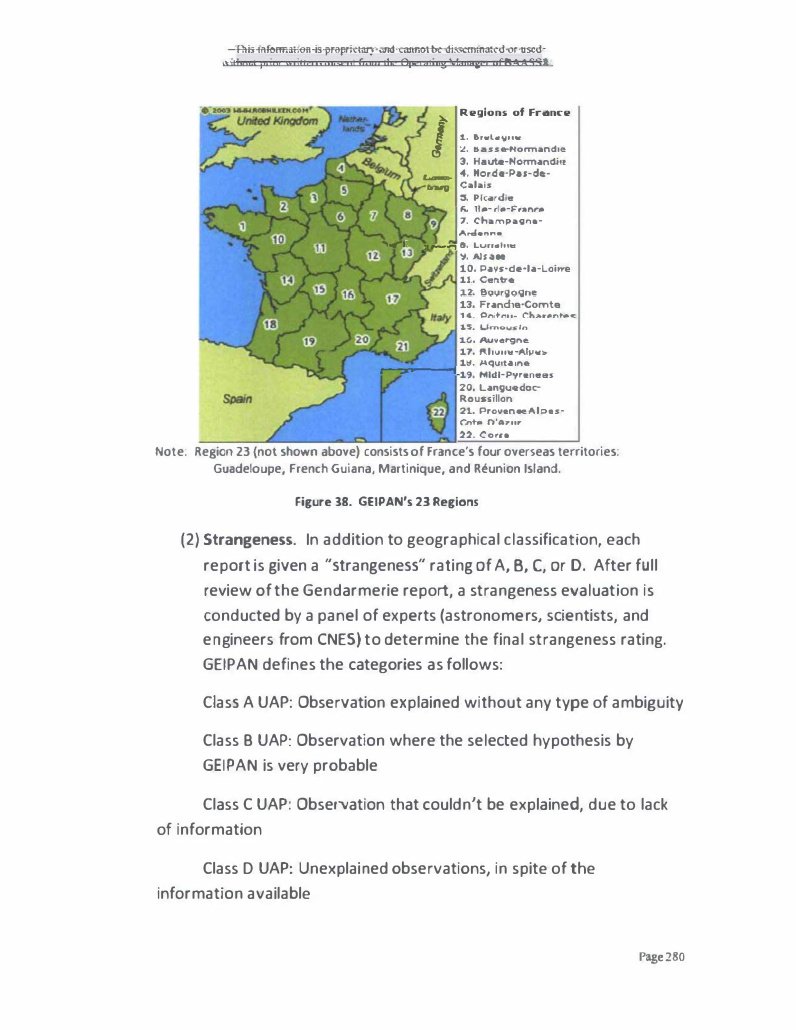
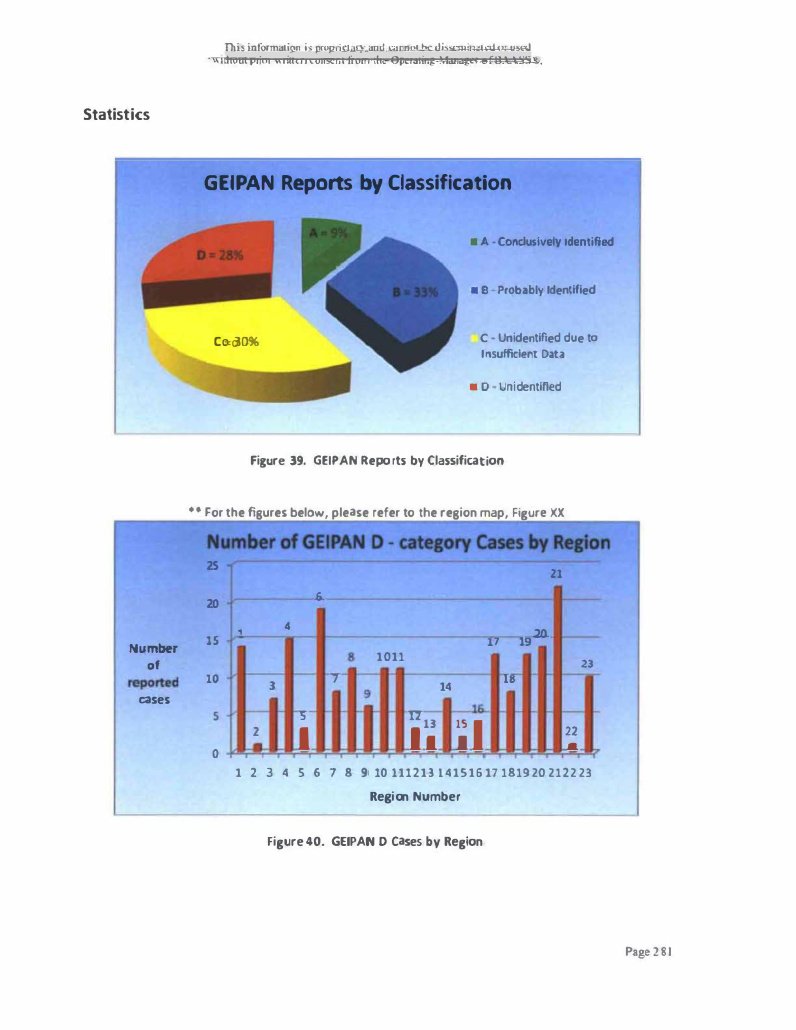
Date: March to July 2009. Location: Las Vegas, where BAASS translated French files. According to the report, France's National Center for Space Studies (CNES) created GEPAN, now GEIPAN, in 1977 to record reports of aerial phenomena. The Gendarmerie is the main investigative body, with a network of 58 regional investigators. The cases are divided into 23 regions and four classes: A, explained unambiguously (9%); B, probable explanation (33%); C, unexplained due to lack of data (30%); D, unexplained despite the data (28%).
BAASS decided to translate only classes C and D. There were 205 D cases and 323 C cases. By the time of the report, the company had completed 68 D cases, about 672 pages, from regions 1 to 6 and part of 7; one translator did about four cases per week. The estimate was 3.000 more hours to finish. As examples of “high interest,” that is, low-altitude sightings, daytime sightings, or sightings with physical evidence by BAASS criteria, the report summarizes four cases.
In Ploërmel, on July 22, 1985, an off-duty gendarme and another witness saw, at about 200 meters, an oval UFO about 20 meters across, with a light that traveled around its edge. In Brest-Guipavas, on November 22, 1981, drivers and two gendarmes saw a UFO shaped like a reddish-orange ball descend near the airport runway, and the air traffic control center recorded a radar echo. In Fleury-sur-Andelle, on January 4, 1994, a man described a spinning conical UFO, which left him very shaken.
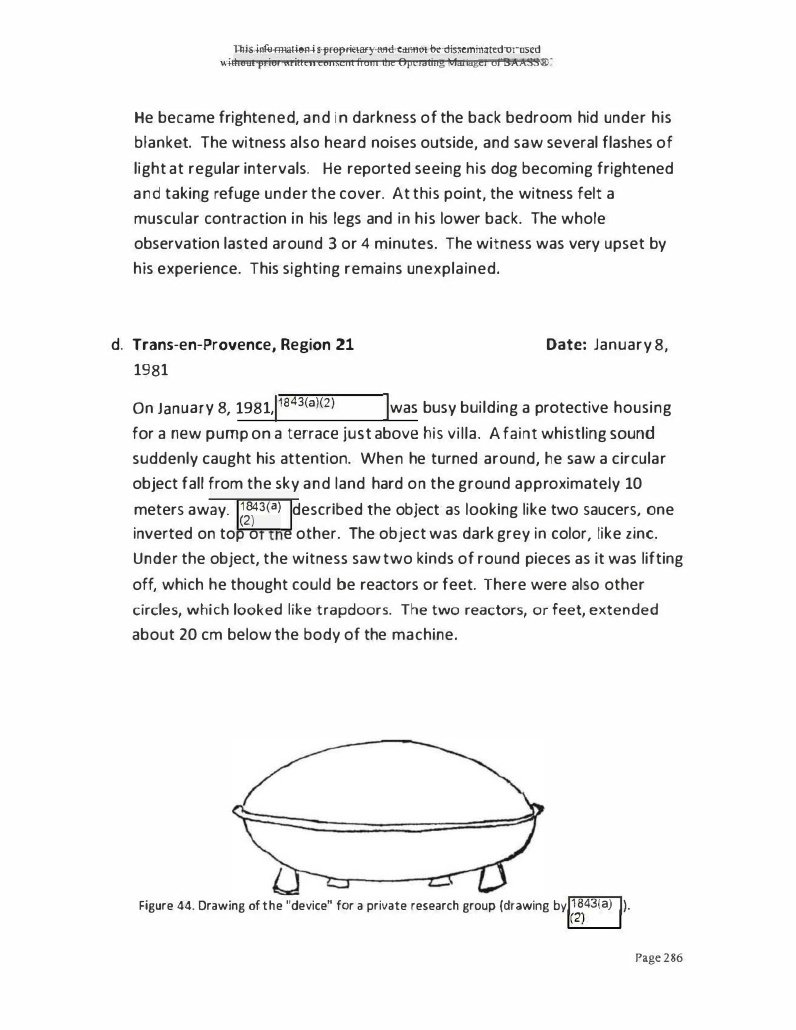
In Trans-en-Provence, on January 8, 1981, a resident reported a dark gray UFO, like two saucers placed one on top of the other, about 2,5 meters across, that landed about 10 meters away and took off within seconds, leaving a circular mark about 2 meters across. The Gendarmerie collected samples the next day and GEPAN on February 17. According to the summary, four laboratories indicated strong mechanical pressure, heating of the soil, and traces of iron, phosphates, and zinc. The agronomic institute INRA measured plant degradation related to distance from the mark, without finding the cause.
The report records the skeptical hypothesis that a tractor used for drilling would have made the marks and left products such as cement and bentonite. It also cites a 1988 reanalysis, carried out by a researcher whose name is redacted at an American laboratory, which found no construction material and, according to the text, tends to corroborate GEIPAN and the witness. The reproduced drawing was made by the witness for a private research group. The conclusion that “a major event” occurred at the site comes from the summary used by BAASS.
BAASS assesses that the GEIPAN files are the most descriptive ever released by any country, owing to the rigor of the investigations. It notes, however, that they deal with events from 1979 to 2006, 80,3% of them in the 1980s and 1990s, which reduces their “investigative appeal.” The plan was to finish the D cases, select the C cases of interest, and transfer everything to the Capella format.
More images from the document
DIRECT READING OF THE FILE
The document, in the original
Physical pages 284 to 296 are translated in full, with the maps in Figures 37 and 38, the charts in Figures 39 to 43 and the Trans-en-Provence drawing (Figure 44). Page 296 also contains the beginning of the section on the United Kingdom, covered in the next dossier. The name of the Trans-en-Provence witness is redacted in the original.
EXCERPT 1 · PHYSICAL PAGE 284
Physical page 284, full page
the work of!1843(a)(2)
Thi!. infonnJiion is proprktID') and cannot be diSScminaced or used
\\llhou1 prior "rinen c-onsem tio111 d,c Opc,atiug M.an:,ger ofB,\.\SS`.
46. French GEIPAN Files. In 1977, CNES {Centre National d'Etudes Spatio/es)
Director General- the French equivalent of NASA- created a unit to record
witness reports of abnormal and unidentified phenomena observed in the sky.
This unit, named GEPAN (Group for the Study of Unidentified Aerospace
Phenomena) remains active today under the name GEIPAN {Groupe d'Etudes et
d'Jnformation sur /es Phenomenes Aerospatiaux Non identifies). GEPAN and its
successor GEIPAN were borne out of the efforts of its founder!1843(a)(2)
I, a
retired astrophysicist/space research and electronics engineer at CNES. Inspired
by the release of U.S. government UFO reports released in the early 1960's and
!began to investigate official French UFO
1843(a)(?L_repo.rts;--I-·--
!trained the first GEPAN investigators, teaching them how to
conduct official investigations into different kinds of reports, from lights in the
sky, to landings with physical evidence, and observation of occupants.
47. GEIPAN's primary goal is to investigate unidentified aerospace phenomena
occurring within France, and to make these findings available to the public in
hopes that the disclosure would in future reveal truly revolutionary scientific
discoveries. After more than 30 years of investigations, GEIPAN has amassed over
100,000 pages-including police and expert reports, witness sketches, video
footage and audio recordings. The French government published the first of
these releases in March 2007, which can be found on the GEIPAN homepage.
http://www.cnes-geipan.fr/geipan/recherche.html
48. Today, GEIPAN is under the direction ofl1843(a)(2)
!who previously worked
for the astronomical division of CNES. While the Gendarmerie National (military
police) acts as the primary investigative and reporting agency for the program,
GEIPAN also maintains a separate auxiliary network of 58 independent
investigators who act as regional representatives for the agency.
Page 278Editorial note: Physical page 284 of DOW-UAP-D172-BAASS_Ten_Month_Report_July-2009.pdf.
Check the original PDF
the work of!1843(a)(2)
Thi!. infonnJiion is proprktID') and cannot be diSScminaced or used
\\llhou1 prior "rinen c-onsem tio111 d,c Opc,atiug M.an:,ger ofB,\.\SS`.
46. French GEIPAN Files. In 1977, CNES {Centre National d'Etudes Spatio/es)
Director General- the French equivalent of NASA- created a unit to record
witness reports of abnormal and unidentified phenomena observed in the sky.
This unit, named GEPAN (Group for the Study of Unidentified Aerospace
Phenomena) remains active today under the name GEIPAN {Groupe d'Etudes et
d'Jnformation sur /es Phenomenes Aerospatiaux Non identifies). GEPAN and its
successor GEIPAN were borne out of the efforts of its founder!1843(a)(2)
I, a
retired astrophysicist/space research and electronics engineer at CNES. Inspired
by the release of U.S. government UFO reports released in the early 1960's and
!began to investigate official French UFO
1843(a)(?L_repo.rts;--I-·--
!trained the first GEPAN investigators, teaching them how to
conduct official investigations into different kinds of reports, from lights in the
sky, to landings with physical evidence, and observation of occupants.
47. GEIPAN's primary goal is to investigate unidentified aerospace phenomena
occurring within France, and to make these findings available to the public in
hopes that the disclosure would in future reveal truly revolutionary scientific
discoveries. After more than 30 years of investigations, GEIPAN has amassed over
100,000 pages-including police and expert reports, witness sketches, video
footage and audio recordings. The French government published the first of
these releases in March 2007, which can be found on the GEIPAN homepage.
http://www.cnes-geipan.fr/geipan/recherche.html
48. Today, GEIPAN is under the direction ofl1843(a)(2)
!who previously worked
for the astronomical division of CNES. While the Gendarmerie National (military
police) acts as the primary investigative and reporting agency for the program,
GEIPAN also maintains a separate auxiliary network of 58 independent
investigators who act as regional representatives for the agency.
Page 278View the document record ↗ · Physical page 284, counting the cover.
EXCERPT 2 · PHYSICAL PAGE 285
Physical page 285, full page
11,is inforinatio1, is pmpr iet:at) a11d earmot be disseminated 01 ti:sed
wi1,hot11 prior wrillea eansent lrert1 t,e Opcrnting M,111age, of BAASS®.
lN
Figure 37. Location of 58 regional investigators covering the French territories
49. GEIPAN Classification and Statistics
a. Classification. GEIPAN reports are classified in two ways:
(1) Regional. France and its overseas territories are separated into
23 geographical regions.
Page 279Editorial note: Physical page 285 of DOW-UAP-D172-BAASS_Ten_Month_Report_July-2009.pdf.
Check the original PDF
11,is inforinatio1, is pmpr iet:at) a11d earmot be disseminated 01 ti:sed
wi1,hot11 prior wrillea eansent lrert1 t,e Opcrnting M,111age, of BAASS®.
lN
Figure 37. Location of 58 regional investigators covering the French territories
49. GEIPAN Classification and Statistics
a. Classification. GEIPAN reports are classified in two ways:
(1) Regional. France and its overseas territories are separated into
23 geographical regions.
Page 279View the document record ↗ · Physical page 285, counting the cover.
EXCERPT 3 · PHYSICAL PAGE 286
Physical page 286, full page
l'!!l".---;-19. Midi-Pyrenees
Alis iflfafffl:aUe11 i:. preprieM) ttnd e.tSmot be diS3Cfflinate:d er used
,ņ, it:hotst pt ioi n1itk111...011St1it fio111 tl1c Opc1ati11g tvfauuge-1 ofBAASSX,.
Regions of France
;,..
J
1, &rwl•V"'"
Ň. 11asse-Norrnand1e
3. Haut.e-Normandht
'- 4. Norde·Pas-de:
Calais
-V
:S. PICC41rdle
F., 11 .. -rl.-F,.,.n,
7. Champa9n•
Nden"•
31H˪i ˫W:.....:ˬi :11u--,., e. Lun.ilu•
'I, Alsace
10. Pavs·d•·la-Loh...-e
11.. Centre
;u. eour11ogntt
13, Franche·Comte
1 4. Dl\a-nu• r.h.-r•n+-c
15'. Umousfn
1G, Auvergna
17. l\l1u, ... -A1v .. i.
1ň. Aqurta1ne
20. Languedoc
Rousslllon
21. Provence-Alpes·
<:nt• n•A,.11r
22. Con•
Note: Region 23 (not shown above) consists of France's four overseas territories:
Guadeloupe, French Guiana, Martinique, and Reunion Island.
Figure 38. GEIPAN's 23 Regions
(2) Strangeness. In addition to geographical classification, each
report is given a "strangeness" rating of A, B, C, or D. After full
review of the Gendarmerie report, a strangeness evaluation is
conducted by a panel of experts (astronomers, scientists, and
engineers from CNES) to determine the final strangeness rating.
GEIPAN defines the categories as follows:
Class A UAP: Observation explained without any type of ambiguity
Class B UAP: Observation where the selected hypothesis by
GEIPAN is very probable
Class C UAP: Observation that couldn't be explained, due to lack
of information
Class D UAP: Unexplained observations, in spite of the
information available
Page280Editorial note: Physical page 286 of DOW-UAP-D172-BAASS_Ten_Month_Report_July-2009.pdf.
Check the original PDF
l'!!l".---;-19. Midi-Pyrenees
Alis iflfafffl:aUe11 i:. preprieM) ttnd e.tSmot be diS3Cfflinate:d er used
,ņ, it:hotst pt ioi n1itk111...011St1it fio111 tl1c Opc1ati11g tvfauuge-1 ofBAASSX,.
Regions of France
;,..
J
1, &rwl•V"'"
Ň. 11asse-Norrnand1e
3. Haut.e-Normandht
'- 4. Norde·Pas-de:
Calais
-V
:S. PICC41rdle
F., 11 .. -rl.-F,.,.n,
7. Champa9n•
Nden"•
31H˪i ˫W:.....:ˬi :11u--,., e. Lun.ilu•
'I, Alsace
10. Pavs·d•·la-Loh...-e
11.. Centre
;u. eour11ogntt
13, Franche·Comte
1 4. Dl\a-nu• r.h.-r•n+-c
15'. Umousfn
1G, Auvergna
17. l\l1u, ... -A1v .. i.
1ň. Aqurta1ne
20. Languedoc
Rousslllon
21. Provence-Alpes·
<:nt• n•A,.11r
22. Con•
Note: Region 23 (not shown above) consists of France's four overseas territories:
Guadeloupe, French Guiana, Martinique, and Reunion Island.
Figure 38. GEIPAN's 23 Regions
(2) Strangeness. In addition to geographical classification, each
report is given a "strangeness" rating of A, B, C, or D. After full
review of the Gendarmerie report, a strangeness evaluation is
conducted by a panel of experts (astronomers, scientists, and
engineers from CNES) to determine the final strangeness rating.
GEIPAN defines the categories as follows:
Class A UAP: Observation explained without any type of ambiguity
Class B UAP: Observation where the selected hypothesis by
GEIPAN is very probable
Class C UAP: Observation that couldn't be explained, due to lack
of information
Class D UAP: Unexplained observations, in spite of the
information available
Page280View the document record ↗ · Physical page 286, counting the cover.
EXCERPT 4 · PHYSICAL PAGE 287
Physical page 287, full page
(biޯ information i, prop□dil[}' and caro01 he dissc:ni1PIN or 11scd
"idmm plim "iittc11 cm&ul from ihް Opeffiling ޱ.1a11a t1f ll.U,S$J<.
Statistics
Co=o30%
GEIPAN Reports by Oassltlcatlon
■A -COndusively Identified
■ B -Probably Identified
C- Unidentified due to
Insufftclent D࠹ta
■ o Unidentified
Fig"Ure 39. GEIPAN Reports by Classification
•• For the figures below, please refer to the region map, Figure XX
25
21
,:.
20
4
.,
,n
15
1.7
19
Number
1011
of
23
10
7
18
3
14
cases
!)
u13
2
22
I
•• I
0
1 2 3 4 5 6 7 8 91 10 111213 141516 17 1819 20 2122 23
Region Number
Figure40. GEIPAN o cases by Region
Page 281Editorial note: Physical page 287 of DOW-UAP-D172-BAASS_Ten_Month_Report_July-2009.pdf.
Check the original PDF
(biޯ information i, prop□dil[}' and caro01 he dissc:ni1PIN or 11scd
"idmm plim "iittc11 cm&ul from ihް Opeffiling ޱ.1a11a t1f ll.U,S$J<.
Statistics
Co=o30%
GEIPAN Reports by Oassltlcatlon
■A -COndusively Identified
■ B -Probably Identified
C- Unidentified due to
Insufftclent D࠹ta
■ o Unidentified
Fig"Ure 39. GEIPAN Reports by Classification
•• For the figures below, please refer to the region map, Figure XX
25
21
,:.
20
4
.,
,n
15
1.7
19
Number
1011
of
23
10
7
18
3
14
cases
!)
u13
2
22
I
•• I
0
1 2 3 4 5 6 7 8 91 10 111213 141516 17 1819 20 2122 23
Region Number
Figure40. GEIPAN o cases by Region
Page 281View the document record ↗ · Physical page 287, counting the cover.
EXCERPT 5 · PHYSICAL PAGE 288
Physical page 288, full page
-
-
-
Ι
ll1isiuJvuuativu is p1up1ittwJmad twaautIx.disscnaimdcd01 used
\\u:hout priorMilia,wnswlfiom the 0pe@HngĎianďr 9fB.I\"SSK
6.0 .
lO
..-
11
- -
P,
s.o
14
.1
..,.
.ofrepons4.o
9 10
22
,c 16
per
3 0
-
18
fllion people•
17
17 ....
-
2.0
:, g
1.0
Κ -... -
0.0
1 2 3 4 5 6 7 8 9 10 11 12 13 14 15 16 17 18 19 20 21 22
ResionNumber
Figure 41. GEIPAN D Cases per Million People
,_.,....-
ŋt
1'.0
No. of
12.0
-
repoeb
10.0 .
per
10,000 km2 8.0
6.0 .
-
8
ft -
-
"'.A
4.0
2.0
0.0
2-
c;
I
......,,_
1" 11
.1,
14
19
18
'"'
• 1,.
""'
• • I •• I
.
.
-
l 2 3 4 5 6 7 8 9 10 11 12 13 14 15 16 17 18 19 20 21 22
Region Number
Figure42. GEIPAN D Cases per 10,000 km2
Page282Editorial note: Physical page 288 of DOW-UAP-D172-BAASS_Ten_Month_Report_July-2009.pdf.
Check the original PDF
-
-
-
Ι
ll1isiuJvuuativu is p1up1ittwJmad twaautIx.disscnaimdcd01 used
\\u:hout priorMilia,wnswlfiom the 0pe@HngĎianďr 9fB.I\"SSK
6.0 .
lO
..-
11
- -
P,
s.o
14
.1
..,.
.ofrepons4.o
9 10
22
,c 16
per
3 0
-
18
fllion people•
17
17 ....
-
2.0
:, g
1.0
Κ -... -
0.0
1 2 3 4 5 6 7 8 9 10 11 12 13 14 15 16 17 18 19 20 21 22
ResionNumber
Figure 41. GEIPAN D Cases per Million People
,_.,....-
ŋt
1'.0
No. of
12.0
-
repoeb
10.0 .
per
10,000 km2 8.0
6.0 .
-
8
ft -
-
"'.A
4.0
2.0
0.0
2-
c;
I
......,,_
1" 11
.1,
14
19
18
'"'
• 1,.
""'
• • I •• I
.
.
-
l 2 3 4 5 6 7 8 9 10 11 12 13 14 15 16 17 18 19 20 21 22
Region Number
Figure42. GEIPAN D Cases per 10,000 km2
Page282View the document record ↗ · Physical page 288, counting the cover.
EXCERPT 6 · PHYSICAL PAGE 289
Physical page 289, full page
A,is i11funnatioo is p,OpFiett'ldJ tt11d eftl,Hot be diM<:1t1ir1tt1ed or lt5el'l
witl1uot p1 io, «1 iuc,, co11.sent ti otu the Ope:1ati11g Manage, of BAASS Jt•
...... ofnGEIMN D-aapy Reports per Year
1
6
s
umber
4
of
3
Reports
2
1
0
2000
2005
1979
1984
1990
1995
Year
Figure 43. GEIPAN D Reports per Year
50. Accomplishments to Date. BAASS decided that translating "high value"
reports was the priority. For this reason, past and ongoing efforts are
concentrated solely to reports falling into GEIPAN categories C and D. Within
those categories, translation efforts would proceed in order of region, starting
with region 1 and follow consecutively through region 23. Currently, the
numerical breakdown of these top priority categories is as follows:
D cases: 205 cases for 23 regions.
C cases: 323 cases for 23 regions.
Note: These numbers may change as GEIPAN updates and releases new cases to
the public.
51. BAASS began translating the GEIPAN files in late March 2009. Currently,
BAASS has completed work on 68 GEIPAN category D cases (roughly 672 pages).
Page 283Editorial note: Physical page 289 of DOW-UAP-D172-BAASS_Ten_Month_Report_July-2009.pdf.
Check the original PDF
A,is i11funnatioo is p,OpFiett'ldJ tt11d eftl,Hot be diM<:1t1ir1tt1ed or lt5el'l
witl1uot p1 io, «1 iuc,, co11.sent ti otu the Ope:1ati11g Manage, of BAASS Jt•
...... ofnGEIMN D-aapy Reports per Year
1
6
s
umber
4
of
3
Reports
2
1
0
2000
2005
1979
1984
1990
1995
Year
Figure 43. GEIPAN D Reports per Year
50. Accomplishments to Date. BAASS decided that translating "high value"
reports was the priority. For this reason, past and ongoing efforts are
concentrated solely to reports falling into GEIPAN categories C and D. Within
those categories, translation efforts would proceed in order of region, starting
with region 1 and follow consecutively through region 23. Currently, the
numerical breakdown of these top priority categories is as follows:
D cases: 205 cases for 23 regions.
C cases: 323 cases for 23 regions.
Note: These numbers may change as GEIPAN updates and releases new cases to
the public.
51. BAASS began translating the GEIPAN files in late March 2009. Currently,
BAASS has completed work on 68 GEIPAN category D cases (roughly 672 pages).
Page 283View the document record ↗ · Physical page 289, counting the cover.
EXCERPT 7 · PHYSICAL PAGE 290
Physical page 290, full page
_t_t
_t_t
Ibis i1-1fun:na1ion is propriel:11') aRd cannot be dissemin.aled er wed
\1 ithout prior u:ritten consent fmm lhe Op,Qrating Mimager ofB 4 A SSlr
This includes all the 0-class reports in Regions 1 through 6, and some of Region 7.
A typical report is about 9 pages long, and a translator can review, analyze, and
translate about four cases per week.
4
_B
._!1t
During this research project, BAASS made contact with
52.
3(a)(2)____.!the
GEIPAN assistant at CNES. She is assisting in correcting the display issues
associated with some of the police reports published on the GEIPAN website.
53. GEIPAN High Interest cases. Among the cases already translated, four
examples of reports consistent with current BAASS criteria for "high interest" (i.e.
sighting below 600', daytime, physical evidence, etc.) are provided below.
Included in this selection of cases is the landmark Trans-en-Provence sighting
(paragraph 53.d below).
a. Ploermel, Region 1
Date: July 22,
1985
A Gendarmerie officer on his day off observed an unusual flicker of light at
his home. The officer decided to take a closer look. Once at the spot, he
was not able to see anything, but did find another person who saw the
flicker and also came to investigate. While they were talking, to their
surprise, the witnesses saw about 200 meters away, a big oval shaped
object. The object was 20 meters in length and about 5 meters tall,
emitting a rather pale light. An intermittent light seemed to follow the
circumference of the object. Another light, of variable intensity was
located next to the bigger form. Both witnesses saw the object
disappeared and reappear without hearing any noise. Others saw a
cylinder-shaped object with changing luminous intensity. From the rear,
the object appeared to sweep the sky like a projector. The observation
Page 284Editorial note: Physical page 290 of DOW-UAP-D172-BAASS_Ten_Month_Report_July-2009.pdf.
Check the original PDF
_t_t
_t_t
Ibis i1-1fun:na1ion is propriel:11') aRd cannot be dissemin.aled er wed
\1 ithout prior u:ritten consent fmm lhe Op,Qrating Mimager ofB 4 A SSlr
This includes all the 0-class reports in Regions 1 through 6, and some of Region 7.
A typical report is about 9 pages long, and a translator can review, analyze, and
translate about four cases per week.
4
_B
._!1t
During this research project, BAASS made contact with
52.
3(a)(2)____.!the
GEIPAN assistant at CNES. She is assisting in correcting the display issues
associated with some of the police reports published on the GEIPAN website.
53. GEIPAN High Interest cases. Among the cases already translated, four
examples of reports consistent with current BAASS criteria for "high interest" (i.e.
sighting below 600', daytime, physical evidence, etc.) are provided below.
Included in this selection of cases is the landmark Trans-en-Provence sighting
(paragraph 53.d below).
a. Ploermel, Region 1
Date: July 22,
1985
A Gendarmerie officer on his day off observed an unusual flicker of light at
his home. The officer decided to take a closer look. Once at the spot, he
was not able to see anything, but did find another person who saw the
flicker and also came to investigate. While they were talking, to their
surprise, the witnesses saw about 200 meters away, a big oval shaped
object. The object was 20 meters in length and about 5 meters tall,
emitting a rather pale light. An intermittent light seemed to follow the
circumference of the object. Another light, of variable intensity was
located next to the bigger form. Both witnesses saw the object
disappeared and reappear without hearing any noise. Others saw a
cylinder-shaped object with changing luminous intensity. From the rear,
the object appeared to sweep the sky like a projector. The observation
Page 284View the document record ↗ · Physical page 290, counting the cover.
EXCERPT 8 · PHYSICAL PAGE 291
Physical page 291, full page
I 111s mlonnauon 1s pl op, h,tmy and cwinot be dissemiRalcd or used
without prior wriJlen conse111 Cro1:u Ll:ie Opcr:atiRg Manager of BAASS®.
took place approximately between the hours of 11:15 PM and 3:30 AM,
before a sudden and final disappearance. No other information could be
collected regarding this phenomenon and remains unexplained.
b. Brest - Guipavas, Region 1
Date: November
22, 1981
Between 7:40-8:00 a.m., drivers on a rural road saw a red/orange ball
hovering over a field near the local airport. The sun had not yet completely
risen but the visibility was good. The object was the size of a soccer ball. It
suddenly disappeared and seemed to fall into a field. No sound was heard.
Around 8 a.m., two Gendarmes on patrol described seeing a reddish
orangeish luminous ball that moved in the direction of the runway as if
about to land. As the ball slowly descended, it became more imposing. A
local firefighter warned the control tower of the object approaching, but
the object suddenly disappeared. The witnesses heard no noise and no
traces on either the field or the runway could be found. Nevertheless, the
CRNA (Centre en Route de fa Navigation Aerienne; Center of Control of
Aerial Navigation) noticed a visible spot on their radar between 7:15 and
8:04 a.m. The incident remains unexplained.
c. Fleury sur Andelle, Region 3
Date: January 4,
1994
On January 4, 1994 at 11:50 p.m., while watching television, a 33-year-old
man noticed an orange light outdoors making a to-and-fro movement.
After getting closer to the window, the witness noticed a bright conical
form turning around its axle. There were streaks of different colors around
its diameter. The object was stationary, then suddenly moved away very
fast to become a single bright point. The object returned slowly towards
the house. During the event, the witness felt like he was being watched.
Page 285Editorial note: Physical page 291 of DOW-UAP-D172-BAASS_Ten_Month_Report_July-2009.pdf.
Check the original PDF
I 111s mlonnauon 1s pl op, h,tmy and cwinot be dissemiRalcd or used
without prior wriJlen conse111 Cro1:u Ll:ie Opcr:atiRg Manager of BAASS®.
took place approximately between the hours of 11:15 PM and 3:30 AM,
before a sudden and final disappearance. No other information could be
collected regarding this phenomenon and remains unexplained.
b. Brest - Guipavas, Region 1
Date: November
22, 1981
Between 7:40-8:00 a.m., drivers on a rural road saw a red/orange ball
hovering over a field near the local airport. The sun had not yet completely
risen but the visibility was good. The object was the size of a soccer ball. It
suddenly disappeared and seemed to fall into a field. No sound was heard.
Around 8 a.m., two Gendarmes on patrol described seeing a reddish
orangeish luminous ball that moved in the direction of the runway as if
about to land. As the ball slowly descended, it became more imposing. A
local firefighter warned the control tower of the object approaching, but
the object suddenly disappeared. The witnesses heard no noise and no
traces on either the field or the runway could be found. Nevertheless, the
CRNA (Centre en Route de fa Navigation Aerienne; Center of Control of
Aerial Navigation) noticed a visible spot on their radar between 7:15 and
8:04 a.m. The incident remains unexplained.
c. Fleury sur Andelle, Region 3
Date: January 4,
1994
On January 4, 1994 at 11:50 p.m., while watching television, a 33-year-old
man noticed an orange light outdoors making a to-and-fro movement.
After getting closer to the window, the witness noticed a bright conical
form turning around its axle. There were streaks of different colors around
its diameter. The object was stationary, then suddenly moved away very
fast to become a single bright point. The object returned slowly towards
the house. During the event, the witness felt like he was being watched.
Page 285View the document record ↗ · Physical page 291, counting the cover.
EXCERPT 9 · PHYSICAL PAGE 292
Physical page 292, full page
ੑ
Hlis infe,RHaliOR is Jlrei,rietary antl ewmeL be dis3e111i11atcd 01 osed
wilheut pFier «·ritte11 eoaseut from the Opciatit1g ManagermBAASS®.
He became frightened, and in darkness of the back bedroom hid under his
blanket. The witness also heard noises outside, and saw several flashes of
light at regular intervals. He reported seeing his dog becoming frightened
and taking refuge under the cover. At this point, the witness felt a
muscular contraction in his legs and in his lower back. The whole
observation lasted around 3 or 4 minutes. The witness was very upset by
his experience. This sighting remains unexplained.
d. Trans-en-Provence, Region 21
Date: January 8,
1981
)
On January 8, 1981,l1843(a)(2
lwas busy building a protective housing
for a new pump on a terrace just above his villa. A faint whistling sound
suddenly caught his attention. When he turned around, he saw a circular
object fall from the sky and land hard on the ground approximately 10
meters away. 43(a) described the object as looking like two saucers, one
inverted on top o
e other. The object was dark grey in color, like zinc.
Under the object, the witness saw two kinds of round pieces as it was lifting
off, which he thought could be reactors or feet. There were also other
circles, which looked like trapdoors. The two reactors, or feet, extended
about 20 cm below the body of the machine.
Figure 44. Drawing of the "device" for a private research group {drawing by࠺).
Page286Editorial note: Physical page 292 of DOW-UAP-D172-BAASS_Ten_Month_Report_July-2009.pdf.
Check the original PDF
ੑ
Hlis infe,RHaliOR is Jlrei,rietary antl ewmeL be dis3e111i11atcd 01 osed
wilheut pFier «·ritte11 eoaseut from the Opciatit1g ManagermBAASS®.
He became frightened, and in darkness of the back bedroom hid under his
blanket. The witness also heard noises outside, and saw several flashes of
light at regular intervals. He reported seeing his dog becoming frightened
and taking refuge under the cover. At this point, the witness felt a
muscular contraction in his legs and in his lower back. The whole
observation lasted around 3 or 4 minutes. The witness was very upset by
his experience. This sighting remains unexplained.
d. Trans-en-Provence, Region 21
Date: January 8,
1981
)
On January 8, 1981,l1843(a)(2
lwas busy building a protective housing
for a new pump on a terrace just above his villa. A faint whistling sound
suddenly caught his attention. When he turned around, he saw a circular
object fall from the sky and land hard on the ground approximately 10
meters away. 43(a) described the object as looking like two saucers, one
inverted on top o
e other. The object was dark grey in color, like zinc.
Under the object, the witness saw two kinds of round pieces as it was lifting
off, which he thought could be reactors or feet. There were also other
circles, which looked like trapdoors. The two reactors, or feet, extended
about 20 cm below the body of the machine.
Figure 44. Drawing of the "device" for a private research group {drawing by࠺).
Page286View the document record ↗ · Physical page 292, counting the cover.
EXCERPT 10 · PHYSICAL PAGE 293
Physical page 293, full page
This info, 111ation is proprieta-iy afld ean11et be d:issem.iaated er used
without prior written cooseo• from •be 011,w.i,iiRg MMager ofBAASS®.
After a few seconds, the object moved away vertically at very high
speed. The object left ring-like traces on the ground. When the
device lifted off, he saw four openings below, through which neither
flame nor smoke were escaping. The circular object was
approximately 2.5 meters wide and 1.7 meters high, and had a ridge
around its circumference. The event lasted between 30 to 40
seconds. When the witness approached the landing site, he saw an
imprint of approximately 2 meters in diameter on the ground, as well
as some dark discoloration at several points in the circumference.
The next day, the Gendarmerie investigated the sighting. Tlney
interviewed the witness, documented the imprint on the ground, and
proceeded to take soil and plant samples 10 meters surrounding the
imprint.
On February 17, 1981, GE/PAN conducted its own investigation and
took a new set of samples. The landing imprints were still visible on
the ground. GE/PAN sent soil samples to four different laboratories
for testing. Each laboratory employed different analytical
techniques, but reached the same results.
After reviewing the lab results, GE/PAN reached several conclusions.
First, GEIPAN found that a strong mechanical pressure, probably due
to a shock, was exerted on the surface of the ground. Superficial
modification of the structure {striations and erosion) took place.
Secondly a heating effect, presumably caused by the shock, caused
the soil temperature to rise to 600o° Celsius. Lastly, laboratory tests
detected the presence of a small quantity of iron oxides over a
limestone grain, as a well as a small amount of phosphates, and zinc.
These metals present in the sample could have resulted from friction
Pagee287Editorial note: Physical page 293 of DOW-UAP-D172-BAASS_Ten_Month_Report_July-2009.pdf.
Check the original PDF
This info, 111ation is proprieta-iy afld ean11et be d:issem.iaated er used
without prior written cooseo• from •be 011,w.i,iiRg MMager ofBAASS®.
After a few seconds, the object moved away vertically at very high
speed. The object left ring-like traces on the ground. When the
device lifted off, he saw four openings below, through which neither
flame nor smoke were escaping. The circular object was
approximately 2.5 meters wide and 1.7 meters high, and had a ridge
around its circumference. The event lasted between 30 to 40
seconds. When the witness approached the landing site, he saw an
imprint of approximately 2 meters in diameter on the ground, as well
as some dark discoloration at several points in the circumference.
The next day, the Gendarmerie investigated the sighting. Tlney
interviewed the witness, documented the imprint on the ground, and
proceeded to take soil and plant samples 10 meters surrounding the
imprint.
On February 17, 1981, GE/PAN conducted its own investigation and
took a new set of samples. The landing imprints were still visible on
the ground. GE/PAN sent soil samples to four different laboratories
for testing. Each laboratory employed different analytical
techniques, but reached the same results.
After reviewing the lab results, GE/PAN reached several conclusions.
First, GEIPAN found that a strong mechanical pressure, probably due
to a shock, was exerted on the surface of the ground. Superficial
modification of the structure {striations and erosion) took place.
Secondly a heating effect, presumably caused by the shock, caused
the soil temperature to rise to 600o° Celsius. Lastly, laboratory tests
detected the presence of a small quantity of iron oxides over a
limestone grain, as a well as a small amount of phosphates, and zinc.
These metals present in the sample could have resulted from friction
Pagee287View the document record ↗ · Physical page 293, counting the cover.
EXCERPT 11 · PHYSICAL PAGE 294
Physical page 294, full page
1843(a)(2)
Tlti$ iBfeRftlll:iOA is proprir-tary and Gallnel be disgemin:ued oc used
11ithou1 pri,n .. :rinen s՝mi,eat freffl the Opefft՞i11g MaJ1agu of BA ASS30.
of the soil with paint coatings. Alternately, these metal residues
could have been a product of some sort of combustion process.
Biochemical analyses of the vegetation around the site were
conducted by INRA (lnstitut National de la Recherche Agriculture).
Tests on these samples demonstrated a degradation of multiple
plaints correlated with the distance from the imprint. In most cases
the differences appeared on a logarithmic or bilogarithmic function
of distance from the center of the imprint. However, the exact cause
of the degradation could not be determined. The level of
understanding regarding vegetal trauma at the time of the
investigation was too fragmentary to draw a single precise conclusion
from the results. An alternate theory is the vegetal degradation was
caused by an intense electric field.
In general, it can be safely concluded that the quantitative results
confirmed that a large-size event did take place at the location. The
event triggered mechanical deformations on the ground, heating,
and perhaps even the depositing of trace materials not commonly
found in the area.
...... -----
Tran;e---Provencef
.._
-.-
_____.IRe-examination. The details
surrounding this case still arouse much speculation among scientists
and ufologists alike many years after the original investigation.
Several alternate theories regarding the cause of the ring-like traces
have been forwarded through the years. 1 843(a)(2) xamined
several of these theories in1843(a)(2)
1843(a)(2)
'-------------------------1 One theory is
that the wheels of a tractor maneuvering on the site caused the ring-
Page-
288Editorial note: Physical page 294 of DOW-UAP-D172-BAASS_Ten_Month_Report_July-2009.pdf.
Check the original PDF
1843(a)(2)
Tlti$ iBfeRftlll:iOA is proprir-tary and Gallnel be disgemin:ued oc used
11ithou1 pri,n .. :rinen s՝mi,eat freffl the Opefft՞i11g MaJ1agu of BA ASS30.
of the soil with paint coatings. Alternately, these metal residues
could have been a product of some sort of combustion process.
Biochemical analyses of the vegetation around the site were
conducted by INRA (lnstitut National de la Recherche Agriculture).
Tests on these samples demonstrated a degradation of multiple
plaints correlated with the distance from the imprint. In most cases
the differences appeared on a logarithmic or bilogarithmic function
of distance from the center of the imprint. However, the exact cause
of the degradation could not be determined. The level of
understanding regarding vegetal trauma at the time of the
investigation was too fragmentary to draw a single precise conclusion
from the results. An alternate theory is the vegetal degradation was
caused by an intense electric field.
In general, it can be safely concluded that the quantitative results
confirmed that a large-size event did take place at the location. The
event triggered mechanical deformations on the ground, heating,
and perhaps even the depositing of trace materials not commonly
found in the area.
...... -----
Tran;e---Provencef
.._
-.-
_____.IRe-examination. The details
surrounding this case still arouse much speculation among scientists
and ufologists alike many years after the original investigation.
Several alternate theories regarding the cause of the ring-like traces
have been forwarded through the years. 1 843(a)(2) xamined
several of these theories in1843(a)(2)
1843(a)(2)
'-------------------------1 One theory is
that the wheels of a tractor maneuvering on the site caused the ring-
Page-
288View the document record ↗ · Physical page 294, counting the cover.
EXCERPT 12 · PHYSICAL PAGE 295
Physical page 295, full page
11,is i11fo1 matiOJ\ is pFepFie,111,-11:11tl e&flREll llu c.fo;se11ɒiRat1a1d 9F USGQ
Wllhom pnor wnllen consent irom chi.: Opcrathig fvhmage1 of BAASS®.
like traces. A neighbor had recalled observing a tractor used for
1843(a)(2)_
dr:illing c>-nthel····· ···•
!property. Mor,eover, such drilling work
involves the use of materials such as powdered cement, barite,
bantonite, and "formamouse" (a lubricating agent) which could have
caused the changes in the plants surrounding the rings.
1843(a)(2)
-····1·n···
!returned to the site in 1988. As part of the investigation, he
took the original soil samples from the initial investigation and sent
them to an American laboratory for analysis. The results of this later
analysis were consistent with the witnesses' account of the event
and the history of the soil. Furthermore, the failure to detect cement
or any of the other construction and drilling materials refutes the
tractor theory proffered by skeptics to explain the ring traces.
1843(a)(2) .. ..-............ ............... , ·····
Iresults tend to support the e·arlier GEIPAN conclusions, as
··n
well as the witness' testimony,
54. GEIPAN Files Conclusion. While it is difficult to draw concrete inferences
regarding the value of the information contained in the GEIPAN files before they
are fully analyzed, two general observations can be made. First, because of their
meticulous investigative processes and methodologies, the GEIPAN files contain
the most descriptive information regarding the analysis of sighting information
released by any country to date. From its detailed witness accounts, to the
quality and training of its 58 regional investigators, to the level of support
provided for the project by the Gendarmerie, natilonal laboratories, as well as the
army of scientists ensure the information collected adheres to rigorous scientific
standards.
55. However, the high quality of the GEIPAN files must nevertheless be tempered
by the fact that these files involve events that are between 3 and 30 years old
Page 289Editorial note: Physical page 295 of DOW-UAP-D172-BAASS_Ten_Month_Report_July-2009.pdf.
Check the original PDF
11,is i11fo1 matiOJ\ is pFepFie,111,-11:11tl e&flREll llu c.fo;se11ɒiRat1a1d 9F USGQ
Wllhom pnor wnllen consent irom chi.: Opcrathig fvhmage1 of BAASS®.
like traces. A neighbor had recalled observing a tractor used for
1843(a)(2)_
dr:illing c>-nthel····· ···•
!property. Mor,eover, such drilling work
involves the use of materials such as powdered cement, barite,
bantonite, and "formamouse" (a lubricating agent) which could have
caused the changes in the plants surrounding the rings.
1843(a)(2)
-····1·n···
!returned to the site in 1988. As part of the investigation, he
took the original soil samples from the initial investigation and sent
them to an American laboratory for analysis. The results of this later
analysis were consistent with the witnesses' account of the event
and the history of the soil. Furthermore, the failure to detect cement
or any of the other construction and drilling materials refutes the
tractor theory proffered by skeptics to explain the ring traces.
1843(a)(2) .. ..-............ ............... , ·····
Iresults tend to support the e·arlier GEIPAN conclusions, as
··n
well as the witness' testimony,
54. GEIPAN Files Conclusion. While it is difficult to draw concrete inferences
regarding the value of the information contained in the GEIPAN files before they
are fully analyzed, two general observations can be made. First, because of their
meticulous investigative processes and methodologies, the GEIPAN files contain
the most descriptive information regarding the analysis of sighting information
released by any country to date. From its detailed witness accounts, to the
quality and training of its 58 regional investigators, to the level of support
provided for the project by the Gendarmerie, natilonal laboratories, as well as the
army of scientists ensure the information collected adheres to rigorous scientific
standards.
55. However, the high quality of the GEIPAN files must nevertheless be tempered
by the fact that these files involve events that are between 3 and 30 years old
Page 289View the document record ↗ · Physical page 295, counting the cover.
EXCERPT 13 · PHYSICAL PAGE 296
Physical page 296, full page
This i11fo1 nmtio11 is proprietm) m,d eat,not be disseminated or 1:1sed
withoac prior w,im:n consent from Lhe Operaung Manager of BAASS®.7
(1979-2006). Among the cases analyzed thus far in the D-category, the vast
majority of the cases (80.3%) occurred in the 1980's and 1990's. The relative
"staleness" of these reports greatly reduces their "investigational appeal" or
potential to become subjects of future BAASS investigations. Notwithstanding the
concerns about the age of these files, translation and analysis of these files
remains an important endeavor consistent with the BAASS goal of becoming a
leader in the study and research of the UFO phenomena in the world.
56. GEIPAN Files Recommendations. BAASS will continue the work of reviewing,
analyzing, and translating of the C and D cases released by GEIPAN. It will take
another estimated 3,000 man-hours to complete the C and D cases already
released by the French government. When the translation of the D-cases is
completed, BAASS management should then make a preliminary determination of
which C-cases are of sufficient interest to BAASS to merit translation to English.
After the category C and D cases are translated, BAASS will input those cases into
CAPELLA format for further analysis within the BAASS Data Warehouse.
57. United Kingdom Ministry of Defense Release Introduction. Beginning in
May 2008, the government of the United Kingdom authorized the structured
release of files collected by the Ministry of Defence (MoD) relating to Unidentified
Flying Objects. The MoD has stated that it receives a large number of requests
each year for information relating to UFOs, and in response has introduced
a system to meet this demand by releasing these files in a structured way. A total
of seven releases are planned with three having been released thus far. The rest
of the files are currently under review by the MoD and will be available for public
viewing through a series of planned releases through 2010. According to The
National Archives there are currently a total of 155 files containing information
related to UFOs on their website http://www.nationalarchives.gov.uk/catalogue/.
The files which have thus far been made available for public viewing have been
obtained by BAASS and have been examined to identify potentially credible
Page 290Editorial note: Physical page 296 of DOW-UAP-D172-BAASS_Ten_Month_Report_July-2009.pdf.
Check the original PDF
This i11fo1 nmtio11 is proprietm) m,d eat,not be disseminated or 1:1sed
withoac prior w,im:n consent from Lhe Operaung Manager of BAASS®.7
(1979-2006). Among the cases analyzed thus far in the D-category, the vast
majority of the cases (80.3%) occurred in the 1980's and 1990's. The relative
"staleness" of these reports greatly reduces their "investigational appeal" or
potential to become subjects of future BAASS investigations. Notwithstanding the
concerns about the age of these files, translation and analysis of these files
remains an important endeavor consistent with the BAASS goal of becoming a
leader in the study and research of the UFO phenomena in the world.
56. GEIPAN Files Recommendations. BAASS will continue the work of reviewing,
analyzing, and translating of the C and D cases released by GEIPAN. It will take
another estimated 3,000 man-hours to complete the C and D cases already
released by the French government. When the translation of the D-cases is
completed, BAASS management should then make a preliminary determination of
which C-cases are of sufficient interest to BAASS to merit translation to English.
After the category C and D cases are translated, BAASS will input those cases into
CAPELLA format for further analysis within the BAASS Data Warehouse.
57. United Kingdom Ministry of Defense Release Introduction. Beginning in
May 2008, the government of the United Kingdom authorized the structured
release of files collected by the Ministry of Defence (MoD) relating to Unidentified
Flying Objects. The MoD has stated that it receives a large number of requests
each year for information relating to UFOs, and in response has introduced
a system to meet this demand by releasing these files in a structured way. A total
of seven releases are planned with three having been released thus far. The rest
of the files are currently under review by the MoD and will be available for public
viewing through a series of planned releases through 2010. According to The
National Archives there are currently a total of 155 files containing information
related to UFOs on their website http://www.nationalarchives.gov.uk/catalogue/.
The files which have thus far been made available for public viewing have been
obtained by BAASS and have been examined to identify potentially credible
Page 290View the document record ↗ · Physical page 296, counting the cover.
Dates and documentary context
- Event
- 03/2009 — BAASS began translating the GEIPAN files at the end of March 2009; the cases cited are from 1981 to 1994.
- Document
- 07/2009 — BAASS ten-month report, July 2009.
- Publication
- Not established — Published by the U.S. Department of War on war.gov, release 08 of UAP files (2026).
Origin and release
Bigelow Aerospace Advanced Space Studies (BAASS), for the Defense Intelligence Agency (DIA), AAWSAP program; GEIPAN/CNES cases · DOW-UAP-D172-BAASS_Ten_Month_Report_July-2009.pdf
Physical pages 284 to 296 of 538.
undefined ↗ — undefined
Related accounts and their differences
- The BAASS ten-month report, July 2009
- The Capella data warehouse
- The AAWSAP study on effects on witnesses
Questions to continue the investigation
- Did BAASS ever translate the 205 class D cases?
- Do the original Trans-en-Provence lab reports confirm the temperature of 600 °C cited in the summary?
GEOGRAPHY OF THE CASE
Las Vegas, Nevada
Approximate reference point placed by the editorial team; it does not indicate the exact location.
DOCUMENTARY TRAIL
Go back to the sources
References use physical pages of the PDF, counting the cover. Summaries are presented in English; the documents keep their original language.
- DOW-UAP-D172-BAASS_Ten_Month_Report_July-2009.pdf
Physical pages 284 to 296
DOW · 538 pages
Editorial summary based on the collection's research notes. How we read the documents.