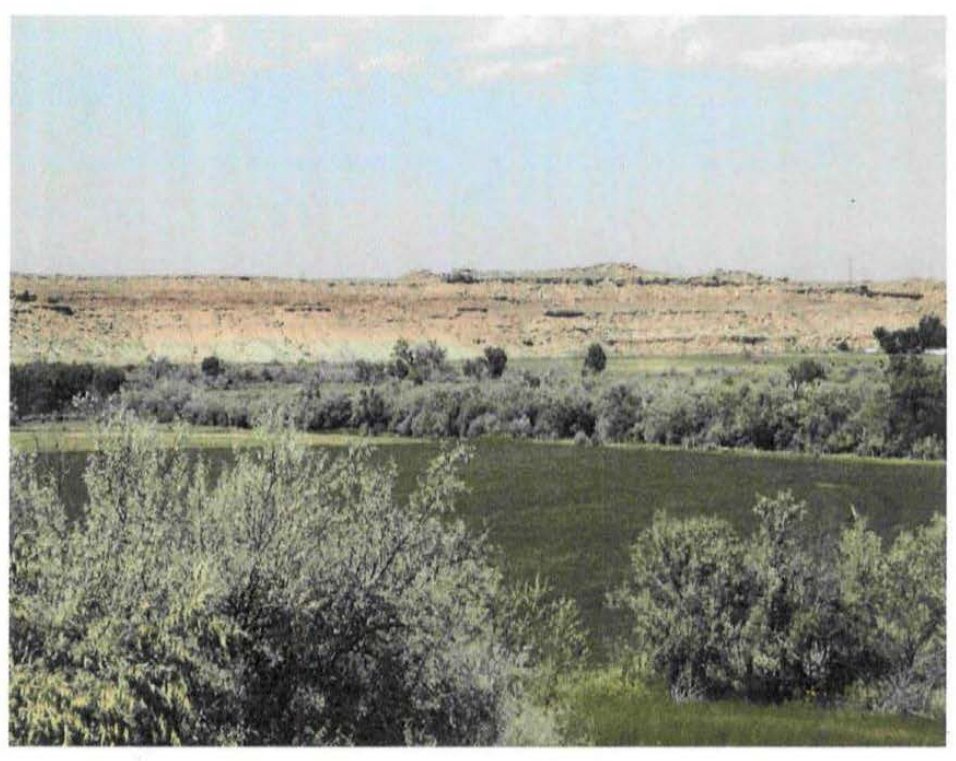
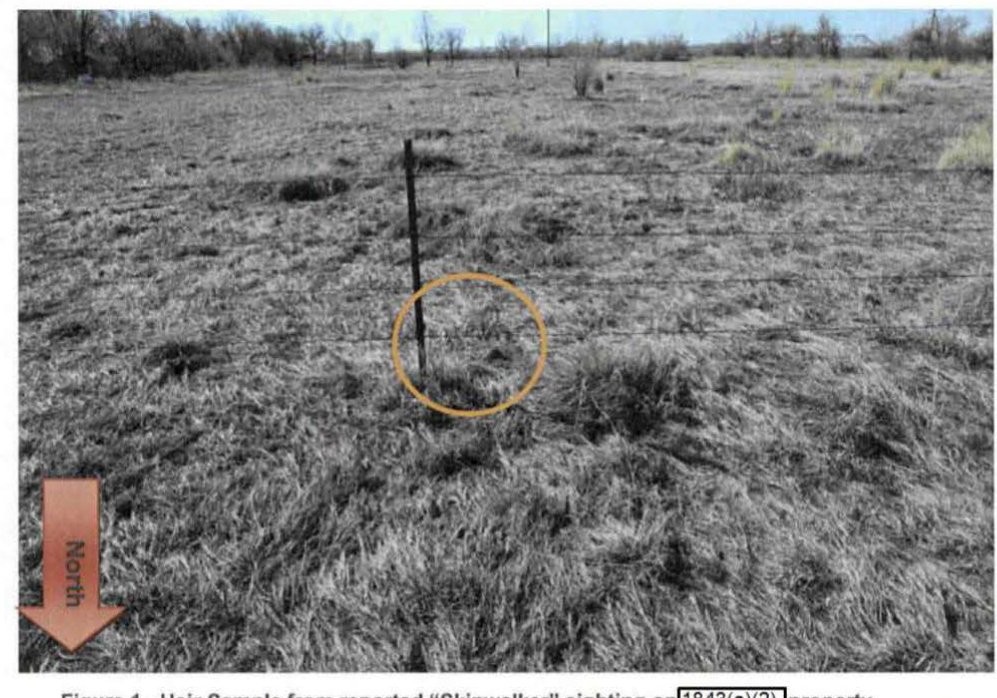
Date: Date: 06/04/2010 (biosensor plants taken to the ranch); 22/04/2010 (seed experiment)Location: Trailer at the investigated ranch, near Fort Duchesne, Utah, USA; control at BAASS headquarters, Las Vegas, Nevada
Utah ranch, 2010: BAASS brings tobacco and spiderwort plants and plants peas and beans to detect radiation
In April 2010, BAASS installed in the trailer at the Utah ranch six tobacco plants and six spiderwort plants used in laboratories to reveal mutations caused by radiation or substances, and set up a pea and bean germination experiment, with a control at the company's headquarters. By the end of the report there was no result: the tobacco leaves had no spots and the examination of the flowers had not yet been done.
- Event date
- Date: 06/04/2010 (biosensor plants taken to the ranch); 22/04/2010 (seed experiment)
- Location
- Trailer at the investigated ranch, near Fort Duchesne, Utah, USA; control at BAASS headquarters, Las Vegas, Nevada
- Topic
- AAWSAP and advanced technologies
- Source agencies
- DOW
- Documents
- 1 document · 60 pages
- Reading time
- 7 min
 Report page with photographPhysical page 30
DOCUMENTARY SOURCES · DOW
What the records tell
One of the stated objectives of the investigation was to use plants, including transgenic ones, as biosensors for radiation and for deviations in the magnetic field on the property. On April 6, 2010, six spiderwort plants and six tobacco plants were taken to the ranch and divided between the living room and the bedroom of a trailer, under grow lights with sixteen hours of light and eight of darkness per day. The team's biologist, identified as AAP Person 29, checked the plants during the April trip.
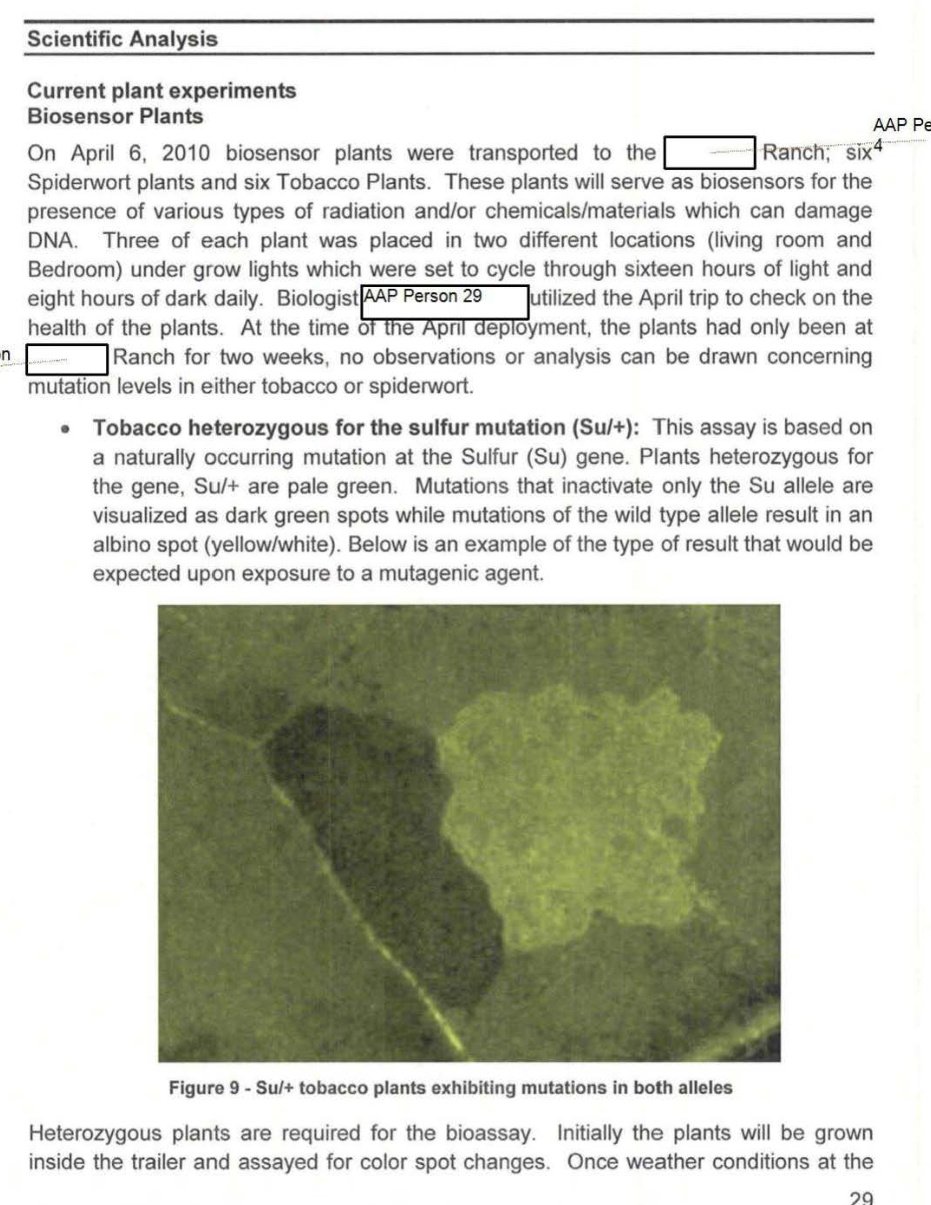
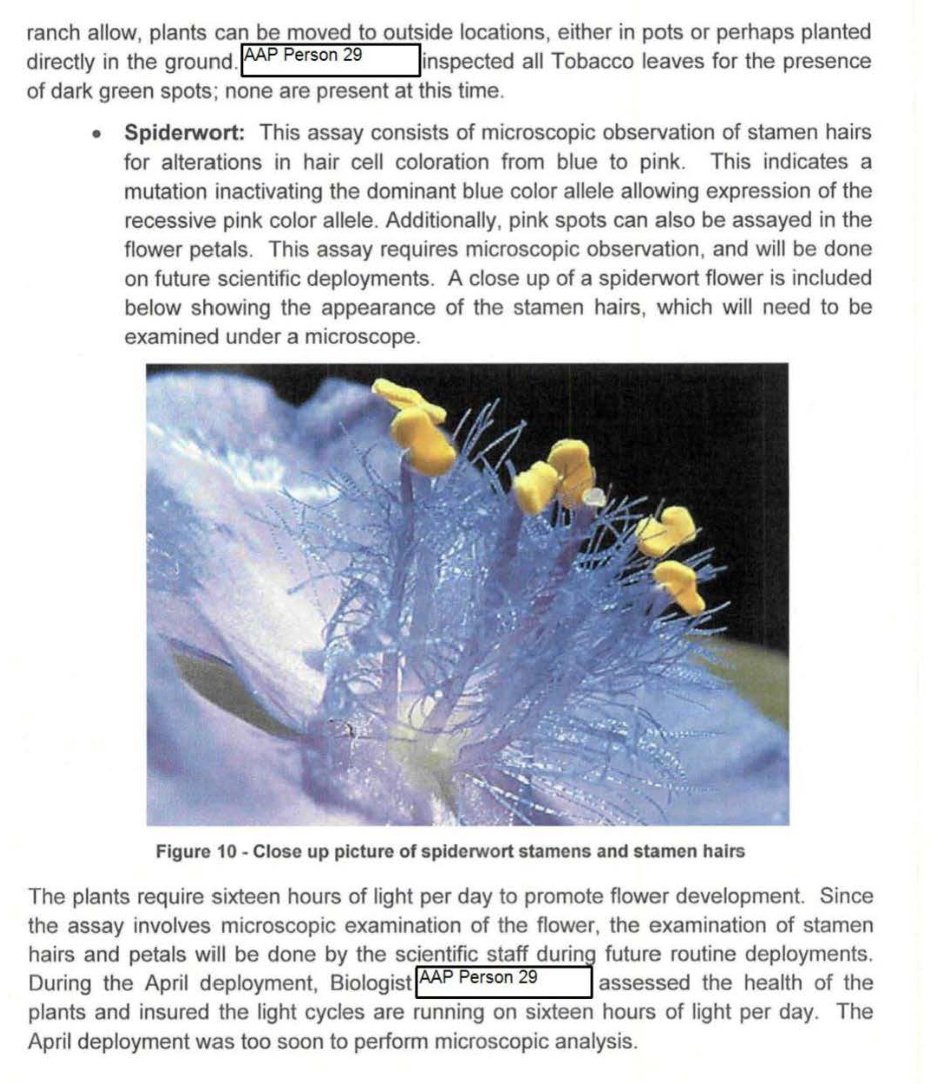
Both assays are well known in genetics. In tobacco heterozygous for the sulfur mutation (Su/+), which has light-green leaves, a mutation caused by an external agent appears as a dark-green spot or as an albino spot. In spiderwort, the mutation causes the stamen hairs to change from blue to pink, which requires a microscope. The images in Figures 9 and 10 are examples of what is being looked for, not results obtained at the ranch. In April, the biologist found no spots on the tobacco leaves, and the report says it was still too early for the microscopic examination of the flowers.
On April 22, 2010, the team set up a second experiment: Stokes-brand snow peas and green beans, treated with fungicide, in elongated tubes ("cone-tainers"), watered with distilled water and kept under lamps with timers and covers to block outside light. There were two locations in the ranch trailer and a control at BAASS headquarters. The plan called for photos and germination logs twice a day and, at the end, measuring and weighing the plants. This report records only the setup; the results, if they exist, are not in the released pages.
More images from the document
DIRECT READING OF THE FILE
The document, in the original
Physical pages 30 to 33 are translated in full in the blocks of this dossier; page 8, in the block of the report's dossier.
EXCERPT 1 · PHYSICAL PAGE 30
Physical page 30, full page
Scientific Analysis
Current plant experiments
Biosensor Plants
AAP Person
On April 6, 201 0 biosensor plants were transported to the I
· I Ranch;·····s,x4 •
Spiderwort plants and six Tobacco Plants. These plants will serve as biosensors for the
presence of various types of radiation and/or chemicals/materials which can damage
DNA. Three of each plant was placed in two different locations (living room and
Bedroom) under grow lights which were set to cycle through sixteen hours of light and
eight hours of dark daily. Biologist~P Person 29
jutilized the April trip to check on the
health of the plants. At the time othe April deployment, the plants had only been at
~P P:.~.~?.r:i,. j. . --· IRanch for two weeks, no observations or analysis can be drawn concerning
mutation levels in either tobacco or spiderwort.
•
Tobacco heterozygous for the sulfur mutation (Su/+): This assay is based on
a naturally occurring mutation at the Sulfur (Su) gene. Plants heterozygous for
the gene, Su/+ are pale green. Mutations that inactivate only the Su allele are
visualized as dark green spots while mutations of the wild type allele result in an
albino spot (yellow/white). Below is an example of the type of result that would be
expected upon exposure to a mutagenic agent.
Figure 9 - Su/+ tobacco plants exhibiting mutations in both alleles
Heterozygous plants are required for the bioassay. Initially the plants will be grown
inside the trailer and assayed for color spot changes. Once weather conditions at the
29Editorial note: Start of the scientific analysis: tradescantia and tobacco plants brought to the ranch on 06/04/2010 as biosensors for radiation and DNA-damaging agents (Figure 9).
Check the original PDF
Scientific Analysis
Current plant experiments
Biosensor Plants
AAP Person
On April 6, 201 0 biosensor plants were transported to the I
· I Ranch;·····s,x4 •
Spiderwort plants and six Tobacco Plants. These plants will serve as biosensors for the
presence of various types of radiation and/or chemicals/materials which can damage
DNA. Three of each plant was placed in two different locations (living room and
Bedroom) under grow lights which were set to cycle through sixteen hours of light and
eight hours of dark daily. Biologist~P Person 29
jutilized the April trip to check on the
health of the plants. At the time othe April deployment, the plants had only been at
~P P:.~.~?.r:i,. j. . --· IRanch for two weeks, no observations or analysis can be drawn concerning
mutation levels in either tobacco or spiderwort.
•
Tobacco heterozygous for the sulfur mutation (Su/+): This assay is based on
a naturally occurring mutation at the Sulfur (Su) gene. Plants heterozygous for
the gene, Su/+ are pale green. Mutations that inactivate only the Su allele are
visualized as dark green spots while mutations of the wild type allele result in an
albino spot (yellow/white). Below is an example of the type of result that would be
expected upon exposure to a mutagenic agent.
Figure 9 - Su/+ tobacco plants exhibiting mutations in both alleles
Heterozygous plants are required for the bioassay. Initially the plants will be grown
inside the trailer and assayed for color spot changes. Once weather conditions at the
29View the document record ↗ · Physical page 30, counting the cover.
EXCERPT 2 · PHYSICAL PAGE 31
Physical page 31, full page
ranch allow, plants can be moved to outside locations, either in pots or perhaps planted
directly in the ground.IMP Person 29
!inspected all Tobacco leaves for the presence
of dark green spots; none are present at this time.
•
Spiderwort: This assay consists of microscopic observation of stamen hairs
for alterations in hair cell coloration from blue to pink. This indicates a
mutation inactivating the dominant blue color allele allowing expression of the
recessive pink color allele. Additionally, pink spots can also be assayed in the
flower petals. This assay requires microscopic observation, and will be done
on future scientific deployments. A close up of a spiderwort flower is included
below showing the appearance of the stamen hairs, which will need to be
examined under a microscope.
Figure 10. Close up picture of spiderwort stamens and stamen hairs
The plants require sixteen hours of light per day to promote flower development. Since
the assay involves microscopic examination of the flower, the examination of stamen
hairs and petals will be done by the scientific staff durin future routine deployments.
During the April deployment, Biologist AAPPerson 29
assessed the health of the
plants and insured the light cycles are running on sixteen hours of light per day. The
April deployment was too soon to perform microscopic analysis.
30Editorial note: Continuation: no spots on the tobacco leaves in April 2010 and explanation of the tradescantia stamen hair assay (Figure 10).
Check the original PDF
ranch allow, plants can be moved to outside locations, either in pots or perhaps planted
directly in the ground.IMP Person 29
!inspected all Tobacco leaves for the presence
of dark green spots; none are present at this time.
•
Spiderwort: This assay consists of microscopic observation of stamen hairs
for alterations in hair cell coloration from blue to pink. This indicates a
mutation inactivating the dominant blue color allele allowing expression of the
recessive pink color allele. Additionally, pink spots can also be assayed in the
flower petals. This assay requires microscopic observation, and will be done
on future scientific deployments. A close up of a spiderwort flower is included
below showing the appearance of the stamen hairs, which will need to be
examined under a microscope.
Figure 10. Close up picture of spiderwort stamens and stamen hairs
The plants require sixteen hours of light per day to promote flower development. Since
the assay involves microscopic examination of the flower, the examination of stamen
hairs and petals will be done by the scientific staff durin future routine deployments.
During the April deployment, Biologist AAPPerson 29
assessed the health of the
plants and insured the light cycles are running on sixteen hours of light per day. The
April deployment was too soon to perform microscopic analysis.
30View the document record ↗ · Physical page 31, counting the cover.
EXCERPT 3 · PHYSICAL PAGE 32
Physical page 32, full page
Seed Experiment
A seed germination and growth experiment was set up at both BAASS and l~P Person
Ranch on April 22, 2010. AAP Person 18
set up the BAASS control experiment while
Biologist AAP Person 29
set up t e experiment at I -- jRanm_Irailer Jn _two _/J.AP_Person
different locations. One location is the trailer living room while the second is the trailer 4
•••••••
bedroom. Plants will be grown to determine if differences exist in germination rate
and/or growth rate between the three locations. Two types of seeds will be grown in
each location; Stokes Sugar Snap Peas and Stokes Green Beans. Both seed types are
treated with fungicide to control contamination by fungus. The following steps were
taken when planning and setting up the seed experiments to ensure consistent
environmental factors are accounted for:
•
All locations will be watered with distilled water.
•
Specialized containers known as "cone-tainers" are being utilized. Cone-
tainers are elongated pots are arranged in a rack for optimal use of space
which can be reused many times. This approach will allow the plants to grow
for longer periods of time in order to assess plant growth. Two seed types
were planted on each tray allowing for forty-nine of each seed type to be
grown.
Figure 11 - Example of Cone-tainers and associated racks
•
The cone-tainers were placed under Jump Start TS Grow light systems. This
was to control the light cycles at each location. Timers were set on the light
systems to provide sixteen hours of light and eight hours of dark.
31Editorial note: Pea and bean germination experiment set up on 22/04/2010 in the ranch trailer and, as a control, at BAASS headquarters (Figure 11).
Check the original PDF
Seed Experiment
A seed germination and growth experiment was set up at both BAASS and l~P Person
Ranch on April 22, 2010. AAP Person 18
set up the BAASS control experiment while
Biologist AAP Person 29
set up t e experiment at I -- jRanm_Irailer Jn _two _/J.AP_Person
different locations. One location is the trailer living room while the second is the trailer 4
•••••••
bedroom. Plants will be grown to determine if differences exist in germination rate
and/or growth rate between the three locations. Two types of seeds will be grown in
each location; Stokes Sugar Snap Peas and Stokes Green Beans. Both seed types are
treated with fungicide to control contamination by fungus. The following steps were
taken when planning and setting up the seed experiments to ensure consistent
environmental factors are accounted for:
•
All locations will be watered with distilled water.
•
Specialized containers known as "cone-tainers" are being utilized. Cone-
tainers are elongated pots are arranged in a rack for optimal use of space
which can be reused many times. This approach will allow the plants to grow
for longer periods of time in order to assess plant growth. Two seed types
were planted on each tray allowing for forty-nine of each seed type to be
grown.
Figure 11 - Example of Cone-tainers and associated racks
•
The cone-tainers were placed under Jump Start TS Grow light systems. This
was to control the light cycles at each location. Timers were set on the light
systems to provide sixteen hours of light and eight hours of dark.
31View the document record ↗ · Physical page 32, counting the cover.
EXCERPT 4 · PHYSICAL PAGE 33
Physical page 33, full page
•
To control for extraneous light, large enclosures were placed over the grow
light systems. The amount of light will therefore be consistent.
Pictures will be taken and germination charts will be filled out twice daily for all
locations. Once germination data collection has been completed, germination charts
will be produced.
When the experiment has been completed, plants from ~ P Person
Ranch will be brought back to BAASS for analysis. All plants will be measure an
weighed.
32Editorial note: End of the description of the seed experiment: light control, photos and germination logs twice a day, and final analysis at BAASS.
Check the original PDF
•
To control for extraneous light, large enclosures were placed over the grow
light systems. The amount of light will therefore be consistent.
Pictures will be taken and germination charts will be filled out twice daily for all
locations. Once germination data collection has been completed, germination charts
will be produced.
When the experiment has been completed, plants from ~ P Person
Ranch will be brought back to BAASS for analysis. All plants will be measure an
weighed.
32View the document record ↗ · Physical page 33, counting the cover.
Dates and documentary context
- Event
- 06/04/2010 — Arrival of the biosensor plants; the seed experiment was set up on 22/04/2010.
- Document
- 07/05/2010 — Date of the report summary.
- Publication
- Not established — Released in release 07 of war.gov, in 2026.
Origin and release
Bigelow Aerospace Advanced Space Studies (BAASS), contractor of the Defense Intelligence Agency (DIA) in the AAWSAP program; report of the Utah task force, led by AAP Person 7 · DOW-UAP-D174-Utah_Ranch_Investigation_Report_April_2010.pdf
Physical pages 8 and 30 to 33.
undefined ↗ — undefined
Related accounts and their differences
Questions to continue the investigation
- Was there any difference in germination or growth between the ranch trailer and the control at BAASS?
GEOGRAPHY OF THE CASE
Outskirts of Fort Duchesne and Ballard, Utah, USA
Approximate reference point for the region of the investigated ranch, placed by the editorial team based on the localities mentioned in the report. It does not indicate the exact location of the property.
DOCUMENTARY TRAIL
Go back to the sources
References use physical pages of the PDF, counting the cover. Summaries are presented in English; the documents keep their original language.
- DOW-UAP-D174-Utah_Ranch_Investigation_Report_April_2010.pdf
Physical pages 8 (objectives) and 30 to 33 (experiments with biosensor plants and seeds, 06/04 and 22/04/2010)
DOW · 60 pages
Editorial summary based on the collection's research notes. How we read the documents.